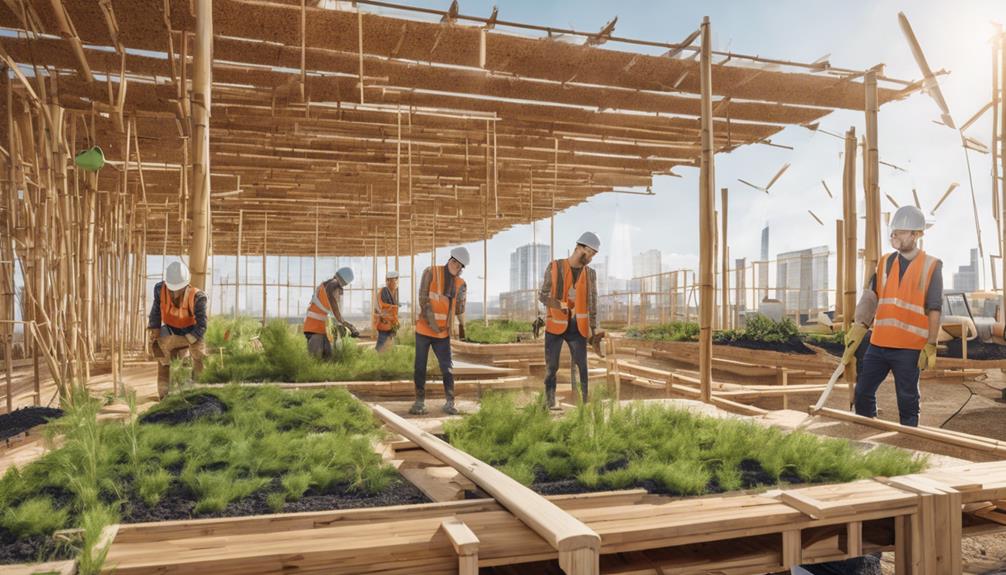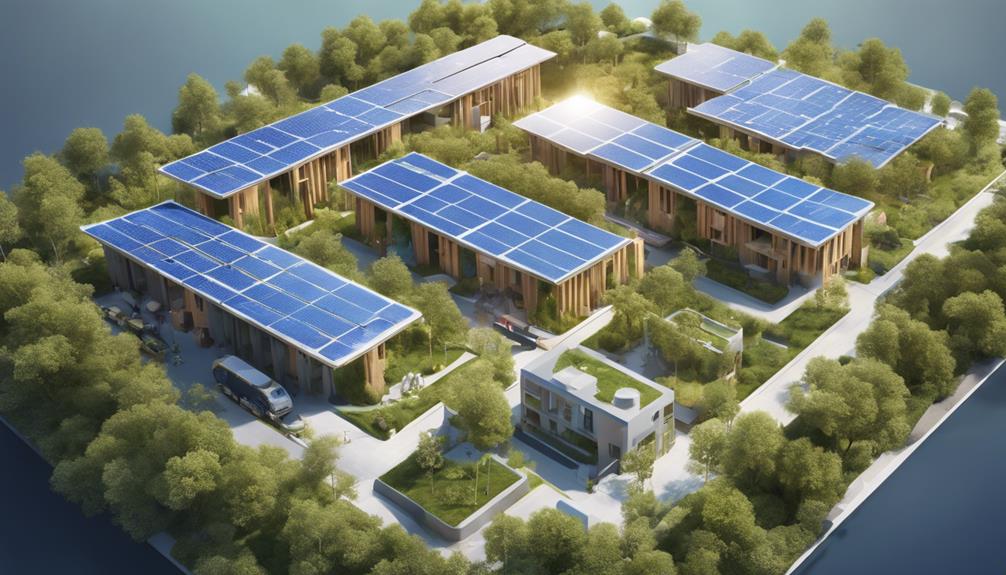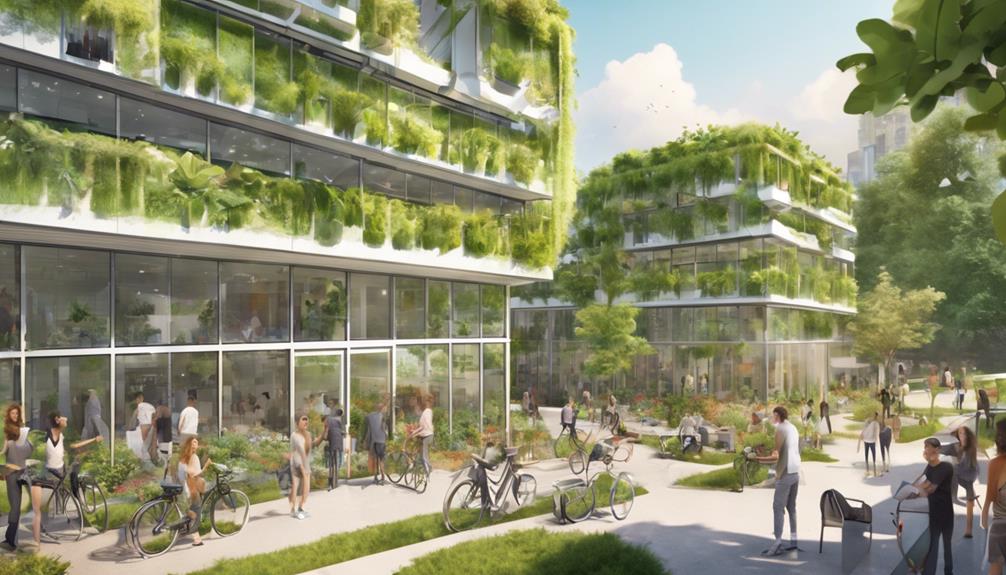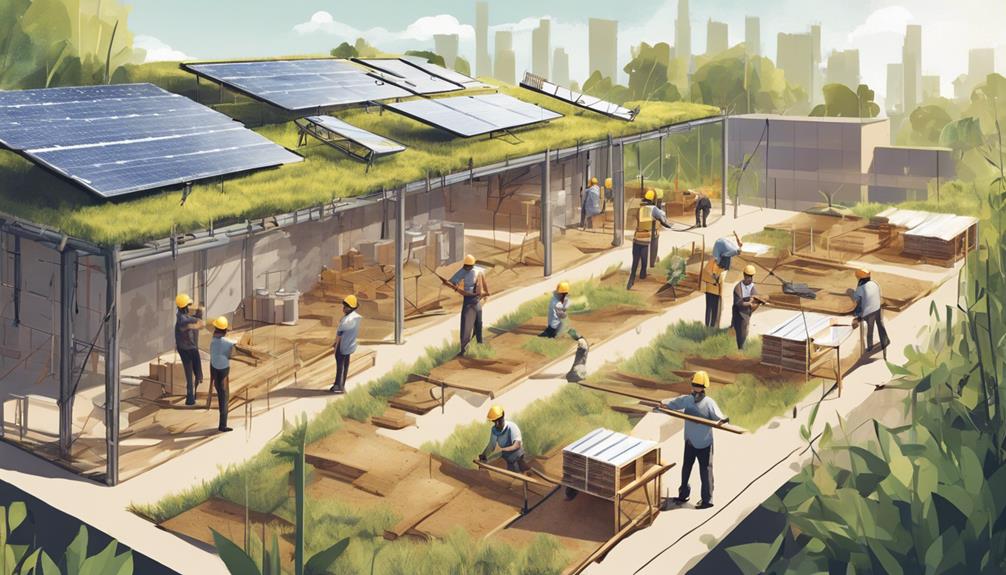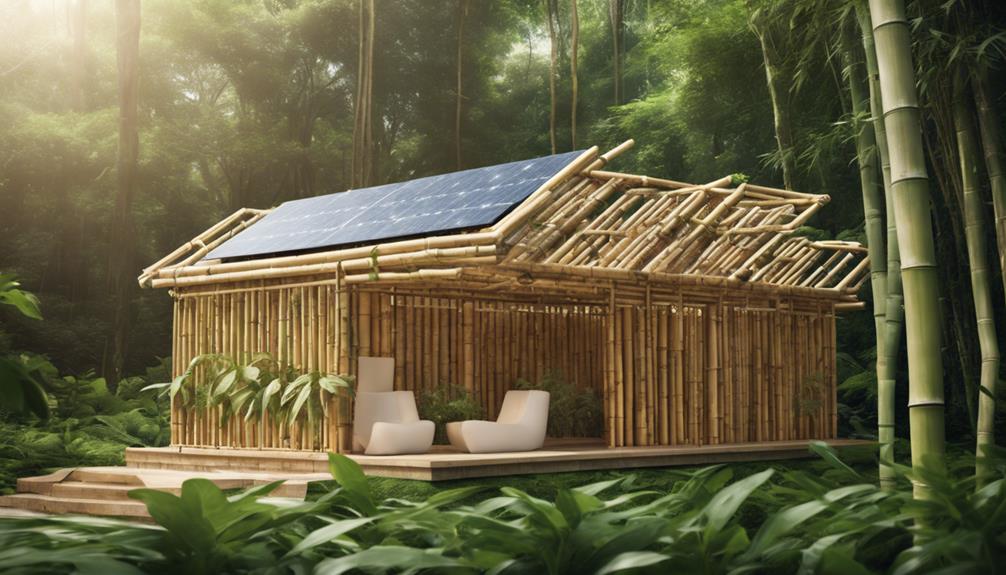
You can revolutionize how you build by choosing eco-friendly materials like recycled steel, which slashes energy consumption and carbon emissions while maintaining strength. Consider low-emission concrete that incorporates materials like fly ash and calcined clays, reducing CO2 significantly. Bamboo could be your go-to for durability and carbon sequestration, offering a high strength-to-weight ratio desirable in many architectural styles. Don't forget about sustainable insulation options such as sheep's wool and recycled denim, which enhance energy efficiency naturally. Leveraging green roofing could additionally minimize your energy use and urban runoff. These choices promise more than just immediate benefits. There's a wealth of insights waiting that can transform your approach further.
Recycled Steel Utilization
Harnessing the potential of recycled steel marks a significant stride in sustainable construction. You're not just building structures; you're part of a larger movement towards environmental responsibility. Recycled steel offers a compelling alternative to new steel, primarily because it reduces the demand for virgin materials, which, in turn, slashes energy consumption and carbon emissions associated with mining and processing.
When you choose recycled steel, you're tapping into a cycle of reuse that's both efficient and sustainable. This material maintains its strength and durability across multiple lifecycles, making it ideal for everything from structural beams to roofing. Moreover, steel recycling facilities are increasingly adopting more energy-efficient technologies, enhancing the sustainability profile of this already green choice.
You'll also find that using recycled steel can lead to significant cost savings. It's generally less expensive than new steel because it bypasses the energy-intensive production stages of iron extraction and smelting. The availability of recycled steel is growing as more industries recognize its benefits and contribute to the recycling stream.
Low-Emission Concrete Options
In the realm of sustainable building, exploring low-emission concrete options offers a direct path to reducing your project's carbon footprint. Traditional concrete production is notoriously carbon-intensive, but recent advancements have paved the way for greener alternatives that you can use without compromising structural integrity.
One innovative solution is the use of fly ash, a byproduct of coal combustion, as a partial replacement for Portland cement. This not only utilizes waste material but also significantly cuts down CO2 emissions associated with manufacturing. You'll find that incorporating fly ash can reduce concrete's carbon footprint by about 15%.
Another promising approach is the development of concrete made with alternative, low-carbon cements. These varieties often use materials like calcined clays and limestone, which require less energy in processing and result in lower overall emissions. They're gaining traction, especially in regions abundant with these natural resources.
You might also consider adopting concrete mixes that incorporate carbon capture technology. These innovative mixes chemically bind CO2 during the curing process, effectively sequestering carbon within the structure itself. It's a forward-thinking choice that not only minimizes environmental impact but can also enhance the durability of your constructions.
Bamboo as a Building Material
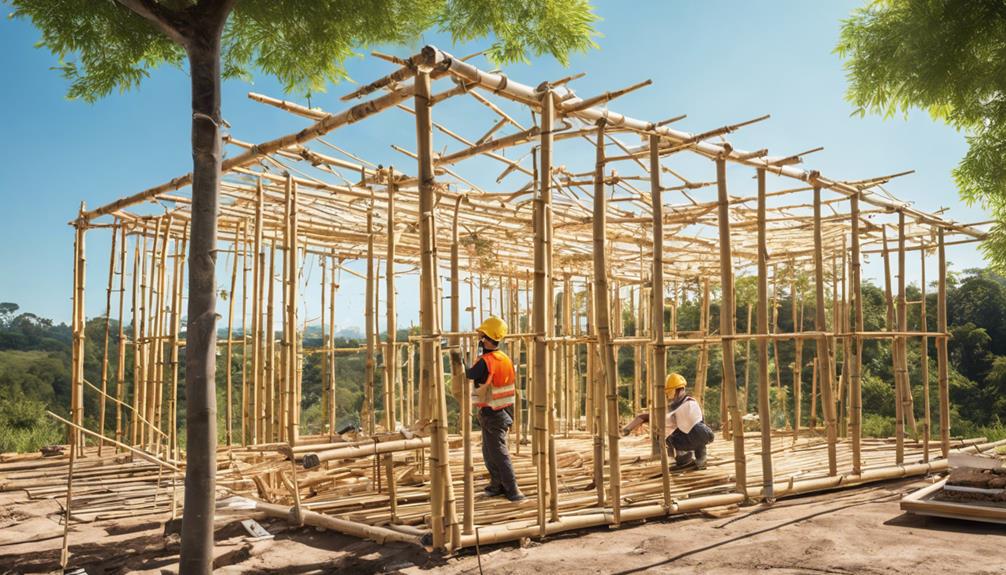
Bamboo offers a sustainable alternative to traditional hardwoods in construction. You'll find it's not only incredibly fast-growing but also remarkably sturdy, making it an ideal choice for eco-conscious building projects.
Unlike slow-growing hardwoods, bamboo can be harvested every three to five years, significantly reducing the impact on forests. Its natural properties, such as flexibility and tensile strength, rival those of many traditional construction materials.
You might be surprised to learn that bamboo has a higher strength-to-weight ratio than many types of wood and even some steel grades. This makes it exceptionally useful for structures requiring high strength with minimal bulk.
Moreover, bamboo's natural versatility allows it to adapt to various architectural styles, from modern to traditional.
Additionally, the use of bamboo in your projects can considerably lower carbon footprints. It absorbs carbon dioxide at a higher rate than many trees, contributing to reduced greenhouse gas emissions.
Plus, bamboo's capacity for regeneration without replanting helps preserve soil integrity and prevent erosion.
Sustainable Insulation Choices
While exploring alternative materials like bamboo significantly boosts sustainability in construction, choosing the right insulation is equally important for energy efficiency. You'll find that traditional fiberglass isn't always the greenest choice.
Instead, consider materials like sheep's wool, recycled denim, or cork. Each of these options not only provides excellent thermal performance but also supports a healthier environment inside and out.
Sheep's wool, for instance, is a superb natural insulator. It's renewable, biodegradable, and can regulate humidity, making your home more comfortable while reducing the reliance on heating and cooling systems.
Recycled denim, repurposing scrap from the textile industry, offers a toxin-free alternative that's easy on the lungs during installation.
Cork, harvested from the bark of cork oak trees without harming the tree, boasts a unique cellular structure that traps air, providing exceptional thermal and acoustic insulation.
You're not just insulating your home; you're aligning with sustainable practices that contribute to a larger global effort. These materials, often requiring less energy to produce, leave a smaller carbon footprint. By choosing them, you're stepping towards a more sustainable lifestyle while enhancing your living space's efficiency and comfort.
Innovations in Green Roofing
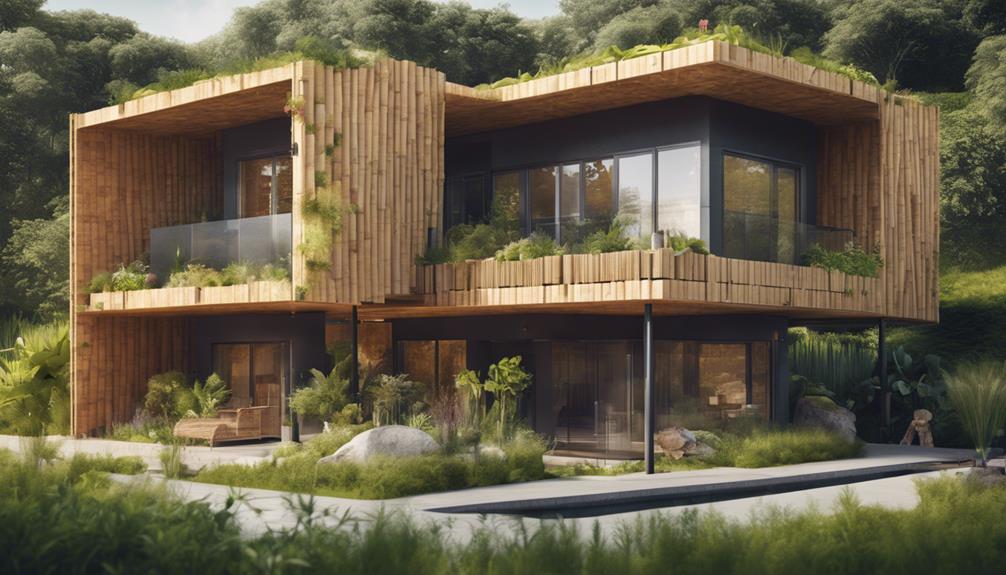
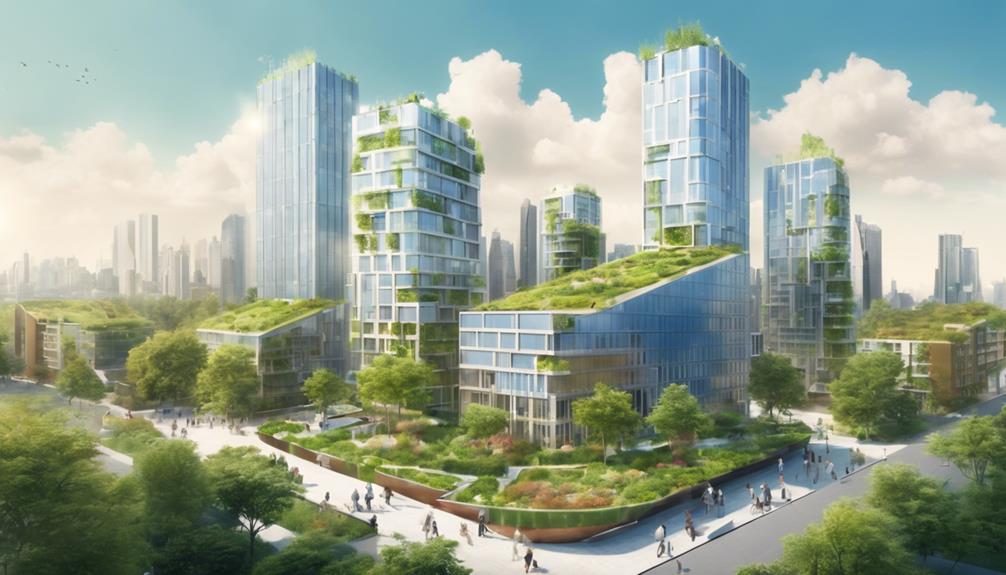
Green roofing technology has transformed how we think about sustainable building. When you choose to install a green roof, you're not just topping your building with plants; you're significantly reducing your carbon footprint. These roofs act as natural insulators, meaning you'll use less energy to heat or cool your building. This can lead to substantial savings on your utility bills and a noticeable reduction in your building's overall environmental impact.
Additionally, green roofs absorb rainwater, reducing runoff and decreasing the burden on urban sewage systems. This helps mitigate the risk of flooding, a growing concern in many cities. By incorporating layers of vegetation, soil, and drainage systems, green roofs can retain up to 90% of the rainwater they absorb, slowly releasing it back into the atmosphere through evaporation and transpiration.
You'll also find that green roofs can improve air quality. The plants filter pollutants and carbon dioxide out of the air, which is a boon for urban areas where air quality may be a concern.
Furthermore, they provide critical habitats for wildlife, promoting biodiversity in environments that are often devoid of natural spaces.
Embracing green roofing isn't just a trend; it's a smart, sustainable choice that benefits both you and the planet.
Conclusion
You've explored the frontier of eco-friendly building materials, from recycled steel to bamboo and green roofing. By choosing these sustainable options, you're not just constructing a building; you're building a better future. Remember, every choice counts. Opting for low-emission concrete and sustainable insulation improves not only your carbon footprint but also the health of the planet. Embrace these innovations, and let's build a world that thrives on both creativity and sustainability.
Related articles: Choosing Sustainable Materials for Commercial Construction · What Are the Best Affordable High-Rise Construction Supplies? · 7 Tips for Affordable High-Rise Construction Supplies