
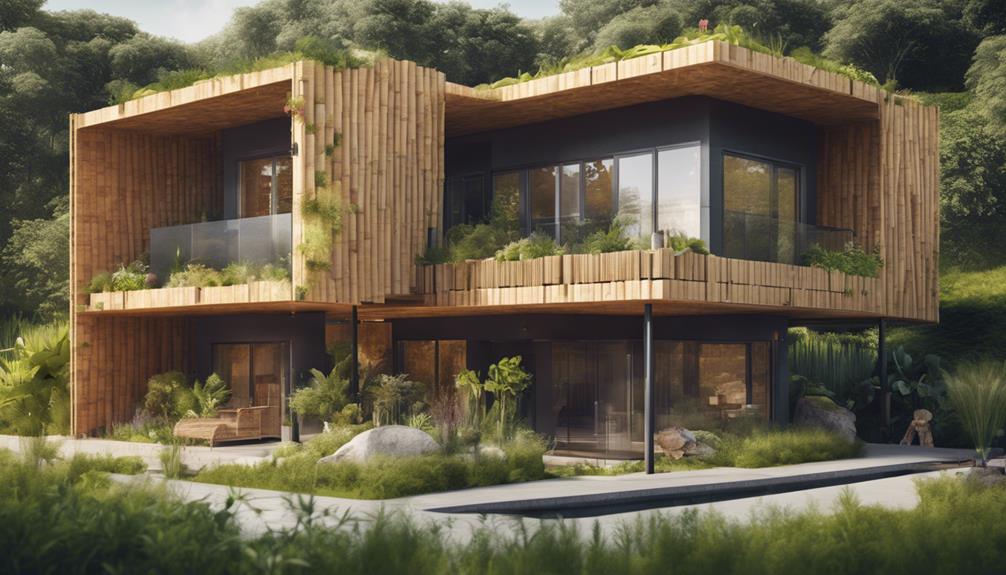
When you're considering sustainable building materials, bamboo, recycled steel, cork flooring, reclaimed wood, and rammed earth are some of the best options out there. Bamboo grows rapidly and is incredibly durable, while recycled steel helps conserve raw materials and reduce CO2 emissions. Cork flooring offers excellent insulation and is naturally fire-resistant. Reclaimed wood prevents deforestation and adds unique character to any space. Rammed earth, enhanced with stabilizers, excels in energy efficiency and sound insulation. Each of these materials not only supports environmental sustainability but also brings distinctive qualities to building projects. Exploring these options further could open up even more possibilities for their use.
Benefits of Bamboo in Construction
Bamboo steps up as a remarkably sustainable choice for construction, offering unique environmental and practical advantages. Unlike traditional timber, bamboo reaches maturity in just three to five years, making it a rapidly renewable resource. You'll find it absorbs carbon dioxide at a higher rate than many trees, which significantly reduces environmental impact.
Moreover, bamboo's natural versatility is hard to match. It boasts a strength-to-weight ratio comparable to steel, and its inherent flexibility makes it resistant to earthquakes. This resilience is paired with ease of use in construction. You can shape, split, and join bamboo with basic tools, adapting it to various architectural styles.
It's not just strong and adaptable; it also provides excellent thermal properties, keeping your space cooler in summer and warmer in winter.
Incorporating bamboo into your building projects means you're not only opting for an eco-friendly material but also embracing a cost-effective solution. Its rapid growth and local availability in many regions reduce transportation costs and promote local economies. By choosing bamboo, you're supporting sustainable forestry practices, which contribute to the preservation of global biodiversity.
Exploring Recycled Steel Uses
Recycled steel emerges as a powerhouse in sustainable construction, offering both environmental and economic benefits. As you explore options for your next building project, consider how recycled steel isn't just a choice, but a statement about your commitment to reducing environmental impact.
Here's why you should take a closer look: when you opt for recycled steel, you're not only conserving raw materials but also minimizing energy consumption and greenhouse gas emissions compared to producing new steel. This process saves substantial amounts of coal and iron ore and reduces CO2 emissions significantly.
You might wonder about its applications. Recycled steel is incredibly versatile and can be used for structural components like beams and columns in your buildings. It's also perfect for roofing and external cladding, providing durability against weather elements. Interior designers love it for furniture and decorative features, which add a modern touch to any space.
Moreover, recycled steel maintains its strength and integrity, making it ideal for high-strength requirements in construction. It supports innovative designs without compromising on safety or quality.
Advantages of Cork Flooring
Exploring the advantages of cork flooring, you'll quickly discover its remarkable sustainability and comfort. Harvested from the bark of cork oak trees, which regenerate their bark every nine years, cork is a prime example of a renewable resource. This process doesn't harm the tree, allowing it to continue absorbing CO2, making your choice in cork flooring both eco-friendly and impactful in the fight against climate change.
You'll appreciate cork's natural insulation properties, keeping your space warmer in the winter and cooler in the summer, potentially reducing your heating and cooling costs. It's also inherently fire resistant and emits zero toxins, even when burned, ensuring your home remains a safe haven.
Comfort isn't sacrificed for durability with cork. Its unique cellular structure gives it a cushioned feel underfoot, a boon if you spend a lot of time standing. This same structure reduces sound transmission, creating a quieter, more serene home environment.
And don't worry about heavy furniture leaving permanent marks; cork bounces back from compressions.
Lastly, for those with allergies, cork resists mildew and mold and repels dust mites, keeping your indoor air quality pristine. Opting for cork flooring means you're stepping towards sustainability without stepping away from quality and comfort.
Utilizing Reclaimed Wood
While cork flooring harnesses nature's resilience, utilizing reclaimed wood merges historical charm with contemporary sustainability. You're not just building or renovating your home; you're preserving a piece of history and making an environmentally sound choice.
Reclaimed wood comes from old buildings, barns, and other structures, and using it prevents the need for new timber harvesting. This reduces deforestation and the associated environmental impacts.
You'll find that reclaimed wood adds a unique aesthetic to any space. Each piece has its own story, with weathered textures and aged patinas that you can't replicate in new wood. This adds an element of rustic beauty that's both timeless and robust. Plus, it's versatile—perfect for flooring, beams, furniture, and even accent walls.
Choosing reclaimed wood also means you're opting for durability. These woods were often originally harvested from old-growth forests, making them more stable and resistant to rot and pests compared to newer woods. It's a smart choice that marries aesthetics with functionality.
Innovations in Rammed Earth
Rammed earth construction isn't just an ancient technique; it's rapidly evolving with modern technology to offer more sustainable building solutions. As you explore your options for eco-friendly building, you'll find that modern rammed earth buildings aren't what they used to be. They now incorporate durable, recycled materials and are often enhanced with stabilizers like lime or cement to increase their strength and resistance to weathering.
You'll be impressed by how these innovations not only boost the material's structural integrity but also extend the lifespan of buildings. The addition of thermal mass properties means that rammed earth can naturally regulate indoor temperatures, keeping your space cooler in the summer and warmer in the winter, slashing energy costs significantly.
Moreover, the aesthetic possibilities have expanded. Today, pigments and finishes allow for a range of textures and colors, so your building can look cutting-edge, yet effortlessly blend with its natural surroundings.
Also, due to its dense composition, rammed earth offers excellent sound insulation, creating a quieter and more serene indoor environment.
In embracing rammed earth, you're not just building walls; you're investing in a sustainable future, reducing your carbon footprint, and supporting a time-tested technique refined by modern innovation.
Implementing Straw Bales
If you're considering eco-friendly building materials, implementing straw bales might be an excellent choice for your next project. Straw bale construction uses natural, renewable materials that significantly reduce your carbon footprint. Not only do these bales provide exceptional insulation, which can lower your energy costs, but they also offer a unique aesthetic that can't be matched by more conventional materials.
When you opt for straw bales, you're leveraging a resource that's often considered agricultural waste. This repurposing can help reduce environmental damage associated with disposal methods like burning. As you plan, you'll find straw bale construction is surprisingly versatile, suitable for walls in both load-bearing and non-load-bearing applications.
It's crucial, however, to ensure that the bales are kept dry during storage and construction to prevent mold and decay.
To get started, engage with a contractor experienced in straw bale construction. They'll help navigate any regulatory concerns and ensure your building meets local codes and standards. Remember, proper design and construction techniques are key to maximizing the durability and effectiveness of straw bale insulation.
With thoughtful implementation, straw bale construction can provide a sustainable, efficient, and visually appealing solution for your building needs.
Conclusion
You've seen how sustainable materials like bamboo, recycled steel, and cork can revolutionize construction, reducing environmental impact while maintaining quality. Embrace reclaimed wood for its unique aesthetic and history. Consider rammed earth and straw bales for their natural insulation properties. By choosing these materials, you're not just building structures; you're supporting a more sustainable planet. Make the switch and become part of the solution in addressing environmental challenges through innovative, eco-friendly construction practices.
Related articles: Eco-Friendly Materials for Sustainable Construction · 3 Best Sustainable Building Materials for Construction · Eco-Friendly Innovations in Building Materials