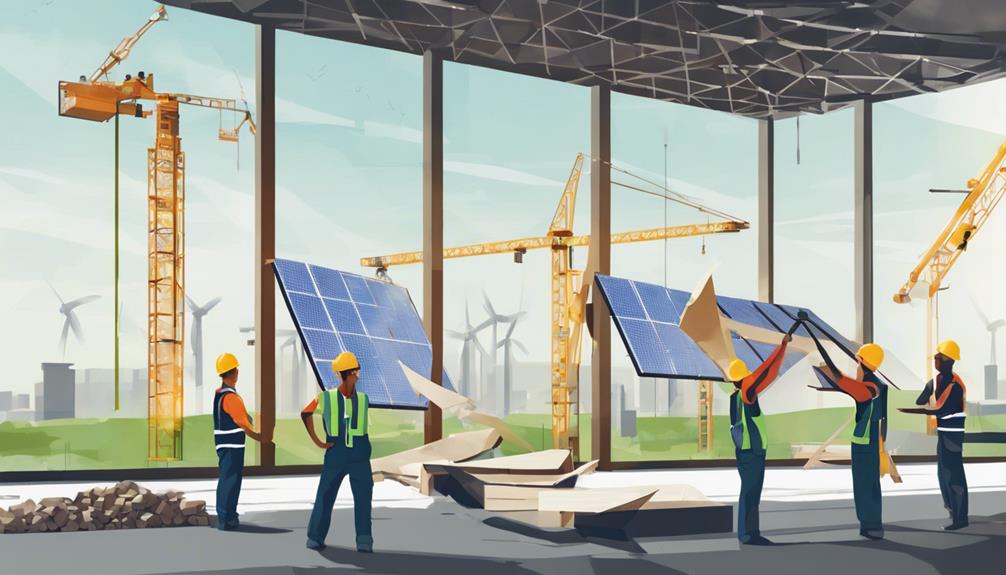
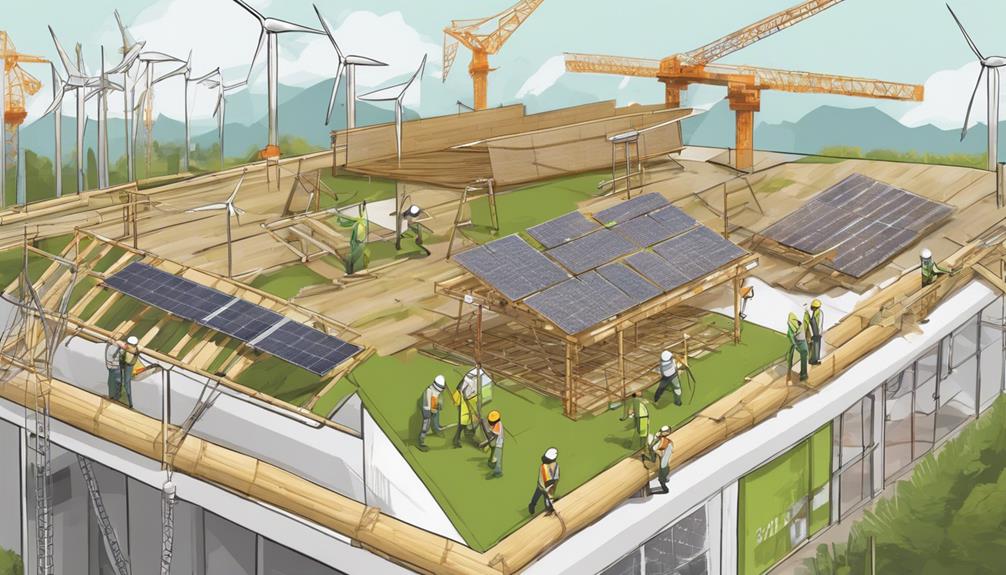
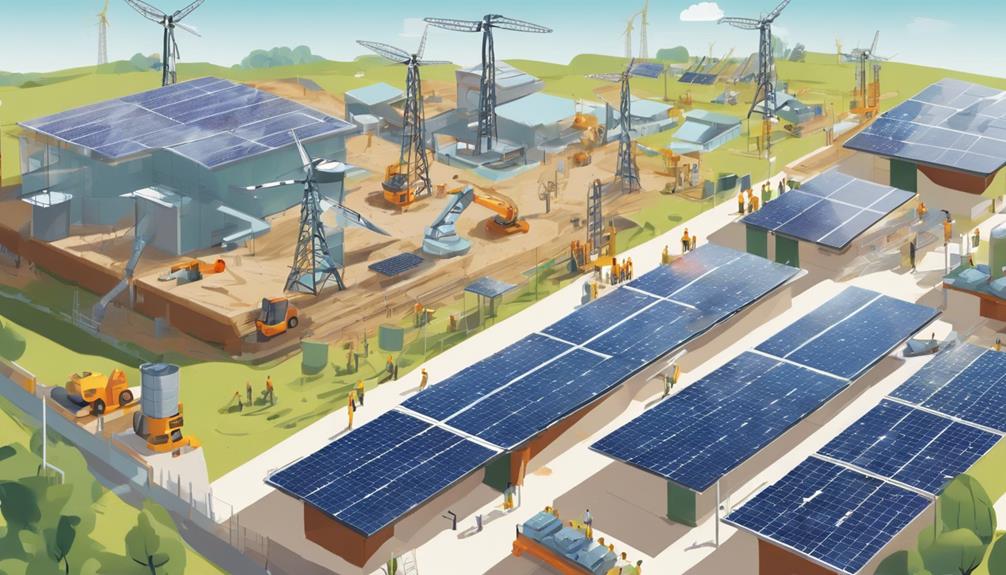
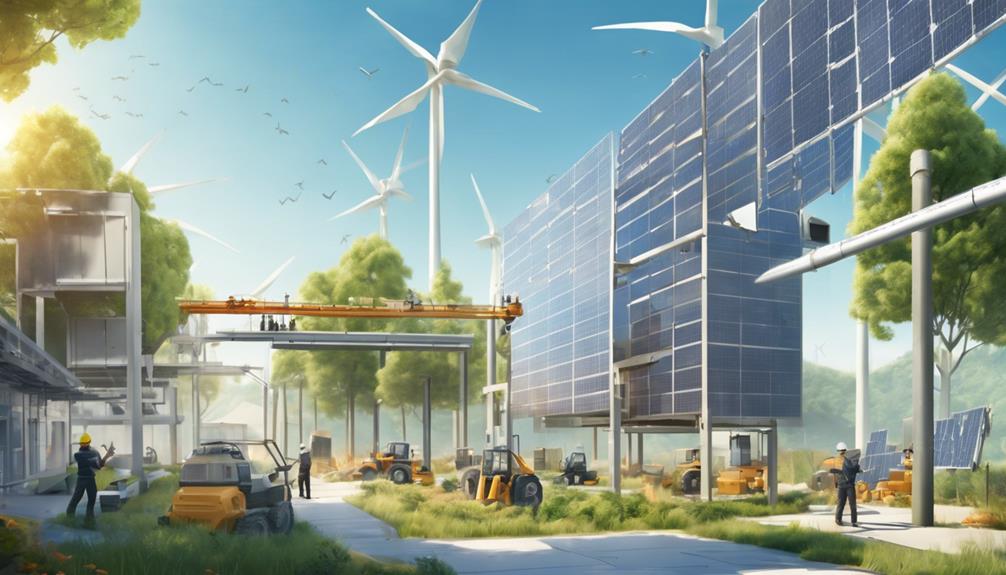
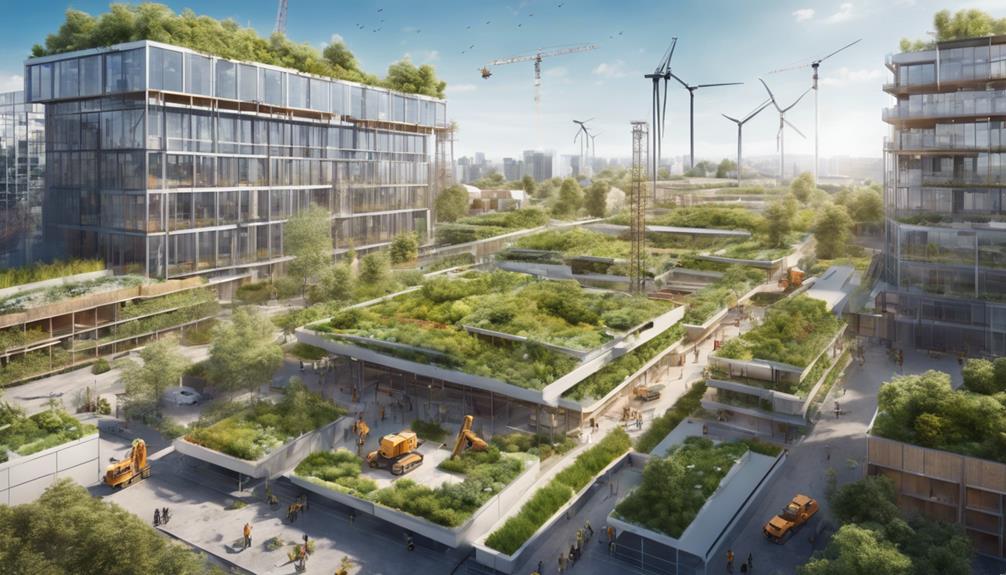
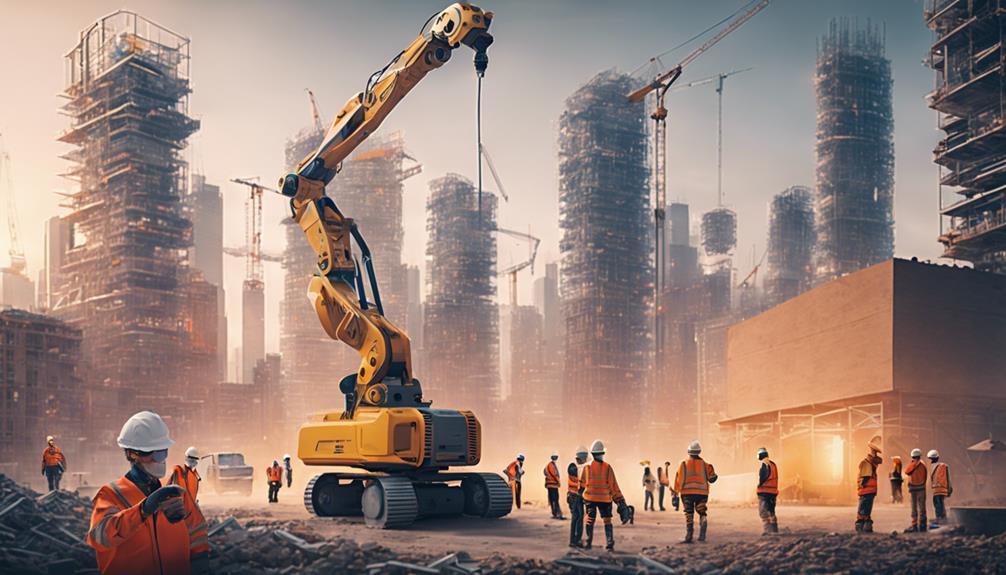
AI is revolutionizing commercial construction, making your projects more efficient and cost-effective. By analyzing vast data sets, AI improves planning precision, foreseeing delays and optimizing task allocations. It streamlines supply chains, maintaining real-time tracking and automating procurement to minimize errors. Your site's safety is enhanced through continuous monitoring and risk prediction, while labor productivity soars with AI-driven tools and smart automation. Quality control is advanced with constant data analysis, reducing rework and enhancing reliability. AI's predictive capabilities extend to maintenance and resource allocation, cutting down on waste and downtime. Consider how further exploration could unveil deeper insights into AI's pivotal role in modern construction techniques.
Enhancing Project Planning Precision
AI significantly boosts the accuracy of project planning in commercial construction. You'll find that integrating AI tools into your projects allows for the meticulous analysis of vast data sets, ranging from timelines and budget forecasts to risk assessments. This high-level data handling isn't just about crunching numbers; it's about delivering insights that you can trust to make crucial decisions swiftly and effectively.
Imagine you're handling a complex project with multiple variables. AI's predictive capabilities let you foresee potential delays or budget overruns before they become problematic. This isn't just convenient; it's a game-changer in maintaining your project on track and within budget, reducing the stress typically associated with manual tracking and adjustments.
Moreover, AI applications can optimize task allocations based on worker skills and project phases, ensuring that the right people are working on the right tasks at the right time. This optimization not only enhances productivity but also boosts morale by preventing the common issue of task mismatch in large projects.
Streamlining Supply Chain Management
Efficient management of your supply chain can significantly reduce costs and enhance project timelines in commercial construction. By leveraging AI, you're not just managing logistics; you're optimizing them. AI technologies forecast demands more accurately, anticipate delays, and suggest the most cost-effective materials and suppliers. This means you can avoid overstocking and reduce wastage, trimming down expenses significantly.
AI also offers real-time tracking of materials from order to delivery. You won't be left guessing when materials will arrive or facing unexpected shortages that can stall your projects. With AI, you're equipped with predictive analytics that alert you to potential disruptions, allowing you to make swift adjustments. This agility in the supply chain ensures that your construction projects remain on schedule.
Moreover, by automating procurement processes with AI, you reduce human error and free up your team to focus on more strategic tasks. This not only speeds up operations but also enhances accuracy in order fulfillment.
You'll find that streamlined communication across different stakeholders becomes the norm, not the exception, leading to more synchronized project execution.
In essence, AI in supply chain management isn't just a tool—it's your strategic partner in ensuring that your construction projects are successful, cost-effective, and timely.
Improving Construction Site Safety
While streamlining supply chain management enhances project efficiency and cost-effectiveness, equally important is the role of AI in elevating construction site safety. You're likely aware that construction sites are rife with hazards, from high-rise structures to heavy machinery. AI steps in as a game-changer, constantly monitoring these environments to predict and prevent accidents before they occur.
Imagine sensors and cameras integrated throughout the site, feeding data into AI systems. These systems analyze patterns and detect anomalies in real-time. For example, if a worker nears an unsafe zone, AI can instantly alert them and their supervisor, perhaps preventing a potentially fatal fall. It's like having an extra set of eyes that never blink.
Moreover, AI-driven robots are deployed to handle dangerous tasks. They're designed to operate in environments that would be risky for humans, such as demolishing unstable structures or handling hazardous materials. This not only reduces the risk of injury but also spares you from having to place your team in harm's way.
In essence, AI in construction doesn't just protect individual workers; it transforms the entire safety culture. By integrating AI, you're not just building structures; you're also building a safer, smarter workplace.
Boosting Labor Productivity
How can AI further enhance your team's productivity on the job? By introducing smart automation and data-driven decision-making, AI revolutionizes how tasks are approached and completed. Imagine AI-driven tools that predict the best times for concrete pours based on weather, worker availability, and material readiness, or robotic arms that assist in heavy lifting and precise installations. These innovations not only speed up the construction process but also reduce physical strain on your workers, allowing them to focus on more complex tasks.
AI also plays a crucial role in training and skill development. Virtual reality (VR) simulations, powered by AI, provide your team with realistic, hands-on training experiences without the risks associated with live training. These VR platforms can tailor scenarios to individual learning needs, accelerating proficiency and ensuring that every team member performs at their best.
Moreover, AI enhances teamwork and communication. With AI-driven communication tools, your team can stay connected effortlessly, ensuring that everyone is on the same page. Real-time updates and alerts help in maintaining a smooth flow of information, crucial for timely and efficient project execution. By leveraging AI, you're not just upgrading technology; you're enhancing every aspect of your team's performance.
Optimizing Resource Allocation
Optimizing resource allocation is crucial in commercial construction, where managing materials, machinery, and manpower effectively can significantly cut costs and boost efficiency. As you're dealing with numerous projects, AI steps in as a game-changer. It isn't just about using resources wisely; it's about predicting future needs and adjusting in real-time, ensuring you're always a step ahead.
Imagine AI algorithms evaluating past project data to forecast the precise amount of materials needed, reducing waste. You won't order too much or too little, just the perfect amount.
AI also strategically schedules the use of heavy machinery. Instead of sitting idle, expensive equipment is used efficiently across multiple sites, slashing rental costs and downtime.
Moreover, AI optimizes workforce deployment. It analyzes tasks and assigns the right number of workers with the appropriate skills, preventing both understaffing and costly overstaffing. You'll see projects moving smoothly, without the delays that mismatched resources can cause.
Advancing Quality Control Measures
Building on the efficient use of resources, advancing quality control measures is another area where AI significantly impacts commercial construction. You're seeing it firsthand as AI technologies embed deeper into the fabric of the industry. They're not just improving how materials are used, but also how buildings are constructed with precision and accuracy.
Imagine AI-powered systems that continuously analyze data from construction sites. These systems alert you to inconsistencies and errors in real-time, drastically reducing the need for costly rework. You're no longer just reacting to quality issues; you're preventing them. This preemptive approach ensures adherence to safety standards and building codes, enhancing the overall reliability of your projects.
Moreover, AI tools integrate with imaging and sensor technologies to provide detailed inspections that are humanly impossible. These tools can detect micro-cracks and structural weaknesses that the naked eye would miss.
As a result, you're delivering projects that aren't just completed on time and within budget, but also exceed safety and quality expectations.
Facilitating Predictive Maintenance
Predictive maintenance is revolutionizing the way you manage and maintain construction equipment. By harnessing AI, you're now capable of predicting failures before they occur, ensuring that your machinery is always in top condition. This isn't just about fixing equipment; it's about foreseeing faults and preventing them, which means you're saving time and money.
AI analyzes data from sensors embedded in your equipment to monitor its condition continuously. This data includes vibration, temperature, and power consumption, among others. You'll receive alerts when patterns deviate from the norm, indicating potential issues well before they become critical. This allows you to schedule maintenance only when necessary, rather than relying on a routine schedule. It's not just efficient; it's smart.
What's more, this shift to predictive maintenance means you're less likely to face sudden breakdowns. Equipment reliability goes up, and the risk of unexpected repair costs goes down. You're not just maintaining equipment; you're optimizing its lifecycle and performance.
Incorporating AI into your maintenance strategy doesn't just keep your equipment running smoothly; it integrates your operational processes, enhancing overall productivity without compromising safety. Now, that's how you leverage technology to stay ahead in the competitive field of commercial construction.
Reducing Project Delays
AI significantly cuts down on project delays in commercial construction. You've probably experienced the frustration of delayed projects, which not only disrupt schedules but also ripple through various aspects of operations. With AI, you're looking at smarter planning and real-time problem-solving.
Here's how it works: AI algorithms analyze massive amounts of data including weather conditions, workforce availability, and supply chain statuses. This analysis helps predict potential delays before they occur, allowing you to preemptively adjust schedules or resources.
Imagine you're managing a large-scale construction project. AI tools keep you a step ahead, offering insights derived from ongoing projects worldwide. They can alert you to the likelihood of delays based on similar past scenarios. This means you're not just reacting to issues as they arise; you're anticipating and mitigating them effectively.
Moreover, AI enhances communication among your project teams. Automated updates and alerts ensure that everyone, from architects to engineers, stays on the same page, reducing misunderstandings that can lead to delays. You're ensuring smoother operations, where coordination is no longer a blockade but a facilitator.
Increasing Cost Efficiency
Cost efficiency in commercial construction has soared with AI integration. As you delve into your projects, you'll notice that AI tools streamline operations and significantly slash costs. They tackle the heavy lifting of data management, from real-time budget monitoring to predictive analytics. This means you're not just reacting to financial issues; you're anticipating them and adapting preemptively.
Imagine reducing waste with precise calculations on material requirements, or optimizing labor allocation based on predictive models. AI's ability to forecast and plan with high accuracy minimizes the risk of over-ordering and understaffing—two major cost burdens in your field.
Additionally, AI-powered software enhances task automation. Routine paperwork, compliance checks, and even some elements of physical labor are now managed by intelligent systems. This not only speeds up the process but also cuts down on human error, which can be costly.
Moreover, AI tools provide a granular view of every aspect of your project. You can see where every penny goes, ensuring tighter control over your budget. By integrating AI, you're not only keeping up with the latest in technology—you're also ensuring that your projects are as profitable as possible.
Integrating Sustainable Practices
Building on the cost efficiencies gained through AI, integrating sustainable practices into your commercial construction projects is another significant step forward. By leveraging AI, you're not just cutting costs; you're also paving the way for a more sustainable future. AI helps you choose materials that are both cost-effective and environmentally friendly, reducing waste and minimizing your carbon footprint.
Imagine this: your AI system analyzes past projects and current data to predict the optimal mix of materials and methods that meet sustainability targets without compromising on quality or budget. You're not just building; you're doing so with the least environmental impact possible.
AI also enhances energy efficiency in the construction process itself. It optimizes machinery use, schedules tasks to reduce energy consumption, and monitors construction sites to ensure compliance with green regulations. This isn't just good for the planet—it's good for your bottom line, too.
Moreover, AI-driven analytics can forecast long-term environmental benefits, helping you make informed decisions that align with global sustainability standards. You're building smarter, greener, and more efficiently, showcasing your commitment to sustainability. This not only attracts clients who value eco-friendliness but also sets you apart in a competitive industry.
Conclusion
You've seen how AI is revolutionizing commercial construction, making every phase more efficient and safer. It sharpens project planning, smooths out supply chains, and boosts worker productivity. It also ensures resources are used wisely and maintenance is timely, cutting down on delays and costs. Most importantly, it helps integrate sustainable practices into every project. Embrace AI in your construction projects to stay ahead, reduce risks, and build smarter, not just faster.
Related articles: Innovative Sustainable Tech in Commercial Construction · What Are the Best Sustainable Construction Tech Solutions? · How to Implement Green Construction Technology Solutions