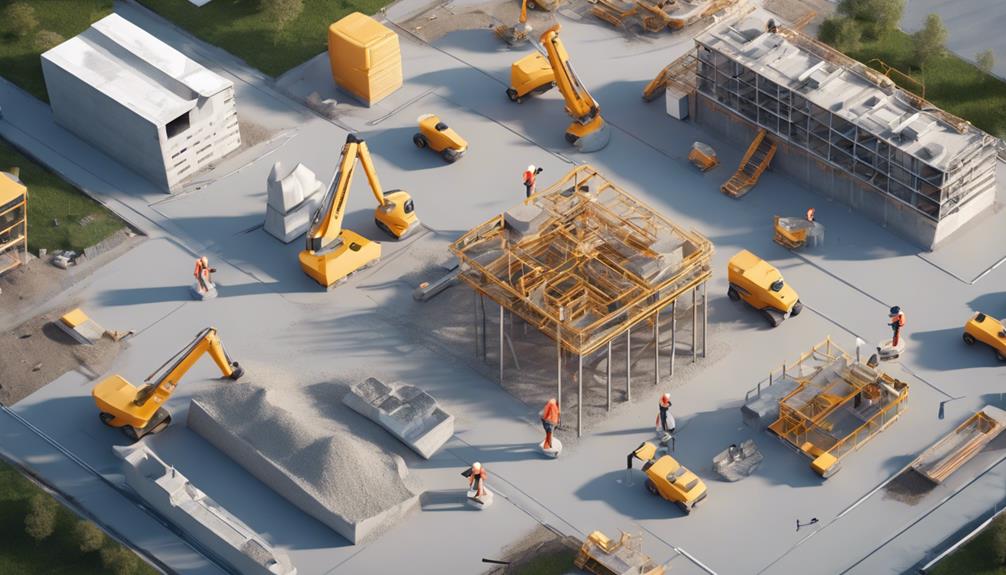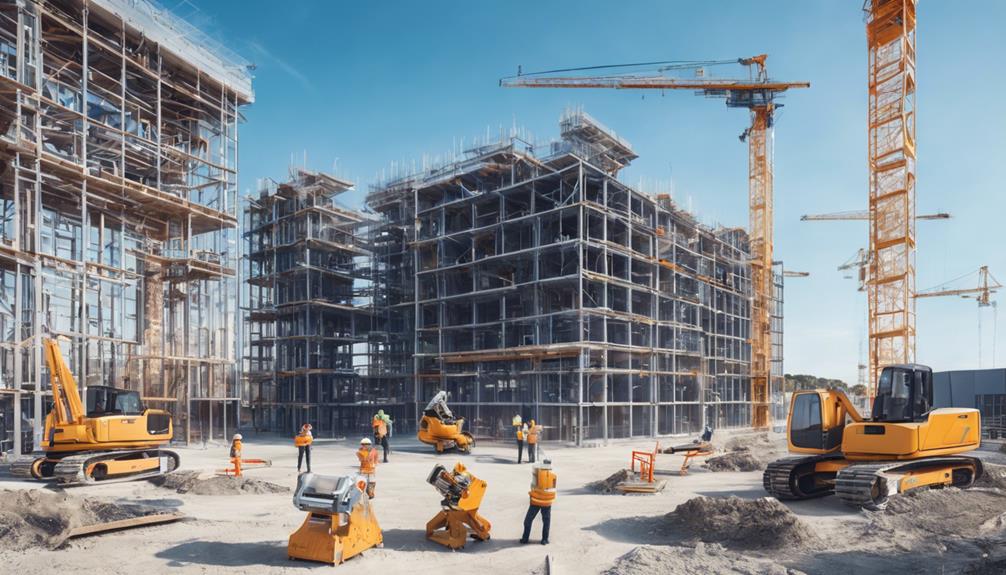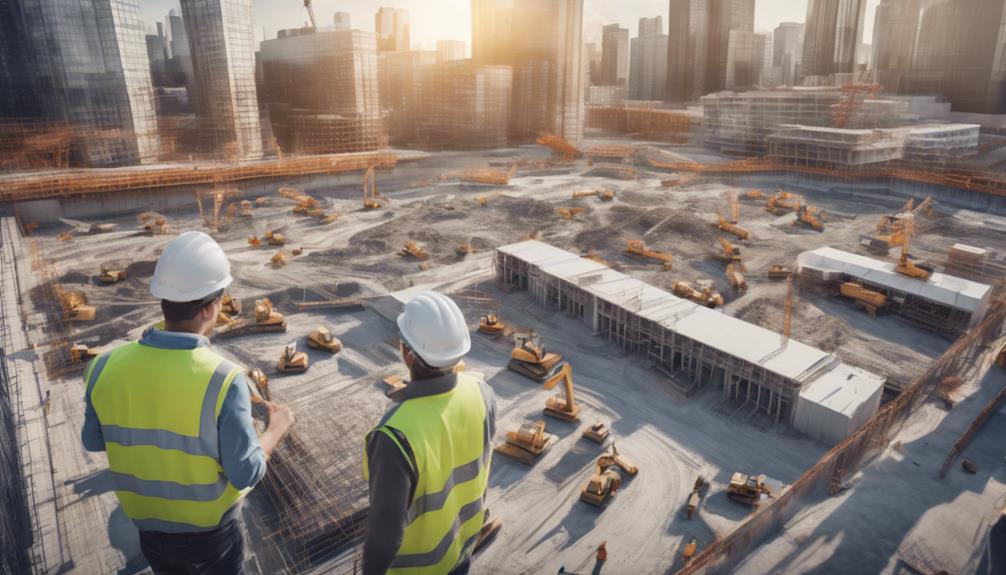
innovative tools revolutionize construction

Revolutionary Tools Transforming Commercial Construction Management

You're in the midst of a revolution in commercial construction management, where technologies like advanced BIM software, IoT monitoring, and AI-driven optimization are changing the game. Picture managing your project with 3D visualizations that integrate all data points and simulate scenarios to optimize resources. Imagine onsite IoT sensors tracking every aspect of your site's efficiency, while AI predicts timelines and automates decisions. Add to this drones and AR enhancing surveying and blueprint accuracy, and robots boosting onsite safety and efficiency. Each innovation not only streamlines processes but also paves the way for future advancements. Exploring these tools further might open up new possibilities for efficiency and precision in your projects.

Advanced BIM Software Capabilities

Advanced BIM (Building Information Modeling) software capabilities have transformed how you manage commercial construction projects. With state-of-the-art BIM tools, you're now able to visualize projects in stunning 3D, allowing for a deeper understanding of the construction process before breaking ground. This isn't just about seeing a building's structure; it's about experiencing the space, anticipating potential issues, and planning accordingly.

You can now integrate various data points into one cohesive model. For instance, by incorporating cost analysis and timelines directly into your BIM software, you're not only tracking the architectural design but also aligning it with budgeting and scheduling in real-time. This integration ensures that you stay on top of finances and timelines, reducing the risk of overruns.

Moreover, BIM software facilitates enhanced collaboration among stakeholders. Whether you're in the office or out in the field, you and your team can access and update models in real-time. This immediate exchange of information leads to more informed decision-making and a more synchronized project team.

Lastly, BIM's capability to simulate different construction scenarios helps you optimize processes and resource allocation. By foreseeing and mitigating challenges before they manifest on site, you enhance efficiency and productivity, ensuring smoother project execution.

IoT in On-Site Monitoring

Building on the capabilities of modern technology, the integration of the Internet of Things (IoT) in on-site monitoring has revolutionized your approach to managing commercial construction projects. With IoT, you can now seamlessly track real-time data from various sensors placed across the construction site. These sensors monitor a range of critical parameters including temperature, humidity, structural integrity, and even the presence of hazardous gases.

This constant flow of information enhances your ability to make data-driven decisions quickly. You don't have to wait for manual reports or routine checks. Instead, you get instant alerts if something's amiss, which means you can address potential issues before they escalate into costly delays or safety hazards.

Moreover, IoT devices help you oversee machinery and equipment usage, ensuring optimal performance and preventive maintenance.

What's more, the data collected from IoT sensors provides you with detailed insights into the efficiency of your site operations. You can analyze this data to identify patterns, predict project outcomes, and refine your strategies, leading to more efficient use of resources and improved project timelines. IoT doesn't just support your current project; it sets the stage for continuous improvement in all your future endeavors.

AI-Powered Project Planning

Harnessing AI-powered tools in project planning transforms how you tackle scheduling and resource allocation challenges in commercial construction. As you dive into this innovative approach, you'll notice a significant shift in how projects are mapped out. AI algorithms can predict project timelines more accurately by analyzing vast amounts of data from past projects. This capability enables you to foresee potential delays and adjust resources accordingly, ensuring that deadlines are met without compromise.

With AI, you're not just planning; you're predicting. It lets you simulate various scenarios to see the impacts of different decisions before making them. This means you can optimize your strategy based on solid data, rather than just intuition.

For instance, AI can help you decide the best time to order materials to avoid delays or price hikes, which is crucial in managing budget constraints effectively.

Moreover, these tools integrate seamlessly with other digital solutions you're already using, creating a cohesive system that enhances communication across all levels. You'll find that team coordination improves as everyone has access to real-time updates, making it easier to stay on track and adapt to any changes swiftly.

Robotic Automation Trends

As you explore the potential of AI in project planning, it's equally important to consider how robotic automation is reshaping the construction landscape. Robots are now taking over tasks that were traditionally manual, risky, or time-consuming, significantly boosting efficiency and safety on-site.

Imagine robotic arms that lay bricks or concrete precision-milled by automated machines. These aren't distant future scenarios; they're current trends that are transforming how buildings are constructed. Robots don't just work faster; they also work longer hours without fatigue, reducing project timelines dramatically.

You've likely heard about robots used for repetitive tasks, but today's models can adapt to complex environments. They're equipped with sensors and AI that allow them to navigate through construction sites, recognize patterns, and even respond to changes in their surroundings. This adaptability makes them invaluable for tasks like structural assembly or hazardous material handling, where precision and safety are paramount.

Moreover, robotic automation isn't just about the heavy lifting. It encompasses a range of support functions, from automated logistics on-site to real-time data collection, ensuring that every phase of construction is optimized for efficiency and cost-effectiveness. As you integrate these tools, you'll find they're not just changing the workflow; they're revolutionizing the entire building process.

Drone Technology for Surveying

Transitioning from ground to air, drone technology is revolutionizing the way surveying is conducted in commercial construction. You're now witnessing a significant shift where traditional methods, often slow and labor-intensive, are being replaced by agile, precise aerial solutions.

Drones provide you with a comprehensive view of your project site, capturing high-resolution images and data from vantage points that were once impossible or cost-prohibitive to reach.

By integrating drone technology, you're not just speeding up the surveying process; you're enhancing accuracy. Drones can quickly map large areas, reducing human error and the need for costly rework. They're equipped with advanced sensors and cameras that deliver real-time insights, allowing you to make informed decisions faster.

This technology also improves safety on your construction sites. You can now conduct surveys in potentially hazardous areas without risking worker safety. Drones monitor site conditions and progress, ensuring compliance with safety standards and helping you identify risks before they become problems.

Embracing drone technology in surveying means you're at the forefront of efficiency, safety, and precision. It's not just about keeping up; it's about staying ahead, transforming challenges into opportunities for innovation and growth in your construction projects.

Real-Time Collaboration Platforms

In the realm of commercial construction, real-time collaboration platforms are transforming how teams communicate and work together. You've likely experienced the frustration of delayed communications and mismanaged data, which can derail project timelines. Now, imagine a scenario where updates, documents, and feedback are exchanged in a flash among architects, engineers, and contractors, no matter where they are. This isn't just convenient; it's revolutionizing the industry.

You see, these platforms integrate various forms of communication into a single interface. You can share files, discuss project details, and manage tasks without switching between different apps. It streamlines processes and ensures everyone stays on the same page.

Moreover, the ability to track changes and access documents in real-time reduces errors and saves valuable time.

Think about the impact on your projects. Reduced misunderstandings, fewer delays, and a cohesive team working toward a common goal. With real-time collaboration tools, you're not just building structures; you're building efficiency.

As the industry evolves, staying updated with these technologies isn't just advisable; it's essential to maintain competitiveness and project success. Embrace these tools, and watch your projects transform.

Augmented Reality for Blueprints

Stepping into the world of augmented reality (AR) for blueprints offers profound advantages for commercial construction projects. Imagine you're walking through a physical construction site, but instead of carrying stacks of paper blueprints, you're equipped with AR glasses. You can see the digital overlays of the blueprints right on the actual building structures. This integration isn't just cool; it's revolutionizing how you visualize, interpret, and execute building designs.

With AR, you can spot discrepancies between planned designs and the current build instantaneously. This immediate feedback allows you to make corrections on the fly, reducing costly delays and reworks. You're not just looking at a flat diagram; you're experiencing the spatial relationships and dimensions in real-time, which enhances your understanding and decision-making capabilities.

Moreover, AR for blueprints facilitates better communication among your team. When everyone, from architects to engineers to builders, sees the same augmented reality, misunderstandings diminish significantly. You're all literally seeing the building from the same perspective.

This technology isn't just a step forward; it's a leap into efficiency and precision. As you adopt AR, you're not just following trends—you're setting them, ensuring your projects aren't only successful but also cutting-edge.

Sustainable Construction Innovations

Amidst the push for eco-friendliness, sustainable construction innovations are reshaping the industry. As you look to the future, you'll find that integrating green technology and methods into your projects isn't just an ethical decision—it's also economically wise.

You've likely heard about green roofs and solar panels, but the realm of sustainable construction goes beyond these visible markers. Advances in materials are pivotal. For instance, consider self-healing concrete, which incorporates bacteria that produce limestone to fill cracks that develop over time. This not only extends the material's lifespan but also reduces maintenance costs and resource usage.

Energy efficiency is another key area. Smart glass, which adjusts its transparency to control solar radiation entering a building, can drastically cut heating and cooling demands. You'll save on energy bills and enhance occupant comfort.

Moreover, the adoption of recycled and locally sourced materials is gaining traction. These practices reduce the carbon footprint associated with transport and production, and they often offer cost savings in the long term.

As you integrate these innovations, you'll not only adhere to stricter environmental regulations but also meet a growing consumer demand for sustainable living spaces. Remember, every green choice you make contributes to a larger global impact.

Modular Construction Breakthroughs

Modular construction is revolutionizing how we build, allowing projects to be completed faster and with less waste than traditional methods. Imagine having major components of a new building manufactured in a controlled factory setting. It's not just about efficiency; it's about precision, reducing the room for error seen on traditional sites.

You might wonder about the range of applications. Well, from hospitals to schools, modular units are being tailored to meet diverse needs. The entire rooms, complete with electrical and plumbing fixtures, are assembled off-site and transported to the location for final assembly. This shift not only speeds up construction timelines but also significantly cuts down on-site disruptions.

Moreover, this method enhances worker safety. By constructing in a controlled environment, risks associated with weather and on-site injuries are drastically minimized.

You're looking at a future where construction sites are less cluttered and more organized, making them safer and more efficient.

Machine Learning in Budgeting

Many construction firms are now leveraging machine learning to streamline their budgeting processes. You've likely encountered traditional methods, which often rely on manual data entry and gut feelings. But imagine a system where predictive analytics help you foresee cost overruns and save money before they even happen.

This isn't just a futuristic dream. Today, machine learning algorithms analyze historical data and ongoing project metrics to provide you with real-time budget forecasts. They spot patterns that you might miss and suggest where to cut costs without compromising quality.

For example, if material costs are fluctuating, the system can recommend the best time to buy or suggest alternative suppliers.

You'll also find these tools incredibly useful for labor allocation. By predicting the phases of your project that will require more manpower, you can optimize your workforce and avoid the extra cost of last-minute hires. These predictions are based on a multitude of factors, including past project timelines compared against the current progress.

Conclusion

You're on the brink of a construction revolution. With advanced BIM software, IoT monitoring, and AI in project planning, managing commercial construction is becoming more efficient. Robotic automation and drones are reshaping how tasks are performed, while augmented reality brings blueprints to life. Embrace sustainable and modular innovations to stay ahead. Machine learning is even simplifying budgeting. It's an exciting time to leverage these tools and transform how you build. Get ready to innovate and lead.

Related articles: What Are the Top Smart Building Technologies?

cutting edge tools for construction

What Are the Latest Tools for Construction Management?

The latest tools in construction management leverage advanced technologies like AI, IoT, and drones to boost efficiency and safety on your sites. You'll benefit from AI-driven analytics predicting project risks and optimizing hiring, while IoT sensors on-site track real-time data, enhancing operational decisions and preventing costly issues. Drones provide detailed site surveys quickly and safely. Additionally, cloud-based project management software and real-time collaboration platforms enable seamless communication and updates, ensuring everyone's on the same page. Explore further to uncover how these innovative tools can transform your approach to construction management.

Emerging AI Solutions in Construction

The construction industry is stepping up its game with the integration of emerging AI solutions. You're seeing a revolution unfolding right before your eyes, where AI assists in more than just administrative tasks. It's about enhancing accuracy and safety, too. AI-driven analytics can predict project risks before they become costly problems, saving you time and money.

Imagine drones equipped with AI, flying over your construction site. They aren't just capturing video; they're analyzing data to monitor progress and ensure compliance with safety standards. This technology spots potential hazards that might escape human oversight, thereby preventing accidents and enhancing worker safety.

AI isn't stopping there. It's reshaping hiring practices within the construction sector. By leveraging AI for HR tasks, companies can swiftly process thousands of job applications, identifying the most suitable candidates based on algorithm-driven insights. This not only speeds up the recruitment process but also ensures that the workforce is optimized for specific project needs.

As a stakeholder in the construction industry, you're positioned at the forefront of a significant shift. Embracing these AI tools doesn't just mean keeping up; it means staying ahead. It's about transforming challenges into opportunities and setting new benchmarks in construction efficiency and safety.

Advanced Project Management Software

Advancing beyond traditional methods, project management software now harnesses cutting-edge technology to streamline construction projects from inception to completion. You'll find that these tools are more than just digital spreadsheets; they're comprehensive platforms that manage every aspect of a project, ensuring that you're not just on track but ahead of schedule.

These advanced systems integrate planning, resource allocation, and performance monitoring to give you real-time insights into every phase of your construction project. Imagine automatically updating timelines and budgets as conditions change. You can adjust your strategies dynamically, minimizing downtime and maximizing efficiency.

The software's predictive analytics can also forecast potential delays or budget overruns, allowing you to mitigate risks before they become costly issues.

Moreover, cloud-based solutions mean you can access your project dashboard from anywhere, whether you're on-site or at your office. This ensures that all team members are on the same page, fostering a collaborative work environment that enhances productivity.

With these tools, you're not just managing a construction project; you're mastering it. Efficiently navigating through complexities, you ensure that every decision is data-driven and every action is as effective as possible, setting new benchmarks in construction management.

IoT Integration on Construction Sites

Integrating IoT on construction sites revolutionizes how you monitor and manage your projects. By embedding sensors and connected devices throughout your site, you're able to collect real-time data on everything from material usage to equipment health. This means you can anticipate problems before they become costly and ensure that your project stays on track.

Imagine sensors that alert you when a crucial piece of machinery begins to show signs of malfunction. You're not only saving on repair costs but also avoiding downtime that can derail your schedule.

Similarly, IoT devices can track the conditions of stored materials, ensuring that sensitive items like cement or paints are kept in optimal environments to prevent spoilage.

You'll also enjoy enhanced safety on your sites. IoT technology can monitor environmental conditions and alert workers when hazardous situations arise, such as extreme temperatures or the presence of toxic gases.

Wearables can track worker vitals, sending alerts if signs of fatigue or heatstroke are detected, ensuring that interventions can be made before any incidents occur.

With IoT, you're not just building; you're overseeing a highly efficient, data-driven operation that minimizes risks and maximizes productivity.

Real-Time Collaboration Platforms

Real-time collaboration platforms transform how teams communicate and coordinate on construction projects. You can access and update project details instantly from anywhere, ensuring everyone's on the same page. This means fewer misunderstandings and delays, which often plague large-scale construction.

Imagine you're working on multiple sites. Traditional methods might've required lengthy phone calls or physical meetings to align project goals and updates. Now, you can simply log into a platform, and see real-time updates, share documents, and manage schedules with a few clicks.

It's not just about sharing files; these platforms allow for live editing, so you can make real-time changes to blueprints or schedules, while discussing these adjustments with your team through integrated chat features.

Moreover, these platforms support decision-making by providing tools like task management and progress tracking. You can set milestones and monitor them as they're achieved, adjusting resources and timelines as needed. They also integrate with other software, enhancing functionality and allowing for a more comprehensive management approach.

In essence, these tools aren't just improving communication; they're revolutionizing the management of construction projects, making them more efficient and connected. You're not just building structures; you're building smarter, faster, and more collaboratively.

Drone Technology for Site Surveying

While real-time collaboration platforms enhance the way teams manage and interact on projects, drone technology is reshaping site surveying by providing a bird's-eye view that's hard to match. You can now capture comprehensive data in a fraction of the time it once took. Imagine you're overseeing a large-scale construction project. By deploying drones, you're not just speeding up the survey process but also drastically reducing human error.

Drones excel in accessing hard-to-reach areas. Whether it's soaring over uneven terrain or buzzing around obstructed sites, they collect high-resolution images that give you a detailed lay of the land. You'll see real-time updates directly on your device, enabling quick decisions and adjustments.

Moreover, you're not limited to simple visuals. Modern drones are equipped with advanced sensors that can measure elevations, track changes, and even assist in environmental assessments. This isn't just about snapshots; it's about gathering multifaceted data that feeds into a digital replica of your site.

Embrace this tech to not only streamline your operations but also safeguard your team. Drones minimize the need for manual site checks, reducing safety risks. It's clear that integrating drone technology into your workflow isn't just smart; it's a game-changer.

Conclusion

You've just explored the cutting-edge tools transforming construction management. From AI-driven solutions optimizing efficiency to advanced software streamlining project oversight, these innovations are game-changers. Integrating IoT enhances on-site safety and operational insights, while real-time platforms ensure seamless team communication. Plus, drone technology revolutionizes site surveying, offering detailed aerial views. Embracing these tools not only elevates your project management capabilities but also positions you at the forefront of industry advancements.

Related articles: Revolutionary Tools Transforming Commercial Construction Management

innovative tools revolutionize construction

Why Are New Construction Management Tools Game-Changers?

New construction management tools are game-changers because they dramatically improve how you oversee building projects. With features like real-time collaboration, you can instantly update and share project details, ensuring everyone's in sync. Automated task management streamlines daily operations, significantly reducing the chance of human error and boosting productivity. Moreover, advanced visualization tools allow you to overlay 3D models onto real terrain, spotting potential issues early. These innovations not only keep your projects on schedule and within budget but also elevate overall operational efficiency. With every project detail optimized, you're well-poised to achieve unprecedented success. Discovering more about these tools could further transform your approach to construction management.

Enhanced Project Visualization

Project managers' tools have evolved significantly, with enhanced project visualization leading the charge in transforming the construction management landscape. Imagine you're overseeing a sprawling construction site. You've got deadlines to meet and myriad teams to coordinate. In your arsenal now, you have advanced visualization software that transforms complex data into clear, actionable graphics. These tools aren't just fancy tech—they're your insight into a project's every detail.

You can now see 3D models of upcoming structures overlaid directly onto real-world terrain, all on your tablet screen. This isn't just about seeing a building rise from the ground; it's about spotting potential issues before they become costly.

You're not flipping through stacks of blueprints anymore. Instead, you swipe through layers of your project, adjusting timelines and resources with a tap.

Visualization software also allows you to share these insights seamlessly with your team. Whether it's a subtle shift in the plumbing layout or a major architectural feature, you see it first, ensuring everyone's on the same page.

It's about preempting problems and planning with precision. Enhanced visualization isn't just reshaping your workflow; it's redefining how efficiently you can bring a project from conception to completion.

Real-Time Collaboration Boost

Building on the advancements in visualization, real-time collaboration tools have significantly ramped up the efficiency of construction management. You've likely noticed how seamless project coordination can be when everyone's literally on the same page.

With tools like cloud-based platforms, you can now update, share, and review project details instantaneously with all stakeholders, no matter where they are. This isn't just convenient; it's transformative.

Imagine you're on-site and spot a potential issue. Instead of calls or emails that might go unanswered for hours, you drop a pin on a shared digital blueprint and flag it. The architect sees your update in real time, assesses the issue, and responds directly on the same platform. Changes are immediate and transparent, reducing downtime and misunderstandings that can lead to costly delays.

Moreover, these tools integrate seamlessly into mobile devices, making them accessible for field workers who aren't tethered to a desk. You get real-time updates from the ground, and they get immediate feedback and instructions. It's a dynamic, interactive process that keeps projects fluid and timelines tight.

Real-time collaboration doesn't just keep your project on track; it propels it forward, ensuring efficiency and adaptability are always part of the plan.

Automated Task Management

While real-time collaboration tools streamline communication, automated task management systems take project efficiency to the next level. These systems allow you to automate routine tasks, effectively cutting down the time you spend on daily management activities. Imagine not having to manually assign tasks every day or track progress through endless emails. Automated task management does this for you, integrating seamlessly into the overall project workflow.

As a project manager, you're constantly juggling multiple tasks, from scheduling to resource allocation. Automated systems provide you with tools that instantly update and notify team members about changes or new assignments. This means you can focus more on critical decision-making rather than getting bogged down by administrative tasks.

Moreover, these systems offer customizable templates that adapt to your specific project needs, ensuring that no detail is overlooked.

What's more, the automation of repetitive tasks reduces the likelihood of human error, enhancing the overall quality of the project. You'll see an improvement in task completion rates and a noticeable boost in team productivity. By leveraging automated task management, you're not just keeping projects on track; you're setting a new standard for operational excellence in your field.

Improved Budget Tracking

Effective budget tracking is crucial for the success of any construction project. You've likely experienced the headache of budget overruns and unexpected project costs that weren't accounted for in your initial plans. With new construction management tools, you're now equipped to monitor financial health in real time, ensuring that every dollar is allocated and used as planned.

These tools integrate seamlessly into your existing workflows, pulling data from various sources to give you a comprehensive view of your project's finances. You can see where you're spending the most money and identify potential savings with a few clicks. This means you're not just reacting to financial issues as they arise; you're anticipating them and adjusting course proactively.

Moreover, the ability to share this financial data across teams helps everyone stay on the same page. You're not left in the dark wondering if a particular department is overspending or if you can afford that extra material cost. Everyone can access the budget status, which enhances collaboration and accountability.

This is how you keep your project on track and within budget, without the constant back-and-forth and guesswork that used to define construction project management. It's not just about spending less, it's about spending smarter.

Advanced Safety Features

With the integration of advanced safety features in construction management tools, you're now better equipped to protect your workforce and minimize risks on site. These tools leverage cutting-edge technologies such as AI and IoT to monitor safety conditions in real-time, alerting you immediately to potential hazards.

Imagine sensors embedded in construction gear that measure heat stress or fatigue levels; this isn't just possible, it's already happening. You're able to receive data-driven insights that prompt you to make timely decisions, significantly reducing the risk of accidents.

Moreover, wearable devices can track the location of each team member, ensuring that everyone is accounted for, especially in case of an emergency.

These tools don't just passively monitor; they actively engage in preventing accidents. With functionalities like automated compliance checks, you're constantly aware of whether safety protocols are being followed. This not only helps in maintaining high safety standards but also shields you from potential legal repercussions.

Streamlined Resource Allocation

Construction management tools have revolutionized the way you allocate resources, ensuring optimal efficiency and reduced waste. With these tools, you're now able to see real-time data on resource usage and adjust quickly to project demands. This means you're not left guessing how many materials or workers are needed on a daily basis. The precision cuts down on over-ordering and underutilizing, saving you significant money and time.

These tools also allow you to track resources across multiple projects simultaneously. You can shuffle materials, tools, and labor from one site to another with ease, maximizing the use of every asset at your disposal. It's all about having the right resources in the right place at the right time, and modern software makes this easier than ever.

Moreover, the streamlined process reduces delays caused by resource shortages or misallocations. You're better equipped to meet deadlines and keep your projects on track. This not only enhances your reputation but also boosts client satisfaction, as they see consistent, efficient progress.

In essence, these tools don't just help you manage resources; they enhance your entire operation, making you more competitive in a busy market.

Robust Data Analytics

Building on the efficient management of resources, robust data analytics further empower you to extract valuable insights from every aspect of your construction projects. You've got a wealth of data at your fingertips—from cost performance and material usage to labor productivity. But it's not just about collecting data; it's how you use it that counts.

With advanced analytics tools, you can now predict trends, foresee potential delays, and optimize processes like never before. Imagine being able to anticipate cost overruns before they happen or adjust your staffing levels based on precise productivity data. That's the power you hold. These tools aren't just reactive; they're proactive, giving you the ability to steer your project dynamics actively rather than just responding to them.

It's about making informed decisions that keep your project on track and within budget. Moreover, data analytics don't just help you manage a single project. They enable you to assess performance across multiple projects, identifying best practices and areas for improvement. By integrating these insights, you're not just completing projects; you're continually enhancing your operational strategies.

This ongoing refinement leads to greater efficiency, reduced waste, and ultimately, higher profitability and client satisfaction in your construction endeavors.

Eco-Friendly Building Practices

Sustainability is becoming a cornerstone in modern construction management. As you delve into the latest tools and practices, you'll find that eco-friendly approaches aren't just good for the planet; they also make financial sense. Integrating green technology and sustainable materials can drastically reduce waste and energy consumption, leading to significant cost savings over time.

For instance, using recycled materials in your projects not only cuts down on waste but also lessens the demand for virgin resources, which are often more expensive and environmentally taxing to process.

You'll also see a trend toward more sustainable energy solutions, like solar panels and wind energy, which can be integrated into building designs. These aren't just for show; they contribute to a building's energy efficiency and can dramatically lower operating costs.

Moreover, managing a construction project with an eye toward sustainability helps you comply with increasingly stringent environmental regulations. You'll avoid potential fines and boost your company's reputation by demonstrating commitment to green practices.

Remote Monitoring Capabilities

Nearly all modern construction sites can benefit from remote monitoring capabilities, which allow project managers to oversee operations without being physically present. Imagine you're managing multiple projects spread across the city or even across the country. With remote monitoring, you can check in on any site at any time from your smartphone or computer.

This isn't just about watching live feeds; it's about accessing real-time data on project progress, resource allocation, and workforce management. You'll find that remote monitoring tools integrate seamlessly with other tech solutions like project management software and IoT devices. This integration means you're not just seeing what's happening; you're analyzing performance data that helps predict and resolve potential issues before they escalate.

For instance, if a section of your construction project is falling behind schedule, you can pinpoint the problem and address it promptly. Moreover, remote monitoring enhances safety standards by allowing continuous oversight of compliance practices and immediate response in case of an emergency. You're always in the loop, ensuring that safety protocols are followed diligently.

Embracing these capabilities doesn't just save time; it significantly reduces travel costs and minimizes delays, making your projects more efficient and cost-effective. Consider how leveraging these tools can transform your approach to construction management.

Conclusion

You've seen how new construction management tools are reshaping the industry. From real-time collaboration to advanced safety features, these tools aren't just upgrades; they're revolutionizing how projects come to life. With capabilities like robust data analytics and eco-friendly practices, you're not only building more efficiently but also more responsibly. Embrace these game-changers to stay ahead in a competitive field, ensuring every project you undertake is smarter, safer, and more sustainable. Isn't it time you stepped up your game?

Related articles: What Are the Latest Tools for Construction Management?

construction tech breakthroughs described

Top 3 Construction Management Tech Innovations

As you explore current trends in construction management, you'll find that advanced BIM software, IoT integration, and AI-powered project management tools are leading the way. Advanced BIM software not only allows for 3D visualization of complex structures but also predicts their behavior over time, enhancing communication and collaboration among professionals. Meanwhile, IoT technologies optimize material usage and enhance safety through real-time monitoring via connected devices and wearables. Lastly, AI tools remarkably predict project timelines and budget variances, adapting quickly to new data to optimize resources and improve stakeholder communication. These innovations promise more efficient, safer, and more predictable construction projects, compelling you to look further into how they transform the industry.

Advanced BIM Software Capabilities

With the advent of advanced BIM (Building Information Modeling) software capabilities, construction management has entered a new era of precision and efficiency. You'll find that utilizing these tools, you can visualize complex infrastructures in 3D before even breaking ground. This isn't just about seeing a building in high definition; it's about integrating data that predicts how buildings will behave over time.

Imagine you're planning a multi-story residential complex. With BIM, you can access simulations that show how different design choices impact everything from structural integrity to energy efficiency. You can tweak materials, layouts, and systems early in the design phase, saving you costly corrections during construction.

Moreover, BIM facilitates better communication. Since the model is accessible and understandable to architects, engineers, and contractors, you're all literally on the same page. Misinterpretations and errors diminish because updates are instantaneous and universally visible.

You're not just constructing a building; you're nurturing a fully coordinated symphony of stakeholders.

In essence, BIM isn't just another software tool; it's a transformative approach that streamlines decision-making and enhances collaboration. As you integrate these capabilities, you'll notice not just improvements in how you manage projects, but in the outcomes themselves.

IoT Integration in Construction Sites

IoT technology is transforming construction sites, making them smarter and more efficient. As you step onto a modern construction site, you'll notice a network of connected devices streaming real-time data to a centralized platform. This isn't just convenient; it's revolutionizing how projects are managed and executed.

For instance, sensors placed throughout the site monitor structural health, environmental conditions, and equipment status. This means you can anticipate problems before they escalate, reducing downtime and maintenance costs.

You'll also find wearables that track worker location and vitals, enhancing safety by alerting you to potential hazards or fatigue-related risks.

Moreover, IoT enables automated resource tracking. Imagine knowing exactly where your materials and machinery are at any given moment, optimizing usage and preventing theft. This level of oversight ensures that you're not just saving time and money, but also running a tighter, more secure operation.

This integration doesn't just affect day-to-day operations; it impacts overall project outcomes. With continuous data collection, you're not just reacting to issues; you're predicting and planning with unprecedented precision. This proactive approach minimizes risks and boosts efficiency, pushing your projects towards success with every data point collected.

AI-Powered Project Management Tools

Building on the technological advancements seen with IoT, AI-powered project management tools are redefining efficiency in construction management. These tools leverage machine learning algorithms to forecast project timelines, budget variances, and potential risks with an accuracy that traditional methods can't match. You'll find that these AI systems can adapt to new data as your project progresses, ensuring that all predictive models are up-to-date and reflective of the current state of affairs.

Moreover, AI-driven analytics help you identify inefficiencies in your workflow, allowing you to optimize resource allocation and crew scheduling. This isn't just about tracking progress; it's about preemptively solving problems before they escalate. Imagine being alerted the moment a potential delay is detected, or when cost overruns are projected. That's the level of oversight you get.

These tools also foster better communication among stakeholders. Everyone from the ground crew to top-level management has access to real-time updates, fostering a collaborative environment that ensures everyone is on the same page. This integration significantly reduces misunderstandings and errors, streamlining operations and boosting productivity.

Embrace these tools, and you'll see not just improvement in project management efficiency but also in the overall outcome of your construction projects.

Conclusion

You're stepping into a future where construction management is more efficient than ever. With advanced BIM software, you can visualize complex projects in stunning detail. IoT integration on your sites ensures that every piece of equipment and material is tracked in real time. And with AI-powered tools at your disposal, managing your projects becomes a breeze, minimizing delays and reducing costs. Embrace these top tech innovations and watch as they revolutionize the way you build.

Related articles: Why Are New Construction Management Tools Game-Changers?

construction management software tools

Top 3 Construction Management Tech Tools

You'll significantly enhance your construction management capabilities with three key tech tools. First, Building Information Modeling (BIM) software lets you plan, design, and manage projects with integrated, strategic data utilization. Next, drones elevate the precision and monitoring of your sites, capturing critical data and reducing the need for hazardous inspections. Lastly, mobile project management apps put real-time control and decision-making right in your hands, streamlining task management and integrating essential tools like GPS. These technologies not only streamline operations but also improve communication and efficiency across your projects. Explore further to see how these tools can transform your approach.

Exploring BIM Software

Building Information Modeling (BIM) software revolutionizes how you plan, design, and manage construction projects. It's not just about creating detailed digital models; it's about bringing all aspects of the construction process into a cohesive, manageable form.

You can integrate data related to design, construction sequences, and even facilities management. This integration allows for more informed decision-making throughout the lifecycle of a project.

You'll find that BIM goes beyond traditional blueprints. It enables you to simulate and analyze potential impacts before physical work begins, reducing the risk of errors and the need for costly corrections during construction. This capability is crucial, especially in complex projects where the scope or the environmental conditions can change unexpectedly.

Moreover, BIM facilitates better communication among all stakeholders. By having a shared model, you, your architects, engineers, and builders can all access the same information in real-time. This transparency helps to keep everyone on the same page and can significantly reduce misunderstandings and delays.

Using BIM, you're not just building structures; you're harnessing technology to foresee and solve problems, optimize resources, and streamline your operations. It's a tool that turns your data into a strategic asset, making your project more efficient from conception to completion.

Advantages of Drones

Drones are revolutionizing the construction industry by providing a bird's-eye view that enhances precision and efficiency on-site. You can monitor large-scale projects in real-time, ensuring that every detail aligns with your plans. This aerial advantage isn't just about oversight; it's about integrating high-resolution imagery and data to streamline operations and boost productivity.

Imagine you're tracking the progress of a multi-acre development. With drones, you're not just observing; you're capturing essential data that can be analyzed to predict potential issues before they become costly. They help you maintain a safer job site by reducing the need for physical inspections in dangerous or hard-to-reach areas. This means you're not only safeguarding your crew but also cutting down on the time and resources typically spent on manual safety checks.

Furthermore, drones facilitate better communication. By sharing updated aerial visuals, you can keep stakeholders informed and engaged, regardless of their physical location. This transparency builds trust and helps maintain project timelines.

Incorporating drones into your workflow isn't just a tech trend; it's a strategic move that enhances site management, safety, and stakeholder satisfaction. You'll wonder how you ever managed without them.

Mobile Project Management Apps

While drones offer a high-level perspective, mobile project management apps bring project control directly to your fingertips. These apps allow you to manage every aspect of your construction projects, from scheduling and budgeting to communication and documentation, all from your smartphone or tablet. You're no longer tethered to a desk; you can access real-time data and make decisions on the go.

With these apps, you can quickly update project timelines, approve changes, and monitor progress without needing to be on-site. This flexibility is crucial in today's fast-paced construction environments where time is money, and delays can be costly.

You'll find features like task management tools, which let you assign and track work as it's completed. You can also share documents and photos instantly, ensuring that everyone on your team is on the same page, reducing misunderstandings and errors.

Moreover, these apps often integrate with other tools like GPS and weather forecasting, providing you with all the information you need to manage your projects efficiently. They're designed to be user-friendly, so you don't need to be a tech expert to take full advantage of their capabilities.

Embracing mobile project management apps means you're setting up your projects for success, streamlining communication, and enhancing productivity.

Conclusion

In wrapping up, you've seen how BIM software, drones, and mobile project management apps revolutionize construction management. You'll streamline your projects, enhance accuracy, and boost efficiency by integrating these tools. Embrace BIM to create detailed digital models, leverage drones for real-time site surveillance, and manage tasks on-the-go with mobile apps. Don't let traditional methods hold you back—adopt these top tech tools and lead your construction projects to success with less hassle and higher precision.

Related articles: Top 3 Construction Management Tech Innovations

construction innovation transforming industry

Revolutionary Breakthroughs Disrupting Commercial Construction

You're experiencing the future of commercial construction, molded by revolutionary breakthroughs that are dramatically transforming the way buildings come to life. Smart building materials adapt to environmental changes, slashing maintenance costs and boosting durability. Modular construction and advanced prefabrication methods streamline the building process, ensuring faster, waste-reduced assembly that doesn't compromise on quality. From 3D printing creating complex, sustainable structures, to autonomous machinery and robotics enhancing precision and efficiency, you're at the forefront of an industry evolving at an unprecedented pace. This surge in innovation not only refines how projects are executed but also opens up incredible possibilities in design and sustainability. Uncover what lies ahead and how it could redefine your projects.

Smart Building Materials

One often hears about innovations that promise to transform industries, but smart building materials genuinely revolutionize commercial construction. These aren't your standard bricks and mortar. Imagine materials that adapt to environmental changes, conserve energy, and even self-heal. You're not just building; you're investing in the future of infrastructure.

Take phase-changing materials (PCMs), for instance. Integrated into walls or ceilings, they absorb or release heat depending on the temperature, maintaining a building's internal environment. You'll appreciate this on a sweltering summer day or a freezing winter night without the high energy bill that typically accompanies comfort.

Then there's self-healing concrete. Infused with bacteria that produce limestone, it fills cracks formed over time. It's like having a maintenance crew built right into the structure, continually working to extend its lifespan.

These innovations don't just add to the cost; they're cost-saving in the long run. They reduce maintenance expenses, energy consumption, and even insurance premiums due to their enhanced durability.

As you plan your next project, consider how smart materials can't only save money but also create a building that stands out for its innovation and sustainability.

Modular Construction Techniques

Shifting focus to modular construction techniques, you'll find this method streamlines the building process significantly. You're not just saving time; you're also reducing waste. Imagine constructing whole building sections in a factory setting—this is the heart of modular construction. Here, large modules are built, including walls, ceilings, and floors, which are then transported to the construction site.

Once on site, these modules are assembled much like building blocks. It's straightforward and fast. You're likely to see a building come together in a fraction of the time it takes for traditional construction methods. This isn't just efficient; it's also incredibly precise. Factory settings allow for tighter controls and adherence to specifications, which means fewer discrepancies and errors.

Moreover, you're not dealing with the usual delays typical of on-site construction. Weather delays? Less problematic. Material shortages? Not as likely. Everything needed is pre-arranged and crafted off-site, reducing the chance of unexpected hold-ups.

This method isn't just about efficiency, though. It also promotes sustainability. With less waste and a reduced need for on-site resources, you're contributing to a greener building process. Embracing modular construction doesn't just meet current demands—it's a step towards the future of building.

Advanced Prefabrication Methods

As the construction industry evolves, advanced prefabrication methods are paving the way for even more efficient building processes. You've likely noticed how swiftly new buildings are springing up, and much of this speed is thanks to these innovative techniques. Prefabrication isn't just about speed; it's also significantly reducing waste and improving safety on construction sites.

Imagine components like walls, floors, and roof trusses being assembled in a controlled factory setting before being transported to the site. This shift means you're seeing fewer delays due to weather, and there's less noise and disruption at the construction site itself.

It's not just about assembling parts faster; it's about smarter, sustainable building.

You're also seeing a surge in customization options. Unlike traditional methods that might limit design due to onsite constraints, prefabrication offers the flexibility to explore more complex designs and integrate various materials. These components are engineered with precision, ensuring that when they arrive on site, they fit together perfectly, reducing the need for adjustments and modifications.

This method isn't just transforming how quickly buildings can go up; it's revolutionizing the quality and efficiency of construction projects, turning what used to be months of work into weeks. You're witnessing a significant shift in how structures come to life, reshaping skylines faster than ever before.

3D Printing in Construction

Building on the momentum of advanced prefabrication methods, 3D printing technology is setting new standards in the construction industry. You've likely heard about 3D printing for small gadgets or even medical applications, but it's now revolutionizing how large structures are built.

This isn't just about innovation for the sake of it; you're looking at a future where construction times plunge and design possibilities expand beyond traditional methods.

Imagine you're constructing a complex, curved facade that would typically require intricate molds and a lot of manual labor. With 3D printing, you can produce these unique shapes directly from a digital model, drastically reducing both the time and cost.

Moreover, the materials used in 3D construction printing, such as concrete and composites, are evolving to offer greater durability and sustainability. This means you're not only speeding up the building process but also contributing to a greener construction environment.

Beyond just the practicalities, think of the creative freedom this technology grants architects and designers. Complex geometries that once seemed far-fetched or too costly to consider are now within reach. You're witnessing a shift where the only limit to what can be built is the imagination itself.

Autonomous Construction Machinery

The integration of autonomous construction machinery is transforming the way projects are executed. Imagine you're overseeing a construction site where robots and autonomous vehicles do the heavy lifting. You're no longer tied down by the limitations of human endurance, and the risks associated with dangerous tasks are significantly reduced. This isn't just a glimpse into the future; it's the reality you can tap into today.

Autonomous machinery includes drones that survey sites and robots that lay bricks or tie rebar, all without a human hand guiding them. You'll find these machines can work around the clock, boosting productivity exponentially. Moreover, they're programmed to follow precise specifications, reducing errors and material waste. This accuracy not only saves money but also speeds up the overall construction timeline.

Imagine a world where you can deploy a fleet of machines at the touch of a button. Scheduling becomes a breeze as these autonomous units are synced to a central system, ensuring seamless operation. You're able to monitor progress remotely, making adjustments in real-time and predicting project timelines more accurately.

This level of automation in construction isn't just convenient; it revolutionizes how you plan, execute, and complete projects. Embrace this change, and you'll lead the way in building smarter, faster, and safer.

Green Building Innovations

Several green building innovations are reshaping the construction landscape, making it more sustainable and efficient. You're seeing the rise of materials that not only reduce the ecological footprint but also provide better performance. For instance, bio-based materials like hempcrete and recycled plastic are becoming more prevalent. They offer significant insulation properties and durability, drastically cutting down on energy costs.

You'll also find that green roofs are no longer a novelty but a necessity in urban design. These living roofs don't just beautify buildings; they contribute to thermal regulation and improve air quality, making your projects stand out for their eco-credentials.

Additionally, the integration of solar technology has shifted from optional to essential. Photovoltaic glass isn't just for rooftops anymore; it's being incorporated into the very facade of buildings, transforming every surface into an energy-harvesting powerhouse.

Moreover, the push for net-zero buildings is creating a competitive edge in the market. As you adopt these standards, you're not just following trends; you're setting them. Building projects that prioritize sustainability are attracting more investors and tenants who are eager to align with green values. This shift isn't just good for the planet, it's smart business.

Augmented Reality Applications

Augmented reality (AR) is revolutionizing your approach to commercial construction projects. By overlaying digital information onto the real world, you're able to visualize architectural designs and structural elements in real-time at the construction site. This isn't just about seeing a 3D model on a screen; it's about integrating that model with the physical space to enhance both understanding and communication.

Imagine you're walking through an unfinished building, but through your AR headset, you see the completed version. Walls, electrical systems, and plumbing that haven't been built yet appear before your eyes. This helps you spot potential issues before they become costly mistakes. It's like having a glimpse into the future, allowing you to make adjustments that save time and money.

Furthermore, AR facilitates real-time collaboration among various stakeholders. You can share what you're seeing with a remote team member, who can provide instant feedback or make design changes on the fly. This level of interaction ensures everyone's on the same page, reducing misunderstandings and delays.

As you adopt AR tools, you're not just keeping up with technology—you're staying ahead. In a competitive field like construction, AR isn't just useful; it's becoming essential to maintaining your edge.

Internet of Things Integration

While augmented reality enhances visualization in commercial construction, integrating the Internet of Things (IoT) propels your project management capabilities to new heights. Imagine sensors embedded throughout your construction site, constantly feeding data back to your central system. You're not just overseeing a project; you're receiving real-time insights on everything from material durability to environmental conditions.

This isn't the future—it's your new reality with IoT.

You can track the location and operation of equipment, monitor structural health, and even predict maintenance needs before they become costly. IoT devices make your job site smarter; they communicate issues immediately, allowing you to address them swiftly and efficiently. It's all about minimizing downtime and enhancing productivity.

Moreover, IoT integration means you're better equipped to ensure worker safety. Sensors can alert you to hazardous conditions, reducing the risk of accidents and reinforcing a culture of safety. Plus, with IoT, your resource management becomes more precise. You'll know exactly when to reorder materials and optimize your inventory, avoiding both surpluses and shortages.

Robotics and Automation Advances

As the commercial construction industry embraces robotics and automation, your project's efficiency and precision are set to soar. You'll witness a remarkable transformation in how structures are built as machines and automated systems undertake tasks that were once manually intensive.

Drones now conduct site surveys with pinpoint accuracy, allowing for precise measurements and faster project initiation.

You're also seeing robots lay bricks and install drywall, tasks that not only move swiftly but with a consistency that minimizes errors and material waste. These advances aren't just speeding up construction; they're enhancing worker safety. Robots can operate in hazardous conditions where human safety would be at risk, reducing workplace accidents and increasing overall site security.

Moreover, automated machinery is revolutionizing supply chain logistics within construction. Automated guided vehicles efficiently transport materials across sites, streamlining operations and cutting down on delays.

This integration of robotics ensures that you're not just meeting deadlines but are also capable of handling more complex projects with greater cost effectiveness.

Embrace these technologies to stay competitive. As automation becomes more advanced, being at the forefront will ensure your projects aren't only successful but also landmarks of innovation in construction.

Conclusion

You're witnessing an era where innovation reshapes commercial construction profoundly. Smart materials and modular techniques cut costs and time, while advanced prefabrication and 3D printing push boundaries. Autonomous machinery and green innovations are making sites safer and more sustainable. With augmented reality and IoT, you're more connected than ever, overseeing projects with precision. And with robotics and automation, you're not just building; you're revolutionizing every step. Embrace these changes—they're not just trends, they're the future.

Related articles: Top 3 Construction Management Tech Tools

cutting edge construction tech quiz

Quiz: Discover the Newest Construction Tech Innovations

You're entering an era where construction technology leaps forward, transforming mundane tasks into high-tech operations. Imagine robots streamlining construction sites with enhanced precision, while 3D printers craft buildings right before your eyes. Don't forget the smart wearables that not only boost safety but also ramp up efficiency by integrating real-time data and 3D visualization. Drones and AI are turning project management into a realm of high accuracy and predictive prowess, revolutionizing how deadlines and budgets are handled. If you're curious about how these innovations could change the game, there's more just around the corner to spark your imagination.

Exploring Automated Robotics

Automated robotics are revolutionizing the construction industry, enhancing both speed and precision on job sites. You'll find these mechanical marvels performing a range of tasks that traditionally required human hands, now executed with machine-like efficiency. They're laying bricks, cutting massive beams, and installing windows, transforming the way buildings rise from the ground.

Imagine you're managing a large-scale project. With robotic arms, you're not just speeding up the construction process but also reducing the risk of human error and workplace injuries. These robots come equipped with sensors and AI capabilities that allow them to adapt to different tasks and environments, increasing their utility across various stages of construction.

Moreover, the integration of robotics in construction isn't just about the heavy lifting. It's also about the intricate and detailed work. Robots are now programmed to handle tasks that require high precision, such as electrical installations and plumbing. This shift not only boosts productivity but also ensures standards are met with unparalleled accuracy.

Embracing this technology can significantly alter your project timelines and budgets. By reducing labor costs and downtime, your projects could finish ahead of schedule and under budget, setting new standards in the construction industry.

Advancements in 3D Printing

While robotics streamline many construction processes, 3D printing technology is reshaping how we think about building structures from the ground up. You're now witnessing a revolution where the ability to print complex, customized shapes and structures isn't just a possibility—it's a reality. This isn't just about small models or components; entire buildings, bridges, and even houses are being constructed with 3D printers, using materials ranging from concrete to polymers.

You've probably seen how fast a 3D printer can work, but here's what's really transformative: the reduction in waste and costs. Traditional construction methods often lead to significant material waste, but 3D printing is precise, using only the material needed for each specific part of a structure. This efficiency isn't just good for your budget; it's also better for the environment.

Moreover, the flexibility of 3D printing allows for designs that were once considered too complex or too costly to be feasible. Imagine creating curved walls or intricate facades without the hefty price tag. That's the power you're tapping into with these advancements.

As you explore these innovations, think about the endless possibilities that 3D printing brings to the future of construction.

Smart Wearables on Site

Shifting focus to the job site, smart wearables are revolutionizing how you interact with your surroundings. Imagine slipping on a smart helmet that not only protects your head but also feeds you real-time data about construction site hazards.

Or consider smart gloves that enhance your manual dexterity and record your tasks, ensuring you're following safety protocols precisely.

These gadgets aren't just futuristic novelties; they're practical tools that boost safety and efficiency. For instance, smart glasses can display 3D models of the project you're working on, right in your line of vision. You don't need to juggle between blueprints and the actual work anymore; everything's visually integrated.

Moreover, some wearables monitor your health metrics, alerting you to take a break or hydrate if your biometrics show signs of strain. It's like having a personal health advisor right on your wrist.

These advancements mean you're better equipped to handle the demands of modern construction sites. They reduce errors, enhance safety, and ensure that projects are completed faster and with greater precision. Embracing these tools can significantly alter how you approach your daily tasks, making every action informed and every decision safer.

Drone Technology for Surveying

Drones are transforming the way you survey construction sites, offering a bird's-eye view that improves accuracy and speeds up the process. Imagine deploying a drone to map out a vast area in minutes, which traditionally could take days. You're not only saving time but also reducing the manpower needed on the ground.

These high-flying tools come equipped with advanced cameras and sensors that capture detailed images and data. This means you can get real-time insights into the terrain and existing structures, enabling precise measurements and better planning.

You'll spot potential issues before they become costly problems, ensuring your project stays on track and within budget.

Moreover, drones can access tough terrains that are challenging and hazardous for human surveyors. They soar above obstacles, collecting data without the risk of injury, making your site safer.

You can also use this technology to monitor ongoing work, keeping an eye on progress and compliance with safety regulations.

Incorporating drone technology into your operations isn't just about flashy gadgets; it's a smart investment in efficiency and safety. So why not take your project management to new heights and give yourself a competitive edge in the bustling construction industry?

AI in Project Management

Harnessing the power of artificial intelligence (AI) in project management, you can streamline complex processes and enhance decision-making across your construction projects. AI tools analyze vast amounts of data quickly, identifying patterns and predicting potential delays or budget overruns before they become problematic. This proactive approach reduces risks and can significantly cut costs.

With AI, you're not just reacting to issues as they arise; you're anticipating them. Sophisticated algorithms can forecast project outcomes based on historical data, allowing you to adjust resources or timelines preemptively. This capability is particularly useful in managing labor and supply chain challenges, areas often prone to unpredictability in construction.

Moreover, AI-enhanced software can facilitate better communication among project stakeholders. Automated reporting tools keep everyone updated in real-time, ensuring that all parties are on the same page. This integration leads to improved collaboration and can help prevent misunderstandings and disputes.

AI also offers tools for enhanced safety monitoring. By analyzing site data, AI can predict hazardous conditions and suggest corrective actions, enhancing worker safety and compliance with regulatory standards.

Incorporating AI into your project management toolkit not only optimizes operational efficiency but also empowers you to deliver projects on time, within budget, and with fewer complications.

Sustainable Building Materials

Embrace the future of construction with sustainable building materials that not only reduce environmental impact but also offer long-term savings. You're stepping into a world where every choice you make aligns with eco-friendly practices.

Imagine using materials like bamboo, recycled steel, and cork, all of which are renewable, reduce waste, and decrease carbon footprints. These aren't just good for the planet; they're also cost-effective in the long run due to their durability and energy efficiency.

Explore further and you'll discover innovative composites made from recycled plastic and wood fibers. These materials aren't only resistant to decay and pests but also require minimal maintenance. They're perfect for you if you're looking to cut down on long-term costs and labor.

Moreover, advancements in insulation materials such as sheep's wool or recycled denim ensure that your buildings are energy efficient, keeping heating and cooling costs low.

Choosing sustainable materials means you're building smarter, not harder. You're investing in the future of the planet and your projects. As you move forward, consider the impact of your choices on the world around you. Isn't it time you build with both durability and sustainability in mind?

Real-Time Data Analytics

Step into the realm of real-time data analytics, a game-changer in the construction industry that boosts your project's efficiency and decision-making speed. Imagine having the power to monitor your project's progress, resource allocation, and budget status at your fingertips, every minute of the day. That's what real-time data analytics offers.

With sensors embedded on-site and drones overhead, data on material usage, worker productivity, and equipment status stream continuously into a central system. You can see bottlenecks as they happen, not days later. It's about getting insights on the fly, which allows you to make informed decisions swiftly, avoiding costly delays.

You're not just tracking numbers; you're predicting future outcomes. Advanced algorithms analyze the incoming data to forecast potential issues before they become real problems. This predictive capability means you can proactively adjust schedules, resources, and labor to meet your targets.

Plus, the integration of this technology with mobile devices ensures that you, your team, and stakeholders stay in the loop. Whether you're in the office or on the go, you can access up-to-date project information, enhancing collaboration and transparency in your projects.

Real-time data analytics isn't just a tool; it's your strategic advantage in the fast-paced world of construction.

Virtual Reality Training Tools

Why not revolutionize training in the construction industry with virtual reality (VR) tools? Imagine strapping on a VR headset and instantly stepping onto a virtual construction site. You're tasked with learning complex machinery or understanding site safety protocols without the physical risks associated with on-site training. This isn't just a safer alternative; it's an immersive experience that can drastically reduce learning curves and training costs.

VR training tools aren't just about simulating real-world scenarios; they're about enhancing them. You can interact with virtual materials, operate heavy machinery, and even simulate emergency situations to test your responses in a controlled environment. This technology isn't just a novelty; it's becoming a necessity. As construction projects grow more complex, the demand for skilled workers increases. VR training equips you with practical, hands-on experience from the safety of an office or training room.

Moreover, these tools offer repeatable and consistent training experiences, ensuring every trainee receives the same level of instruction and opportunity for practice. Whether it's your first day or you're brushing up on new techniques, VR tools provide a consistent, effective training ground.

Ready to put on that headset and step into the future of construction training?

Conclusion

You've just ventured through the latest in construction technology, from robotic automation to AI-enhanced project management. These innovations aren't just cool; they're revolutionizing how buildings come to life. Whether it's drones mapping out a site or VR tools training your team, each advancement offers a smarter, safer way to work. Embrace these technologies, and you'll not only boost efficiency but also push towards a more sustainable future. It's time to build smarter, not harder!

Related articles: Revolutionary Breakthroughs Disrupting Commercial Construction

innovative technologies revolutionizing construction

Top 3 New Commercial Construction Technologies

In your search for groundbreaking commercial construction technologies, you'll likely come across autonomous construction robots, advancements in 3D concrete printing, and AI-integrated project management. These robots boost safety and efficiency by performing repetitive tasks with precision, while 3D concrete printing allows for the creation of complex and intricate designs swiftly, reducing waste. Additionally, AI optimizes project management by predicting delays and advising on resource allocation. As you explore, you'll uncover how each technology plays a pivotal role in reshaping the construction landscape and potentially enhancing your next project.

Exploring Autonomous Construction Robots

In recent years, autonomous construction robots have revolutionized the building industry by enhancing efficiency and safety on job sites. You've likely seen videos or heard about drones buzzing over construction areas, but it's what they're doing that's truly groundbreaking. These robots aren't just for show; they're actively scanning sites, mapping out terrains, and analyzing data in real-time. This isn't just about faster work; it's about smarter, safer construction.

Beyond mere observation, robots on the ground are transforming how tasks are performed. Imagine robots laying bricks or tying rebar, tasks that typically take human workers countless hours and significant physical strain. These robots can tirelessly perform these duties with precision, day in and day out, without fatigue.

You're not only saving time but also reducing the risk of injuries that are common in such labor-intensive tasks.

Additionally, these autonomous helpers are equipped with sensors that help prevent accidents on the site. They can detect when humans are too close to danger zones and alert them or even pause their operations to ensure everyone's safety. This integration of technology isn't just changing how buildings are constructed; it's ensuring they're built with utmost safety and efficiency.

Advancements in 3D Concrete Printing

While autonomous robots streamline traditional construction tasks, 3D concrete printing is reshaping the very structure of building processes. This technology allows you to create complex building forms that traditional methods couldn't achieve easily. You're no longer constrained by the limitations of manual labor and conventional molding techniques. Instead, you can print intricate designs layer by layer with concrete, opening up new possibilities for architectural innovation.

The speed of construction is another breakthrough. Imagine slashing the time needed to erect buildings because components can be printed and assembled in a fraction of the traditional timeframe. You're not just saving time; you're also significantly cutting down on waste.

The precision of 3D printing means you use only the amount of material required, minimizing excess and reducing overall costs.

Moreover, the sustainability factor can't be ignored. With the ability to use recycled materials within the print mix, you're contributing to a greener construction environment. This method not only enhances your project's efficiency but also its ecological footprint, aligning with more stringent environmental regulations.

You're witnessing a pivotal shift in how structures come to life, setting a new standard for the future of construction.

Integration of AI in Project Management

Shifting focus to project management, the integration of AI is transforming how projects are planned, monitored, and executed. You're seeing a shift where predictive analytics and machine learning are becoming integral in foreseeing project delays and optimizing resources. Imagine AI tools that can analyze historical data and ongoing project metrics to predict outcomes and suggest corrective actions. This isn't just theory; it's happening now, and it's reshaping your approach to managing large-scale construction projects.

AI-driven platforms help you streamline communication across various project teams. They ensure that everyone's on the same page, reducing misunderstandings and errors that could set you back. You'll find these tools indispensable for risk management, constantly scanning for potential issues and offering solutions before they escalate.

Moreover, AI enhances decision-making. With real-time data analysis, you're equipped to make informed decisions quickly. This agility is crucial in an industry where timing affects both budget and project quality. As you integrate more AI into your processes, you'll notice a significant boost in efficiency and a reduction in costs, proving that embracing these advanced technologies isn't just a trend—it's a strategic move for staying competitive in your field.

Conclusion

As you dive into the future of commercial construction, you'll find these technologies at the forefront. Autonomous construction robots are revolutionizing efficiency onsite. Meanwhile, 3D concrete printing isn't just a novelty; it's reshaping how structures are built, offering both speed and sustainability. And with AI integrated into project management, you're looking at unmatched precision in planning and execution. Embrace these innovations—they're not just changing the game; they're setting a whole new standard.

Related articles: Quiz: Discover the Newest Construction Tech Innovations

cutting edge construction tech 2023

Newest Innovations in Construction Technology 2023

In 2023, you're seeing a revolution in construction technology with innovations designed to boost efficiency, safety, and sustainability. Autonomous construction technology lets machines work continuously without breaks, enhancing precision while reducing accidents and waste. You can explore designs in real-time using augmented reality and 3D tech, making it easier to make adjustments and enhance collaboration. Smart wearables are ramping up safety by monitoring workers' vital signs and environmental hazards, preventing incidents before they happen. Plus, advancements like 3D printing are reshaping building processes, enabling faster construction with less waste. These tools not only streamline operations but also open up new possibilities for creativity and efficiency in your projects.

Autonomous Construction Vehicles

Autonomous construction vehicles are transforming the building industry by executing tasks more efficiently and with fewer errors. You've probably seen the rise of driverless cars, but imagine that technology applied on a construction site. These vehicles range from excavators to bulldozers, all equipped with advanced sensors and GPS technology that allow them to operate with minimal human intervention.

You'll find that these machines can work around the clock. They don't need breaks or shifts, which significantly speeds up project timelines. Moreover, they're programmed to adhere strictly to predefined routes and patterns, reducing the risk of on-site accidents. This is crucial, considering the high rate of injuries in construction work.

These vehicles also contribute to precision. Since they're controlled by software, they can achieve exact movements that might be challenging for human operators. This precision reduces waste materials, which not only cuts costs but also minimizes environmental impact.

Adopting this technology might seem costly initially, but you'll see the return on investment through faster completion times and reduced labor costs. As you look forward to future projects, consider how integrating autonomous vehicles couldn't only streamline your operations but also enhance safety and efficiency on your sites.

Augmented Reality in Design

Augmented reality (AR) is revolutionizing the way you visualize project designs before the first stone is laid. With AR, you're no longer confined to 2D blueprints or small-scale models. Instead, you can see a full-scale, interactive 3D representation of your project overlaid onto the actual construction site. This allows you to explore various design options and make adjustments in real time, significantly reducing the likelihood of costly post-construction changes.

Imagine walking through your future building, observing how different materials and lighting options affect the ambiance, all before construction officially begins. AR also enhances collaboration among stakeholders. You can share the same visual perspective with architects, engineers, and clients, ensuring everyone's on the same page. This synchronization not only streamlines the decision-making process but also helps in identifying potential design conflicts early.

Moreover, AR can be a powerful tool for municipal approvals. By presenting a realistic visualization of how a new structure will look within its intended environment, you can address community concerns and regulatory requirements more effectively. This immersive technology isn't just changing the way designs are conceived but also how they're communicated and executed, making your projects more efficient and aligned with everyone's vision.

Smart Wearables for Safety

While augmented reality offers substantial improvements in design visualization, equally important advancements are being made in the realm of worker safety through smart wearables. You're now stepping into a construction site that's as connected as any high-tech office.

Imagine wearing a smart helmet that not only protects your head but also scans the environment for potential hazards. It's equipped with sensors that monitor your vital signs and alert you if you're experiencing stress or fatigue.

You've got a smartwatch on your wrist that sends real-time health and safety alerts. It vibrates if you're too close to a dangerous zone or if toxic gases reach critical levels. These wearables are synced with a central system, ensuring that supervisors can track every team member's location and well-being, enhancing collective safety protocols.

Moreover, your vest isn't just a high-visibility safety garment; it's embedded with electronics that regulate your body temperature and record your movements to analyze ergonomic risks. This gear isn't just protective; it's predictive, using data to foresee and prevent incidents.

This integration of smart wearables is transforming construction sites into safer, more efficient work environments. You're not just wearing gear; you're equipped with a personal safety consultant.

Advanced Modular Construction

Nearly every aspect of building processes is being streamlined thanks to advanced modular construction. You're seeing projects wrap up faster than ever, with components manufactured off-site in controlled environments. This isn't just about speed; it's about precision and efficiency too. The parts arrive ready to assemble, reducing on-site construction time and the typical disruptions caused by weather or scheduling conflicts.

You'll appreciate how this method cuts down on waste. Traditional building methods can be quite wasteful in terms of materials and energy. In contrast, modular construction uses materials more efficiently and often incorporates sustainable practices and materials. Moreover, the controlled factory setting minimizes the risk of material overuse and allows for tighter inventory control.

The scalability of modular construction is something you can't overlook. Whether it's expanding a school or building a new hotel wing, modules can be designed to fit the current need and easily adjusted or added in the future. This flexibility is key in rapidly changing urban landscapes.

As you look towards your next project, consider how advanced modular construction can't only meet your efficiency needs but also push you towards more sustainable and adaptable building practices.

AI in Project Management

In project management, AI is transforming how teams track and complete tasks. Imagine you're overseeing a large construction project. With AI, you're not just juggling schedules and manpower; you're leveraging smart algorithms that predict delays and optimize workflows. These systems can analyze data from ongoing projects in real-time, suggesting adjustments to keep everything on track and under budget.

You'll find AI tools particularly adept at risk management. They identify potential risks before they become issues, from supply chain disruptions to unexpected weather conditions. This isn't just about avoiding problems; it's about foreseeing them, giving you a strategic advantage in planning and resource allocation.

Moreover, communication across various project stages becomes seamless. AI integrates information from different teams, ensuring everyone's on the same page. This reduces misunderstandings and errors, streamlining operations and boosting productivity.

You're not chasing down emails or texts; you're getting concise reports and actionable insights directly.

As you move forward, adopting AI in your project management toolkit isn't just an upgrade; it's a necessity. It's about staying competitive and capable in a rapidly evolving industry. So, don't just manage projects—master them with the precision and efficiency that AI offers.

Green Building Materials

As the construction industry evolves, so does the importance of sustainable practices, particularly through the use of green building materials. You'll find that these materials not only help reduce your carbon footprint but also improve the overall efficiency and longevity of your projects.

Take bamboo, for instance. It's incredibly sustainable due to its rapid growth rate and is as durable as traditional hardwoods. You can use it for flooring, cabinetry, and more, significantly lowering the environmental impact of your constructions.

Similarly, recycled steel is a game-changer. It offers the same strength and durability as its virgin counterparts without the extensive energy consumption and waste production.

Then there's cork, a remarkable choice for insulation. It's not just natural and renewable; it's also great for thermal and acoustic insulation. This means you're not just building greener but also creating quieter, more energy-efficient spaces.

You should also consider low-VOC paints. These products minimize the release of harmful chemicals into the environment, making your construction sites healthier for workers and ultimately for the building's occupants.

3D Printing in Construction

Exploring the realm of 3D printing in construction, you'll discover how this technology revolutionizes building processes. 3D printing, or additive manufacturing, allows for the creation of complex structures with less waste and reduced labor costs. Imagine printing entire building sections layer by layer, using materials that range from concrete to polymers and composites. This method not only speeds up construction times but also enhances design flexibility, enabling you to realize shapes and forms that would be either impossible or too costly with traditional methods.

You'll find that 3D printing also contributes to sustainability. By precisely using materials only where needed, you'll significantly reduce the environmental footprint of your projects. The ability to recycle materials directly on-site is another perk, minimizing the need for transportation and further cutting down on emissions.

Furthermore, the integration of 3D printing in construction leads to safer work environments. With machines handling the most hazardous tasks, you'll see a drop in workplace accidents, making construction sites safer for everyone involved.

This technology isn't just about creating structures; it's about reimagining what's possible in the built environment. As you adopt 3D printing, you're stepping into a future where construction is faster, safer, and greener.

Real-Time Collaboration Tools

Switching focus to Real-Time Collaboration Tools, you'll notice how vital these systems are in modern construction projects. They're not just a convenience; they're a game changer.

Imagine coordinating multiple project sites with live updates. You no longer rely on delayed reports or emails that sit unread. Instead, you get instant communication, ensuring that every team member, from architects to engineers, is on the same page.

With these tools, you're equipped to make decisions quickly. If there's an issue, you don't wait for the next site visit to resolve it. You can address it immediately through a shared digital platform where all project data is accessible and updatable in real-time.

This means fewer mistakes, less rework, and a significantly streamlined workflow.

Moreover, these tools integrate seamlessly with other software, enhancing overall efficiency. They support various formats and devices, allowing on-the-go access to project details, which is essential in today's fast-paced construction environments.

The result? Projects are completed faster, with higher quality and lower costs.

Embracing these tools not only boosts your project's efficiency but also positions your business as a modern and adaptive competitor in the construction industry.

Energy-Efficient Building Systems

The construction industry's embrace of energy-efficient building systems marks a pivotal shift towards sustainability. You're seeing a revolution unfold as builders and architects adopt technologies that not only reduce energy consumption but also cut down long-term operational costs. It's about smarter resource use, harnessing renewable energy, and optimizing building designs for maximum efficiency.

Imagine living or working in a space where the heating, ventilation, and air conditioning (HVAC) systems are so advanced that they adjust themselves based on real-time occupancy and weather data. That's not just a pipe dream anymore. These systems are being integrated today, reducing energy waste dramatically. You're looking at buildings that can maintain perfect indoor climates with minimal energy use, thanks to smart thermostats and AI-driven controls.

Moreover, the materials used in construction now often include recycled content and are sourced sustainably to minimize environmental impact.

You'll find that new buildings are equipped with better insulation materials, high-efficiency windows, and LED lighting systems—each playing a crucial role in decreasing the carbon footprint.

As you step into this new era, it's clear that adopting these innovations isn't just good for the planet—it's also economically sensible. You're not just constructing buildings; you're building a sustainable future.

Conclusion

You've just explored the cutting-edge of construction technology for 2023. From autonomous vehicles reshaping how projects are executed, to AR and AI enhancing precision and efficiency, your toolkit is expanding. Embrace smart wearables to boost safety and modular techniques for speed. Lean on green materials and 3D printing for sustainability. With these innovations, you're not just building structures; you're crafting the future. Dive in, harness these tools, and transform your construction projects into models of modern efficiency and sustainability.

Related articles: Top 3 New Commercial Construction Technologies

innovative advancements in construction

5 Cutting-Edge Trends in Commercial Construction Tech

You're witnessing a revolution in commercial construction as five key technologies redefine the industry. Augmented Reality (AR) streamlines decision-making and enhances visualizations, drastically cutting down errors and costs. Modular construction techniques boost efficiency, reducing timelines and labor needs while minimizing waste. Innovations in green building integrate sustainable materials and technologies, promoting eco-friendly practices. AI transforms project management, predicting issues and optimizing resources for better control over budgets and deadlines. Robotics improve safety and expedite construction processes, handling repetitive tasks with precision. Each of these advancements propels the field toward a more efficient, sustainable, and cost-effective future, and there's plenty more to uncover.

Augmented Reality Applications

Exploring augmented reality (AR) applications is transforming how construction projects are visualized and executed. You're no longer just looking at blueprints and models; you're now able to see a full-scale, interactive version of your project overlaid on the actual construction site. Imagine walking through your future building, making real-time adjustments to materials and designs before any physical work begins. This isn't just convenient—it's revolutionizing the industry by reducing errors and saving time.

AR tools allow you to troubleshoot problems before they become costly. You can spot potential clashes in HVAC systems or electrical routing, which traditionally wouldn't be caught until the build phase. This early detection system not only saves money but also ensures projects stay on schedule.

Additionally, AR enhances team collaboration. With everyone from architects to engineers able to see and interact with the AR model, decision-making becomes faster and more effective. You're not waiting for updated plans to be emailed; you're seeing changes in real-time.

This technology is also a boon for client interactions. By showing clients a lifelike model of the finished project, you're providing a clearer, more engaging presentation. Their feedback becomes more insightful, leading to results that truly meet expectations.

Modular Construction Innovations

While augmented reality allows us to visualize and interact with our construction projects in unprecedented ways, modular construction innovations are reshaping the actual building process. You'll find that these advancements aren't only speeding up construction timelines but also enhancing precision and efficiency on your projects.

Modular construction involves pre-assembling components of a building in a factory-controlled environment. This means you're looking at significantly reduced on-site labor needs and a much shorter build time. Imagine you're able to cut down construction time by as much as 50% compared to traditional methods.

The sections, or modules, are then transported to the site and assembled much like Lego pieces, which drastically simplifies the on-site process.

Moreover, this method reduces waste and minimizes site disruption, a significant advantage in urban environments where space and time are at a premium. You'll also find that weather delays are less of a setback; since much of the construction is indoors, poor weather isn't going to slow you down as much.

Adopting modular techniques means you're not just keeping up with the latest trends; you're staying ahead. It's a smart move to embrace these innovations, ensuring your projects aren't only cost-effective but also timely and less susceptible to external delays.

Green Building Technologies

Nearly every commercial construction project now integrates some form of green building technology, aimed at reducing environmental impact and enhancing sustainability. As you delve deeper into this field, you'll find several innovative practices that are reshaping the industry.

One key trend is the use of sustainable materials. Companies are increasingly opting for recycled, reclaimed, and locally sourced materials. This not only minimizes transportation emissions but also reduces waste. You're seeing more structures built with bamboo, recycled steel, and precast concrete, which are durable yet environmentally friendly.

Energy efficiency is another major focus. Modern buildings often incorporate smart glass that adjusts to external light conditions, significantly reducing heating and cooling needs. Solar panels are becoming more aesthetically pleasing and integrated, allowing buildings to generate their own clean energy.

Water conservation technologies are also crucial. Low-flow fixtures and water-efficient landscaping are becoming standard in new developments. Moreover, rainwater harvesting systems are now more sophisticated, helping buildings decrease municipal water use.

AI in Project Management

How is AI transforming project management in commercial construction? As you're navigating the complexities of modern construction projects, AI is becoming your pivotal ally, optimizing everything from scheduling to risk management. By harnessing vast datasets, AI algorithms predict project delays, budget overruns, and even compliance issues, allowing you to preemptively address potential hurdles.

You'll find AI particularly useful in enhancing decision-making. Through real-time data analysis, AI provides insights that aren't immediately obvious. For instance, it can analyze weather forecasts against project timelines to suggest optimal working days, thus minimizing downtime and boosting productivity.

Moreover, AI-driven tools streamline communication across various teams. These systems can automatically update everyone involved when changes occur, ensuring that all parties are on the same page, reducing miscommunications and errors.

Additionally, AI contributes to financial management by monitoring expenditures and comparing them against the budget in real-time. This lets you spot financial discrepancies quickly and adjust before they spiral out of control. With AI, you're not just managing a project; you're proactively steering it towards efficiency and success, ensuring that deadlines are met and budgets are kept in check.

Robotics on Construction Sites

Many construction sites now employ robotics, revolutionizing how tasks are performed and enhancing both safety and efficiency. Imagine you're overseeing a project where robots handle repetitive, physically demanding tasks. You're not just cutting down on human error but also significantly reducing workplace injuries. The use of robotic arms for bricklaying or drones for surveying large areas has accelerated project timelines and brought down costs.

As you integrate robotics into your operations, you'll notice that these machines can work around the clock. They don't need breaks, and their precision is unmatched. For instance, robots equipped with 3D printing technology can construct complex building components directly on-site, minimizing the need for transportation and reducing your carbon footprint.

Moreover, the integration of robotics with other technologies like AI and IoT maximizes their potential. You can monitor real-time data through connected devices, ensuring that every robotic function aligns perfectly with your project specifications. This synergy not only boosts productivity but also empowers you to tackle more innovative projects, pushing the boundaries of traditional construction.

Embracing robotics might seem daunting, but it's a game-changer. You're not replacing your workforce; you're equipping them with tools to build safer, faster, and smarter.

Conclusion

You're stepping into a transformative era in commercial construction where technology enhances every aspect of your projects. Embrace augmented reality to visualize your builds, leverage modular construction for efficiency, and prioritize sustainability with green technologies. AI will streamline your project management, while robotics revolutionizes onsite work. By adopting these cutting-edge trends, you'll not only optimize your operations but also lead in innovation and sustainability in the construction industry. Stay ahead; the future is now.

Related articles: Newest Innovations in Construction Technology 2023