
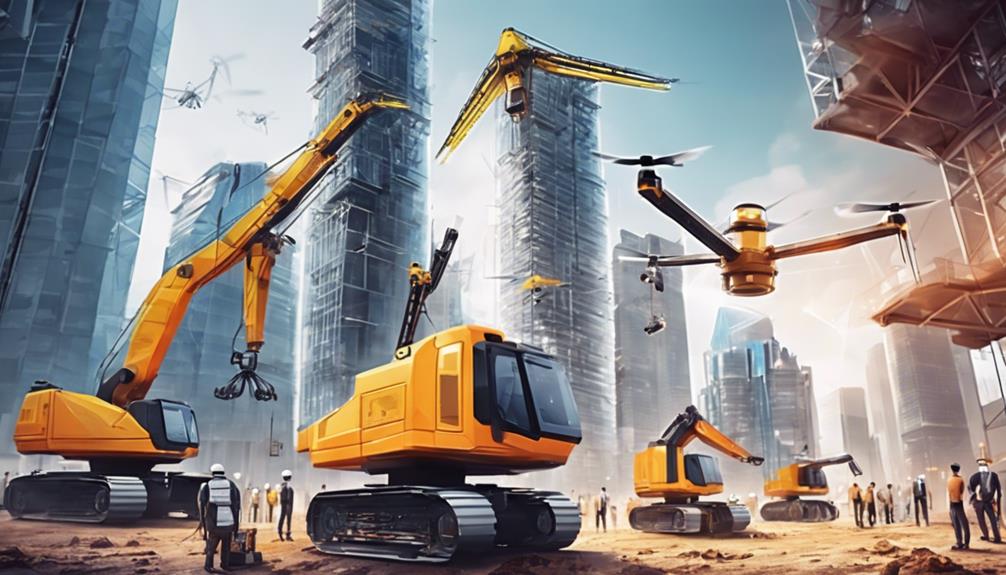
You're entering an era where construction technology leaps forward, transforming mundane tasks into high-tech operations. Imagine robots streamlining construction sites with enhanced precision, while 3D printers craft buildings right before your eyes. Don't forget the smart wearables that not only boost safety but also ramp up efficiency by integrating real-time data and 3D visualization. Drones and AI are turning project management into a realm of high accuracy and predictive prowess, revolutionizing how deadlines and budgets are handled. If you're curious about how these innovations could change the game, there's more just around the corner to spark your imagination.
Exploring Automated Robotics
Automated robotics are revolutionizing the construction industry, enhancing both speed and precision on job sites. You'll find these mechanical marvels performing a range of tasks that traditionally required human hands, now executed with machine-like efficiency. They're laying bricks, cutting massive beams, and installing windows, transforming the way buildings rise from the ground.
Imagine you're managing a large-scale project. With robotic arms, you're not just speeding up the construction process but also reducing the risk of human error and workplace injuries. These robots come equipped with sensors and AI capabilities that allow them to adapt to different tasks and environments, increasing their utility across various stages of construction.
Moreover, the integration of robotics in construction isn't just about the heavy lifting. It's also about the intricate and detailed work. Robots are now programmed to handle tasks that require high precision, such as electrical installations and plumbing. This shift not only boosts productivity but also ensures standards are met with unparalleled accuracy.
Embracing this technology can significantly alter your project timelines and budgets. By reducing labor costs and downtime, your projects could finish ahead of schedule and under budget, setting new standards in the construction industry.
Advancements in 3D Printing
While robotics streamline many construction processes, 3D printing technology is reshaping how we think about building structures from the ground up. You're now witnessing a revolution where the ability to print complex, customized shapes and structures isn't just a possibility—it's a reality. This isn't just about small models or components; entire buildings, bridges, and even houses are being constructed with 3D printers, using materials ranging from concrete to polymers.
You've probably seen how fast a 3D printer can work, but here's what's really transformative: the reduction in waste and costs. Traditional construction methods often lead to significant material waste, but 3D printing is precise, using only the material needed for each specific part of a structure. This efficiency isn't just good for your budget; it's also better for the environment.
Moreover, the flexibility of 3D printing allows for designs that were once considered too complex or too costly to be feasible. Imagine creating curved walls or intricate facades without the hefty price tag. That's the power you're tapping into with these advancements.
As you explore these innovations, think about the endless possibilities that 3D printing brings to the future of construction.
Smart Wearables on Site
Shifting focus to the job site, smart wearables are revolutionizing how you interact with your surroundings. Imagine slipping on a smart helmet that not only protects your head but also feeds you real-time data about construction site hazards.
Or consider smart gloves that enhance your manual dexterity and record your tasks, ensuring you're following safety protocols precisely.
These gadgets aren't just futuristic novelties; they're practical tools that boost safety and efficiency. For instance, smart glasses can display 3D models of the project you're working on, right in your line of vision. You don't need to juggle between blueprints and the actual work anymore; everything's visually integrated.
Moreover, some wearables monitor your health metrics, alerting you to take a break or hydrate if your biometrics show signs of strain. It's like having a personal health advisor right on your wrist.
These advancements mean you're better equipped to handle the demands of modern construction sites. They reduce errors, enhance safety, and ensure that projects are completed faster and with greater precision. Embracing these tools can significantly alter how you approach your daily tasks, making every action informed and every decision safer.
Drone Technology for Surveying
Drones are transforming the way you survey construction sites, offering a bird's-eye view that improves accuracy and speeds up the process. Imagine deploying a drone to map out a vast area in minutes, which traditionally could take days. You're not only saving time but also reducing the manpower needed on the ground.
These high-flying tools come equipped with advanced cameras and sensors that capture detailed images and data. This means you can get real-time insights into the terrain and existing structures, enabling precise measurements and better planning.
You'll spot potential issues before they become costly problems, ensuring your project stays on track and within budget.
Moreover, drones can access tough terrains that are challenging and hazardous for human surveyors. They soar above obstacles, collecting data without the risk of injury, making your site safer.
You can also use this technology to monitor ongoing work, keeping an eye on progress and compliance with safety regulations.
Incorporating drone technology into your operations isn't just about flashy gadgets; it's a smart investment in efficiency and safety. So why not take your project management to new heights and give yourself a competitive edge in the bustling construction industry?
AI in Project Management
Harnessing the power of artificial intelligence (AI) in project management, you can streamline complex processes and enhance decision-making across your construction projects. AI tools analyze vast amounts of data quickly, identifying patterns and predicting potential delays or budget overruns before they become problematic. This proactive approach reduces risks and can significantly cut costs.
With AI, you're not just reacting to issues as they arise; you're anticipating them. Sophisticated algorithms can forecast project outcomes based on historical data, allowing you to adjust resources or timelines preemptively. This capability is particularly useful in managing labor and supply chain challenges, areas often prone to unpredictability in construction.
Moreover, AI-enhanced software can facilitate better communication among project stakeholders. Automated reporting tools keep everyone updated in real-time, ensuring that all parties are on the same page. This integration leads to improved collaboration and can help prevent misunderstandings and disputes.
AI also offers tools for enhanced safety monitoring. By analyzing site data, AI can predict hazardous conditions and suggest corrective actions, enhancing worker safety and compliance with regulatory standards.
Incorporating AI into your project management toolkit not only optimizes operational efficiency but also empowers you to deliver projects on time, within budget, and with fewer complications.
Sustainable Building Materials
Embrace the future of construction with sustainable building materials that not only reduce environmental impact but also offer long-term savings. You're stepping into a world where every choice you make aligns with eco-friendly practices.
Imagine using materials like bamboo, recycled steel, and cork, all of which are renewable, reduce waste, and decrease carbon footprints. These aren't just good for the planet; they're also cost-effective in the long run due to their durability and energy efficiency.
Explore further and you'll discover innovative composites made from recycled plastic and wood fibers. These materials aren't only resistant to decay and pests but also require minimal maintenance. They're perfect for you if you're looking to cut down on long-term costs and labor.
Moreover, advancements in insulation materials such as sheep's wool or recycled denim ensure that your buildings are energy efficient, keeping heating and cooling costs low.
Choosing sustainable materials means you're building smarter, not harder. You're investing in the future of the planet and your projects. As you move forward, consider the impact of your choices on the world around you. Isn't it time you build with both durability and sustainability in mind?
Real-Time Data Analytics
Step into the realm of real-time data analytics, a game-changer in the construction industry that boosts your project's efficiency and decision-making speed. Imagine having the power to monitor your project's progress, resource allocation, and budget status at your fingertips, every minute of the day. That's what real-time data analytics offers.
With sensors embedded on-site and drones overhead, data on material usage, worker productivity, and equipment status stream continuously into a central system. You can see bottlenecks as they happen, not days later. It's about getting insights on the fly, which allows you to make informed decisions swiftly, avoiding costly delays.
You're not just tracking numbers; you're predicting future outcomes. Advanced algorithms analyze the incoming data to forecast potential issues before they become real problems. This predictive capability means you can proactively adjust schedules, resources, and labor to meet your targets.
Plus, the integration of this technology with mobile devices ensures that you, your team, and stakeholders stay in the loop. Whether you're in the office or on the go, you can access up-to-date project information, enhancing collaboration and transparency in your projects.
Real-time data analytics isn't just a tool; it's your strategic advantage in the fast-paced world of construction.
Virtual Reality Training Tools
Why not revolutionize training in the construction industry with virtual reality (VR) tools? Imagine strapping on a VR headset and instantly stepping onto a virtual construction site. You're tasked with learning complex machinery or understanding site safety protocols without the physical risks associated with on-site training. This isn't just a safer alternative; it's an immersive experience that can drastically reduce learning curves and training costs.
VR training tools aren't just about simulating real-world scenarios; they're about enhancing them. You can interact with virtual materials, operate heavy machinery, and even simulate emergency situations to test your responses in a controlled environment. This technology isn't just a novelty; it's becoming a necessity. As construction projects grow more complex, the demand for skilled workers increases. VR training equips you with practical, hands-on experience from the safety of an office or training room.
Moreover, these tools offer repeatable and consistent training experiences, ensuring every trainee receives the same level of instruction and opportunity for practice. Whether it's your first day or you're brushing up on new techniques, VR tools provide a consistent, effective training ground.
Ready to put on that headset and step into the future of construction training?
Conclusion
You've just ventured through the latest in construction technology, from robotic automation to AI-enhanced project management. These innovations aren't just cool; they're revolutionizing how buildings come to life. Whether it's drones mapping out a site or VR tools training your team, each advancement offers a smarter, safer way to work. Embrace these technologies, and you'll not only boost efficiency but also push towards a more sustainable future. It's time to build smarter, not harder!
Related articles: Revolutionary Breakthroughs Disrupting Commercial Construction · Top 3 Construction Management Tech Tools · Top 3 Construction Management Tech Innovations