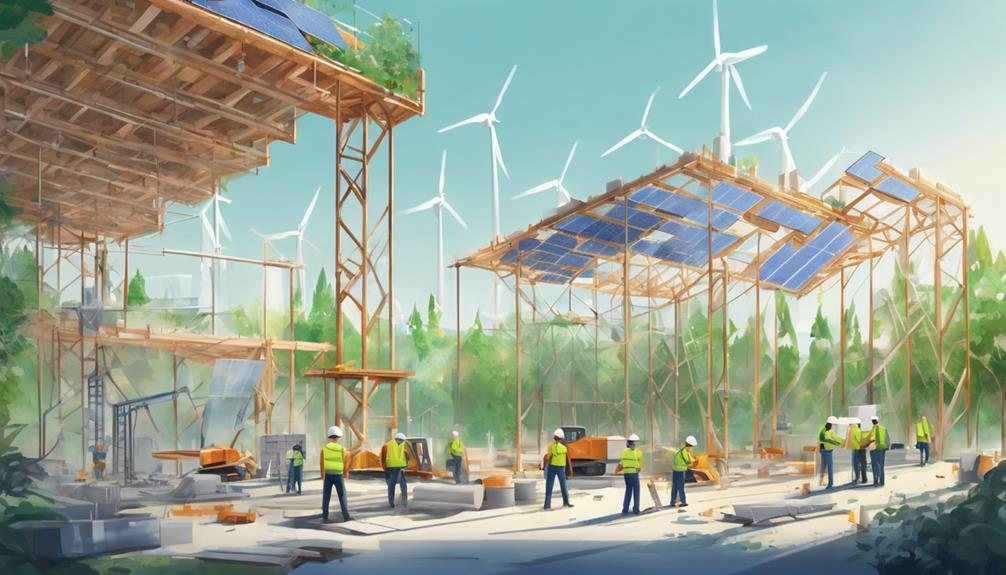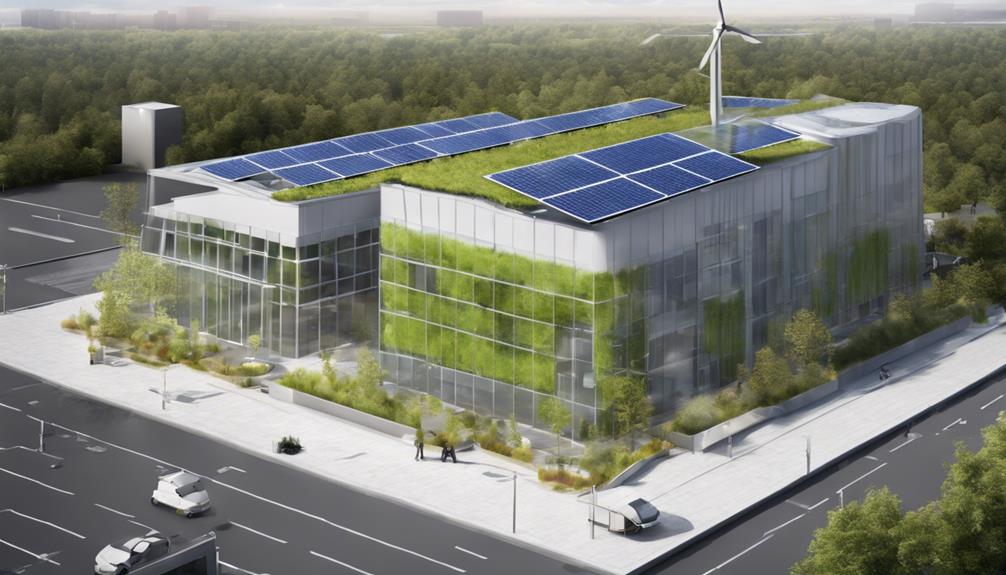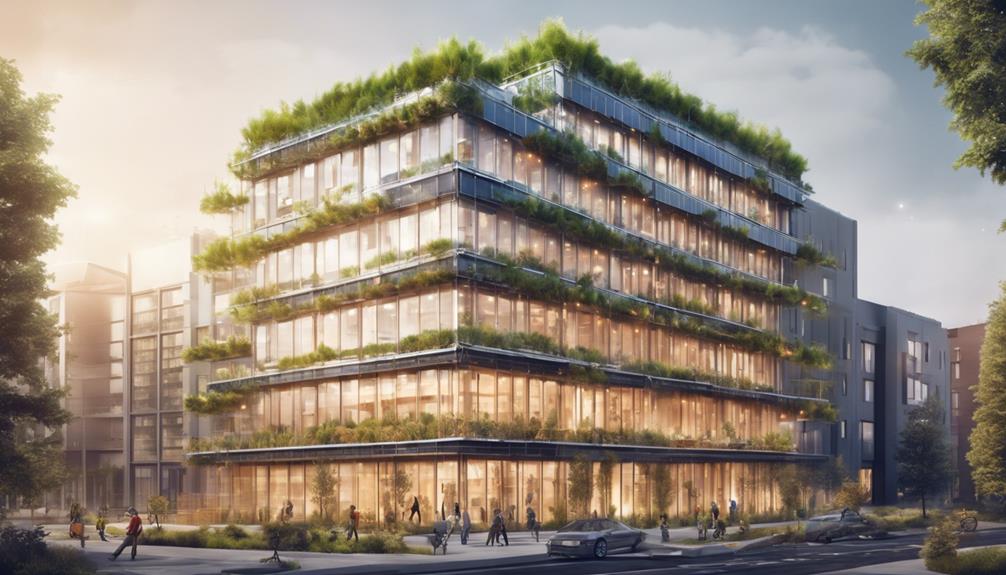
You're on the right path by considering certifications such as LEED, known globally for improving water, energy use, and material selection, and BREEAM, which focuses on holistic sustainability. Don't overlook the Green Globes system, offering a flexible assessment approach, or Energy Star, which helps enhance energy performance. The WELL Building Standard is essential for boosting occupant health, while the rigorous Living Building Challenge pushes for self-sufficient buildings. Similarly, the Zero Energy Building Certification commits to net-zero energy use. For land development, consider SITES for sustainable practices, and don't miss Earth Advantage for comprehensive environmental performance. Exploring further will uncover which certification best aligns with your sustainability goals.
LEED Certification Overview
LEED, or Leadership in Energy and Environmental Design, is a globally recognized certification that sets the standard for environmentally responsible building practices. You might be considering this prestigious certification for your next construction project, and you're on the right track. LEED-certified buildings aren't only efficient but also promote healthier work and living environments.
When you choose LEED, you're looking at a rating system that comprehensively assesses the building's environmental impacts. It focuses on key aspects such as water efficiency, energy use, and material selection. By adhering to LEED standards, you can significantly reduce your carbon footprint and utility bills.
Achieving LEED certification involves accumulating points across several categories. These points reflect your building's performance in areas critical to environmental health, like indoor air quality and resource conservation. The more points you earn, the higher your certification level—ranging from Certified to Platinum.
As you embark on this journey, remember that each decision you make can contribute to a greener future. Opting for sustainable materials or investing in renewable energy sources not only helps you score higher but also sets a commendable example in your community.
BREEAM Certification Explained
Many builders and developers are turning to BREEAM, or the Building Research Establishment Environmental Assessment Method, as another top choice for green certification. Introduced in the UK in 1990, BREEAM has become one of the world's foremost environmental assessment methods for projects, measuring a building's environmental performance across several categories.
You'll find that BREEAM focuses on sustainability from a holistic angle. It assesses areas like energy efficiency, water use, health and well-being, pollution, transport, materials, waste, ecological use, and management processes. This comprehensive approach ensures that certified buildings contribute positively to the environment while offering economic and health benefits to the people who use them.
To achieve certification, your project must meet predetermined standards. The performance is rated on a scale from "Pass" to "Outstanding." You'll be involved in a detailed process that includes design assessments, post-construction reviews, and even potential ongoing operational evaluations.
Engaging with BREEAM not only helps you meet regulatory requirements but also boosts your building's marketability. It shows your commitment to a sustainable future and can significantly reduce operational costs. Plus, it's a potent tool for attracting eco-conscious tenants and buyers who are increasingly aware of environmental issues.
Green Globes Rating System
Gaining popularity in the sustainable building sector, the Green Globes Rating System offers a flexible, user-friendly approach to assessing environmental impacts and sustainability of commercial buildings. You'll find it's less prescriptive than other systems, focusing instead on providing guidance that adapts to your specific project needs.
Developed in Canada and now widely used in the United States, Green Globes helps you evaluate your project at various stages, from design to operation. It's an online tool, making it accessible and straightforward to manage. You're guided through a series of evaluations that cover a broad range of sustainability topics such as water, materials, and site — all without the need to focus extensively on paperwork.
What sets Green Globes apart is its interactive nature. You're not just checking boxes; you're engaging in an ongoing conversation about how to best implement sustainable practices in your building.
The system allows for third-party assessments, which provide you with valuable feedback and the opportunity to adjust your strategies before final certification.
It's ideal if you're looking for a certification that molds to your project's unique characteristics while still maintaining rigorous environmental standards. Opting for Green Globes means you're taking a proactive step towards sustainability without being overwhelmed by the process.
Energy Star for Buildings
If you're aiming to boost the energy efficiency of your building, consider the Energy Star for Buildings program. Administered by the U.S. Environmental Protection Agency (EPA), this program helps you measure and improve the energy performance of your properties. You'll be joining thousands of businesses and organizations that have already made significant energy savings and reduced greenhouse gas emissions.
Energy Star provides a 1-100 ENERGY STAR score, a standard metric for comparing your building's energy use against similar structures nationwide. If your building scores a 75 or higher, it qualifies as top performance, making it eligible for the Energy Star certification. This label is widely recognized by the public and can significantly enhance your building's marketability.
To get started, you'll need to track your building's energy consumption using tools like Portfolio Manager, an interactive energy management platform that allows you to monitor and assess energy and water consumption across your entire portfolio.
WELL Building Standard
The WELL Building Standard focuses on enhancing occupants' health and well-being through the built environment. It's a performance-based system for measuring, certifying, and monitoring features that impact human health and wellness within buildings.
You'll find that WELL addresses aspects such as air, water, nourishment, light, fitness, comfort, and mind.
As you explore WELL, you'll notice it's not just about the physical aspects of your space but also how these elements contribute to your experience and productivity. For instance, the standard requires rigorous testing and a high level of air quality, ensuring that you're breathing cleaner air, which can reduce health-related issues and increase your work performance.
Moreover, WELL is implemented in various types of buildings including commercial, institutional, and residential. Whether you're renovating an existing structure or constructing a new one, WELL can guide you towards creating a healthier, more sustainable environment.
It's a holistic approach that intertwines health-sciences with building design, emphasizing a human-centered strategy.
Passive House Certification
Nearly every aspect of a building's environmental impact is addressed with Passive House Certification, a rigorous standard aimed at reducing energy consumption and enhancing comfort. You'll find that this method isn't just about energy efficiency, but also about achieving optimal living conditions. The certification focuses on creating structures that require minimal energy for heating and cooling, significantly cutting down on your utility bills and carbon footprint.
To meet the Passive House standards, your building must have superb insulation, airtight construction, and high-performance windows and doors. These features work together to maintain a stable interior climate, making your home or office comfortable year-round without excessive heating or cooling.
Moreover, the certification demands the use of energy recovery ventilation systems. This ensures that you're breathing fresh air indoors without losing energy. The design also minimizes thermal bridges, which are often overlooked weak points in a building's thermal envelope where heat tends to escape.
If you're planning a new construction or major renovation, aiming for Passive House Certification can be a smart move. It's not just an investment in sustainability; it's about enhancing your everyday living environment while drastically reducing energy use.
Living Building Challenge
Moving beyond Passive House Certification, you'll encounter the Living Building Challenge, arguably the most rigorous sustainable building certification available today. This program pushes you to create buildings that generate more energy than they consume, capture and treat all water on-site, and use materials that are safe for all species through time.
As you dive into the specifics, you'll find that this challenge isn't just about reducing harm but about achieving net positive impacts—socially, culturally, and environmentally. To be certified, your project must meet the requirements of seven performance areas, or "Petals": Place, Water, Energy, Health & Happiness, Materials, Equity, and Beauty. These Petals are subdivided into 20 Imperatives, each of which focuses on a specific sustainable goal.
For instance, under the Materials Petal, you're required to eliminate the use of materials that have a negative impact on the environment and human health. This includes avoiding products containing asbestos, cadmium, lead, and mercury. You'll need to think creatively and choose your resources wisely to meet these stringent standards.
Engaging in the Living Building Challenge, you're not just constructing a building; you're contributing to a sustainable future, encouraging innovation, and setting new benchmarks in the construction industry.
Zero Energy Building Certification
Shifting focus to Zero Energy Building Certification, you'll find it's designed to significantly reduce your building's carbon footprint. This certification isn't just a label; it's a commitment to achieving net-zero energy usage, meaning the total amount of energy used by the building on an annual basis is roughly equal to the amount of renewable energy created on-site.
To meet these rigorous standards, you'll need to integrate advanced energy efficiency strategies and technologies. Think solar panels, high-performance insulation, and energy-efficient windows. It's all about balancing your energy consumption with renewable production.
The process encourages you not only to think about energy in new ways but also to innovate in your building practices.
Achieving Zero Energy Building Certification sets your project apart as a leader in sustainability. It demonstrates your dedication to environmental stewardship and positions your building as a forward-thinking project. Moreover, it significantly lowers energy costs in the long run, making it as economically appealing as it's eco-friendly.
You're not just building or renovating a structure; you're pioneering a sustainable future. Remember, every step toward zero energy is a step towards a sustainable planet. Are you ready to take that step?
SITES Certification Program
While the Zero Energy Building Certification focuses on energy efficiency within the building itself, the SITES Certification Program expands the scope to include the land surrounding your project. This program, developed by the United States Botanic Garden and the American Society of Landscape Architects, is all about promoting sustainable land development and management practices. If you're aiming to make a positive impact on the planet, this certification provides the framework you need.
SITES evaluates your project on various sustainability factors, such as water use, soil restoration, vegetation, and materials. It's not just about reducing the negative impacts; it's about enhancing the ecosystem services that your site can provide. Think of it as not only reducing harm but actively doing good—restoring ecological functions and supporting biodiversity.
When you opt for SITES certification, you're looking at a comprehensive assessment that ensures every aspect of your site contributes to the health of the environment. This means your project can help in mitigating urban heat island effect, sequestering carbon, and even purifying water. It's a holistic approach that benefits both the environment and your community's well-being. By achieving this certification, you'll be at the forefront of sustainable landscape design, showcasing your commitment to environmental stewardship.
Earth Advantage Certification
After exploring the SITES Certification Program, which enhances the sustainability of the landscape surrounding a project, consider the Earth Advantage Certification to elevate your building's overall environmental performance. This certification goes beyond just the aesthetics and functionality of green spaces; it dives deep into the sustainability of your building itself.
Earth Advantage Certification focuses on a comprehensive approach to sustainable construction and design. It's not just about energy efficiency, though that's a big part of it. You'll also look at water conservation, resource efficiency, and indoor air quality. By meeting these criteria, you're not only ensuring that your building conserves natural resources but also that it provides a healthy environment for its occupants.
To get certified, you'll need to meet specific standards throughout your building's design, construction, and operational processes. This involves everything from selecting sustainable materials to incorporating energy-efficient systems. The process is rigorous, but it's worth it. You'll end up with a building that's not only environmentally friendly but also cost-effective in the long run due to reduced utility bills.
Conclusion
You've just explored the top 10 green certifications that can elevate the sustainability of any building project. By choosing certifications like LEED, BREEAM, or the Living Building Challenge, you're not just complying with standards; you're making a commitment to the planet. Whether it's improving energy efficiency or enhancing indoor environmental quality, these certifications guide you in making impactful decisions. So, take the next step toward sustainability and choose a certification that aligns with your building's goals and values.
Related articles: Green Badges: Your Building’s Eco-Friendly Merit Badges · Sustainable Ideas for Eco-Friendly Office Design · 5 Eco-Friendly Tips for Office Building Design