
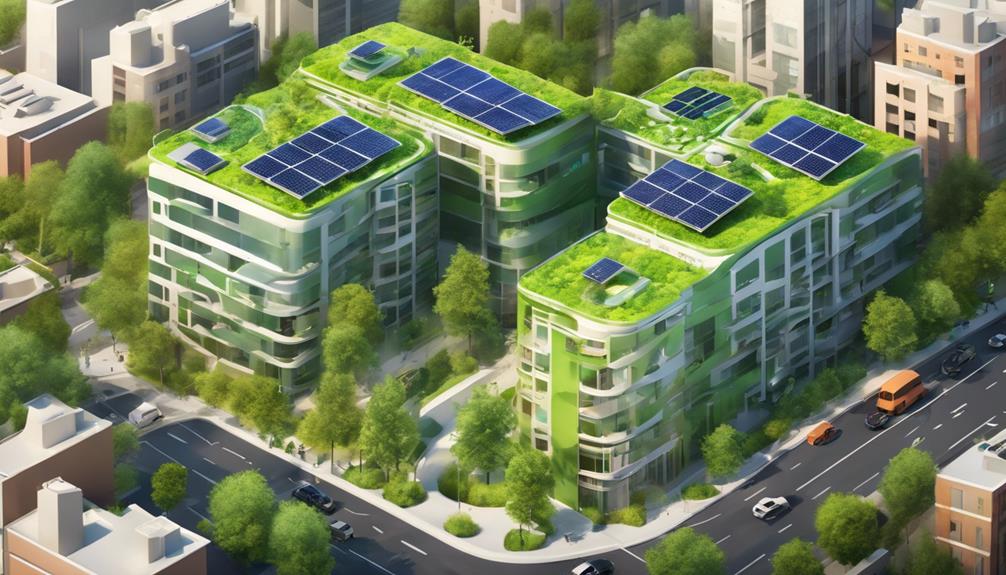
Green badges aren't just about looks; they're your building's proof of environmental stewardship. By aiming for certifications like LEED, BREEAM, or Energy Star, you're committing to higher efficiency and sustainability standards. These labels serve as benchmarks in areas like energy use, water conservation, and material sourcing. They not only lower operational costs but also boost your building's marketability and potential resale value. Whether you're renovating or building from scratch, integrating sustainable practices shows you're serious about your environmental impact. This could lead your project to stand out as an example of effective sustainability integration in building design.
Overview of Green Certifications
Green certifications are essential tools you can use to verify a building's environmental performance. They're not just badges; they act as benchmarks for sustainability, efficiency, and responsibility. Whether you're a developer, owner, or tenant, these certifications guide you in making environmentally sound choices that align with global standards.
These certifications cover various aspects of building operations, including energy use, water conservation, material selection, and indoor environmental quality. By adhering to specified criteria, a building can minimize its carbon footprint, enhance its market value, and provide healthier spaces for its occupants. This holistic approach ensures that every certified building contributes positively to its immediate environment and the broader ecosystem.
You'll find several types of green certifications globally, each with a unique focus and criteria. Some prioritize energy efficiency, others may focus more on the use of sustainable materials or water savings. The choice of certification depends on your building's specific needs and your environmental goals.
Achieving certification requires a commitment to sustainable practices and can significantly influence how your building is perceived in the marketplace. It's a proactive step towards environmental stewardship and positions your property as a leader in the green movement.
LEED Certification Process
Many buildings seek LEED certification to demonstrate their commitment to sustainability. If you're considering this for your property, here's what you need to know about the process.
First, you'll choose a rating system that best fits your project, whether it's for new construction, existing buildings, or entire neighborhoods.
Next, you'll register your project with the U.S. Green Building Council (USGBC). This step officially kicks off your journey. You'll then need to meet various prerequisites and earn points in categories like water efficiency, energy use, and materials selection. The more points you earn, the higher your LEED certification level—Certified, Silver, Gold, or Platinum.
You'll gather documentation to prove your project meets the required criteria. This might include architectural drawings, energy modeling, and water usage reports. Once you've compiled your evidence, you'll submit it for review. A team of experts will assess your submission and decide on your certification level.
Achieving LEED certification isn't just about submitting paperwork. You'll need to integrate sustainable practices from the design phase through construction and into ongoing operations. It's a rigorous process, but it's also a rewarding one that can significantly enhance your building's environmental performance.
Benefits of Energy Star Ratings
While LEED certification focuses on a broad range of sustainability metrics, Energy Star ratings hone in specifically on energy efficiency. You'll find that by targeting this aspect, you can significantly reduce your building's operational costs. Energy Star-certified buildings typically use 35% less energy than average buildings, translating directly into savings on your utility bills.
It's not just about lower costs; it's also about higher performance standards, making your property more competitive and attractive in a crowded market.
Moreover, by displaying an Energy Star label, you're signaling to tenants and investors that you're committed to environmental stewardship. This can boost your building's marketability and potentially increase its resale value. Tenants are often willing to pay a premium for spaces in energy-efficient buildings, knowing they'll save on energy costs and contribute to a greener planet.
Understanding BREEAM Standards
Understanding BREEAM standards is essential if you're aiming to enhance the sustainability and environmental performance of your buildings. BREEAM, or the Building Research Establishment Environmental Assessment Method, is one of the world's foremost environmental assessment methods for buildings. It sets the standard for best practices in sustainable building design, construction, and operation.
You're likely aware of its influence if you're involved in the real estate or construction sectors. BREEAM assesses environmental performance from a series of categories, ranging from energy to ecology. Each category scores points, which add up to a final rating: Pass, Good, Very Good, Excellent, or Outstanding. This comprehensive method not only considers the environmental impacts but also looks at health and well-being implications for occupants.
To get started, you'll need to understand the specific criteria and assessment process. Each project is evaluated against the standards relevant to its particular stage of life, be it design, construction, or operational phase.
Engaging with an accredited BREEAM assessor early in your project can help maximize your score. They'll guide you through the necessary steps and documentation, ensuring you meet or exceed the targeted rating, thus boosting your building's environmental credentials significantly.
The Importance of Green Globes
Green Globes plays a crucial role in promoting sustainable building practices. If you're managing or developing a property, embracing this system can significantly elevate your building's environmental performance. Unlike other certification systems that may seem rigid, Green Globes offers flexibility, allowing you to customize your approach to sustainability.
This program focuses on enhancing energy efficiency, reducing water use, and improving the indoor environment, which not only benefits the planet but also enhances the comfort and well-being of everyone inside.
What sets Green Globes apart is its user-friendly nature. You'll find the assessment criteria straightforward and the certification process less intimidating than some of the alternatives. It's practical and accessible, making it an excellent choice for both new constructions and existing buildings looking to upgrade their green credentials.
Moreover, implementing Green Globes can lead to significant operational savings, from reduced energy costs to lower water bills.
If you're aiming to make a real environmental impact, integrating Green Globes into your building strategy is a wise move. It's not just about earning a plaque; it's about making a commitment to a sustainable future. So, why not take the leap? Your building—and the planet—will thank you.
Innovations in Passive House Design
Building on the foundation of environmental stewardship laid by systems like Green Globes, innovations in Passive House design are pushing the envelope in sustainable architecture. You'll find that the latest advancements focus on ultra-efficient building envelopes, advanced ventilation strategies, and the integration of renewable energy sources. These elements work together to drastically reduce the need for artificial heating and cooling.
One of the key features you're seeing is the use of high-performance windows and super-insulated walls. This isn't just about stuffing more insulation into the frame; it's about smart materials that adapt to environmental changes, maintaining indoor comfort with minimal energy use.
Then there's the emphasis on airtight construction. By eliminating leaks, you're not only conserving energy but also improving indoor air quality.
Moreover, heat recovery ventilation systems have become a staple in new Passive House projects. These systems efficiently exchange indoor air with fresh outdoor air, recovering about 90% of the heat from the exhaust air in the process. This means you're enjoying fresh air without the hefty energy bill.
Adopting these innovations isn't just about saving costs or meeting regulations; it's a commitment to sustainable living that benefits everyone. As you consider your next building project, think of these Passive House strategies as your blueprint for a greener future.
Case Studies in Sustainable Construction
Why not explore real-world applications of sustainable construction through enlightening case studies? Let's dive into the Bullitt Center in Seattle, a beacon of green construction. You'd marvel at its net-zero energy system, which harnesses solar power so effectively that it generates more electricity than it uses annually. This isn't just a building; it's a statement on how commercial structures can operate without a carbon footprint.
Now, shift your focus to the Edge in Amsterdam. It's touted as the world's greenest office building, and you'll quickly see why. Imagine working in a place where every light is connected to an Ethernet that monitors occupancy and energy use. You're not just saving power; you're optimizing it. The Edge utilizes natural light so well that artificial lighting barely gets a look in during daytime.
These examples aren't outliers; they're trailblazers, setting standards in sustainability. As you consider the implications of these case studies, think about how their innovations could be adapted to your next project.
Could you push the boundaries further? It's not just about building; it's about inspiring change and thinking ahead. How will you leave your green mark?
Conclusion
You've explored the landscape of green certifications, from LEED to BREEAM and beyond. Now, you can see how these "eco-friendly merit badges" not only enhance your building's sustainability but also boost its value and appeal. Don't just think of them as requirements; they're investments in your future and the planet's. Embrace these standards, innovate with designs like Passive House, and let your building stand as a testament to your commitment to a greener world.
Related articles: Sustainable Ideas for Eco-Friendly Office Design · 5 Eco-Friendly Tips for Office Building Design · Why Choose Eco-Friendly Office Building Designs?