
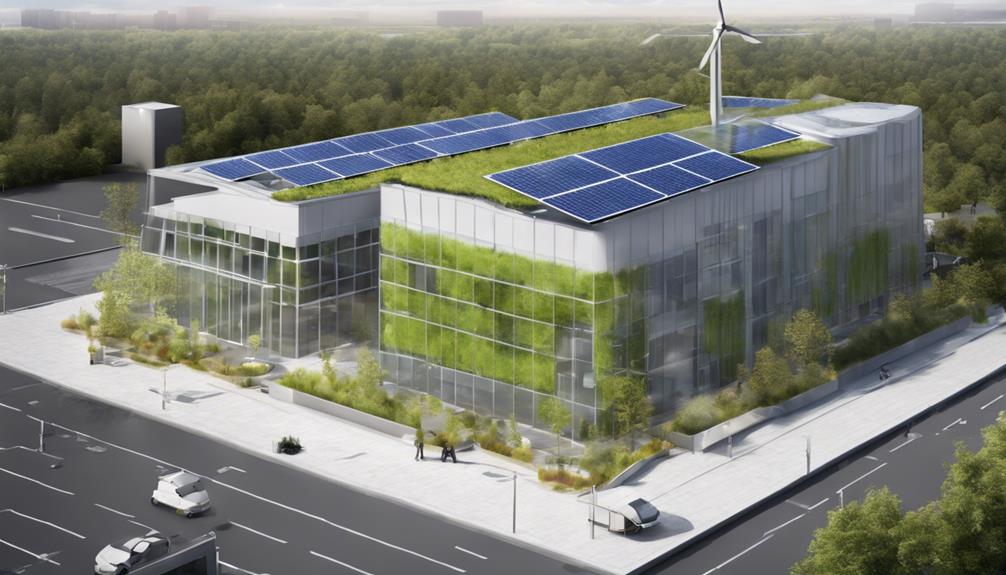
To boost energy efficiency in your commercial building, start with high-performance building envelopes that use enhanced insulation and triple-pane windows to minimize energy loss. Upgrade your HVAC systems with modern, adaptive technologies including smart thermostats and variable speed drives that optimize energy use. Implement smart lighting solutions utilizing LED lights coupled with sensors and timers to cut down on unnecessary electricity consumption. Consider integrating renewable energy sources like solar panels or wind turbines to decrease reliance on fossil fuels. Also, adopt water conservation strategies, including low-flow fixtures and water-efficient landscaping. These initiatives not only reduce costs but also increase your building's market value. Exploring these strategies further could unveil more benefits and cost-saving opportunities.
High-Performance Building Envelopes
To significantly cut energy costs in commercial buildings, consider upgrading to high-performance building envelopes. These advanced barriers are key in minimizing unwanted heat loss or gain. By focusing on the envelope — which includes walls, roofs, windows, and doors — you're essentially wrapping your building in a thermal blanket that efficiently manages energy consumption.
What does this mean for you? Initially, you might face some upfront costs, but the long-term savings are substantial. Enhanced insulation, triple-pane windows, and high-quality seals make these envelopes capable of maintaining interior temperatures with far less reliance on heating and cooling systems. This isn't just about reducing bills; it's also about enhancing occupant comfort and contributing to a healthier environment.
Consider the choice of materials and the design. Innovative solutions like reflective roofing or green roofs, and walls with integrated photovoltaic panels, not only reduce energy costs but also add to the aesthetic and functional value of your property. You're not only saving money but potentially increasing your building's market value.
Advanced HVAC Systems
Switching to advanced HVAC systems can significantly enhance your building's energy efficiency. These modern systems operate more effectively, adapting to changes in external and internal temperatures, and maintaining optimal indoor air quality with less energy.
You'll find that newer HVAC models use technologies like variable speed drives and energy recovery ventilators. These components adjust the airflow based on real-time needs, which means you're not wasting energy cooling or heating unoccupied spaces. It's not just about the immediate savings on your utility bills; it's also about reducing your carbon footprint.
Consider also the integration of smart thermostats into these systems. They learn your building's usage patterns and make automatic adjustments. This isn't just convenient; it ensures that you're using energy only when and where it's needed most.
Moreover, regular maintenance and upgrades of your HVAC system are crucial. Don't overlook the importance of ensuring that all components are functioning efficiently. Preventive maintenance can catch issues before they become costly problems and extend the life of your system.
Smart Lighting Solutions
Implementing smart lighting solutions can significantly reduce your building's energy consumption. By upgrading to LED lights, which use up to 75% less energy than traditional bulbs, you'll see immediate savings on your electricity bill. But don't stop there; integrating sensors and intelligent lighting controls can maximize these benefits.
Motion sensors ensure lights are only on when needed, avoiding unnecessary energy use. Similarly, daylight harvesting sensors adjust indoor lighting based on the amount of natural light available, which further diminishes electricity usage during peak daylight hours.
You can also tailor your lighting system with timers and dimmers to optimize energy use throughout the day. For instance, setting lower light levels during off-peak hours can significantly decrease your overall energy expenditure.
Plus, smart lighting systems can be managed remotely through a central management system, allowing you to monitor and adjust settings on-the-go or from a centralized location. This not only enhances your control over energy consumption but also simplifies maintenance and troubleshooting, leading to additional savings.
Renewable Energy Integration
While smart lighting solutions play a significant role in reducing energy costs, integrating renewable energy sources such as solar panels and wind turbines further enhances your building's sustainability. You're not just cutting down on greenhouse gas emissions; you're also tapping into a long-term strategy for reducing operational costs.
Solar panels, for instance, can be installed on rooftops or unused land around your building. They provide a clean and consistent source of power, especially in sunny climates. By harnessing the sun's energy, you're reducing reliance on fossil fuels and stabilizing energy costs against market fluctuations.
Wind turbines, while needing more initial investment and space, generate power efficiently and can significantly lower your energy bills if your site is wind-appropriate.
Moreover, consider biomass systems, which use organic materials to generate heat and electricity. These systems can be particularly cost-effective if you have access to local, renewable sources of biomass.
Lastly, geothermal energy offers a reliable and constant energy supply. Installing a geothermal heat pump system can heat and cool your building more efficiently than traditional systems.
Water Conservation Strategies
Water conservation is crucial for maintaining your building's operational efficiency and supporting environmental sustainability. By adopting smart water management practices, you're not just cutting costs; you're also contributing to a healthier planet. Let's dive into effective strategies that can make a significant difference.
Firstly, consider installing low-flow fixtures in restrooms, kitchens, and any other applicable areas. These devices, including faucets, toilets, and showerheads, use significantly less water than standard models. You'll see a reduction in water usage and your utility bills will reflect the savings.
Next, think about upgrading to water-efficient landscaping. Opt for native plants that require less water, and integrate drip irrigation systems that target root zones directly, minimizing waste.
Monitoring your water usage can also lead to substantial savings. Install sub-metering to track water use in different parts of your building. This will help you identify leaks and inefficiencies quickly, allowing for prompt repairs.
Conclusion
You've seen how top energy-efficient techniques can transform your commercial building. By embracing high-performance envelopes, advanced HVAC systems, smart lighting, renewable energy, and water-saving strategies, you're not just cutting costs—you're investing in the future. These innovations not only reduce your ecological footprint but also enhance the comfort and productivity of your space. So, take the leap, make those changes, and watch as your building becomes a beacon of sustainability and efficiency.
Related articles: 7 Best Energy-Efficient Construction Techniques · Top Green Certifications for Commercial Buildings · Top 7 Green Certifications for Buildings