
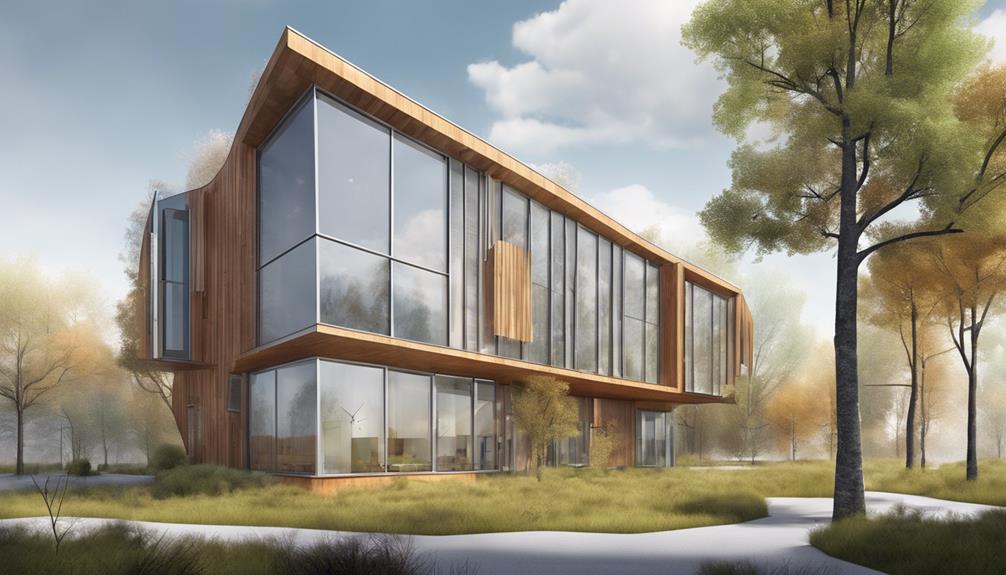
To boost your home's energy efficiency, you might consider a mix of high-performance insulation, like spray foam or rigid foam boards, and strategic window placement to maximize natural light while minimizing energy loss. Incorporating passive solar design principles, such as orienting your building to benefit from the sun's heat and light, is another effective technique. Choose sustainable materials like bamboo or recycled steel, and install a high-efficiency HVAC system to further cut down on energy costs. With these strategies, you can significantly reduce your energy bills and your home's environmental impact. Exploring these options could open up even more possibilities for energy optimization.
Passive Solar Design Principles
Passive solar design principles harness the sun's energy to heat and light homes naturally, reducing reliance on artificial heating and lighting. You can leverage these principles by orienting your home properly, incorporating materials with thermal mass, and using windows strategically. Imagine your house as a sun sponge, soaking up free energy and using it efficiently.
Start by considering the orientation of your home. A south-facing orientation maximizes sunlight exposure, crucial during colder months. In summer, you can prevent overheating with overhangs or deciduous trees that shed leaves, allowing winter light and blocking summer heat.
Next, think about thermal mass—materials like brick, concrete, or stone that absorb and store heat from the sun. They slowly release this heat during cooler periods, maintaining a comfortable indoor temperature without active heating systems. Place these materials where they'll catch sunlight during the day.
Windows also play a key role. Large, south-facing windows capture sunlight. However, ensure they're well-sealed and consider glazing options to minimize heat loss.
North-facing windows should be minimized or eliminated to reduce energy leakage.
High-Performance Insulation Options
To significantly boost your home's energy efficiency, explore high-performance insulation options. These materials not only reduce heating and cooling costs but also enhance indoor comfort year-round. High-performance insulation typically includes options like spray foam, rigid foam boards, and advanced batts that are denser than traditional materials.
Spray foam insulation is a standout due to its ability to create a tight seal in wall cavities, attics, and basements. It expands upon application, filling gaps and reducing air leaks more effectively than standard materials. This can dramatically lower your energy bills by keeping the warm or cool air inside your home.
Rigid foam boards add exceptional thermal resistance to exterior walls and roofs. They can be tailored to fit various spaces, making them ideal for retrofitting older homes where traditional insulation mightn't reach. Plus, they're moisture-resistant, which helps prevent mold growth and ensures a healthier living environment.
Lastly, consider enhanced fiberglass or mineral wool batts for areas needing extra thermal protection. These products are denser and thicker, providing superior soundproofing and energy conservation without taking up too much space.
Advanced Window Placement Strategies
After considering high-performance insulation materials for energy efficiency, another effective approach involves strategically placing your windows. You'll find that the position and size of your windows can significantly influence your home's energy consumption. By optimizing window placement, you harness natural light and reduce reliance on artificial lighting during the day, which saves energy and lowers your bills.
Firstly, consider the orientation of your windows. North-facing windows capture consistent, indirect sunlight, ensuring bright interiors without excessive heat. South-facing windows are ideal for cooler climates as they receive more direct sunlight, naturally warming your house. However, if you're in a warmer region, you might want to minimize east and west-facing windows, which can become sources of unwanted heat during summer mornings and afternoons.
You should also think about incorporating overhangs or using shading devices like awnings and blinds. These additions help control the amount of sunlight entering through the windows, particularly during hot months, without obstructing views or natural light completely.
Energy-Efficient HVAC Systems
Shifting focus to heating, ventilation, and air conditioning (HVAC) systems, consider the significant role they play in achieving energy efficiency in your home. You're not just looking for comfort; you want to ensure that every watt of energy is used effectively. One of the best ways to achieve this is through the installation of a high-efficiency HVAC system. These systems are designed to use less energy while maintaining optimal indoor air quality and comfort.
One of the best ways to achieve this is through the installation of a high-efficiency HVAC system. These systems are designed to use less energy while maintaining optimal indoor air quality and comfort.
You should consider models that have a high Seasonal Energy Efficiency Ratio (SEER) and Energy Efficiency Ratio (EER). The higher these ratings, the better the unit's energy performance. Also, look for features like programmable thermostats, which let you control the temperature based on your schedule, reducing unnecessary heating and cooling.
Moreover, regular maintenance is crucial. Ensuring that your system is regularly checked and filters are replaced can prevent energy wastage and extend the unit's lifespan. Also, think about the size of the HVAC system. An oversized or undersized unit can lead to inefficient operation and energy losses.
Incorporating these energy-efficient practices isn't just good for your wallet; it's also a step towards reducing your home's environmental footprint. Choose wisely, and ensure your HVAC system contributes to a greener, more sustainable home.
Sustainable Building Materials
Exploring sustainable building materials is key to enhancing the eco-friendliness of your home. These materials not only reduce your environmental footprint but also can save you money in the long run. Let's dive into some options you might consider.
Bamboo stands out as a superb choice. It's not only sturdy and attractive but also grows rapidly, making it a highly renewable resource.
You're also looking at cork, which isn't just for wine bottles! It provides excellent insulation, is naturally mold-resistant, and is harvested from the bark of the cork oak tree without harming it, allowing the tree to continue growing.
Recycled materials are another avenue worth exploring. Recycled steel, glass, and plastic reduce landfill waste and decrease the energy used in manufacturing new materials. Incorporating these into your build could make a significant environmental impact.
For insulation, consider sheep's wool. It's sustainable, biodegradable, and has fantastic thermal properties. Plus, it helps control humidity levels in your home.
Choosing any of these materials contributes to a greener planet. You're not just building a house; you're setting a standard for sustainability in your community. So, think green when planning your next home project!
Smart Lighting and Electrical Technologies
As you consider updating your home, integrating smart lighting and electrical technologies can significantly enhance both energy efficiency and convenience. These systems allow you to control lighting, appliances, and even thermostats remotely or via automated settings. Imagine adjusting lights and temperature from your smartphone or having them adapt automatically based on natural light and occupancy. This isn't just handy; it slashes your energy bills and reduces your carbon footprint.
Smart lighting systems utilize LED bulbs, which use at least 75% less energy and last 25 times longer than traditional incandescent bulbs. You can set them to dim or turn off when not needed, and personalize settings for different times of the day or activities, maximizing your energy savings.
Moreover, smart electrical systems often include energy monitoring features. You'll know exactly where and how you're using electricity, identifying any inefficiencies. This insight lets you make targeted changes that further reduce consumption.
Conclusion
You've explored a range of techniques to make your building more energy-efficient. From harnessing the sun's power through passive solar design and investing in high-performance insulation, to strategically placing windows and selecting advanced HVAC systems. You've also considered sustainable materials and smart lighting solutions. Together, these strategies not only reduce your energy bills but also decrease your environmental footprint. Now, you're equipped to make informed decisions that align with both your economic and ecological goals.
Related articles: Top Energy-Efficient Techniques for Commercial Buildings · 7 Best Energy-Efficient Construction Techniques · Top Green Certifications for Commercial Buildings