
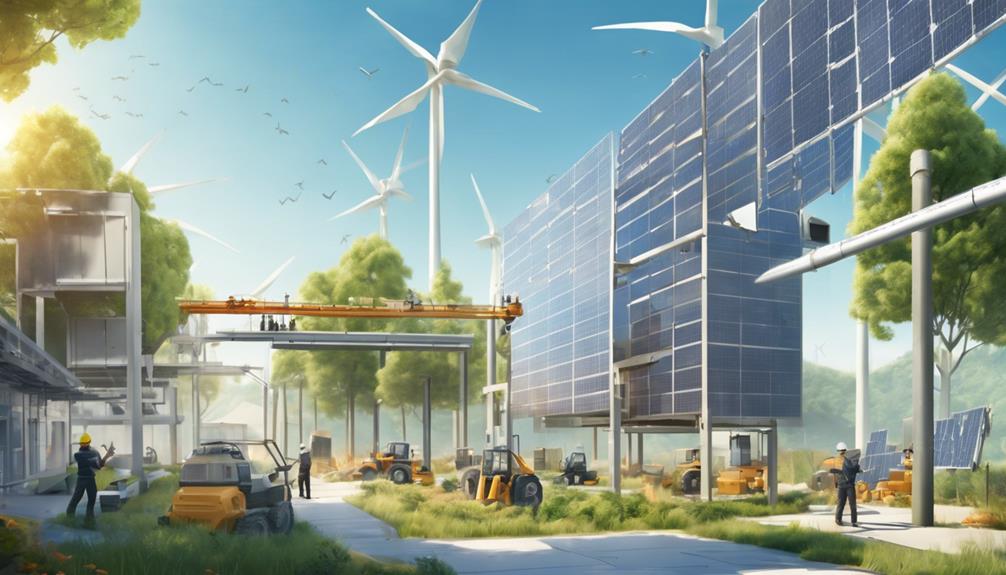
The best sustainable construction tech solutions you can use include leveraging materials like bamboo and recycled steel to minimize environmental footprint. You might also consider incorporating precast concrete and cellulose insulation to increase efficiency and reduce waste. Additionally, integrating solar panels and green roofs can drastically lower energy expenses and improve insulation. Technologies like high-efficiency HVAC systems, smart thermostats, and LED lighting enhance your building's operational performance. Don't forget about systems for harvesting rainwater and managing water smartly to conserve resources. Each of these options not only makes your project more sustainable but also promises significant cost savings over time, revealing an exciting path forward in eco-friendly construction.
Green Building Materials
Integrating green building materials into your construction projects not only boosts sustainability but also significantly reduces the environmental footprint of your buildings. You're making a choice that benefits both the planet and your project's longevity. Materials like bamboo, recycled steel, and precast concrete aren't only eco-friendly but also durable and aesthetically pleasing.
Bamboo, for instance, grows rapidly and absorbs carbon dioxide at a higher rate than many trees, making it a super sustainable option.
You'll find that using recycled steel helps in minimizing waste in the industry. It takes far less energy to recycle steel than to produce new steel from raw materials. By incorporating such recycled elements, you're not just constructing buildings; you're also helping to reduce landfill waste.
Precast concrete, another sustainable choice, is known for its precision and versatility. It's produced in a controlled environment, which minimizes waste and ensures quality.
When you choose these materials, you're not only addressing the immediate needs of your project but also contributing to a broader positive impact. You're participating in a cycle of sustainability that promotes environmental health and resource efficiency, paving the way for a greener future.
Energy-Efficient Systems
Shifting your focus to energy-efficient systems can dramatically enhance the sustainability of your construction projects. These systems aren't just good for the planet; they'll save you a bundle on energy costs in the long run. Let's dive into some of the most effective technologies that you should consider integrating.
First off, high-efficiency HVAC systems are a must. They use less energy to heat and cool buildings, ensuring comfort without the hefty energy bill. You'll want to pair these with smart thermostats that adjust temperatures based on occupancy and weather conditions, maximizing efficiency.
Next, consider LED lighting solutions. LEDs consume significantly less power than traditional bulbs and have a longer lifespan, reducing both your energy consumption and maintenance costs. For an even greater impact, integrate these with daylight sensors and dimming systems to adjust the light levels in real time, according to natural light availability.
Lastly, don't overlook the importance of high-performance insulation and energy-efficient windows. These can drastically reduce the need for heating and cooling by keeping the indoor environment naturally more stable. Opt for materials and designs that prevent thermal bridging and ensure a tight building envelope.
Implementing these technologies not only contributes to environmental conservation but also enhances the economic value of your property.
Water Conservation Technologies
After exploring energy-efficient systems, it's equally important to consider water conservation technologies in your construction projects. These innovations help you not only save water but also reduce your overall environmental impact. One effective tool is low-flow plumbing fixtures. By installing faucets, toilets, and showerheads that use less water, you're significantly cutting down on water usage without sacrificing performance.
You should also think about rainwater harvesting systems. These systems collect rainwater from roofs and store it for non-potable uses such as irrigation and flushing toilets. It's a great way to reduce dependence on municipal water supplies and lower your water bills.
Another smart approach is the use of greywater systems. These systems recycle water from sinks, showers, and washing machines, using it for landscape irrigation or toilet flushing. It's a superb method to maximize water reuse on your property, ensuring you're making the most out of every drop.
Lastly, consider incorporating smart water management systems. These technologies utilize sensors and IoT technology to monitor water usage and detect leaks, ensuring optimal water management throughout your building.
Waste Reduction Strategies
Minimizing construction waste is crucial for any sustainable building project. You can achieve this by adopting several key strategies that not only reduce waste but also promote resource efficiency.
Start by planning the use of materials meticulously. This involves calculating precise material requirements to avoid overordering, which often leads to surplus and waste. It's also beneficial to standardize dimensions, which ensures materials are fully utilized with minimal offcuts.
Utilize prefabrication techniques wherever possible. By constructing components in a controlled factory environment, you reduce waste generated on-site and enhance the precision of builds. This approach not only cuts down on waste but also speeds up construction times.
Recycling and reusing materials should be a priority. Encourage the segregation of waste on-site to make recycling processes more efficient. Materials such as wood, metal, and concrete can often be recycled or reused in new projects, significantly reducing the need for raw materials and the waste associated with their extraction and processing.
Lastly, consider materials with lower environmental impacts. Opt for those that are recyclable, reusable, and have a longer lifespan to further diminish the waste footprint of your projects. By integrating these strategies, you're not just cutting costs—you're also paving the way for a more sustainable construction industry.
Smart Automation Tools
Beyond waste reduction strategies, integrating smart automation tools is essential for enhancing efficiency in sustainable construction. You'll find that these tools dramatically streamline processes, from planning through to execution. Imagine systems that can automatically adjust material orders based on real-time inventory levels or robots that can precisely place bricks, reducing both time and waste. These aren't just conveniences; they're revolutionizing how buildings are made.
When you dive into smart automation, you're also stepping into a realm of advanced data analytics. Tools like AI-powered software can predict project timelines and potential delays by analyzing vast amounts of data. This isn't just about speed; it's about precision. By predicting issues before they occur, you're not just saving time—you're ensuring that every step is carried out with sustainability in mind.
Moreover, consider the role of drones and IoT devices. Drones can perform site surveys more quickly and accurately than human teams, while IoT devices monitor construction conditions, ensuring that everything from temperature to air quality is optimized for both efficiency and sustainability. Integrating these technologies means you're not only building smarter, but also contributing to a healthier planet.
Eco-Friendly Insulation Options
Shifting focus to eco-friendly insulation options, you'll discover that these materials are crucial for reducing energy consumption and minimizing environmental impact. Traditional insulation often involves materials that can be harmful both during manufacture and disposal. In contrast, eco-friendly insulation uses sustainable or recycled materials that are better for the environment and can be just as effective.
One popular choice is sheep's wool insulation. It's renewable, biodegradable, and has excellent thermal properties. Moreover, it naturally regulates humidity and can help improve indoor air quality by absorbing pollutants.
Another option is recycled cotton, which uses textile scraps that would otherwise end up in landfills. This material is treated to be fire and pest resistant, making it a safe, sustainable choice.
If you're looking for something more durable, consider rigid foam boards made from cork or wood fiber. These materials aren't only sustainable but also provide excellent thermal resistance and are easy to install.
Lastly, cellulose insulation, made from recycled paper, is a cost-effective option that offers superior soundproofing and is easy to retrofit in existing structures.
Conclusion
You've seen the power of sustainable construction technologies, from green building materials to smart automation tools. By integrating these solutions, you're not just building structures; you're fostering a healthier planet. Embrace energy-efficient systems and water conservation technologies to cut costs and conserve resources. Don't overlook the importance of waste reduction strategies and eco-friendly insulation options. Together, these innovations not only support the environment but also pave the way for a sustainable future in construction.
Related articles: How to Implement Green Construction Technology Solutions · Building Green: Gadgets for Guilt-Free Construction · Top 10 Sustainable Construction Technology Solutions