
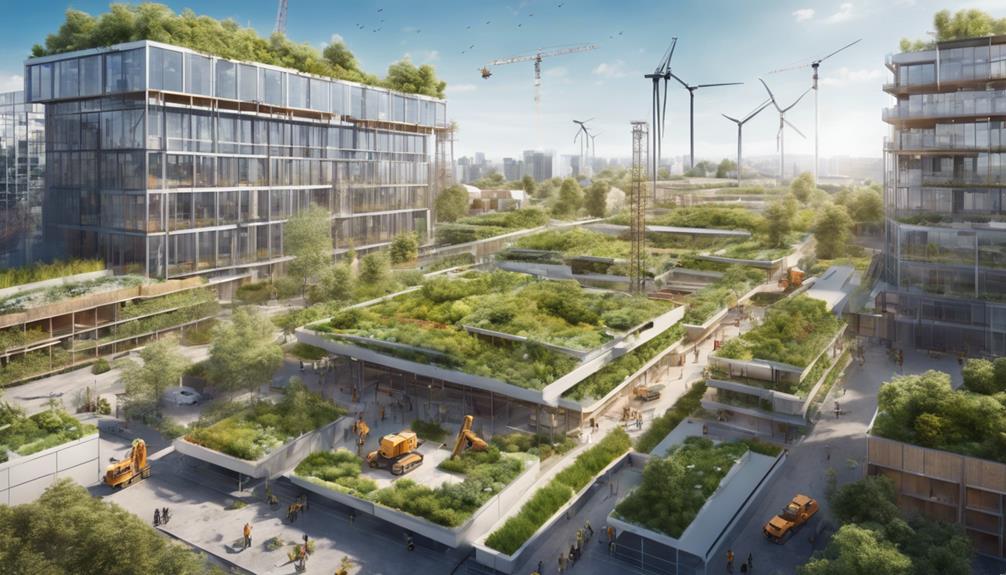
You're embracing a greener future in commercial construction with innovative sustainable technologies. Consider solar power systems that turn buildings into energy producers, and smart HVAC systems optimizing your energy usage. Don't forget high-efficiency fixtures and smart water meters that make water conservation straightforward. Enhanced with sustainable building materials like bamboo flooring and recycled concrete, your projects not only reduce environmental impact but also appeal to eco-conscious consumers. Harnessing these technologies leads to operational cost savings and boosts your building's marketability. Exploring these options further will reveal deeper benefits and potentials for your construction projects.
Green Building Materials
In the realm of commercial construction, green building materials are revolutionizing how structures come to life. You're seeing more developers choose sustainable options that not only benefit the environment but also offer long-term financial gains. These materials, ranging from recycled steel to low-VOC paints, ensure that your building projects are as eco-friendly as they're robust.
Imagine using bamboo for flooring instead of traditional hardwood. Bamboo grows quickly, making it a highly renewable resource that you can feel good about. It's not just about the materials themselves but also about the impact their production has on the planet.
By opting for recycled content in concrete, you're reducing landfill waste and decreasing the use of virgin materials, which often require energy-intensive extraction processes.
Your choices extend beyond just the materials. The way these materials are sourced and manufactured plays a crucial role in reducing the carbon footprint of your projects. Opting for locally sourced materials minimizes transportation emissions, enhancing the sustainability of your construction even further.
These choices aren't just good for the Earth; they also cater to a growing market of eco-conscious consumers, potentially increasing your project's marketability. By integrating green materials, you're not just building; you're leading in the new era of sustainable construction.
Energy Efficient Systems
Transitioning from materials to mechanisms, consider how energy-efficient systems dramatically cut down your building's power consumption. Integrating smart HVAC systems, for example, isn't just about maintaining comfortable temperatures; it's about optimizing airflow and thermal settings based on real-time occupancy and weather conditions. You'll see your energy bills plummet as these systems learn and adapt to daily building usage patterns.
Don't overlook lighting solutions either. By switching to LED lighting, coupled with intelligent sensors that adjust brightness according to natural light levels and room occupancy, you're not just saving on electricity. You're also enhancing the work environment which can boost productivity.
Furthermore, think about the role of high-performance insulation and energy-efficient windows. These aren't just barriers against weather; they're crucial components in maintaining internal temperatures without overburdening heating and cooling systems. This synergy between advanced materials and smart systems significantly reduces the need for artificial heating and cooling, slashing your energy consumption even further.
Adopting these technologies means you're not only contributing to environmental sustainability but also capitalizing on substantial cost savings in the long run. Embrace these innovations and watch as they pay off in both ecological and economic dividends.
Water Conservation Technologies
Shifting focus to water conservation technologies, you'll discover that implementing advanced systems can significantly reduce your building's water usage. These innovations not only benefit the environment but also cut down on your operational costs.
For starters, consider high-efficiency fixtures like toilets, faucets, and showerheads. These aren't just any fixtures; they're designed to use less water per use, dramatically cutting your building's overall consumption. Pair these with smart water meters that provide real-time data on water usage and leaks. This way, you're not just saving water; you're also becoming proactive in managing resources efficiently.
Next, explore greywater recycling systems. These systems reuse water from sinks, showers, and laundry, treating it for use in toilet flushing or landscape irrigation. It's a clever way to double the utility of the water you're already consuming.
Don't overlook rainwater harvesting either. By installing a system to collect and store rainwater, you can reduce your reliance on municipal water supplies. This collected water can be used for non-potable purposes, such as irrigation or cooling towers.
Solar Power Integration
As you explore water conservation technologies, another impactful step towards sustainable building involves integrating solar power. Solar power systems harness sunlight to generate electricity, drastically reducing reliance on non-renewable energy sources. You'll not only lower energy costs but also enhance your building's environmental credentials.
Imagine converting vast areas of your building's rooftops and facades into energy-producing assets. By installing photovoltaic (PV) panels, you can turn these underutilized spaces into power generators.
The initial investment in solar technology might seem substantial, but the long-term savings on electricity bills and the potential to earn tax credits and rebates make it economically viable.
Moreover, integrating solar power contributes to a sustainable energy profile that appeals to eco-conscious tenants and clients. This can significantly boost your property's marketability and potentially increase its value.
And you're not just saving money; you're playing a pivotal role in the global shift towards sustainable development.
Adopting solar power isn't just about installing panels; it's about committing to a renewable future. Consider the broader impact of your choice: reduced greenhouse gas emissions, less dependency on fossil fuels, and a strong message about your commitment to sustainability.
Smart Building Solutions
Building on the momentum of solar integration, smart building solutions represent the next frontier in sustainable commercial construction. You'll find that these technologies not only enhance building efficiency but also significantly reduce operational costs.
Imagine walking into a building where lighting, heating, and cooling systems adjust automatically based on occupancy and weather conditions. That's the reality of smart buildings.
By integrating IoT devices, smart sensors, and advanced analytics, you can now monitor and control your building's energy consumption in real time. This isn't just about saving money; it's about optimizing resources and improving the occupant experience.
For instance, smart windows can adjust their tint based on the intensity of sunlight, maintaining optimal indoor temperatures without excessive air conditioning use.
Moreover, these smart systems can predict maintenance needs before they become costly repairs, ensuring that your building operates smoothly without unexpected downtime. This proactive approach not only preserves the building's value but also enhances sustainability by extending the lifespan of its components.
As you dive deeper into smart building solutions, you'll realize they're not just optional upgrades. They're essential tools that align with your commitment to sustainability and efficiency. Embrace these innovations and lead the way in transforming commercial construction for a better tomorrow.
Waste Reduction Methods
Reducing waste in commercial construction is crucial for maintaining sustainability and cost-efficiency. You've got to adopt strategies that not only minimize waste generation but also promote the reuse and recycling of materials.
Start by planning your projects meticulously. Efficient design reduces excess, and by using materials that can be recycled or are made from recycled content, you're already a step ahead.
You should also consider deconstruction over demolition. This method allows you to salvage valuable materials that can be reused in other projects, significantly reducing the amount of waste sent to landfills. It's not just about being eco-friendly; it's also about cutting down costs associated with waste disposal.
Implementing a just-in-time (JIT) inventory system can drastically cut down on waste by reducing the materials that are over-ordered and subsequently wasted. Ensure you're ordering only what's necessary, when it's necessary.
Lastly, educate your team about the importance of waste management. Conduct regular training sessions on waste reduction techniques and the benefits of recycling. When everyone's on board, maintaining a lean construction site becomes much easier, helping you meet your sustainability goals while keeping a lid on costs.
Indoor Environmental Quality
Improving indoor environmental quality (IEQ) in commercial construction significantly enhances occupant comfort, health, and productivity. You'll find that focusing on IEQ involves several key components, such as air quality, lighting, and acoustic performance.
Firstly, consider the air you're breathing inside. Utilizing advanced HVAC systems with proper filtration methods can drastically reduce pollutants, ensuring the air remains clean and fresh. This isn't just about comfort; it's about reducing sickness and boosting cognitive function among building occupants.
Next, let's talk about natural light. Maximizing daylight not only saves energy but also benefits mental health and overall well-being. By designing spaces with ample windows and using materials that reflect natural light, you can create an environment that reduces eye strain and increases productivity.
Sound plays a crucial role too. Implementing sound-absorbing panels and thoughtfully designed layouts can minimize noise pollution, which often disrupts concentration and increases stress.
Sustainable Site Development
As we focus on the interior elements that enhance comfort and productivity, it's equally important to consider the impact of our building practices on the external environment. You're now entering a phase where your decisions can significantly affect local ecosystems and the broader climate. Sustainable site development focuses on minimizing these impacts through thoughtful planning and innovative practices.
You should start by choosing a site that inherently requires fewer alterations. This means selecting locations that don't disrupt natural waterways, fertile soil, or critical habitats. You'll benefit from leveraging the existing topography to reduce extensive grading and deforestation.
Consider the implementation of green infrastructure elements such as permeable pavements, green roofs, and rain gardens. These features manage stormwater onsite, reduce runoff, and lower the heat island effect, making your project more sustainable and less intrusive to the surrounding area.
You're also encouraged to restore native vegetation and create landscapes that support local wildlife. This not only helps in carbon sequestration but also enhances the aesthetic and ecological value of your development.
Lifecycle Assessment Tools
Lifecycle assessment tools are essential for evaluating the environmental impacts of your commercial construction project from inception to completion. These tools help you measure the sustainability of materials and processes throughout your project's life. You'll find they're indispensable for making informed decisions that align with your sustainability goals.
Let's break it down. Initially, you'll use these tools to analyze raw material extraction and processing impacts. This stage is critical as it sets the foundation for your project's overall environmental footprint.
From there, you'll assess the construction phase, examining everything from energy use to waste management practices. By doing so, you're not just ticking boxes; you're actively minimizing adverse environmental effects.
Post-construction, lifecycle assessment tools continue to serve you by monitoring the building's operation and maintenance. This ongoing evaluation ensures that the building remains as green as possible throughout its use.
Conclusion
You've explored the cutting-edge of sustainable tech in commercial construction, from green materials and energy-efficient systems to solar power and smart solutions. By integrating these innovations, you're not just building structures; you're crafting future-proof, eco-friendly spaces. Embrace these technologies to significantly reduce environmental impacts and enhance efficiency. Remember, every sustainable choice you make contributes to a healthier planet. It's time to lead the change, one building at a time.
Related articles: What Are the Best Sustainable Construction Tech Solutions? · How to Implement Green Construction Technology Solutions · Building Green: Gadgets for Guilt-Free Construction