
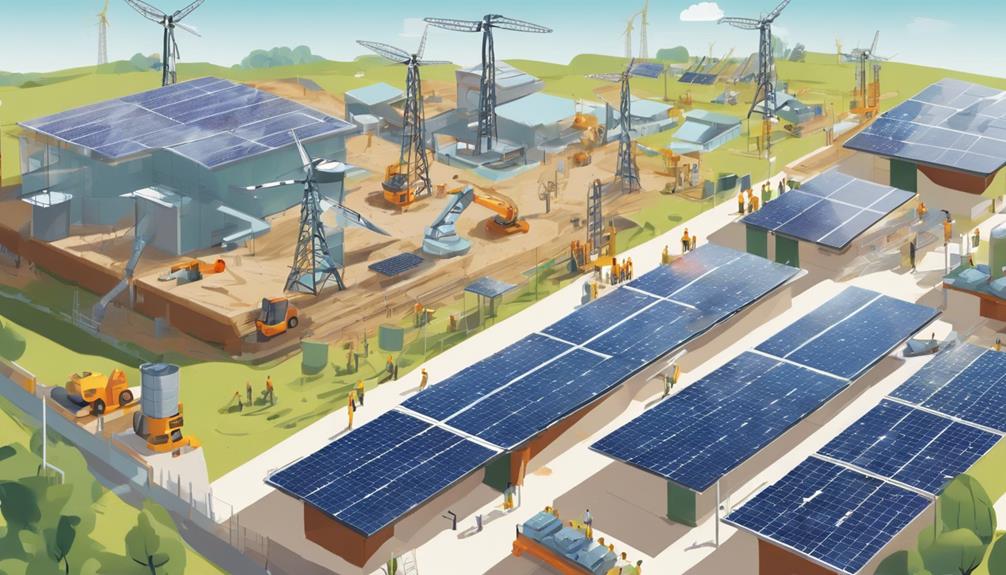
To implement green construction technology solutions, start by familiarizing yourself with green building standards like LEED or BREEAM. Opt for sustainable building materials such as recycled steel or bamboo, and consider using renewable energy systems like solar panels or geothermal energy to power your projects. Don't forget to install efficient water management systems, including low-flow fixtures and rainwater harvesting. Integrating smart building technologies will enhance energy efficiency and operational performance. Each step you take not only supports the environment but also boosts the health and comfort of building occupants. There's more to explore on how these technologies can transform your next project.
Understanding Green Building Standards
Green building standards are crucial guidelines you must follow to ensure sustainability in construction. These benchmarks serve as the foundation for reducing environmental impacts while promoting healthier living environments. You're not just constructing buildings; you're fostering a sustainable future.
When you dive into these standards, you'll encounter various certifications and ratings like LEED, BREEAM, or WELL. Each of these has its own set of criteria focusing on aspects such as energy efficiency, water use, indoor environmental quality, and innovation in design. It's key to familiarize yourself with the specific requirements of the certification you're aiming for. This isn't just about compliance; it's about exceeding norms and setting new benchmarks in sustainable construction.
Implementation often involves rigorous planning and detailed project management. You'll need to engage with architects, engineers, and builders who are versed in these standards. They'll help you navigate the complex landscape of sustainable building, ensuring that every component of your project aligns with the established criteria.
Choosing Sustainable Building Materials
After understanding green building standards, selecting the right sustainable building materials is your next crucial step. You'll want to focus on materials that not only reduce environmental impact but also promote energy efficiency and long-term durability.
Start by considering locally sourced materials. Using local products reduces transportation emissions and often supports your local economy. Materials like reclaimed wood, recycled steel, and bamboo are sustainable choices that also add a unique aesthetic to your project.
Next, think about the life cycle of the materials you choose. Opt for those that offer longevity and are recyclable, ensuring they can be reused or disposed of responsibly at the end of their life. Products like recycled content concrete and natural fiber insulation are excellent examples.
Don't forget to assess the manufacturing process of each material. Prefer those produced with minimal chemical pollutants and lower water usage. This step not only helps in preserving natural resources but also minimizes health risks to construction workers and future building occupants.
Lastly, ensure all materials meet or exceed existing green building standards. This alignment guarantees that your choices aren't only environmentally friendly but also recognized and valued in the green construction community.
Integrating Renewable Energy Systems
Once you've selected sustainable building materials, the next step is to integrate renewable energy systems into your construction project. This move isn't just eco-friendly; it's also economically wise in the long run. You're looking at solar panels, wind turbines, and geothermal energy as primary options.
Start with solar panels. They're versatile and can be installed on roofs or as part of the building's facade. You'll need to evaluate the solar potential of your site to ensure maximum efficiency. Don't forget to consider battery storage systems to manage excess power.
Next, consider wind turbines if your site is in a high-wind area. Small-scale turbines can be seamlessly integrated into building designs and are especially effective in rural or remote locations.
Geothermal systems are another excellent option, particularly for heating and cooling. By installing a geothermal heat pump, you're tapping into the earth's stable underground temperature to regulate building climate more efficiently.
Lastly, ensure all systems are interconnected with smart technology. This allows for real-time monitoring and better energy management. You'll not only save on costs but also boost the building's sustainability credentials. Remember, integrating these systems requires careful planning and expertise, so consider consulting with a specialist.
Implementing Efficient Water Management
While integrating renewable energy is crucial, don't overlook the importance of implementing efficient water management in your construction project. Efficient water management isn't just about saving water; it's about integrating systems that reduce your project's overall environmental impact and operational costs.
Start by choosing low-flow fixtures for toilets, showers, and faucets. These fixtures use significantly less water than standard ones, helping you cut down on water usage without sacrificing performance.
Also, consider installing rainwater harvesting systems. These systems collect rainwater from roofs, which can be used for landscaping, flushing toilets, and other non-potable uses. This not only reduces your demand on the local water supply but also decreases stormwater runoff, which can be a major pollutant.
Incorporate drought-resistant landscaping to further minimize water usage. Opt for native plants that require less water, maintenance, and fertilizer. By doing so, you're not just conserving water; you're also creating a sustainable ecosystem that supports local wildlife.
Lastly, implement a water management plan that includes regular checks for leaks and a schedule for maintenance. Educating your building users on water conservation practices is also essential. This holistic approach ensures that your project remains efficient and sustainable long after completion.
Utilizing Smart Building Technologies
Shifting focus to smart building technologies, you'll find they're essential for enhancing operational efficiency and occupant comfort in modern construction projects. These technologies aren't just about automation; they're about integrating intelligence into every part of a building.
You can start by incorporating advanced sensors and IoT devices. These tools monitor everything from energy usage to structural health, providing data that's crucial for proactive maintenance and energy management. Imagine being alerted about a potential system failure before it happens—that's the power of smart technology at your fingertips.
Next, consider the role of building management systems (BMS). A BMS centralizes control of the building's systems, from HVAC to lighting, often optimizing performance to reduce energy consumption and costs. It's not just about keeping the lights on; it's about making sure they're used efficiently.
Enhancing Indoor Environmental Quality
Turning our attention to enhancing indoor environmental quality, it's crucial to realize how significantly this impacts both comfort and health. As you embark on green construction projects, consider the array of strategies that ensure the air inside remains healthy and clean.
Start by choosing low-emitting materials. These products, such as paints, sealants, and flooring, release fewer volatile organic compounds (VOCs), enhancing the air quality of your indoor spaces.
You'll also want to focus on advanced ventilation systems. A well-designed system doesn't just circulate air; it filters and purifies, removing pollutants and maintaining an appropriate level of humidity. This is vital for preventing mold growth and ensuring occupants are breathing easy.
Moreover, natural light plays a pivotal role. Incorporate large windows and skylights to maximize daylight, reducing the reliance on artificial lighting, which can emit harmful by-products and consume excessive energy.
Daylighting not only saves energy but also boosts mood and productivity, creating a more pleasant and productive environment.
Adopting Waste Reduction Practices
Building on the foundation of enhancing indoor environmental quality, it's equally important to focus on waste reduction in green construction. You need to start at the design phase, where minimizing material usage can significantly cut down waste. This means optimizing your building layouts and selecting standardized sizes to reduce cut-offs.
You'll also benefit from choosing materials that are recyclable or that have been recycled. It's not just about selecting the right materials; it's about planning how to use them efficiently.
For instance, consider modular construction techniques that allow for components to be prefabricated. This method not only speeds up construction but also reduces waste generated on site.
Implementing a strict sorting policy at your construction site is crucial. Set up clear bins for different types of waste – wood, metal, plastic, and so forth. Educate your crew on the importance of sorting waste to ensure maximum recycling and minimum landfill use.
Lastly, think about the future. Choose materials and develop designs that can be easily disassembled and reused. This approach extends the lifecycle of the materials and reduces the environmental impact of your projects. It's all about thinking ahead and making sustainable choices that'll pay off long term.
Applying Green Roofing Solutions
Green roofing solutions present a transformative opportunity to enhance the sustainability of your building projects. By incorporating vegetation atop your buildings, you're not just adding aesthetic value; you're actively contributing to urban air quality improvement and biodiversity. These green roofs absorb rainwater, reducing runoff and decreasing the burden on urban sewage systems.
You'll need to choose the right type of green roof depending on your building's structure. Extensive roofs, with shallow soil depths, support small plants like sedums and can be installed on a variety of buildings due to their light weight.
Intensive roofs, however, are heavier, require deeper soil, and can accommodate a wider range of plants, including shrubs and small trees.
Installing a green roof isn't as daunting as it might seem. Start by consulting with a structural engineer to ensure your roof can support the additional weight. Next, choose a waterproof membrane to protect the building. Above this, install a root barrier, followed by a drainage layer, then soil, and finally, the plants.
Evaluating Project Sustainability Impact
After implementing green roofing solutions, it's important to assess the overall sustainability impact of your project. You've made a significant step by choosing environmentally friendly materials and designs, but how do you measure the actual benefits?
Start by evaluating energy efficiency. Green roofs typically reduce the need for heating and cooling, leading to lower energy consumption. You can compare your energy bills before and after installation to see the difference.
Next, consider the roof's impact on stormwater management. Green roofs absorb and retain rainwater, which reduces runoff and alleviates pressure on urban sewage systems. Measure the volume of water your roof retains during rainfall events to quantify this benefit.
Don't forget about the improvement in air quality and biodiversity. Green roofs contribute to filtering pollutants and providing habitats for various species. Assess the types of plants and wildlife supported by your roof, and monitor any changes in local air pollution levels.
Lastly, evaluate the roof's lifespan and maintenance requirements. Sustainable materials often last longer and require less frequent replacement, which enhances the project's sustainability. Calculate the savings in maintenance costs and potential waste reduction over time. These factors collectively showcase the true sustainability impact of your project.
Conclusion
You've explored the essentials of green construction, from selecting sustainable materials to integrating renewable energy. Now, implement these technologies to not only meet green standards but also enhance efficiency and comfort. Utilize smart systems and adopt waste reduction practices for a significant impact. Remember, every small step contributes to a larger environmental goal. By applying what you've learned, you'll lead the way in sustainable building, ensuring a healthier planet for future generations.
Related articles: Building Green: Gadgets for Guilt-Free Construction · Top 10 Sustainable Construction Technology Solutions · 3 Best Modern Architectural Design Trends 2023