
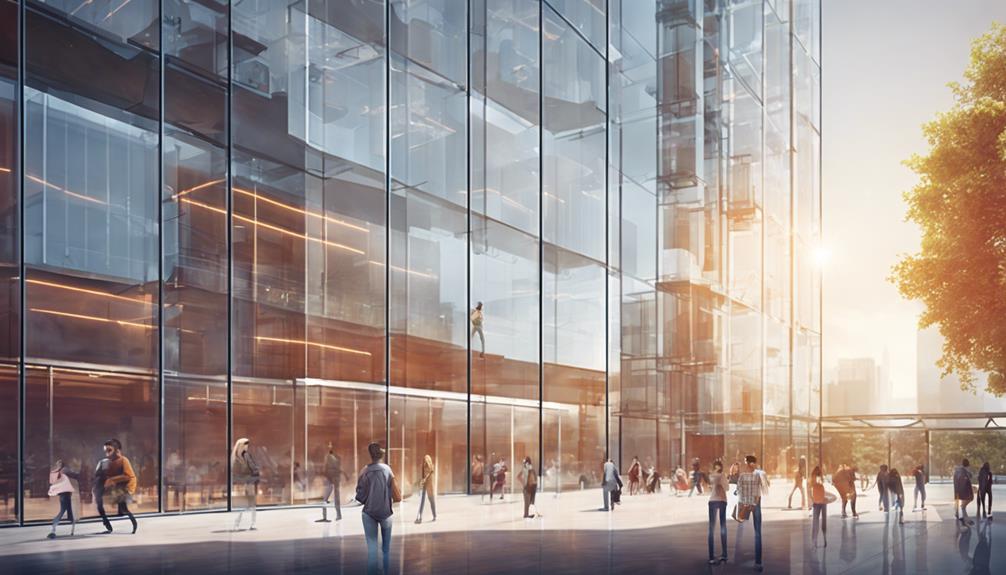
In commercial construction, you'll find that smart building technology significantly boosts efficiency and sustainability. This tech integrates sensors and IoT devices to monitor essential aspects like energy usage and air quality. It can retrofit existing structures and optimize systems such as lighting and HVAC to adapt automatically to occupancy and external conditions. This not only lowers energy costs but also enhances the overall environmental footprint. By harnessing these innovations, buildings become more responsive and interconnected, enabling a holistic management approach that fundamentally transforms environments. You'll see how adopting these technologies can transform your next project and explore what's on the horizon for smart construction.
Overview of Smart Building Technologies
Smart building technologies transform how commercial buildings operate, making them more efficient and responsive. As you explore the latest in construction, you'll discover how these technologies integrate various systems within a building to optimize performance.
Imagine sensors and IoT devices that monitor everything from energy usage to air quality. They feed data into a centralized management system, allowing for real-time adjustments. You don't just get reports on how much energy you're using; you get actionable insights that help you use resources more wisely.
These systems aren't limited to new constructions. Existing buildings can be retrofitted with smart technologies, bringing them up to speed with modern standards. It's about upgrading what you've got, making it better, and preparing it for future demands.
Consider also the role of automation in this tech landscape. Systems can automatically adjust lighting, heating, and air conditioning based on occupancy and weather conditions. You're not just saving on costs; you're also creating a more comfortable environment for everyone inside.
As you delve deeper into smart building technologies, you'll see they're not just about individual gadgets. They represent a holistic approach to building management that fundamentally changes how environments are controlled and experienced.
Benefits of Smart Construction Systems
With smart construction systems, you'll experience significant improvements in efficiency and safety on your projects. These systems streamline numerous construction processes, allowing you to monitor progress and manage resources more effectively. You can expect fewer delays and cost overruns, as real-time data and analytics help you make quicker, informed decisions.
Moreover, smart tech minimizes human error and enhances safety protocols. Automated tools and machinery reduce the need for manual labor in hazardous conditions, thus lowering the risk of accidents.
You'll also find that smart sensors and wearables keep workers safer by monitoring health metrics and environmental conditions, alerting you to potential dangers before they become critical issues.
Beyond efficiency and safety, you'll enjoy improved sustainability with smart construction. These systems optimize the use of materials, reduce waste, and ensure that energy efficiency standards are met or exceeded. This not only helps the environment but also cuts down long-term operational costs, making your projects more sustainable economically and environmentally.
Incorporating smart construction systems isn't just a step forward; it's a leap towards more resilient, efficient, and safer construction practices that align with modern demands and standards.
Key Features of Intelligent Infrastructure
Intelligent infrastructure integrates advanced technology directly into the framework of buildings and systems, enhancing functionality and interconnectivity. When you step into a smart building, you're entering a space where every component, from lighting to HVAC, is optimized for efficiency and comfort. This isn't just about convenience; it's about creating environments that adapt to your needs before you even express them.
One of the standout features you'll notice is the use of sensors. These aren't ordinary sensors; they collect data on everything from room occupancy to air quality, providing a continuous stream of information used to improve your experience and reduce waste.
Imagine walking into a conference room and having the lights and temperature adjust automatically to your preset preferences—this is the reality of intelligent infrastructure.
Moreover, integration plays a huge role. All these systems communicate through a centralized platform, making management a breeze. You can control various aspects of the building from a single dashboard, enhancing not just user comfort but also operational efficiency.
Lastly, energy management in smart buildings goes beyond simple conservation. Systems are designed to learn from usage patterns, making real-time adjustments that significantly lower energy costs and carbon footprints. This isn't the future; it's what you can expect from today's intelligent infrastructure.
Implementation Challenges and Solutions
How do we tackle the hurdles of implementing smart building technology?
First, you're likely to face high upfront costs. To mitigate this, explore various financing options like grants, loans, or partnerships that could ease the initial financial burden. It's also wise to start small with pilot projects that demonstrate ROI before scaling up.
Next, you'll encounter integration issues. Your current building systems mightn't seamlessly connect with new smart technologies. To overcome this, work with technology providers that offer flexible solutions adaptable to existing infrastructure. Ensure there's an integration plan in place that includes comprehensive testing phases to catch any compatibility issues early on.
Another major challenge is the resistance to change from your team. It's crucial to manage this by fostering a culture that values innovation. Provide training sessions and workshops to familiarize your staff with the new technologies. Highlight how these advancements can make their daily tasks easier and improve overall efficiency.
Lastly, concerns about data security can arise. Strengthen your system against potential cyber threats by investing in robust cybersecurity measures and regularly updating them. Keep your team informed about security protocols to ensure everyone's on the same page, safeguarding your project from data breaches.
Future Trends in Smart Construction
Several emerging trends are set to redefine the landscape of smart construction. You'll soon notice that buildings aren't just structures; they're evolving into responsive, interactive environments. Imagine walking into an office that adjusts lighting, temperature, and even background noise based on your preferences and schedule. This personalized environment is made possible by the integration of IoT devices and AI, creating buildings that not only conserve energy but also enhance your productivity and comfort.
You'll also see a significant shift towards sustainable construction practices. As you become more environmentally conscious, the demand for green technology in building designs will skyrocket. Materials that are both sustainable and self-healing will be at the forefront, reducing maintenance costs and extending the lifecycle of infrastructures.
Moreover, the use of augmented reality (AR) and virtual reality (VR) in construction projects will transform how you visualize and modify your space before construction even begins. This technology allows for precise adjustments and error minimization, which in turn cuts down on waste and ensures that projects adhere more closely to their initial plans.
As you look ahead, be ready for a construction industry that's smarter, more efficient, and increasingly tailored to user needs.
Conclusion
As you explore the evolving world of smart building technologies, you're stepping into a future where efficiency and sustainability are at the forefront. Embrace these innovative systems to not only enhance building management but also to significantly cut costs and reduce environmental impact. While implementation challenges may arise, the solutions are within reach, promising a smarter, more resilient infrastructure. Stay ahead by keeping an eye on upcoming trends, ensuring your projects are as future-proof as they are impressive.
Related articles: Evolution of Smart Building Tech in Commercial Construction · 10 Innovative Materials Transforming Commercial Construction · Why Are New Materials Transforming Commercial Construction?