
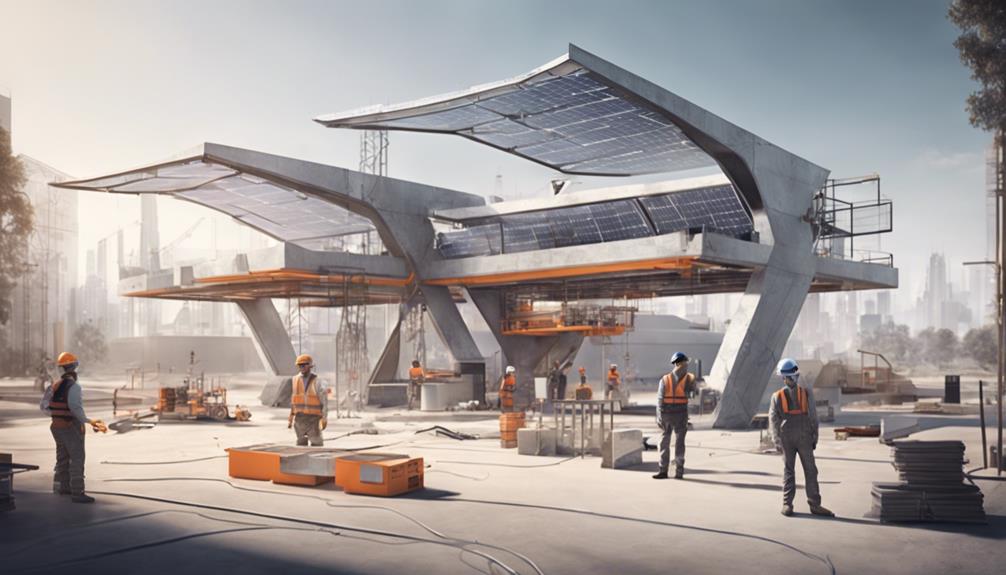
You're at the forefront of a construction revolution with materials that not only enhance building sustainability but also transform design and efficiency. Imagine structures self-repairing with concrete that heals its own cracks, or envision transparent aluminum that offers the strength of metal with the clarity of glass. Consider the rapid customization and reduced costs brought by 3D printed steel, and the superior insulation from aerogel, slashing energy bills. From modular bamboo structures easy to assemble, to lightweight liquid granite, the options are both innovative and environmentally kind. Exploring these materials further could significantly reshape your understanding of modern construction.
Self-Healing Concrete
Self-healing concrete, an innovative material designed with your building's longevity in mind, automatically repairs its own cracks. When you choose this advanced concrete for your construction projects, you're investing in a future where maintenance costs plummet and structural integrity skyrockets.
This concrete isn't just smart; it's practical. It incorporates tiny capsules filled with healing agents that burst upon the formation of cracks, releasing a substance that hardens to fill the gaps.
Imagine the savings you'll achieve with reduced repair work. You won't have to monitor your building as closely for signs of wear and tear, giving you peace of mind and more time to focus on other aspects of your business.
Plus, the environmental impact is significantly minimized. By cutting down on the frequency of repairs, you're also reducing the carbon footprint associated with regular maintenance activities.
This isn't just about cost-saving; it's about resilience. Buildings that incorporate self-healing concrete can withstand harsh conditions longer, reducing the likelihood of catastrophic failures during events like earthquakes.
It's a forward-thinking choice that puts you ahead in the sustainability and durability stakes, making your investment not just sound, but visionary.
Transparent Aluminum
Step into the future with transparent aluminum, an advanced material that revolutionizes traditional views on both aesthetics and functionality in construction. Imagine a world where you can enjoy the toughness of metal with the clear, unobstructed views of glass. That's what transparent aluminum offers. It's not just a fantasy from science fiction; it's a robust, real-world material that's making waves across various industries, especially in commercial building.
You're probably wondering how it works. Transparent aluminum is essentially a ceramic alloy made from aluminum, oxygen, and nitrogen. It combines high optical clarity with the strength and durability typical of metallic elements. This means you can use it in places where traditional glass might shatter or where typical metals might obstruct the view.
Think about the applications in skyscrapers, where large, clear panels are essential for aesthetics but must also withstand extreme weather conditions. Transparent aluminum steps up as the perfect candidate. It's resistant to corrosion, offers excellent durability, and maintains transparency, bridging the gap between function and form.
Moreover, its versatility doesn't stop at windows. From transparent security barriers to sky-high observatories, transparent aluminum is opening up new possibilities in design and architecture, ensuring structures aren't just safe and sound but also visually stunning.
3D Printed Steel
While transparent aluminum is transforming views and structural integrity, 3D printed steel is reshaping how we think about construction timelines and design flexibility. Imagine you're tasked with a complex architectural design that includes intricate patterns and custom fittings. Traditionally, steel fabrication might limit your creativity due to the constraints of manufacturing and the time it takes to produce specific elements.
However, with 3D printed steel, you're no longer bound by these limitations. This technology allows for rapid prototyping and production, meaning you can move from design to construction much faster than before. You can tweak designs up until the last minute, providing a level of flexibility previously unattainable with conventional methods.
This agility can significantly reduce overall project timelines and potentially cut down costs associated with delays and labor. Moreover, 3D printing with steel isn't just about speed and flexibility; it also promotes sustainability. The process minimizes waste by using only the amount of material required for each component, unlike traditional methods that may involve cutting large chunks of steel and discarding the excess.
This efficiency not only saves materials but also reduces the environmental impact of your construction projects. So, as you plan your next big build, consider how 3D printed steel could elevate your project from the ordinary to the extraordinary.
Aerogel Insulation
Moving on to aerogel insulation, you'll find it revolutionizing the way we insulate buildings. Known for its incredible lightness and high insulating properties, this material offers a game-changing approach to energy efficiency in commercial construction.
Imagine a building that stays warm in the winter and cool in the summer, all thanks to an insulation that's nearly as light as air.
You might wonder how something so light can be so effective. It comes down to the structure of aerogel, which is composed almost entirely of air, trapped within a network of silica particles. This formation minimizes heat transfer, making aerogel one of the best insulators available today.
But the benefits don't stop at thermal insulation. Aerogel is also extremely effective at reducing noise pollution—a significant advantage in bustling urban environments. Plus, it's non-toxic and fire-resistant, enhancing both the safety and sustainability of modern buildings.
You're not just looking at an insulation option that performs well; you're investing in a material that pushes the boundaries of what's possible in construction technology. As you consider the future of your projects, remember that incorporating aerogel could significantly reduce energy costs while boosting the overall environmental profile of your buildings.
Modular Bamboo
After exploring the high-tech benefits of aerogel insulation, let's consider another innovative material: modular bamboo. You might wonder why bamboo? Well, it's not just any bamboo. This engineered form is a game-changer in commercial construction due to its sustainability and strength.
Modular bamboo offers you a unique combination of flexibility and durability that traditional materials can't match. It's grown rapidly, harvested sustainably, and prepared into modules that can be easily assembled and disassembled. This means you're looking at a construction process that's not only quicker but also less wasteful.
Imagine reducing your carbon footprint while still achieving high aesthetic and structural standards. Modular bamboo accomplishes this with a lower environmental impact than conventional building materials like steel or concrete. It's also incredibly resilient, capable of withstanding severe weather conditions, which is crucial for commercial buildings.
Moreover, the versatility of modular bamboo allows for innovative design solutions. Whether you're building a high-rise or a sprawling corporate campus, bamboo modules can be adapted to meet diverse architectural needs. This adaptability, coupled with cost-effectiveness, makes modular bamboo an ideal choice for forward-thinking construction projects.
Light-Generating Cement
Exploring the realm of light-generating cement opens up new possibilities for energy-efficient building designs. Imagine walking on a sidewalk illuminated by the very material it's made of. That's the future you're stepping into with light-generating cement.
This innovative material absorbs solar energy during the day and emits light after the sun goes down, providing a built-in lighting solution that doesn't rely on external electricity sources.
You'll find that this technology not only enhances aesthetic appeal but also increases safety in low-light conditions. Think about the reduced need for street lamps and the potential to create safer, self-illuminating pedestrian paths in your projects. Additionally, this cement can be integral in emergency scenarios, lighting up evacuation routes without the need for power.
The practical applications are vast. From driveways and garden paths that need no additional lighting to glowing architectural elements that make a building stand out, your options expand significantly.
Moreover, integrating this cement into your constructions can significantly cut down on electricity costs, contributing to a more sustainable and cost-effective building model.
Liquid Granite
Nearly every commercial construction project stands to benefit from the robust versatility of liquid granite. You might wonder, what exactly is this material? Liquid granite, a composite that mimics the strength and durability of granite without the extensive quarrying and heavy processing, offers a sustainable alternative in building materials.
It's composed of a mix of recycled granulated slags and ashes, bound by a hydraulic binder, generally creating a lighter product than traditional concrete.
Imagine you're managing a project where weight and environmental impact are concerns. You'll find liquid granite to be particularly advantageous. It's not just about the lighter footprint; this material also boasts superior fire resistance compared to standard concrete options. That means you can achieve safer, more resilient structures, particularly vital in high-risk areas prone to fire.
Additionally, its thermal compatibility with steel makes it an excellent choice for reinforced structures, enhancing the building's overall integrity and longevity. You'd appreciate knowing that despite its high-performance qualities, liquid granite remains cost-effective. It requires less energy in production and can be sourced more sustainably, helping you meet budget and environmental targets without compromising on quality.
Flexible Concrete Cloth
Shifting focus to another innovative material, flexible concrete cloth offers unique advantages in commercial construction. You've probably dealt with the complexities of traditional concrete applications, from preparing the mix to ensuring proper curing. Now, imagine a material that simplifies all that while maintaining durability. That's where concrete cloth comes in.
This material, often shipped in rolls, is a fabric infused with cement. You can cut it to size, position it, and then just add water to activate the curing process. It's ready to use in less than 24 hours. Think about the time you'll save on your projects, not to mention the labor costs.
Concrete cloth isn't just quick; it's also incredibly versatile. You can use it for emergency repairs or as a durable layer for erosion control. It molds to the shape of the surface it's applied to, creating a strong, waterproof barrier.
This adaptability makes it perfect for constructing complex shapes or working in tight spaces where traditional methods would be cumbersome.
Thermal Bridging Foam
While flexible concrete cloth simplifies many construction challenges, thermal bridging foam addresses a different set of concerns in commercial building projects. You're likely aware of the significant energy losses that occur through thermal bridging – where building materials conduct heat, cooling, or sound between the inside and outside of a building, bypassing the insulation. That's where thermal bridging foam steps in. It's a game-changer, especially in climates with extreme temperatures.
This innovative foam material is designed to fit snugly between concrete panels and other hard-to-insulate spaces, effectively blocking heat transfer at points that typically leak energy. Think of it as the seal that stops your building's energy from sneaking out. You'll not only save on heating and cooling costs, but you'll also boost your building's overall energy efficiency.
Moreover, thermal bridging foam is incredibly light and easy to install. You won't be wrestling with bulky insulation materials or specialized tools. It's just a matter of fitting the foam into the right spots. This ease of use translates to faster construction times and lower labor costs.
Plus, its durability means you aren't looking at replacements or major maintenance headaches anytime soon. So, you're not just improving efficiency; you're setting up for long-term savings.
Recycled Plastic Bricks
Recycled plastic bricks represent an exciting leap forward in sustainable building materials. You're likely familiar with traditional bricks, but these innovative alternatives are made from recycled plastics, turning waste that would otherwise clog landfills into valuable construction resources. They're not just eco-friendly; they're durable, lightweight, and water-resistant, making them ideal for a variety of building needs.
Imagine constructing a building that helps combat plastic pollution. These bricks are molded from shredded plastic waste, heated, and compressed into robust shapes that lock together easily. This process reduces the carbon footprint associated with manufacturing traditional clay bricks, which typically require high-temperature kilns.
The benefits don't stop at environmental impact. They're cost-effective, as they reduce the need for expensive raw materials and minimize long-term maintenance costs due to their resilience against rot and pest damage.
Plus, their light weight can save you significantly on transportation and labor costs.
Conclusion
You've just explored some of the most groundbreaking materials revolutionizing commercial construction. From self-healing concrete that fixes its own cracks to transparent aluminum that combines strength and aesthetics, these innovations are setting new benchmarks. Imagine building with 3D printed steel or insulating with aerogel for superior energy efficiency. As you consider integrating modular bamboo or recycled plastic bricks, remember, these materials aren't just about building structures; they're about building a sustainable future. Embrace the change and lead the way in modern construction.
Related articles: Why Are New Materials Transforming Commercial Construction? · Top 10 Innovative Materials in Commercial Construction · 7 Best Innovative Materials in Commercial Construction