
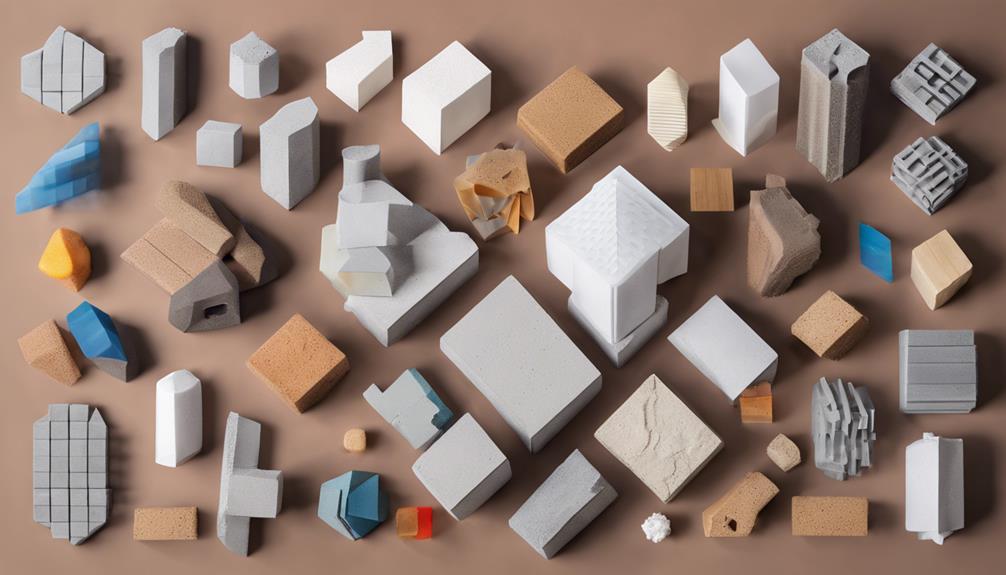
You're stepping into the future with the top 10 innovative materials in commercial construction that are reshaping the industry. Self-healing concrete repairs its own cracks, while transparent aluminum merges the strength of metal with the clarity of glass. Aerogel insulation offers unmatched thermal resistance, and modular bamboo provides flexibility and rapid assembly benefits. The revolution extends to 3D printed structures that reduce waste and enable complex designs. Additionally, thermal bridging breakers improve energy efficiency, and pollution-absorbing bricks clean the air around your buildings. Recycled plastic blocks further promote sustainability. Each material not only promises enhanced performance but also paves the way towards a greener planet. Explore further and you'll uncover how these materials also impact cost and aesthetic considerations.
Self-Healing Concrete
Self-healing concrete represents a significant breakthrough in prolonging infrastructure life and reducing maintenance costs. Imagine you're walking along a bridge or a skyscraper that repairs its own cracks, almost like magic. This isn't a fantasy; it's real, thanks to the innovative use of specific bacteria within the concrete mix. These bacteria, when activated by water ingress, produce limestone, effectively plugging cracks and fissures that develop over time.
You might wonder how this affects you. Well, it drastically reduces the frequency and necessity for repairs, which typically disrupt your daily commute and can be a significant public nuisance. Moreover, because structures last longer, you're also looking at lower construction costs in the long run. This technology doesn't just save money; it's eco-friendly, reducing the carbon footprint associated with frequent renovations and rebuilding.
For you as a homeowner, imagine the benefits in terms of house maintenance. A driveway, patio, or foundation that heals itself means fewer worries about long-term wear and tear. You're not only investing in your home's durability but also in a sustainable future.
Self-healing concrete isn't just a material; it's a smart, practical investment in our infrastructure and living spaces.
Transparent Aluminum
Now, imagine a world where you can enjoy the robust security of metal barriers while still having the ability to see through them. This isn't science fiction—it's a reality with transparent aluminum. This revolutionary material, also known as aluminum oxynitride, combines the strength and durability of metal with the aesthetic appeal of glass.
You might wonder how it's possible. Transparent aluminum is produced by a high-energy process that transforms aluminum oxynitride powder into a clear material. The result is a substance three times harder than steel and transparent like glass. It can withstand extreme pressure and impact, making it an ideal choice for high-security environments.
Think about the possibilities for your projects. You can use it for bulletproof windows or transparent security barriers that don't compromise on light or aesthetics.
It's also highly resistant to thermal shock, so it performs exceptionally well in areas with severe temperature fluctuations.
As you explore options for your next construction project, consider transparent aluminum for applications where durability and visibility are paramount. It's not just a material; it's a game-changer in building design, offering security without sacrificing transparency.
Aerogel Insulation
Shifting focus to another groundbreaking material, consider aerogel insulation for your next project. Known for its exceptional thermal properties, aerogel is a synthetically produced porous ultralight material derived from a gel, in which the liquid component of the gel has been replaced with gas. What makes aerogel stand out is its incredible lightness—it's often dubbed 'frozen smoke' due to its translucent appearance and weight.
When you're tackling energy efficiency, aerogel insulation's performance is unmatched. It offers up to four times the insulating power of traditional fiberglass or foam insulation. This means you can achieve superior thermal performance in your building projects without compromising on space, as aerogel has a much thinner profile.
Moreover, aerogel is hydrophobic, which ensures that it remains effective even in damp conditions. This quality makes it an ideal choice for both humid climates and areas prone to water exposure within buildings. Its durability and resistance to compression also contribute to a longer lifespan compared to standard insulation materials.
Modular Bamboo
Several commercial construction projects are now turning to modular bamboo as a dynamic and sustainable material choice. You'll find that bamboo's natural properties make it an excellent candidate for modern construction needs. It's not only strong and flexible, but it also grows rapidly, ensuring a supply that's both renewable and eco-friendly.
You might wonder how bamboo fits into urban construction. Well, modular bamboo components are prefabricated, meaning they're designed for quick and easy assembly. This modularity allows you to adapt bamboo for various structural needs, from framing to paneling, without compromising on aesthetics or durability. It's a game changer for reducing construction time and labor costs.
Moreover, bamboo's lightweight nature reduces the overall load on building foundations, allowing for less intensive ground work. This aspect is particularly advantageous in areas prone to earthquakes.
Additionally, bamboo has a natural resistance to pests and moisture, which enhances its longevity and reduces the need for chemical treatments.
3D Printed Structures
Diving into another innovative material, 3D printed structures are revolutionizing the commercial construction industry. You've likely heard about 3D printing for small gadgets and tools, but imagine printing entire building components or even whole structures. This isn't just future talk; it's happening right now, and it's transforming how buildings are constructed.
Using large-scale 3D printers, companies can produce walls, floors, and even roofing elements directly from digital models. This technology allows for complex, customized designs that traditional methods would find difficult or too costly. You're not just limited to standard materials either. 3D printers use a variety of inputs, including concrete, plastic composites, and even metal.
The benefits you'll see are substantial. Construction times plummet because parts are printed quickly and assembled faster than traditional methods.
There's also a significant reduction in waste. Since materials are deposited only where needed, there's minimal excess. This efficiency not only saves money but also benefits the environment—a win-win in today's eco-conscious world.
Moreover, the flexibility in design means that new architectural possibilities open up. You can now think about curves and shapes that once seemed out of reach, making your projects stand out in the urban landscape.
Light-Generating Cement
Imagine a world where buildings themselves can illuminate the streets and paths around them. That's the promise of light-generating cement, a groundbreaking material you'll find increasingly in commercial construction. Unlike traditional cement, this innovative variant absorbs solar energy during the day and releases it as light after the sun sets, reducing the need for artificial lighting in outdoor spaces.
Developed using a special type of photoluminescent material, light-generating cement soaks up sunlight and can emit light for around 12 hours at night. The intensity and duration of the light depend on how much sunlight the cement absorbs throughout the day, which means longer, sunnier days can enhance its effectiveness.
You might be wondering about its applications. Well, they're as broad as your imagination. From glowing bike lanes that increase safety for cyclists at night to illuminated sidewalks that enhance urban aesthetics and pedestrian visibility, the potential is vast.
It's also incredibly durable, maintaining its luminescent properties for an extended period without significant degradation.
Think about the implications for energy savings and environmental impact. With light-generating cement, cities can slash their electricity use, lower carbon emissions, and create safer, more sustainable environments—all through the very sidewalks and buildings that define them.
Graphene Reinforcements
While light-generating cement is transforming how we light our cities, another breakthrough, graphene reinforcements, is revolutionizing the strength and durability of construction materials. Imagine you're constructing a building that not only stands taller but lasts longer, all thanks to the incorporation of graphene. This ultra-strong, lightweight material is making significant waves in the construction industry by enhancing the properties of traditional materials like concrete and steel.
You've probably heard about graphene's impressive attributes in other industries, but here's how it applies to construction: when added to materials, graphene improves tensile strength and resistance to wear and tear. This means your projects can endure more physical stress and adverse conditions, reducing maintenance costs and extending the lifespan of structures.
Moreover, graphene's addition to concrete or other composites significantly minimizes material quantities needed without sacrificing structural integrity. You're looking at sleeker, more efficient designs that are resource-effective and environmentally friendlier. This isn't just a step forward; it's a leap in building technology.
Thermal Bridging Breakers
As we continue exploring innovations in commercial construction, thermal bridging breakers emerge as a crucial development. You may wonder what exactly these are. Thermal bridging occurs when materials that are poor insulators come in contact, allowing heat to bypass the insulation in a building. This can significantly affect your building's energy efficiency.
Thermal bridging breakers are specially designed materials that interrupt these pathways. They're typically installed at junctures where insulation is commonly compromised, such as between balconies and interior floors, or around windows. By integrating these breakers, you're effectively reducing heat loss and gain, slashing energy costs noticeably.
These breakers aren't just about energy efficiency; they also help in maintaining interior comfort, preventing cold spots and reducing the risk of condensation, which can lead to mold and mildew. This makes them a key player in both the sustainability and livability of commercial structures.
Materials used for thermal bridging breakers vary, but they all share the characteristic of low thermal conductivity. Innovations continue to evolve, with newer composites and geometric designs enhancing their effectiveness. Adopting this technology means you're stepping towards a more sustainable and cost-effective construction practice.
Pollution-Absorbing Bricks
Turning to pollution-absorbing bricks, these innovative materials offer a proactive way to combat urban air pollution directly from your building's facade. Imagine your office or apartment block not just standing idly, but actively cleaning the air.
These bricks are embedded with pollution-absorbing technology that captures pollutants like nitrogen oxides and volatile organic compounds as air passes over them.
You'll find this technology especially beneficial in cities where air quality is a frequent concern. The bricks work seamlessly, integrating into the structure of new buildings or renovations without altering aesthetic designs. They're made using various materials, including special clays and binders that react with air pollutants, neutralizing them before they can accumulate.
The maintenance is minimal too. Unlike other air-purifying systems that require regular upkeep, these bricks stand the test of time with little to no maintenance required. They don't just reduce environmental impact but also potentially lower healthcare costs by improving air quality.
Adopting pollution-absorbing bricks in your next project could be a significant step towards sustainability. Not only do you contribute to a healthier planet, but you also enhance the appeal and innovation of your property. It's a smart choice for forward-thinking builders and developers focused on green construction solutions.
Recycled Plastic Blocks
Moving from pollution-absorbing bricks to another innovative construction material, consider the benefits of recycled plastic blocks. You're not only choosing a sustainable option but also embracing durability and cost-effectiveness. These blocks are made from melted down plastic waste, transforming what would be landfill content into valuable building materials.
You'll find these blocks incredibly lightweight, which can reduce your overall construction costs. They're easier and quicker to handle compared to traditional materials, cutting down on labor and transportation expenses. Plus, their resistance to mold, insects, and water makes them an excellent choice for areas prone to moisture and pests.
What's more, by opting for recycled plastic blocks, you're contributing to a reduction in global plastic waste—a significant step towards environmental sustainability. Every ton of plastic recycled into blocks means less virgin material used, reducing your project's carbon footprint.
Lastly, these blocks come in various shapes and sizes. Whether you're building a small garden wall or a large commercial facility, there's a product that fits your needs. So, when planning your next construction project, think about using recycled plastic blocks. You'll be investing in the future of our planet, while benefiting from a high-quality, versatile material.
Conclusion
You've just explored some of the most groundbreaking materials transforming commercial construction today. From self-healing concrete that repairs its own cracks to transparent aluminum that combines strength with aesthetic beauty, these innovations are setting new benchmarks. Whether it's the eco-friendly allure of recycled plastic blocks or the efficiency of aerogel insulation, these materials aren't just building structures—they're shaping the future. Embrace these advancements; they're here to revolutionize how you build and what you can imagine.
Related articles: 7 Best Innovative Materials in Commercial Construction · Traditional Vs Modern Materials in Commercial Construction · 3 Best AI Innovations Transforming Construction Industry