
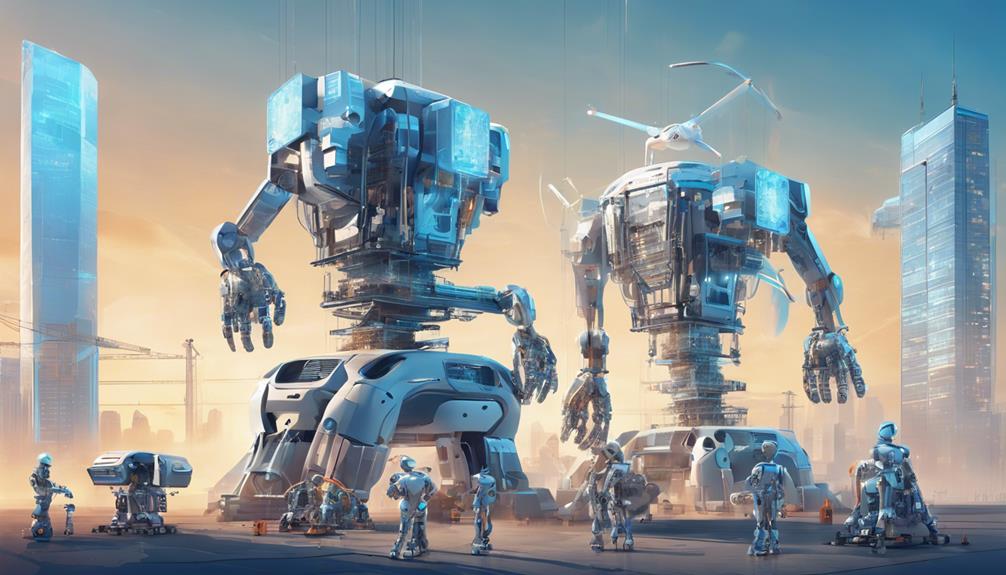
AI is rapidly reshaping the way you manage and execute commercial construction projects. It enhances design accuracy by using simulations to predict and remedy potential structural issues, ensuring that plans are both aesthetically pleasing and sustainable. In project management, AI automates tasks, streamlines communication, and delivers real-time updates, enabling you to predict delays and mitigate risks effectively. Resource allocation becomes more precise with AI's ability to forecast and adjust needs, minimizing waste and cutting costs. Moreover, AI greatly improves on-site safety by monitoring for hazards and handling high-risk tasks. With these advancements, you'll find that further exploration reveals even greater benefits.
Enhancing Design Accuracy
AI technologies are revolutionizing the way we approach design in commercial construction. You're now equipped to achieve unprecedented levels of accuracy that simply weren't possible before. By integrating AI into the design process, you can predict and resolve potential structural issues before they ever become real problems, which not only saves time but also significantly reduces costs.
Imagine you're working on a complex, multi-story building. Traditionally, the margin for error in your blueprints could make or break the project's success. Now, with AI-powered simulation tools, you're able to run countless scenarios to test the viability of different design solutions under varied conditions. This isn't about replacing your expertise; it's about enhancing it.
Moreover, AI's capability to process and analyze vast amounts of data helps you to tailor designs that aren't only structurally sound but also optimally functional and aesthetically pleasing. You'll find that AI can suggest alterations based on environmental impact, helping you meet sustainability targets without a hitch.
As you embrace these advanced tools, you'll notice that your role evolves from merely executing designs to strategically innovating them. This shift not only boosts your project's success rate but also positions you as a leader in sustainable, efficient design practices in the competitive field of commercial construction.
Streamlining Project Management
Commercial construction project management has seen a significant boost in efficiency thanks to AI technologies. You're now witnessing a revolution where complex schedules are streamlined and communication across hundreds of stakeholders is simplified. AI tools integrate with existing project management software, automating mundane tasks and freeing up your time to focus on more critical decision-making processes.
Imagine AI as your assistant that never sleeps; it continuously analyzes project data, predicting delays and suggesting adjustments before they become costly. This proactive approach reduces downtime and accelerates project timelines. You're not just managing a project; you're steering it with precision, enabled by real-time insights that AI provides.
Moreover, risk management has evolved. AI algorithms assess risks by evaluating historical data and current project metrics, alerting you to potential issues before they surface. This means you're better prepared to handle unexpected challenges, safeguarding your project's timeline and budget.
The integration of AI into project management isn't just about keeping the project on track—it's about enhancing your role as a manager. You're empowered to lead with data-driven confidence, ensuring that every decision you make is informed and impactful. This isn't the future; it's your new reality in construction project management.
Optimizing Resource Allocation
With the integration of AI, optimizing resource allocation in construction projects has become more precise and efficient. You're now able to leverage advanced algorithms that predict and adjust resource needs in real-time. This means you can avoid the typical oversupply or shortage of materials that can plague projects, saving both time and money.
AI's ability to analyze vast amounts of data quickly enables you to make informed decisions about where and when to allocate resources. For instance, machine learning models can forecast the optimal deployment of machinery and labor based on project phase, weather conditions, and other variables. You're not just reacting to situations as they arise; you're anticipating them.
Furthermore, AI helps you maintain a lean inventory. By accurately predicting material requirements, you minimize waste and reduce storage costs. This streamlined approach not only boosts your bottom line but also supports sustainability efforts.
Lastly, AI-driven tools integrate seamlessly with other tech solutions, such as project management software. This integration ensures that all aspects of your project are aligned, enhancing overall productivity. With AI, you're not just optimizing resource allocation; you're transforming how projects are managed from the ground up.
Improving Safety Measures
Beyond optimizing resources, AI significantly enhances safety measures on construction sites. You'll find that integrating AI technologies not only streamlines operations but also drastically reduces the risk of accidents and fatalities.
Imagine AI-driven surveillance systems that monitor every corner of a site 24/7. They instantly detect unsafe behavior or hazardous conditions, alerting you before an accident happens.
These systems are equipped with machine learning algorithms that learn from vast amounts of data, identifying patterns that might elude even the most experienced human observer. For instance, if a worker frequently neglects to wear proper safety gear, the AI system flags this behavior, enabling supervisors to intervene promptly.
Moreover, AI-powered robots are being deployed to handle dangerous tasks such as heavy lifting and working in unstable conditions, which significantly lowers the risk for human workers. You're not just keeping your site safer; you're also ensuring that your workforce remains healthy and intact.
Investing in AI for safety doesn't just help prevent physical injuries; it also boosts overall morale and productivity. Workers feel safer, and projects are less likely to be delayed by accidents, ensuring smoother operations and better outcomes.
Facilitating Predictive Maintenance
While AI's role in enhancing safety is evident, its capabilities extend to maintaining equipment reliability through predictive maintenance. You've probably experienced the frustration of equipment breakdowns delaying your projects. Now, imagine AI as your proactive partner that predicts these failures before they even happen.
Here's how it works: AI algorithms analyze data from sensors embedded in your machinery. This data includes vibration, temperature, and operational speed. By continuously monitoring this information, AI identifies patterns and anomalies that precede equipment failures. It's like having a crystal ball, but powered by data, not magic.
You'll receive alerts about potential issues before they escalate. This means you can schedule maintenance during downtime rather than dealing with unexpected and costly disruptions. Plus, this proactive approach extends the life of your equipment, optimizing your investment.
Moreover, predictive maintenance isn't just about avoiding breakdowns; it's also about saving money. By addressing issues early, you're not just dodging the bullet of major repairs; you're also reducing the energy waste that comes with running faulty equipment. Over time, these savings add up, proving that AI doesn't just help you manage; it helps your business thrive.
Advancing Sustainability Efforts
AI's transformative power in commercial construction doesn't stop at predictive maintenance; it's also revolutionizing sustainability practices.
You'll find that AI helps firms drastically reduce their carbon footprint by optimizing resource usage and minimizing waste. Through sophisticated data analysis, AI predicts the exact amount of materials needed, ensuring that you're not over-ordering or underutilizing resources.
Moreover, AI's role extends to energy management. By integrating AI with building information modeling (BIM), you can simulate various energy scenarios and choose the most efficient one. This not only helps in reducing operational costs but also significantly lowers energy consumption during a building's lifecycle. Imagine a system that adjusts energy use based on occupancy and weather conditions in real-time—AI makes this possible.
Additionally, AI contributes to the enhanced use of renewable energy sources in construction projects. It analyzes historical weather data and predicts future patterns to optimize the placement and use of solar panels and other renewable technologies. This predictive capability ensures maximum efficiency and supports your commitment to sustainable development.
Embracing AI, you're not just building smarter; you're building greener. This shift isn't just good for the planet—it's essential, and AI is at the forefront, helping you lead the charge in sustainable construction.
Revolutionizing Client Interactions
As you've seen AI boost sustainability in construction, it's equally transforming how you interact with clients. Imagine AI tools that not only manage but also enhance your client relationships. You're no longer just sending out generic emails or updates. Instead, AI systems analyze client data to personalize communications and predict client needs before they even articulate them.
For instance, AI-driven CRM platforms help you track all interactions, ensuring you're always on top of client concerns and preferences. This isn't about bombarding clients with information but delivering the right message at the right time.
Say a client frequently checks updates on material sourcing for their project. Your AI system notes this and alerts you to send detailed, customized updates specifically about material choices.
Moreover, virtual reality (VR) and augmented reality (AR) powered by AI are reshaping client presentations and meetings. You can walk clients through virtual constructions of their projects, making changes in real-time based on their feedback. This interactive approach not only saves time but also significantly boosts client satisfaction as they feel truly involved in the process.
Thus, AI isn't just a tool for efficiency; it's a strategy to deepen and personalize client engagements, making every interaction count.
Conclusion
As you've seen, AI is revolutionizing commercial construction, making every phase more efficient and sustainable. It's enhancing design accuracy, streamlining project management, and optimizing resource allocation. Safety and maintenance are also getting smarter, reducing risks and downtime. Plus, AI's role in sustainability and client interactions is creating more responsive, eco-friendly projects. Embrace these innovations, and you'll see significant improvements in how your construction projects are planned, executed, and maintained. AI isn't just the future; it's your new reality in construction.
Related articles: Why Is AI Transforming Commercial Construction? · Innovative Sustainable Tech in Commercial Construction · What Are the Best Sustainable Construction Tech Solutions?