
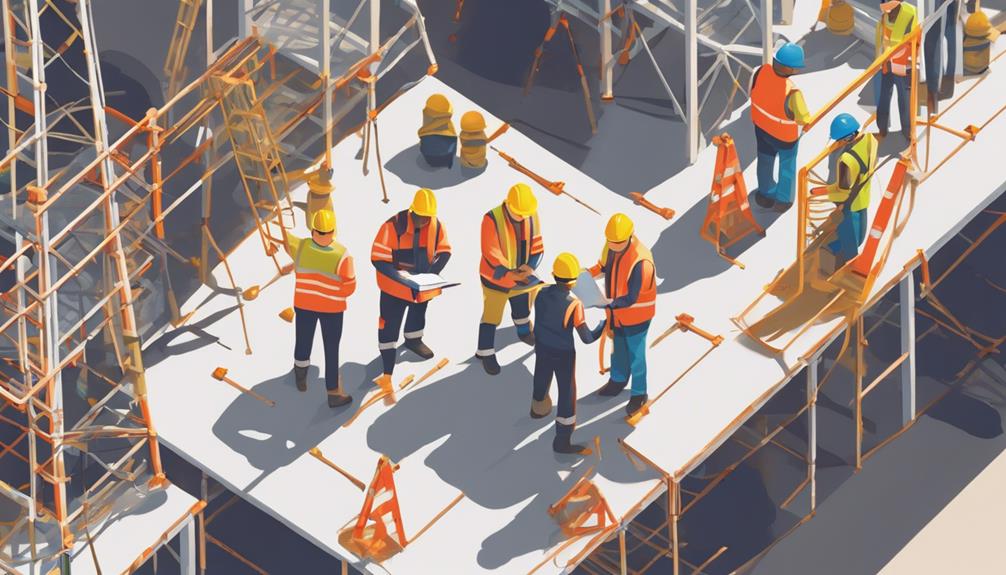
To ensure your construction site remains safe, start by familiarizing yourself with local zoning and building codes to avoid costly delays and ensure structural safety. You'll need to conduct thorough risk assessments, establish detailed safety protocols, and invest in regular hazard recognition training for your team. Make sure everyone is equipped with properly fitting protective gear and understands how to use it effectively. Regular safety audits and drills are crucial to maintain a proactive safety culture. Additionally, have a clear emergency response plan in place and routinely review its effectiveness. Exploring these strategies further will equip you with the knowledge to maintain a safe working environment.
Understanding Commercial Construction Laws
Navigating commercial construction laws is essential for ensuring compliance and preventing legal issues on your project. You've got to stay on top of a multitude of regulations that govern everything from land use to building codes. It's not just about following the law; it's about understanding how these laws affect your timeline, budget, and design plans.
First off, zoning laws dictate what you can build and where. You'll need to ensure your project fits within local zoning requirements which might limit building height, design, and usage. It's crucial you check these before you plan, as non-compliance can lead to costly delays.
Building codes are another major area. These codes ensure that structures are safe and reliable. They cover everything from structural integrity to fire safety, but don't worry about the latter for now. You must adhere strictly to these codes, as inspectors will review your work at several stages. If you're not up to code, you risk having to redo parts of your construction.
Lastly, don't forget about the permits. Every major construction project needs them, and obtaining them can be a lengthy process. You'll need different permits for different aspects of your work, so start this process early to avoid delays.
Implementing Effective Safety Protocols
To ensure your construction site remains a safe environment for everyone, it's crucial to implement effective safety protocols from the outset. You've got to establish clear guidelines that address potential risks unique to your project. Start by conducting a thorough risk assessment to identify specific hazards. This step is foundational; it informs the protocols you'll develop.
Once risks are identified, create a detailed safety plan that includes preventive measures and response strategies. You'll need to set up clear signage around the site, delineating zones like hard hat areas or heavy machinery paths.
It's also vital to ensure that all safety equipment is accessible and maintained. Regular checks on gear like harnesses, helmets, and protective eyewear keep them functional and effective.
Implement a system for reporting and addressing safety incidents. This isn't just about compliance; it's about creating a proactive culture of safety. Encourage your workers to report near-misses and accidents. This data is invaluable for tweaking your safety measures and preventing future incidents.
Training Workers on Hazard Recognition
After setting up safety protocols, it's essential to train your workers in hazard recognition to further enhance site safety. You've got to ensure they can identify potential dangers before they turn into real problems. Start by educating them on the types of hazards typical in construction sites, such as fall risks, unstable structures, and electrical hazards.
You need to focus your training sessions on real-world scenarios. Use visuals like diagrams and photos of actual site conditions to make the lessons stick. It's not just about showing them what's dangerous; you've got to explain why it's dangerous and how accidents can be prevented.
Make sure your training includes hands-on exercises. Let them walk through the site with a seasoned supervisor who points out hazards and models the correct way to react. This practical approach helps cement the knowledge and gives them confidence.
Don't forget to keep these sessions engaging. If you're just lecturing, you'll lose their attention. Mix in discussions, Q&A sessions, and maybe even quizzes to keep them on their toes. You're not just checking a box; you're equipping your team to stay safe every day.
Conducting Regular Safety Audits
Regular safety audits are crucial to maintaining stringent safety standards on construction sites. These audits help you identify potential hazards and ensure compliance with safety regulations before they lead to accidents or injuries. Think of these audits as your ongoing commitment to not just meet, but exceed, safety benchmarks.
You should schedule these audits regularly, not just when you think there's a problem. It's about proactive prevention. You'll want to involve everyone, from site supervisors to workers, as this promotes a culture of safety and accountability.
During these audits, you're checking for everything from the proper storage of materials to the secure installation of scaffolding.
Ensure you're documenting every audit. This documentation isn't just for record-keeping; it's a critical tool for analyzing trends over time. If you notice recurring issues, you can address them systematically rather than as one-offs.
Moreover, sharing the outcomes and corrective actions with your team is essential. It keeps everyone informed and up-to-date on best practices and the specific steps needed to mitigate risks.
Utilizing Protective Gear Properly
Nearly every construction job requires some form of protective gear. As you step onto the site, it's crucial to know not just what gear you need, but how to use it correctly.
First off, you've got your hard hat. Make sure it fits snugly and doesn't slide around on your head. You don't want to be adjusting it when you should be focusing on your work.
Next, consider your eye protection. Whether you choose goggles or safety glasses, ensure they provide enough coverage and don't hinder your vision. Fogging up or slipping can distract you and lead to accidents, so check they're designed for heavy-duty use.
Hearing protection is another must, especially if you're working around loud machinery. Select earmuffs or plugs that reduce noise to safe levels while allowing you to hear necessary signals and alarms.
Don't overlook proper footwear. Steel-toe boots are a must to protect your feet from falling objects or punctures. Ensure they've slip-resistant soles to keep you steady on your feet.
Lastly, gloves are vital for hand protection. Choose the type based on your task – heavy-duty for lifting and carrying, or precision gloves for intricate work. Fit is key; too loose, and you'll struggle, too tight, and it's uncomfortable. Always inspect your gear before use to ensure it's up to the task.
Managing Emergency Response Plans
While protective gear is your first line of defense on a construction site, having a solid emergency response plan is equally important for safety. It's crucial that you're not just aware of the plan, but actively involved in its development and ongoing updates.
As part of the process, you'll need to identify potential emergencies specific to your site, such as fires, building collapses, or hazardous material spills. You must then establish clear, practical response procedures for these scenarios. Include details like evacuation routes, assembly points, and roles and responsibilities.
Make sure everyone knows what they're supposed to do and where they should go in case of an emergency. Regular drills are essential; they ensure that everyone knows the protocol and can act swiftly and confidently if a real emergency occurs.
Communication is key. Equip your site with effective communication tools and systems to alert and direct workers during an emergency. Also, have a backup communication plan in case the primary system fails.
Lastly, review and revise the emergency plan regularly. As conditions and personnel change, your plan must adapt to ensure it remains effective. This proactive approach helps minimize risks and protect everyone on site.
Conclusion
You've got the tools to ensure safety on your construction site. Stay updated with commercial construction laws and never skimp on safety protocols. Regularly train your team to recognize hazards and conduct safety audits to keep everyone sharp. Always use protective gear correctly and have a solid emergency response plan ready. Remember, prioritizing safety doesn't just comply with regulations; it saves lives. Keep up the good work, and let's build safely and successfully together.
Related articles: Top 5 Commercial Construction Site Safety Tips · Stay Safe on the Job: Top Site Safety Tips · Essential Commercial Construction Safety Guidelines FAQ