
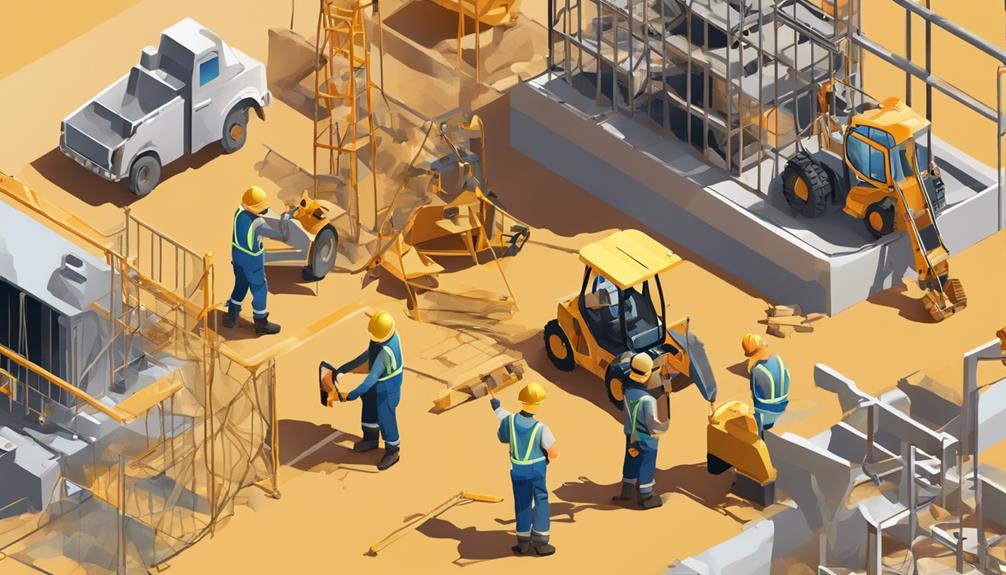
To ensure your commercial construction site is safe, you must adhere to several key guidelines. Familiarize yourself with OSHA regulations specifically relevant to your project, including handling hazardous materials and executing high-altitude tasks. Always maintain strict adherence to safety protocols, such as using personal protective equipment (PPE) like gloves and safety goggles, which must be correct fitting and well maintained. Implement comprehensive fall protection measures and electrical safety procedures to prevent accidents. Don't forget regular training and emergency response planning are critical. By adhering to these practices, you'll not only ensure compliance but also foster a safer work environment, which you'll see enhances productivity and reduces downtime.
Understanding OSHA Regulations
Nearly every commercial construction project falls under the purview of OSHA regulations, ensuring worker safety is a top priority. As you dive into your next project, it's critical you're up-to-date with these standards.
OSHA, or the Occupational Safety and Health Administration, sets and enforces protective workplace safety and health standards. Understanding these regulations isn't just about compliance; it's about ensuring every worker heads home safe every day.
You need to familiarize yourself with the specific OSHA standards that apply to your project. These can vary significantly depending on the nature of the work and the risks involved. For instance, there are stringent guidelines for hazardous materials, heavy machinery, and high-altitude work.
It's your responsibility to identify which aspects of OSHA regulations are most relevant and ensure your team is fully trained on them.
Moreover, staying compliant involves regular site inspections and ensuring all safety protocols are being followed meticulously. You might also need to file certain reports or display specific notices that inform your team about the site's current safety status.
Ignoring these protocols can lead to hefty fines and, more importantly, put your workers at risk.
Personal Protective Equipment
Shifting focus to Personal Protective Equipment (PPE), it's essential you ensure that every worker on your construction site is properly outfitted. From helmets to high-visibility clothing, the right gear is crucial to prevent injuries and comply with legal standards.
You'll want to start by assessing the specific hazards associated with your project. Are there risks of flying debris, or perhaps the potential for exposure to harmful chemicals? These factors determine the type of PPE required. For instance, safety goggles or face shields are a must where there's a risk of particles or chemicals splashing.
Similarly, gloves should be selected based on the need for dexterity, grip, and protection against chemicals or cuts.
Remember, it's not enough to provide the equipment; you must also ensure it fits each worker correctly and is maintained in good condition. Ill-fitting PPE won't offer the necessary protection and could even be dangerous in itself.
Training is another critical component. Make sure everyone knows how to properly use and maintain their PPE. Regular training sessions and reminders can help reinforce this knowledge.
Fall Protection Measures
Addressing fall protection measures is crucial for maintaining safety on your construction site. Falls are among the leading causes of injury in the construction industry, so it's essential you're proactive in implementing stringent safety protocols.
First, ensure you've got guardrails installed at all open sides of elevated platforms and floors. These barriers are your first line of defense against falls. They need to be sturdy and checked regularly for stability.
Don't overlook the importance of hole covers, too. Any opening in the floor must be covered securely to prevent accidental slips and trips.
Next, personal fall arrest systems (PFAS) are mandatory when working at heights of six feet or more. This system includes a full-body harness, a lanyard, and an anchor point that can support substantial weight. You must train your team on how to properly use and inspect this equipment before each use. Regular training refreshers are vital to ensure compliance and understanding.
Lastly, consider implementing safety nets as an additional precaution, especially in areas where other forms of fall protection are impractical. These nets provide a safety catch, reducing the risk of serious injuries from falls.
Electrical Safety Procedures
Moving from fall protection to electrical hazards, it's essential you understand and implement rigorous electrical safety procedures on your construction site.
First, always ensure that all electrical tools are properly maintained and inspected before use. Frayed cords, damaged plugs, and malfunctioning equipment can lead to serious accidents. You're also responsible for verifying that all electrical installations follow the National Electrical Code to prevent overload and potential fires.
Don't overlook the importance of using Ground Fault Circuit Interrupters (GFCIs) on all construction sites. These devices can prevent electrocution by immediately shutting off an electrical circuit when it detects that the current is flowing along an unintended path. It's crucial that you test GFCIs regularly to ensure they're functioning correctly.
Furthermore, keep water away from electrical equipment. Water increases the risk of electrocution, so always use waterproof electrical boxes and cover exposed wires, especially in damp locations.
Lastly, educate your team on the dangers of electrical work. Conduct regular training sessions that cover topics like safe handling of electrical devices, emergency procedures, and the proper use of personal protective equipment. Remember, knowledge is just as important as the physical precautions you put in place. Stay vigilant and keep safety your top priority.
Handling Hazardous Materials
Handling hazardous materials on a construction site requires strict adherence to safety protocols to prevent accidents and health hazards. You need to familiarize yourself with the Material Safety Data Sheets (MSDS) for each substance you're handling. These sheets provide critical information about the properties of each hazardous material, including potential health risks and first aid measures.
Always wear the appropriate personal protective equipment (PPE). This might include gloves, goggles, respirators, and protective clothing, depending on the materials you're dealing with. It's not just about putting on PPE; you must ensure it fits correctly and is in good condition.
Proper storage of materials is crucial. You must store hazardous materials in designated areas that are clearly marked and equipped with the right containment systems to prevent spills or leaks. Make sure these areas are well-ventilated and away from general traffic zones.
When transporting hazardous materials, use the right type of containers and handling equipment. Cylinders should be strapped securely, and all containers must be labeled clearly. Avoid mixing different materials during transport, as this can lead to dangerous chemical reactions.
Lastly, if a spill occurs, follow the emergency procedures outlined in your site's safety plan. Quick and effective response can mitigate risks significantly.
Fire Safety and Prevention
Fire safety and prevention are critical components of maintaining a secure construction site. You need to be vigilant and proactive to protect both your team and the project.
Firstly, ensure that your site has clearly marked fire exits and routes. It's vital you keep these areas unobstructed at all times to facilitate quick evacuations in emergencies.
You must also regularly check that all fire extinguishers are accessible, well-maintained, and appropriate for the types of potential fires that could occur, given the materials and equipment you're working with. Don't forget to train every team member on how to use these extinguishers effectively.
Storing flammable materials is another area where you can't afford to be careless. Make sure these materials are kept in designated, secure areas away from general work zones. Equally important is enforcing a strict no-smoking policy within and around these zones.
Routine fire drills are crucial. They help familiarize your crew with evacuation procedures and identify any weaknesses in your emergency response strategy. Always review and adjust your fire safety plan regularly, adapting to new risks introduced by different phases of the construction project. Remember, preparedness is your best defense against fire-related incidents.
Machinery and Equipment Use
After covering fire safety, let's focus on the proper use of machinery and equipment, which is equally important for maintaining a safe construction environment. As you operate heavy machinery, it's crucial to ensure that you're trained on each specific piece of equipment. Don't just hop on and figure it out as you go. Each machine has its own quirks and requirements.
Firstly, always check the machinery before use. Look for any signs of wear and tear or malfunction. You don't want to discover a faulty brake system while operating a two-ton crane. Regular maintenance checks aren't just a suggestion; they're a must.
Secondly, wear your safety gear. Helmets, goggles, and other protective equipment aren't accessories; they're necessities. They can shield you from unexpected mishaps that often occur when you least expect them.
Lastly, keep your workspace clear. Debris around machinery can cause accidents. Ensure all tools are stowed properly and the area around the equipment is free from clutter. This not only keeps you safe but also maintains the machinery's integrity.
Emergency Response Planning
When a crisis strikes on a construction site, having an efficient emergency response plan can significantly reduce injuries and save lives. You must know the specifics of your plan and be ready to act swiftly when needed. This involves understanding the layout of your site, the location of emergency equipment, and the fastest evacuation routes.
Firstly, ensure all workers are familiar with multiple escape routes. Post evacuation maps prominently across the site and conduct regular drills to keep everyone prepared. It's not just about knowing the way out; it's about reacting quickly and calmly.
Next, you'll need to establish clear roles and responsibilities. Who takes charge during an emergency? Who handles first aid? Who communicates with emergency services? Assigning these roles beforehand prevents confusion and overlapping during critical moments.
Communication is key. Equip your site with a reliable means to alert everyone of an emergency—whether it's air horns, loudspeakers, or alarms. Make sure all workers know what each signal means and how to respond.
Lastly, review and revise your plan regularly. Each project might present new risks, requiring adjustments to the emergency procedures. Stay proactive, and you'll keep your site as safe as possible.
Health Monitoring and Reporting
In addition to emergency preparedness, actively monitoring the health of your workforce and maintaining accurate reporting are critical components of construction site safety. You'll need to establish a robust system to ensure that the health of your employees is constantly assessed and any concerns are swiftly addressed.
Start by implementing regular health screenings and assessments. These can help you catch potential health issues before they become serious problems. It's crucial to have protocols in place for dealing with health emergencies. This includes having qualified medical personnel on call and ensuring all employees are aware of whom to contact if they or a coworker are feeling unwell.
You'll also need to maintain detailed health logs for every employee. These should document any incidents, symptoms of illness, or injuries that occur on the site. Accurate records are essential not only for managing health on site but also for complying with legal requirements and protecting your company in the event of work-related health claims.
Encourage your team to report any health concerns, no matter how minor they seem. A culture of openness and prompt reporting can prevent many issues from escalating. Remember, a healthy workforce is a safe and productive one.
Conclusion
You've got the essentials to keep your construction site safe and compliant. Remember, understanding and applying OSHA regulations, using the right protective gear, and implementing robust safety measures are crucial. Stay vigilant with electrical safety, hazardous materials, and fire prevention. Ensure machinery is used correctly, and always have an emergency plan ready. Keep health monitoring and reporting in check to maintain a secure environment. Stay safe, and let's make safety a priority on your site!
Related articles: What Are OSHA Regulations for Construction? · Understanding OSHA Rules for Commercial Construction · Top OSHA Safety Rules for Construction Sites