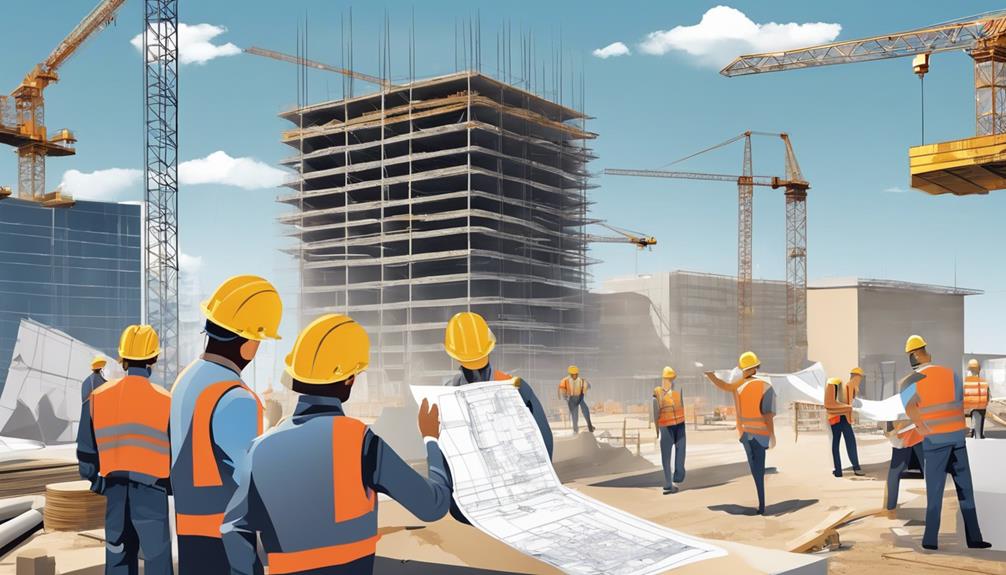
optimizing commercial construction projects

Mastering Commercial Construction Project Management

To master commercial construction project management, you need to begin by clearly defining your project's scope, objectives, and constraints. Establish clear goals, deadlines, and budgets, and create a robust timeline prioritizing essential tasks. Don't forget to implement stringent quality control measures and identify potential risks with appropriate mitigation strategies. Building a skilled team is crucial; ensure they possess both technical expertise and excellent communication skills. Regular meetings and up-to-date training will keep everyone on the same page. Moreover, maintaining a detailed financial plan and utilizing efficient communication tools will streamline your project, keeping it on schedule and within budget. As you explore these strategies, deeper layers of insight into optimizing project execution will unfold.

Defining Project Scope and Objectives

Defining the scope and objectives of a commercial construction project is your first step toward a successful outcome. You must pinpoint exactly what you aim to achieve, detailing the scale, boundaries, and deliverables of the project. Start by establishing clear, measurable objectives that align with your overall business goals. This isn't just about building structures; it's about understanding the purpose behind each task and how it fits into the larger picture.

You'll need to consider all project requirements and constraints. What specific outcomes are you aiming for? Are there regulatory obligations or potential environmental impacts that you need to factor in? Identifying these elements early on will help prevent scope creep, which can derail even the most well-planned projects.

It's also crucial to set realistic deadlines and budgets. You don't want to overpromise and underdeliver. Instead, assess what resources are available and plan accordingly. This involves a meticulous breakdown of tasks, scheduling key milestones, and budgeting for unforeseen challenges.

Building an Effective Team

Once you've established a clear project scope and objectives, assembling the right team becomes your next priority. You'll need a group that's as committed as you're and possesses the specific skills required to bring your project to life. It's essential to choose individuals who not only have the necessary technical expertise but also the ability to collaborate and communicate effectively.

Start by identifying key roles. You'll need a project manager to steer the project, skilled tradespeople to handle the technical aspects, and perhaps a logistics expert to manage the flow of materials and equipment. Don't overlook the need for a quality assurance specialist to ensure all standards are met.

When selecting your team, consider each candidate's experience and past project successes. However, it's just as important to gauge their ability to work as part of a team. Personal interviews can reveal a lot about how they'll mesh with your established crew.

Budgeting and Financial Planning

After assembling your team, it's crucial to focus on the financial aspects of your project. Budgeting and financial planning aren't just about keeping costs under control; they're about ensuring the viability and success of your entire endeavor. You'll need to determine your project's financial framework, which means estimating costs accurately and securing funding sources that align with your project's scale and scope.

Start by breaking down the costs into labor, materials, equipment, and permits. Don't overlook the less obvious expenses like insurance and contingency funds, which can be lifesavers when unexpected costs arise. You're aiming for a budget that's comprehensive yet flexible.

Next, explore financing options. Whether it's bank loans, private investors, or company funds, you need to tailor your financial plan to suit your project's unique needs. Keep in mind that securing funding often requires detailed and persuasive financial forecasting—be prepared to justify every dollar you plan to spend.

Lastly, regularly review and adjust your budget as the project progresses. You'll encounter changes and challenges that necessitate financial adjustments. Staying on top of these, with constant monitoring and communication, ensures that your project remains financially healthy from start to finish.

Scheduling and Time Management

Efficient scheduling and time management are essential for keeping your commercial construction project on track. You'll need to master these skills to ensure that every stage progresses smoothly and deadlines are met without compromising the workflow or budget.

First, develop a comprehensive project timeline. Break down the project into phases, and assign realistic durations to each task. Use tools like Gantt charts or specialized software to visualize and adjust timelines as needed. Remember, flexibility is key; unexpected delays can occur, and you'll need to adapt quickly.

Next, prioritize tasks based on their impact on subsequent phases. This means identifying critical path tasks that directly affect the project's completion date. Ensure these are allocated extra attention and resources to prevent any delays that could derail other tasks.

Communication is also crucial. Keep everyone, from subcontractors to stakeholders, informed about the schedule. Regular updates and meetings will help identify potential delays early and allow for timely interventions.

Lastly, don't underestimate the power of buffer times. Include these in your schedule to absorb the inevitable minor setbacks without affecting the overall timeline. By anticipating and planning for these interruptions, you'll keep your project on pace and under control.

Quality Control Measures

While adept scheduling ensures your commercial construction project remains on time, implementing rigorous quality control measures guarantees the work meets all required standards. You'll need a solid plan that covers every aspect of your project, from materials to workmanship. Start by defining clear quality criteria that align with industry standards and client expectations. Ensure everyone on your team understands these benchmarks right from the start.

Next, integrate regular inspections into your workflow. Don't wait for project milestones to check the quality of work; instead, conduct daily or weekly reviews. This way, you'll catch issues early, preventing costly reworks. Utilize the latest technology, like digital reporting tools and mobile apps, to streamline this process. These tools allow for real-time feedback and faster corrective actions.

Communication is key in maintaining high standards. Hold regular meetings with your crew and stakeholders to discuss quality control findings and necessary improvements. Encourage an open dialogue where team members can voice concerns or suggest enhancements without hesitation.

Lastly, invest in training for your team. Skilled workers are less likely to make errors, and continuous education helps them stay updated with the latest construction techniques and technologies. By focusing on these areas, you're not just ensuring quality; you're also elevating the overall standard of your project.

Risk Management Strategies

As you shift from focusing on quality control to managing potential risks, it's crucial to develop a comprehensive risk management strategy for your commercial construction project. Identifying potential risks early is key. You'll need to assess everything from site safety hazards to supply chain disruptions. Once identified, categorize these risks by their potential impact and likelihood of occurrence. This will help you prioritize which risks need immediate attention.

Next, implement mitigation strategies. For financial risks, consider securing comprehensive insurance and budget contingencies. For operational risks, regular training and safety audits can be effective. You should also have a plan for dealing with unexpected delays or labor shortages. Developing strong relationships with multiple suppliers can prevent bottlenecks in your supply chain, ensuring you're not reliant on a single source.

Lastly, don't overlook the importance of regular risk assessments throughout the project lifecycle. As the project evolves, new risks may emerge. By keeping your risk management plan dynamic, you'll stay ahead of potential problems, ensuring your project remains on track and within budget.

Regular updates to your plan are as crucial as its initial creation.

Communication and Documentation

In managing a commercial construction project, clear communication and meticulous documentation are indispensable. You'll need to establish regular updates and a reliable system to keep everyone from subcontractors to stakeholders well-informed. Think about implementing a variety of communication tools, such as weekly meetings, digital dashboards, and instant messaging platforms, to ensure information flows smoothly and efficiently.

Documentation plays a critical role as well. You're responsible for maintaining accurate records of every aspect of the project. This includes contracts, blueprints, change orders, and compliance documents. Make sure you've got a robust document management system in place to store, track, and retrieve documents easily. It's essential to keep everything organized and accessible to avoid delays and misunderstandings.

Be proactive in your communication strategy. Don't wait for issues to arise before you talk about them. Regularly check in with your team and encourage an open dialogue. Clarity in your instructions and expectations sets the foundation for a successful project.

Conclusion

As you wrap up your commercial construction project, remember to keep your scope and objectives clear. Ensure your team remains cohesive and focused. Stay on top of your budget and keep a tight schedule. Don't overlook quality control and risk management—these are crucial for success. Most importantly, maintain open lines of communication and keep detailed records. By following these strategies, you'll not only meet but exceed expectations, paving the way for future project successes.

Related articles: Commercial Construction Project Management Tips and Strategies
commercial construction project management

FAQs on Managing Commercial Construction Projects

When managing commercial construction projects, you'll need to define your project's scope and goals early on. It's essential to select the right contractors, create a precise budget, and develop a realistic timeline to keep everything on track. Don't overlook handling legal and permit issues; make sure you have the right insurance coverage too. Prioritizing risk management and ensuring continuous safety measures are crucial for smoothly running operations. Above all, maintaining effective communication with your team will keep misunderstandings at bay and foster a collaborative environment. Each step comes with its own set of challenges and insights to uncover further.

Defining Project Scope and Goals

Why should you clearly define the scope and goals of your commercial construction project? Well, it sets the stage for everything that follows. Without a clearly defined scope and specific goals, you're essentially navigating without a map. This can lead to unexpected costs, delays, and conflicts that could derail your project.

Defining the scope means outlining what the project will entail, including its size, the types of activities involved, and the boundaries of the work. It's your blueprint; it lets you identify all the essential elements before any actual work begins. You'll know exactly what's to be constructed, renovated, or expanded. This clarity helps in managing expectations and aligning them with feasible outcomes.

Setting specific goals is equally crucial. These goals should be measurable and achievable, providing a clear vision of the project's end result. They guide your project decisions and keep the team focused on delivering results that align with your vision.

Together, a well-defined scope and clear goals help you monitor progress effectively. You'll be able to spot deviations from the plan early on and make necessary adjustments. This proactive approach not only keeps your project on track but also helps in managing resources efficiently, ensuring a smoother path to a successful completion.

Selecting the Right Contractors

Choosing the right contractors is critical to the success of your commercial construction project. You'll want to focus on their reputation, experience, and ability to meet your specific needs. Start by asking for recommendations from colleagues who've completed similar projects. There's nothing like firsthand feedback to help you make an informed decision.

Next, check each contractor's credentials. Are they licensed and insured? Do they've a history of safety compliance? These are non-negotiable factors that safeguard your project and workers.

Also, review their portfolio to assess their capability in handling projects of your scale and complexity. This step gives you a tangible sense of what they can deliver.

Don't forget to interview potential contractors. This face-to-face interaction is your chance to gauge their professionalism and dedication. How they respond to your queries and whether they seem genuinely interested in your project can tell you a lot.

Also, discuss their previous projects and ask for references.

Budgeting for Your Project

How can you ensure your commercial construction project stays within budget? The answer lies in meticulous planning and ongoing cost management. Initially, you'll need to establish a clear and detailed budget that includes all potential expenses. Don't just think about the obvious costs like materials and labor; consider also the less obvious ones such as permits and contingency funds.

Start by gathering quotes from multiple suppliers and subcontractors to ensure competitive pricing.

It's also wise to involve your project manager early in the budgeting process. They can provide insights into potential financial pitfalls that you mightn't have considered.

Once your project kicks off, maintain a rigorous approach to tracking expenses. Implement a reliable financial management system to monitor expenditures in real-time. This way, you'll catch budget overruns quickly and can adjust before they escalate.

Regularly review your budget against actual expenses. If you're consistently overspending in certain areas, investigate why and adjust accordingly. Be proactive about seeking cost-saving alternatives throughout the project's progression.

Scheduling and Timeline Management

Effective scheduling and timeline management are crucial for the success of your commercial construction project. You'll need to coordinate numerous tasks, ensuring they're completed in the right sequence and within the designated time.

Begin by creating a comprehensive project timeline. This document should outline every phase of construction, from initial groundworks to the final touches. Use tools like Gantt charts to provide a visual representation of the project schedule, making it easier to track progress.

It's essential you're realistic about durations. Underestimating the time for tasks can lead to rushed work and potential quality issues. Similarly, factor in some buffer time for unforeseen delays, which are common in construction projects.

Regularly update your timeline. Construction is dynamic, and changes might be necessary due to resource availability, weather conditions, or other external factors. Communicating these updates promptly to all stakeholders, including your team, suppliers, and clients, ensures everyone is aligned and can adjust their plans accordingly.

Lastly, don't overlook the importance of periodic reviews. These help you assess project status against the timeline, allowing you to make informed decisions about resource allocation and prioritization. With diligent scheduling and timeline management, you'll keep your project on track and within budget.

Handling Legal and Permit Issues

Navigating legal and permit issues is essential for the smooth operation of your commercial construction project. As you dive into this, you'll grapple with various regulations that are critical to legally commence and continue your work. It's vital you understand local zoning laws, which determine what you can build and where. Ignoring these can lead to costly delays or legal challenges.

Next, you'll need to secure the right permits. This isn't just about filling out paperwork; it's about ensuring your project meets all legal requirements set by city, state, and federal agencies. Start this process early, as obtaining all necessary permits can be time-consuming. Engage with local authorities and perhaps consider hiring a specialist who knows the ins and outs of the permitting process. This proactive approach can save you headaches later on.

Don't forget, each phase of your construction might require different permits. Whether it's demolition, building, electrical, or plumbing, staying ahead of these requirements prevents interruptions.

Keep a detailed checklist and regularly confirm you're in compliance as your project progresses. This diligence ensures that you won't face stop-work orders or fines, keeping your project on track and within budget.

Ensuring Quality and Compliance

Ensuring your commercial construction project meets all quality standards and complies with relevant regulations is crucial. You'll need a robust system to manage both these aspects effectively.

Start with a clear understanding of the local, state, and federal regulations that apply to your project. This isn't just about avoiding fines—it's about ensuring that your building is safe, accessible, and capable of passing future inspections.

You should also establish a quality control process. This involves regular check-ins at various stages of the construction. It's not enough to assume that things will be done correctly. You need to verify, through audits and inspections, that every element of your project aligns with the agreed-upon standards and specifications.

Consider hiring an independent quality inspector to provide an unbiased view of the construction quality.

Documentation is your ally. Keep detailed records of every compliance check and quality inspection. These documents can be vital if any legal issues arise post-construction. They're also useful for future maintenance and renovations.

Managing Risks and Safety

While navigating your commercial construction project, it's essential to prioritize risk management and safety to protect your assets and personnel. Understanding the specific risks associated with commercial construction can help you mitigate them effectively. Start by conducting a thorough risk assessment to identify potential hazards, from on-site accidents to delays caused by supply chain issues.

Once you've pinpointed these risks, develop a comprehensive safety plan. This should include strict adherence to safety protocols, regular training sessions for your team, and ensuring that all equipment is up to standard and properly maintained. Don't underestimate the importance of having a well-equipped first aid kit and trained personnel who can respond to emergencies swiftly.

Insurance is another critical component. Ensure you have adequate coverage that includes liability, property damage, and worker's compensation. This shields your business financially in case of accidents or damages during the construction process.

Lastly, continuously monitor and review your safety measures. As the project evolves, so too might the potential risks. Regularly updating your risk management strategies and safety protocols ensures that you stay ahead of any issues, keeping your project on track and your team safe.

Effective Communication Strategies

Effective communication is crucial for the success of any commercial construction project. You must ensure that information flows seamlessly between all stakeholders, including contractors, clients, and your project team. It's not just about sharing updates; it's about fostering an environment where everyone's on the same page.

To achieve this, you'll want to implement regular meetings and use project management tools that everyone can access. These platforms allow you to share documents, project milestones, and updates in real time, reducing misunderstandings and delays. Make sure you're clear and concise in your communications. Avoid jargon when possible, especially when dealing with clients who may not be familiar with construction terminology.

Another key strategy is to encourage feedback from all team members. This not only helps in identifying potential problems early but also promotes a sense of involvement and responsibility. You can set up an open-door policy or have regular check-ins to facilitate this.

Lastly, don't underestimate the power of face-to-face communication. While digital tools are essential, personal interactions can build trust and clarify complex issues more effectively. Schedule onsite visits and walk-throughs regularly to keep everyone engaged and informed.

Conclusion

You've now got the tools to manage your commercial construction project effectively. Remember, defining your project's scope and selecting the right contractors are crucial first steps. Always keep a tight grip on your budget and timelines. Don't overlook the importance of handling legal matters and ensuring compliance. Prioritize safety and risk management, and maintain clear, constant communication. With these strategies in hand, you're well-prepared to steer your project to success. It's your turn to build something great!

Related articles: Mastering Commercial Construction Project Management

optimizing commercial construction projects

5 Best Practices for Managing Commercial Construction Projects

To manage your commercial construction projects successfully, you need to focus on several key practices. Firstly, establish clear communication channels using regular meetings and project management tools. You'll also need to manage your budget strictly through regular reviews and updates. Don't overlook the importance of safety protocols; ensure all workers are well-trained and regular safety audits are conducted. Detailed planning is crucial, so develop a comprehensive project plan and anticipate potential challenges. Lastly, fostering strong team collaboration will keep everyone on the same page and boost morale. These strategies will help you maintain control over your project, and there's even more you can do to optimize your processes.

Establish Clear Communication Channels

Effective management of commercial construction projects hinges on establishing clear communication channels. You need to ensure everyone from the project managers to the subcontractors is on the same page. To do this, you'll want to set up regular meetings and use project management tools that facilitate seamless information sharing.

Start by creating a communication plan that outlines who needs to know what and when. This plan should specify the preferred communication methods, whether it's emails, phone calls, or face-to-face meetings. You'll find that regular updates prevent misunderstandings and keep the project moving smoothly.

Next, consider using cloud-based project management software. These platforms allow you to share documents, project updates, and schedules in real time. Everyone involved can see the latest information at a glance, which reduces the chances of errors and delays.

Implement Strict Budget Management

While establishing clear communication channels sets a strong foundation, equally important is implementing strict budget management to keep your commercial construction project financially on track. You'll find that meticulous budget oversight not only prevents cost overruns but also ensures that every dollar is accounted for from start to finish.

Start by developing a comprehensive budget that includes all potential expenses—materials, labor, permits, and equipment, as well as a contingency reserve for unexpected costs. It's crucial you're realistic about these figures; underestimating can lead to financial strain, while overestimating may tie up funds unnecessarily.

Regularly review your budget versus actual expenses. This means you'll need to keep detailed records and receipts. Utilize budget management software or tools designed for construction projects to streamline this process. They can help you track expenditures in real-time and alert you when you're approaching the budget limit.

Don't hesitate to renegotiate with suppliers or explore alternative materials if costs spike unexpectedly. Flexibility and adaptability are key in managing a budget effectively.

Lastly, communicate budget updates regularly to all stakeholders. Keeping everyone informed helps align expectations and reduces the risk of financial misunderstandings. Remember, a well-managed budget is critical for the success of your project.

Prioritize Safety Protocols

Prioritizing safety protocols is crucial in managing commercial construction projects. As a project manager, you're responsible for not just timelines and budgets, but most importantly, the safety of every worker on site. Safety oversights can lead to serious injuries or even fatalities, alongside costly legal liabilities and project delays. Therefore, it's vital to implement a comprehensive safety plan from day one.

You must ensure that all workers are trained on the latest safety practices and are aware of potential hazards. Regular safety meetings should be part of your routine, keeping everyone informed and vigilant.

Don't just stop at verbal instructions; demonstrate the correct use of equipment and have clear, visible safety signage all around the construction site.

Invest in quality safety gear and make sure it's used consistently. Helmets, goggles, vests, and boots can be the difference between a minor incident and a major injury. Additionally, keep your site tidy to prevent accidents related to tripping or falling debris.

Emphasize Detailed Planning

After ensuring safety protocols are in place, it's equally important to focus on detailed planning in managing commercial construction projects. You must recognize that the backbone of a successful project lies in its blueprint. Start by developing a comprehensive plan that covers every phase of your project, from inception to completion. This includes detailed timelines, budget forecasts, and specific milestones that guide the progress.

You'll need to meticulously outline the resources required, including materials, labor, and equipment. Ensure you have accurate estimates and secure everything well in advance to avoid delays. It's vital to anticipate potential challenges and incorporate contingencies into your plan. This foresight can save you time and money, preventing costly overruns and ensuring the project stays on track.

Establish clear, measurable objectives for each stage of the project. This allows you to monitor progress effectively and make informed adjustments as needed.

Documenting every aspect of your plan is crucial; this not only helps in maintaining a clear vision but also in communicating effectively with all stakeholders involved.

Foster Strong Team Collaboration

To manage a commercial construction project effectively, fostering strong team collaboration is essential. You'll need to ensure that communication channels are open and efficient among your team members. It's about more than just talking; it's about making sure everyone's on the same page.

You can achieve this by holding regular meetings, using collaborative tools, and encouraging an open-door policy.

Remember, a collaborative environment also relies on trust and respect. You've got to build a culture where team members feel valued and know their input is important. This means listening more than you speak and considering all suggestions and concerns seriously.

When team members see their ideas in action, they're more committed and engaged.

It's also crucial to clearly define roles and responsibilities. Confusion over who's handling what can lead to mistakes and delays. Make sure everyone knows their tasks and how those tasks fit into the larger project.

Regular updates can help here, as they keep everyone informed of progress and changes.

Lastly, don't forget to celebrate successes together. This boosts morale and reinforces the value of teamwork. When you acknowledge collective achievements, you reinforce the importance of each team member's contribution to the project's success.

Conclusion

You've got the tools to lead your commercial construction projects to success. Always keep your communication lines open and transparent, tightly control your budgets, and never compromise on safety. Remember, thorough planning is your blueprint for success, and strong teamwork is the cement that holds everything together. By sticking to these best practices, you'll not only manage your projects effectively but also set new standards of excellence in the construction industry. Let's build greatness, together!

Related articles: FAQs on Managing Commercial Construction Projects

importance of commercial management

Why Mastering Commercial Construction Management Matters

Mastering commercial construction management is vital because it allows you to oversee projects effectively, ensuring they meet deadlines, stay within budget, and reach quality standards. By understanding the phases of construction project management, you can enhance execution and prepare for each subsequent step. You'll also learn to control costs through sophisticated budgeting strategies and risk management, keeping your project financially sound while mitigating delays and other risks. Modern technologies facilitate efficient workflow and decision-making. Moreover, adhering to compliance and maintaining high-quality standards protect your reputation and profitability. There's even more to discover about optimizing these processes for better outcomes.

Understanding Construction Project Phases

Before diving into the nitty-gritty of commercial construction management, it's crucial to grasp the construction project phases. You'll find that understanding these phases will streamline your management process and enhance project execution.

The journey starts with the conception phase. Here, you brainstorm ideas, establish feasibility, and define the project's scope. It's where you lay the groundwork for what's coming, so don't rush this part.

Next up is the design phase. You'll work with architects and engineers to translate your initial concepts into blueprints and detailed plans. This stage transforms your vision into tangible designs that guide the entire project.

Following design, you enter the pre-construction phase. It involves selecting the construction team and finalizing contracts. You'll also handle critical prep tasks like site assessment and securing permits. This phase sets the stage for actual building work, ensuring everything's in place for a smooth start.

Construction is where things get real. You'll oversee the physical building process, manage construction crews, and ensure adherence to plans and safety protocols.

Effective Budgeting and Cost Control

After mastering the initial phases of your commercial construction project, it's time to focus on effective budgeting and cost control. You're now at a critical juncture where precise financial management can determine the success of your endeavors. To keep your project financially healthy, you must establish a realistic budget that reflects actual project costs, including materials, labor, equipment, and unexpected expenses.

Start by breaking down the costs associated with each phase of your project. You'll need to monitor these expenditures closely to ensure they align with your initial budget. Utilize software tools that provide real-time data on spending trends and help you forecast future expenses. This allows you to adjust your budget proactively rather than reactively.

It's also crucial to negotiate favorable terms with suppliers and subcontractors. Leveraging bulk purchase discounts or negotiating longer payment terms can significantly reduce your immediate outlays, improving cash flow.

Regular budget reviews are essential. Schedule monthly meetings to go over the budget, comparing projected costs against actual expenses. This not only helps you stay on track but also highlights areas where you can cut costs without compromising quality or timelines.

Managing Construction Project Risks

In managing construction project risks, you'll encounter various challenges that can impact your project's timeline and budget. These risks range from unforeseen site conditions to delays in supply chains. It's your role to anticipate and address these issues before they grow into bigger problems.

Firstly, you need to conduct a thorough risk assessment during the planning phase. Identify potential risks by analyzing past projects and consulting with experienced team members. This step is crucial as it informs the strategies you'll implement to mitigate these risks.

You should also establish a strong communication plan. Keep everyone, from suppliers to stakeholders, informed about progress and potential issues. Clear, frequent communication prevents misunderstandings and ensures quick resolution of issues that may arise.

Moreover, adapting to technological tools can significantly aid in risk management. Software solutions designed for construction management can help you track project progress, manage budgets, and stay updated on compliance issues. These tools also provide critical data that can be analyzed to forecast potential risks and devise preventive measures.

Ultimately, your ability to manage risks effectively ensures the project stays on track and within budget, safeguarding your reputation and profitability in the competitive field of commercial construction.

Importance of Timely Decision-Making

Timely decision-making serves as the backbone of successful commercial construction management. When you're at the helm of a project, your ability to make quick, informed decisions affects every aspect of the operation, from budget to project timelines. Delays in decision-making can lead to a domino effect, causing hold-ups that ripple across the entire project, potentially pushing deadlines and inflating costs.

Consider this: every moment you hesitate or fail to act decisively could result in missed opportunities. Suppliers often have fluctuating availability and prices; if you're not quick to lock in rates, you might face higher costs later.

Similarly, workforce allocation requires you to anticipate needs and make staffing decisions swiftly to keep the project moving without interruption.

Moreover, your team looks to you for direction. A quick, confident decision inspires confidence among your crew and stakeholders, reinforcing your leadership and maintaining morale. Conversely, indecision can lead to confusion and dwindling faith in project success.

Ultimately, mastering the art of timely decision-making ensures you're not just reacting to the project's needs, but actively steering it toward completion and success. It's a skill that demands sharp attention and a proactive mindset—traits that set leading managers apart in the competitive field of commercial construction.

Maintaining Quality and Compliance

Every successful commercial construction project hinges on maintaining high standards of quality and strict compliance with regulations. You've got to keep your eye on both to ensure your project doesn't just meet but exceeds the expectations.

Quality in construction speaks volumes about your capability to deliver a durable, safe, and aesthetically pleasing structure. It involves choosing the right materials, employing skilled labor, and applying meticulous craftsmanship. Remember, cutting corners can cost you more in the long run through repairs and tarnished reputation.

Compliance isn't just about following laws and codes; it's about understanding them deeply to ensure every aspect of your project aligns with safety, environmental, and building standards. You're not just building structures; you're building trust and reliability. Non-compliance can lead to legal troubles, financial losses, and serious delays.

To master these elements, start by integrating quality checks and compliance reviews at every phase of your project. Use advanced tools and technologies to track adherence and maintain records. Engage with experts who can navigate the complex landscape of construction regulations. By staying informed and prepared, you'll not only manage, but excel in delivering projects that stand the test of time.

Enhancing Communication and Coordination

Building on the foundation of quality and compliance, enhancing communication and coordination becomes your next step to ensure that every aspect of your commercial construction project runs smoothly.

You'll discover that clear communication channels between stakeholders are crucial. It's not just about sharing information; it's about making sure everyone's on the same page. This means setting up regular meetings, using clear, jargon-free language, and confirming understanding at every level—from your ground crew to your investors.

Coordination ties directly into this. You must synchronize the activities across various teams to avoid bottlenecks and ensure a seamless workflow.

Think about introducing centralized scheduling or regular cross-departmental briefings where teams can align their tasks and timelines. It's about anticipating conflicts before they become problems and addressing them proactively.

Leveraging Technology for Efficiency

In today's fast-paced construction environment, leveraging technology can significantly enhance your project's efficiency. You're no longer constrained by traditional methods; instead, innovative solutions like project management software streamline complex processes and ensure that every team member stays on the same page. These tools help you track progress, manage budgets, and adhere to schedules with far greater accuracy than ever before.

Imagine handling resource allocation with a few clicks or getting real-time updates from the site directly on your smartphone. That's the power of modern technology in construction management. It's not just about keeping projects on track; it's also about optimizing operations and reducing waste.

Moreover, technology like Building Information Modeling (BIM) allows you to visualize projects in 3D, enabling better planning and decision-making. You can spot potential issues before they become costly problems, saving both time and money.

Integrating smart tech solutions like drones and IoT devices provides you with aerial views and data analytics that were once unthinkable.

Conclusion

You've seen how crucial mastering commercial construction management is. By understanding project phases, controlling budgets, managing risks, making timely decisions, maintaining quality, enhancing communication, and leveraging technology, you set yourself up for success. Remember, every decision impacts the overall outcome. Embrace these strategies, use the tools at your disposal, and watch your projects thrive. Your ability to effectively manage these elements determines the success of your construction projects and ultimately shapes your reputation in the industry.

Related articles: 5 Best Practices for Managing Commercial Construction Projects

commercial construction project management

Effective Tips for Managing Commercial Construction Projects

To effectively manage your commercial construction project, start by setting clear objectives and breaking down the goals into actionable steps. You'll need to choose the right team, ensuring everyone understands their roles and responsibilities, and foster a collaborative environment. Implement strict budgeting and use scheduling techniques to keep the project on time and under budget. Don't forget to conduct regular quality checks and ensure all legal requirements are met, including obtaining necessary permits. Integrating modern technology, like project management software and BIM technology, can enhance efficiency and provide real-time insights. Exploring further will unveil additional strategies to streamline and optimize your project management process.

Establish Clear Objectives

To effectively manage a commercial construction project, you must first establish clear objectives. These goals provide a roadmap for every phase of your project and ensure that everyone involved is aligned with your vision. You've got to set specific, measurable, achievable, relevant, and time-bound (SMART) objectives to maintain focus and direction.

Start by defining what success looks like for your project. Is it about staying within budget, adhering to a timeline, minimizing disruption, or achieving a certain level of quality? You'll want to break down these broad goals into more detailed, actionable steps.

For instance, if staying on budget is crucial, your objectives might include detailed cost analyses at each project stage or regular financial audits.

Next, consider the project's scope. Clearly define what's to be constructed, including the size, design, and materials. Misunderstandings in scope can lead to costly overruns and delays, so it's crucial that these details are agreed upon in writing.

Don't forget to set milestones; these checkpoints will help you measure progress and adjust plans as necessary, keeping the project on track toward its ultimate goals.

Choose the Right Team

After setting your project's objectives, the next step involves assembling the right team to bring your vision to life. It's crucial you choose individuals with the right skills and a proven track record.

Start by identifying the roles critical for your project's success. You'll need a reliable project manager, skilled architects, experienced engineers, and various specialized contractors. Each team member shouldn't only excel in their specific tasks but also understand how to collaborate effectively with others.

It's also wise to evaluate potential team members' past projects and references. This can give you insight into their work ethic and ability to meet deadlines.

Don't hesitate to conduct thorough interviews. These discussions will help you gauge their problem-solving skills and adaptability—key traits for navigating the complexities of commercial construction.

Implement Strict Budgeting

Effective budget management is crucial when overseeing commercial construction projects. You'll find that keeping a tight rein on the finances can make or break your project's success. It's imperative to establish a clear and realistic budget from the outset. This means you need to account for all foreseeable expenses and ensure you've got a cushion for unexpected costs, which are all but inevitable.

Start by breaking down the budget into detailed categories such as materials, labor, permits, equipment, and contingency funds. This level of detail helps you track spending more accurately and make informed decisions quickly when the numbers don't align with initial projections.

You should also regularly review financial reports and conduct audits to ensure every dollar is accounted for. Employing cost control techniques, like negotiating better terms with suppliers or opting for cost-effective materials, can also help you stay within budget.

Schedule Management Techniques

One essential strategy to keep your commercial construction project on track is mastering schedule management. Here's how you can effectively manage timelines to ensure your project doesn't fall behind.

Firstly, you'll want to break down your project into manageable phases. This way, you can monitor progress step-by-step and make adjustments as needed without overwhelming yourself or your team. Establish clear milestones and set realistic deadlines for each phase. Remember, it's better to plan for buffers rather than rush and risk errors.

You should also use a dynamic scheduling tool. Today's technology offers sophisticated software that helps you visualize the entire project timeline and adjust in real-time. This visibility allows you to anticipate delays and redistribute resources swiftly to maintain momentum.

Communication is key. Make sure you're regularly updating everyone involved—from your crew on the ground to your stakeholders. Weekly meetings or digital updates can keep everyone aligned on current progress and upcoming tasks.

Regular Quality Checks

While managing your schedule tightly keeps the project on track, you also need to regularly conduct quality checks to ensure that every phase meets the high standards expected of a commercial construction project. Implementing rigorous inspection routines helps you catch issues early, potentially saving time and money that would otherwise go to costly repairs and delays.

You'll want to start by setting clear quality benchmarks aligned with industry standards and client expectations. Develop a checklist for each construction phase, and include everything from material quality to structural integrity. Don't just rely on your final inspections; instead, integrate these checks into daily workflows. This approach ensures ongoing compliance and helps maintain consistent quality throughout the project lifecycle.

It's also crucial to train your team on what quality means in the context of your project. They should know how to perform checks and understand the importance of adhering to standards. Encourage them to report any discrepancies immediately, not just during scheduled inspections. This proactive stance fosters a culture of quality and accountability.

Lastly, consider third-party audits. These can provide an unbiased view of your project's quality, offering insights that might be overlooked internally. Utilizing external experts ensures your construction project lives up to its promise and satisfies all stakeholders involved.

Effective Communication Strategies

Clear and consistent communication is vital in managing commercial construction projects successfully. As a project manager, you've got to ensure that everyone from your stakeholders to your site workers understands the project goals and updates. Here's how you can keep the lines open and clear.

First, establish a structured communication protocol at the outset. Decide who needs what information and when they need it. This prevents information overload and keeps everyone focused on their respective tasks.

You'll also want to utilize tools that facilitate easy exchange of information—think project management software that allows real-time updates and centralized data access.

Regular meetings are a must, but you've got to keep them efficient. Set a clear agenda before each meeting and stick to it to ensure you're covering all the necessary points without veering off-topic.

It's also crucial that you're not just broadcasting information. Encourage feedback and discussions from your team to foster a collaborative environment.

Risk Management Planning

Transitioning from effective communication, let's dive into risk management planning, a critical component of managing commercial construction projects. As you're taking the helm on these projects, it's essential to anticipate potential risks and have strategies in place to mitigate them.

Firstly, identify all the potential risks that could impact your project, from delays due to weather to unexpected cost overruns. Think about the resources you have and might need. It's not just about spotting the risks, but also ranking them based on their probability and impact. This prioritization helps you focus your efforts and resources on the most critical threats.

Next, develop a response plan for each high-priority risk. This could involve contracting insurance, creating safety nets in your budget, or adjusting project timelines.

Don't just plan for the bad; also have contingency plans ready for opportunities that could accelerate your project.

Lastly, keep monitoring and adjusting. As the project progresses, new risks might emerge, and existing ones might evolve. You need to be nimble, adjusting your risk management plans as necessary to stay on top of potential issues before they become real problems. Remember, effective risk management is proactive, not reactive.

Utilize Modern Technology

In today's fast-paced construction environment, embracing modern technology is crucial for staying competitive and efficient. You'll find that integrating advanced software and tools not only streamlines your operations but also significantly boosts your project's accuracy and speed.

Start by adopting project management software. This allows you to track progress in real-time, manage budgets effectively, and ensure that communication among your team is seamless. You're not just juggling tasks; you're syncing them across various platforms and personnel, making sure everyone's on the same page.

Consider also the power of Building Information Modeling (BIM) technology. BIM goes beyond traditional blueprints, creating three-dimensional, real-time, dynamic building modeling. This lets you simulate and analyze potential impacts in the virtual world before physical construction begins, reducing costly errors and rework.

Don't overlook mobile technology. Apps can enable your team to access documents, blueprints, and communication tools on-the-go, which is especially handy on large sites. Plus, using drones for aerial site surveys can provide you with detailed insights and data that were previously hard to obtain.

Adhere to Legal Requirements

While integrating the latest technology enhances project efficiency, you must also ensure compliance with all legal requirements to avoid costly penalties and delays. Navigating the maze of local, state, and federal regulations can be daunting, but it's crucial for the smooth execution of your project.

You're responsible for securing all necessary permits and ensuring that your project adheres to zoning laws, safety standards, and environmental regulations.

Start by understanding the specific legal requirements that pertain to your project's location. Each region may have unique laws affecting construction, such as noise ordinances, waste disposal protocols, and labor laws. You'll need to stay informed about any changes in legislation that could impact your project timeline or budget.

It's wise to consult with a legal expert specializing in construction law. They can help you review contracts, resolve disputes, and navigate the legal landscape effectively. Keeping meticulous records of compliance efforts and communications can also protect you in case of legal challenges.

Foster Team Collaboration

Effective team collaboration is essential for the success of any commercial construction project. You'll find that fostering a cooperative environment not only streamlines processes but also enhances the quality of your project's outcome. To start, ensure you're communicating openly and regularly. Hold frequent meetings and use collaborative tools to keep everyone on the same page. You don't want any team member to feel out of the loop.

Next, embrace diversity within your team. Different perspectives can lead to innovative solutions and prevent groupthink. Encourage everyone to voice their opinions and consider all ideas seriously. Remember, the best answers often come from the most unexpected places.

You should also define roles and responsibilities clearly. When everyone knows what's expected of them, there's less confusion and a greater focus on productivity. Make sure these roles are aligned with each member's strengths to maximize efficiency.

Lastly, recognize and reward teamwork. Celebrate milestones together and acknowledge individual contributions to the team's efforts. This not only boosts morale but also motivates your crew to keep up the good work.

Conclusion

You've got this! By setting clear goals, choosing the right team, and sticking to your budget, you're on track to manage your commercial construction project successfully. Don't forget to use modern tech to streamline processes and ensure timely completion through effective scheduling. Regular quality checks and risk management will safeguard your project's standards and progress. Always comply with legal standards and encourage team collaboration to overcome challenges. With these strategies, you're well-equipped to lead your project to success.

Related articles: Why Mastering Commercial Construction Management Matters

software for construction projects

Top Software for Commercial Construction Projects

For your commercial construction projects, you'll want to consider top software options like Procore, known for its real-time data and ease of document management, and Autodesk BIM 360, which enhances stakeholder collaboration and safety with predictive analytics. CoConstruct offers a customizable platform while seamlessly integrating with accounting software. PlanGrid excels in blueprint management, significantly improving on-site documentation and collaboration. Buildertrend brings comprehensive tools for streamlined project phases, including detailed budgeting and client proposals. Exploring these solutions will help you discover which software best fits your specific project needs and improves your management efficiency.

Key Features of Procore

While Procore is tailored for streamlining construction management, its key features significantly enhance project efficiency and communication. You'll find that its real-time data access allows project teams to make informed decisions quickly. No more waiting for updates or sifting through outdated reports. Everything's current, from budgets to schedules, ensuring you're always on the ball.

You'll also appreciate Procore's document management system. Imagine having all your project documents stored in one secure, easily accessible place. You can upload, share, and edit documents without the fear of losing vital information. This reduces errors and saves time, which is crucial on any job site.

Moreover, Procore's user interface is designed with you in mind. It's intuitive, making it easy for everyone on your team, regardless of their tech savviness, to adapt quickly and use the software effectively. This smooth integration into daily operations cuts down on training time and accelerates your project's progress.

Lastly, the mobile app keeps you connected even when you're on the move. Whether you're on site or miles away, you can access project data, communicate with team members, and manage tasks from your smartphone. This flexibility ensures that you stay informed and responsive at all times.

Benefits of Autodesk BIM 360

After exploring the impressive capabilities of Procore, let's look at another powerful tool in the construction management arsenal: Autodesk BIM 360. You'll find that this software significantly boosts your project efficiency and reduces errors on site.

Firstly, Autodesk BIM 360 centralizes project data, ensuring you and your team access consistent, up-to-date information. Whether you're in the office or on-site, you can retrieve, share, and manage your construction documents and models in real-time. This level of integration helps prevent costly mistakes and reworks that can derail your project timeline and budget.

Moreover, BIM 360 enhances collaboration among all stakeholders. With tools that support communication and workflow coordination, you can anticipate and resolve conflicts faster than ever. It's about keeping everyone on the same page, from architects to subcontractors, ensuring that every phase of your project aligns perfectly with your set plans.

Safety is another crucial aspect where BIM 360 shines. It offers predictive analytics and risk management capabilities that help you spot potential hazards before they become actual problems. This proactive approach not only safeguards your workforce but also maintains your project's compliance with safety standards, thereby avoiding legal complications.

Exploring CoConstruct Capabilities

Exploring CoConstruct's capabilities reveals how it revolutionizes the way small to medium-sized construction firms manage their projects. You'll find that this software isn't just a tool; it's a comprehensive solution that streamlines project management from start to finish.

Imagine having client communication, project scheduling, budget management, and on-site operations all in one platform. That's what CoConstruct offers.

You can customize the software to fit your project needs. Whether it's adapting the dashboard to highlight key metrics or setting up notifications for critical milestones, CoConstruct provides flexibility that's essential in the construction industry.

This means you're not juggling multiple apps or paperwork. Everything is accessible in one place, updated in real-time, ensuring everyone on your team is on the same page.

Moreover, CoConstruct's integration features are a game changer. It seamlessly syncs with popular accounting software, like QuickBooks, which simplifies the financial aspects of your projects.

You won't have to worry about discrepancies between your project budgets and financial records.

Advantages of PlanGrid Technology

If you've been seeking a solution to enhance on-site documentation and collaboration, PlanGrid technology may be the answer. It's designed specifically for the construction field, streamlining the workflow between teams on-site and stakeholders anywhere else. With PlanGrid, you can access, update, and share blueprints and documents in real-time, ensuring everyone's on the same page—literally.

One of the standout features is its blueprint management system. You'll find that making annotations, updating drawings, and sharing revisions is dramatically simpler than traditional methods. This can lead to a significant reduction in errors and miscommunications, which are often costly in your industry.

Moreover, PlanGrid offers robust reporting tools. You can generate detailed reports with ease, providing valuable insights into project progress and resource allocation. This means you're not just working faster; you're working smarter, with data-driven strategies to back your decisions.

Lastly, it integrates seamlessly with other tools you might already use, enhancing rather than replacing your existing systems. This ease of integration facilitates a smoother transition and quicker adoption, helping you get up and running without missing a beat on your projects.

Reviewing Buildertrend Functions

In addition to PlanGrid, Buildertrend offers a suite of features tailored for managing every phase of your construction projects. You'll find that its project management tools are particularly robust, streamlining processes from pre-sales to project completion. With Buildertrend, you can easily create and manage proposals, which helps in winning bids and getting your projects off the ground quickly.

One standout feature is the daily logs. These allow you to keep a detailed record of every day's work, who was on site, and what tasks were completed. This real-time data is vital for keeping all project stakeholders informed and ensuring accountability across the board.

You'll also appreciate the financial tools integrated within Buildertrend, such as budgeting and invoicing capabilities. These features are designed to keep your project financially on track, reducing the likelihood of overruns and boosting overall profitability.

Moreover, Buildertrend's seamless communication features support constant contact among your team members, subcontractors, and clients. This ensures everyone's on the same page, which is crucial for timely and under-budget project delivery. So, if you're looking to enhance efficiency and streamline project management, Buildertrend might just be your go-to tool.

Understanding Bluebeam Revu Tools

Dive into the capabilities of Bluebeam Revu, a powerful tool designed to enhance the workflow in commercial construction projects. With its comprehensive suite of markup, collaboration, and measurement tools, you'll find managing complex projects simpler than ever. Let's break down some key features that'll streamline your tasks.

First off, you've got the markup tools. These aren't just your average annotations; they're customizable, precise, and save directly to a cloud-based project file, making collaboration seamless. Whether you're marking up architectural plans or highlighting key changes, you're equipped to communicate effectively with your team, regardless of location.

Next, consider the tool chest feature. It's a real game-changer, allowing you to save custom tools and markups. Imagine having your most-used symbols, text boxes, and scales at your fingertips—no more repetitive work. This not only speeds up your project timeline but also ensures consistency across documents.

Conclusion

You've seen how top software like Procore, Autodesk BIM 360, CoConstruct, PlanGrid, Buildertrend, and Bluebeam Revu can revolutionize your commercial construction projects. Each platform offers unique features that streamline operations, enhance communication, and boost efficiency. Whether you're coordinating large teams or handling detailed plans, these tools have got you covered. Embrace these technologies to stay ahead in the competitive construction industry, ensuring your projects are successful, on time, and within budget.

Related articles: Effective Tips for Managing Commercial Construction Projects

software for commercial construction

Ultimate Guide to Top Software for Commercial Construction

In your quest for the ultimate software for commercial construction, you'll find essential tools like Procore Financials, Buildertrend, and Jonas Premier, which are invaluable for budgeting and financial management. Platforms like Slack, Microsoft Teams, and Asana enhance communication and collaboration, ensuring everyone's aligned and efficient. For task scheduling, Microsoft Project and Smartsheet offer robust solutions to keep your project timelines sharply focused. Moreover, integrating these tools can drastically improve your operation's efficiency by aligning project management, safety protocols, and real-time analytics. The right software can transform how you manage construction projects, leading to better outcomes and streamlined processes. Let's explore what sets these tools apart.

Understanding Commercial Construction Software

Commercial construction software streamlines complex projects, making managing timelines, budgets, and collaboration simpler than ever. As you delve into the world of commercial construction, you'll find that traditional methods of project management simply don't hold up under the weight of modern demands. With the right software, however, you're equipped to handle the vast array of challenges that come with large-scale construction.

This type of software typically integrates various functions that are crucial to project success. You'll notice that it connects different teams, from architects and engineers to contractors and subcontractors, fostering seamless communication and data exchange. This integration ensures that everyone stays on the same page, crucial in avoiding costly misunderstandings and delays.

Moreover, the adaptability of commercial construction software to various project sizes and types adds a layer of versatility that can't be underestimated. Whether you're working on a high-rise or a sprawling industrial complex, the software scales to meet the complexity of the project.

This flexibility means that as your projects grow in scope or change direction, your foundational management tool remains consistent, reliable, and responsive to your needs.

Key Features of Project Management Tools

Building on the foundation of integrated and adaptable commercial construction software, let's explore the key features of project management tools that make them so effective.

First, you'll find that real-time collaboration is pivotal. These tools allow your team to communicate changes, updates, and critical information instantly, ensuring everyone's always on the same page, regardless of their location. This minimizes delays and misunderstandings, speeding up project timelines.

Next, consider the scheduling features. You're able to set, track, and manage timelines for multiple projects simultaneously. This helps in predicting potential delays and reallocating resources efficiently to adhere to deadlines.

Document management is another crucial aspect. You can store, share, and edit documents in a centralized location. This accessibility reduces the risk of losing important files and helps in maintaining a single source of truth.

Moreover, these tools often include task management capabilities, enabling you to assign tasks, set deadlines, and monitor progress. This keeps your project team focused and productive, ensuring that no task slips through the cracks.

Top Rated Software for Budget Management

Shifting focus to budget management, it's essential to select software that excels in financial tracking and forecasting. When you're overseeing commercial construction, real-time financial insights can make or break your project's success. A top-rated option you should consider is Procore Financials. It offers robust budgeting tools designed to keep your project financially on track, integrating effortlessly with other modules for a comprehensive oversight.

Another standout is Buildertrend, which provides detailed cost tracking and budget forecasting features. You'll appreciate how it streamlines the budget setup process and enhances visibility into every financial aspect of your projects. This tool helps you predict cost overruns before they happen, enabling proactive management.

For a more specialized approach, look into Jonas Premier. It's particularly strong in job costing, contract management, and financial reporting. What sets Jonas Premier apart is its ability to handle complex financial transactions effortlessly, making it ideal for larger projects that require detailed financial scrutiny.

Choosing the right budget management software isn't just about tracking costs; it's about gaining strategic insights that empower you to make informed decisions swiftly. These tools not only help manage budgets but also provide critical data that influences the financial health of your projects.

Seamless Collaboration and Communication Platforms

While managing your budget effectively is key, equally important is ensuring that everyone involved in your commercial construction projects can communicate and collaborate without barriers. You need software that bridges the gaps between architects, engineers, contractors, and clients. Let's dive into the platforms that can make this happen for you.

Slack stands out for real-time messaging and integrates smoothly with other project management tools you might be using. It allows you to create channels for different aspects of your project, ensuring that specific discussions don't get lost in a flood of emails.

Microsoft Teams is another powerhouse, offering excellent video conferencing features, which are invaluable for virtual site visits and regular check-ins. You can share files, manage conversations, and maintain a clear record of decisions and changes.

For more structured collaboration, consider Asana. It excels in task delegation and progress tracking without focusing specifically on scheduling. This platform ensures that every team member knows their responsibilities and the current status of the project.

Choosing the right platform can dramatically increase efficiency and reduce misunderstandings. You'll find that keeping everyone on the same page isn't just possible; it's easier than ever.

Software for Effective Task Scheduling

In the realm of commercial construction, scheduling is the backbone that keeps your project timelines on track. You know how crucial it's to manage countless tasks efficiently. With the right software, you can streamline these processes, ensuring everything from resource allocation to deadline management runs like clockwork.

Let's dive into some top-tier scheduling tools you shouldn't overlook. Microsoft Project stands out for its robust features that cater to large-scale projects. It lets you map out phases, assign tasks to teams, and adjust timelines easily, adapting as your project evolves.

Then there's Smartsheet, which excels in real-time collaboration. It integrates seamlessly with other tools, making it an excellent choice for keeping everyone in the loop.

For something more tailored to construction, Procore's scheduling software is designed to handle the dynamic nature of the industry. It supports Gantt charts, critical path methods, and more, all accessible from mobile devices. You'll appreciate how it centralizes task management, helping prevent delays and budget overruns.

Choosing the right software doesn't just keep you organized; it propels your projects forward, ensuring you're always building efficiently and on schedule.

Compliance and Safety Management Systems

Ensuring compliance and managing safety are critical components in commercial construction. Adhering to legal standards and maintaining a safe worksite can significantly impact project success. Investing in top-notch compliance and safety management software helps meet legal requirements and safeguards your workforce, your most valuable asset.

This type of software can streamline the tracking and management of safety protocols, training sessions, and certifications. You're able to monitor real-time safety data, which allows for immediate responses to potential hazards. This proactive approach reduces the risk of accidents and the likelihood of costly legal issues stemming from non-compliance.

Moreover, the best systems offer features like incident reporting, audit management, and risk assessment tools. These features facilitate a thorough understanding of every safety aspect on the site, ensuring that you're not just compliant, but also exceeding safety standards.

Integrations With Other Construction Tools

Seamlessly connecting your compliance and safety management systems with other construction tools enhances operational efficiency and data accuracy across your projects. By integrating these systems, you're ensuring that all your project data syncs perfectly, from scheduling to resource allocation. This means you'll spend less time cross-referencing data and more time on what really matters—building.

Imagine having all your construction management tools talking to each other. Your project management software could directly feed into your compliance systems, alerting you to potential safety issues before they become real problems.

It's about creating a cohesive ecosystem where information flows freely between your scheduling software, inventory management systems, and compliance databases.

Integrations help you avoid the pitfalls of manual data entry and the errors that come with it. They also speed up your processes. For instance, when your inventory software is integrated with your procurement system, reordering materials becomes nearly automatic, reducing downtime on your site.

You're looking at a setup where everything is interconnected. The right integrations bring visibility, allowing you to manage the project more effectively, ensuring compliance, safety, and ultimately, the success of your construction projects.

Real-Time Analytics and Reporting Features

Real-time analytics and reporting features transform how you track and manage your construction projects, giving you the power to see project statuses at a glance. With these capabilities, you're not just collecting data; you're actively using it to make informed decisions quickly. This immediacy can significantly reduce delays and enhance efficiency on your job sites.

Imagine having the ability to monitor material usage, labor costs, and equipment performance in real-time. You can spot potential issues before they become costly problems, adjust schedules on the fly, and manage resources more effectively. The right software offers customizable dashboards tailored to the specific needs of your project, ensuring that the most relevant information is always front and center.

Moreover, these tools aren't just about viewing data; they're about sharing it. You can generate automated reports that are easy to understand, making it simpler to communicate progress to stakeholders and team members. This level of transparency builds trust and facilitates better collaboration across your projects.

Incorporating real-time analytics into your workflow isn't just a nice-to-have; it's essential for staying competitive in today's fast-paced construction industry. By leveraging these features, you'll not only keep your projects on track but also enhance overall operational efficiency.

Choosing the Right Software for Your Needs

Choosing the right software for your commercial construction needs can be a daunting task, but it's crucial to the success of your projects. You'll need to consider various factors to make sure the software you select not only fits your current requirements but also adapts to future demands.

First, assess the specific functionalities that are essential for your operations. Do you need robust project management tools, detailed cost estimation capabilities, or comprehensive safety compliance features? Identifying these key requirements will narrow down your options significantly.

Next, consider usability. If the software isn't user-friendly, it'll slow down your operations and frustrate your team. Look for solutions with intuitive interfaces and good support resources. It's a good idea to read user reviews and, if possible, arrange a demo or a trial period to test the software before making a final decision.

Finally, think about integration and scalability. The ideal software should seamlessly integrate with other tools your business uses and should be scalable to accommodate your company's growth.

Investing time in choosing the right software pays off by enhancing efficiency, reducing errors, and ultimately saving money. Make sure you weigh all these factors to find the best fit for your business.

Conclusion

Now that you've explored the landscape of commercial construction software, it's time to choose the tools that fit your project's unique needs. From robust project management features to real-time analytics, the right software will streamline your operations, enhance communication, and ensure compliance. Don't underestimate the power of integration capabilities and choose software that grows with your business. Make an informed decision and watch your construction projects transform with efficiency and precision.

Related articles: Top Software for Commercial Construction Projects

software for commercial construction

Top 7 Software for Commercial Construction Management

If you're managing commercial construction projects, these top seven software options will revolutionize your workflow. Procore's cloud-based platform ensures seamless data integration. Autodesk BIM 360 boosts project delivery through enriched data coordination. PlanGrid allows efficient on-site plan management, while Viewpoint Spectrum streamlines various management aspects. CoConstruct's intuitive design enhances usability. E-Builder Enterprise provides insightful analytics, and Jonas Premier focuses on optimizing multiple project executions with user-friendly features. Exploring these tools further might just reveal the perfect match to elevate your project management capabilities.

Procore Overview

Procore Technologies provides a robust cloud-based construction management software that significantly simplifies project coordination. As you dive into the world of commercial construction management, you'll find that Procore is designed to streamline complex processes. It offers tools tailored for project managers, subcontractors, and owners alike, ensuring that everyone's on the same page.

You'll appreciate Procore's user-friendly interface, which allows for real-time collaboration. It means you can update plans, communicate changes, and manage documents without the back-and-forth hassle typically encountered in construction projects.

The centralized dashboard offers a panoramic view of your project's health, enabling you to make informed decisions swiftly.

Moreover, Procore's mobile functionality stands out. Whether you're on the site or in the office, you can access essential tools and documents from your smartphone or tablet. This flexibility ensures that you can keep projects moving forward, no matter where you are.

Security is a priority with Procore. It protects your sensitive data with rigorous compliance standards, ensuring that your project information is safe from unauthorized access. In commercial construction, where stakes are high, this peace of mind is invaluable.

Autodesk BIM 360 Capabilities

Shifting focus to another powerful tool in commercial construction management, Autodesk BIM 360 enhances project delivery by integrating data throughout the project lifecycle. As you dive into its capabilities, you'll discover that this platform excels in collaboration. It allows you to connect project teams and data in real-time, from design through construction, supporting informed decision-making and leading to more predictable and profitable outcomes.

Autodesk BIM 360 includes a range of features that streamline project management. You can access project data anywhere with its cloud-based platform, ensuring that you're always connected to the latest updates. The tool aids in risk management by providing predictive insights and analytics, helping you foresee potential issues before they become costly problems.

Furthermore, quality control becomes simpler with BIM 360. It facilitates the coordination of workflows and ensures that all project members adhere to standards and regulations. You can use its document management capabilities to keep all stakeholders aligned, reducing reworks and enhancing project efficiency.

Ultimately, Autodesk BIM 360 acts as a backbone for project delivery, integrating various aspects of construction management into a cohesive, efficient system. You're not just managing a project; you're mastering it.

PlanGrid Features

Turning our attention to PlanGrid, another indispensable tool in the realm of construction management, we find its features specifically tailored to enhance onsite efficiency. You'll notice immediately how its seamless plan management capabilities allow you to upload and synchronize your blueprints across devices. This means you can access, update, or mark them up whether you're in the field or back at the office.

PlanGrid's prowess extends to its document control features. You can manage RFIs, submittals, and specifications all within the same platform, ensuring that everyone's on the same page. This reduces the risk of costly errors due to outdated information. Plus, the tool automatically tracks revisions, so you can quickly see what's changed and when.

Furthermore, PlanGrid offers a comprehensive field report system. You're able to create and share daily reports, track project progress, and monitor issues directly from your device. This aspect is crucial for maintaining stringent documentation and compliance standards in your projects.

Viewpoint Spectrum Benefits

With Viewpoint Spectrum, you gain a robust suite of tools designed to streamline every aspect of commercial construction management. This platform integrates seamlessly with your existing operations, allowing you to oversee projects, financials, and resources without switching between different software systems. It's all about enhancing efficiency and reducing the complexities often associated with large-scale construction projects.

You'll find that Spectrum's real-time analytics are a game-changer. They empower you to make informed decisions quickly, minimizing risks and improving project outcomes. These analytics cover everything from cost control and budget management to compliance tracking—key areas where having up-to-date data can make or break a project's success.

Furthermore, Viewpoint Spectrum's document management capabilities ensure that all your project documentation is secure and easily accessible.

This means you can say goodbye to the days of lost files or outdated versions causing chaos. Everything from contracts to plans is managed in one centralized location, streamlining communication across all parties involved and ensuring that everyone is on the same page.

CoConstruct Usability

CoConstruct's intuitive design significantly enhances usability, making it ideal for both seasoned professionals and newcomers to commercial construction management. You'll find that its streamlined interface allows you to easily navigate through the myriad of features without feeling overwhelmed. Whether you're juggling project schedules, budgets, or client communications, everything is accessible from a central dashboard.

What's more, CoConstruct is designed with flexibility in mind. You can customize the layout and features to better suit your project needs and personal preferences. This means you're not stuck with a one-size-fits-all approach, which is a common frustration with other software.

You'll appreciate how this adaptability makes it easier to scale your use of the software as your business grows or as projects become more complex.

Additionally, CoConstruct offers robust mobile support, ensuring you can stay on top of your projects even when you're on the go. The mobile app mirrors the functionality of the desktop version, so you can make important updates and decisions in real-time, directly from your smartphone or tablet. This level of accessibility not only boosts efficiency but also improves communication flow among team members, which is crucial in keeping projects on track.

E-Builder Enterprise Insights

E-Builder Enterprise offers a data-driven approach that transforms how you monitor project performance. This robust platform enables you to harness real-time data insights, ensuring that you're not just collecting information, but actively using it to make informed decisions. With E-Builder, you've got the tools to track critical metrics such as cost, schedule, and scope changes, directly impacting your project's success.

You'll appreciate the customized dashboards that offer a clear, concise view of your project's health. These aren't just generic overviews; they're tailored to highlight the issues that matter most to you. Whether you're dealing with budget forecasts or compliance checks, E-Builder streamlines these processes, making it easier for you to stay on top of every detail.

Moreover, the platform's integrated communication tools keep everyone on the same page. From stakeholders to subcontractors, the shared data environment reduces misunderstandings and ensures that every team member has access to the latest updates. This level of collaboration is critical in avoiding costly delays and conflicts.

Investing in E-Builder means you're not just managing projects; you're mastering them. This isn't just about keeping projects within budget and on schedule—it's about exceeding expectations and achieving superior project outcomes.

Jonas Premier Advantages

Jonas Premier sets itself apart in the competitive field of commercial construction management software with its suite of intuitive, powerful tools. You'll find that its cloud-based platform offers seamless integration capabilities, allowing you to effortlessly merge it with existing systems, which minimizes disruptions in your workflow. This is crucial when you're juggling multiple projects and deadlines.

What's more, Jonas Premier is tailored specifically for the construction industry, featuring modules for job costing, contract management, and even project management. You'll appreciate how it streamlines complex processes, such as financials and compliance management, making your workday more efficient. Its real-time data access means you're always equipped with the latest information, enabling you to make informed decisions quickly.

Furthermore, Jonas Premier's commitment to security is top-notch. They understand the importance of safeguarding your data and provide robust security measures to ensure it. With regular updates and dedicated support, you're never left behind on the latest advancements or without help.

Consider how these advantages could elevate your project management efficiency and security. In a market full of options, Jonas Premier stands out by ensuring that your construction management needs are met with precision and ease.

Conclusion

You've got a variety of powerhouse tools at your disposal for managing commercial construction projects. Whether you lean towards Procore's comprehensive overview, Autodesk BIM 360's capabilities, or the user-friendly aspects of CoConstruct, there's something tailored just for your needs. Don't forget the specific benefits of Viewpoint Spectrum and the detailed insights from E-Builder Enterprise. Choose Jonas Premier for added advantages. Dive into these tools and enhance your project management efficiency like never before!

Related articles: Ultimate Guide to Top Software for Commercial Construction

top software for construction

What Is the Best Software for Commercial Construction?

When choosing the best software for commercial construction, you'll want a versatile tool like Procore, which excels in managing projects, quality, safety, and financials with a user-friendly interface. Alternatively, Autodesk BIM 360 is fantastic for seamless integration across various management tools. For a more straightforward, user-focused option, CoConstruct offers easy navigation and project customization. Each software provides unique features such as real-time updates, centralized data, and robust reporting capabilities, crucial for boosting productivity and streamlining operations. Exploring these options further will unveil which software aligns perfectly with your project needs and goals.

Key Features of Top Software

When you're choosing software for commercial construction, it's essential to know the key features that set the top options apart.

First, consider scalability. You'll need a platform that grows as your projects and company expand. Look for software that offers flexible project management tools that can handle both small renovations and multi-million dollar builds.

Next, evaluate the software's integration capabilities. Effective construction management software should seamlessly integrate with other tools you're using, such as accounting systems, HR platforms, and communication tools. This integration saves you time by automating data entry and reducing errors.

Real-time collaboration is another crucial feature. The ability to share updates, documents, and changes with your team instantly can significantly enhance productivity and ensure everyone is on the same page. This minimizes delays and misunderstandings, which are often costly.

Lastly, don't overlook user-friendliness. If the software isn't intuitive, you'll waste valuable time training staff or dealing with support. A straightforward, clean interface with accessible support and training resources can make a big difference in how quickly your team can become proficient and productive.

Choosing the right software with these key features will streamline your operations and boost your project outcomes.

Procore: Comprehensive Management

Building on the importance of selecting feature-rich software, Procore stands out as a comprehensive management solution tailored for commercial construction. You'll find that it centralizes project information, which streamlines communication and boosts efficiency across your project's lifecycle. With Procore, you're not just managing tasks; you're overseeing every detail from a single platform.

Procore's robust set of tools includes project management, quality and safety, construction financials, and field productivity, all integrated into one easy-to-use system. This means you can track labor productivity in real-time and ensure that safety programs are diligently followed. The platform's financial tools let you keep a tight grip on budgeting, with change orders and contract management seamlessly integrated.

What sets Procore apart is its user-friendly interface. Even if you're not tech-savvy, you'll navigate through its modules with ease, making sure no detail is missed. Plus, the mobile app ensures that you can access critical project data, whether you're on-site or miles away.

Investing in Procore could be a game-changer for your business. It's designed to not just meet but exceed the demands of modern commercial construction, ensuring projects run smoothly and efficiently from start to finish.

Autodesk BIM 360: Integration Capabilities

Shifting focus to Autodesk BIM 360, you'll discover its superior integration capabilities that enhance collaboration and data management across various stages of construction. This platform stands out by seamlessly connecting project data and workflows with a range of construction management software solutions.

This means you can integrate tools such as Revit, Civil 3D, and AutoCAD within the BIM 360 environment, streamlining the process from design to execution without the usual data silos that can disrupt project flow.

Moreover, BIM 360 supports integration with third-party applications through its robust API, enabling you to tailor the software ecosystem to your specific needs. Whether it's ERP systems, scheduling software, or custom in-house apps, BIM 360's flexibility allows for a highly customized experience.

This integration extends to field data management as well, allowing team members to access and update real-time information via mobile devices, ensuring that everyone on the construction site is literally on the same page.

CoConstruct: User-Friendly Interface

Why consider CoConstruct for your next project? Well, if you're looking for a tool that's easy to jump into without a steep learning curve, this might be your best bet. CoConstruct boasts a user-friendly interface that makes navigation a breeze. Even if you're not tech-savvy, you'll find the dashboard intuitive, allowing you to access various features without hassle.

You can manage your project timelines, budgeting, and client interactions all from one central location. The clarity of the interface means you spend less time figuring out how to do things and more time actually doing them. It's designed with the end-user in mind, ensuring that all the essential tools are just a click away.

Moreover, the customization options are impressive. You can tailor the interface to fit your specific project needs, which is a huge plus for maintaining workflow efficiency. Whether it's adjusting the layout or setting up quick access to frequently used functions, CoConstruct adapts to your preferences, making your project management smoother and more efficient.

BuilderTREND: Collaboration Tools

With BuilderTREND, enhancing team collaboration throughout your construction projects becomes more manageable. This platform offers real-time communication tools that ensure you're always up-to-date, no matter where you are. You can share updates, documents, and feedback instantaneously, keeping every team member in the loop. This synchronization reduces misunderstandings and the need for time-consuming meetings.

BuilderTREND excels in centralized data storage. Imagine having all your project files, from blueprints to client requests, stored in one accessible place. You won't need to dig through emails or chase down paperwork. Everyone on the project can access and update files as needed, streamlining the workflow and boosting productivity.

Moreover, BuilderTREND's daily logs feature allows you to track progress effortlessly. You can monitor what's been done, who's done it, and what needs attention next. This aspect is particularly useful in keeping projects on schedule and within budget.

The platform also integrates with popular software like QuickBooks, making it easier to manage project finances alongside collaboration efforts. By syncing data between systems, you avoid discrepancies and save time on data entry.

BuilderTREND's collaboration tools don't just keep your team connected; they propel your projects forward, ensuring efficiency and cohesion from start to finish.

PlanGrid: Efficient Field Management

After exploring the comprehensive collaboration tools of BuilderTREND, let's focus on PlanGrid, a software that enhances field management in commercial construction. You'll find that PlanGrid is tailor-made for the hectic day-to-day operations on construction sites. It streamlines tasks, from viewing project plans to documenting and sharing progress, all from your mobile device or tablet.

With PlanGrid, you can upload drawings and they automatically sync across all devices in real time. This means you're always looking at the latest version, reducing errors caused by outdated plans.

Imagine you're on-site and spot an issue; you can immediately mark it up on the plan and notify the relevant team members. This instant communication mitigates delays and fosters a proactive approach to problem-solving.

Moreover, PlanGrid's toolset includes powerful features for tracking revisions and maintaining a comprehensive record of construction progress and updates. Every mark, every photo added to a drawing is saved and organized, creating a clear audit trail.

This documentation can be invaluable not just for current project management, but also for handling future maintenance or legal concerns.

In essence, PlanGrid transforms the chaotic landscape of a construction site into a neatly organized digital hub, helping you manage your project more effectively and efficiently.

JobPower: Accounting Specialization

Have you ever struggled with managing finances on your construction projects? If you're nodding your head, JobPower is tailored just for you. This software specializes in accounting and financial management for the commercial construction industry.

JobPower integrates seamlessly with your existing operations, providing real-time insights into your project costs, payroll, and even vendor management. It's not just about tracking every dollar; it's about understanding where your money is going and how you can control costs more effectively.

What's particularly handy is how JobPower simplifies the complex process of construction accounting, which can often be a tangled web of numbers and regulations.

You'll appreciate the customized job costing features. Whether you're dealing with direct or indirect costs, JobPower helps you allocate budgets accurately, ensuring you stay on track without overspending. Moreover, the software supports compliance with industry standards, reducing your risk of errors that can lead to hefty fines.

In essence, JobPower isn't just another tool—it's a financial safeguard. It ensures your accounting practices are as solid as the structures you build, giving you peace of mind and a clearer path to profitability.

E-Builder: Data Reporting Features

E-Builder excels in transforming raw data into actionable insights that can significantly enhance your decision-making processes. When you're managing complex construction projects, the ability to quickly interpret project data can make or break your success. E-Builder provides robust reporting tools that allow you to track your project's performance against key metrics such as cost, schedule, and compliance.

You'll find that the dashboard interface is user-friendly, making it easier for you to access and analyze the data you need. With customized reports, you can focus on the specifics of your project without getting lost in irrelevant details. This means you're not just collecting data; you're using it to drive project success.

Moreover, E-Builder's real-time data reporting enables you to identify issues promptly, allowing for swift corrective actions. The system updates continuously, ensuring you're always working with the most current information. This is crucial in maintaining project momentum and avoiding costly delays.

Whether you're in the office or on-site, E-Builder's mobile compatibility ensures you have access to critical data anytime, anywhere. This flexibility is vital in today's fast-paced construction environments, where decisions often need to be made on the go.

Comparing Cost and Value

Understanding the balance between cost and value is crucial when selecting software for commercial construction projects. You might be tempted to go for the cheapest option, but it's essential to consider what you're actually getting for your money. Think about the long-term benefits that a slightly more expensive software can offer, such as better scalability, more comprehensive support, and advanced integration capabilities.

It's about finding that sweet spot where cost aligns with the features you need, without paying for extras you won't use. Start by listing what's non-negotiable in your operations. Do you need real-time collaboration tools? Is robust data security a must? Prioritize these when comparing software.

Remember, the right software can streamline your operations and ultimately save you money. It can reduce errors, cut down administrative tasks, and improve project delivery times.

So, don't just look at the initial cost; calculate the potential return on investment (ROI). How much will you save on labor, time, and materials over time?

Ultimately, you're investing in a tool that'll help manage projects more efficiently. Choose wisely by weighing both the immediate costs and the long-term value. It'll pay off in the smooth running of your construction projects.

Conclusion

You've got some great options for commercial construction software, each with its standout features. Whether you're looking for comprehensive management with Procore, seamless integration with Autodesk BIM 360, or specialized accounting with JobPower, there's a tool tailored to meet your needs. Compare their costs and value to find the perfect fit for your projects. Remember, the best software not only aligns with your budget but also enhances your team's productivity and project outcomes.

Related articles: Top 7 Software for Commercial Construction Management

premier software for construction

Top Software for Managing Commercial Construction Projects

When managing commercial construction projects, you'll want to consider Procore for its comprehensive toolset that simplifies tasks, Autodesk BIM 360 which harnesses BIM to enhance decision-making, or CoConstruct, known for its intuitive interface and robust mobile support. PlanGrid is great for on-the-go collaboration with its user-friendly interface, while Buildertrend offers excellent financial tools and project management capabilities. Each of these software options offers unique features that can be matched to your specific project needs, paving the path for improved efficiency and communication. Exploring further can reveal even more about how these tools can specifically benefit your projects.

Evaluating Procore's Features

In evaluating Procore's features, you'll notice that it stands out for its comprehensive toolset tailored for managing commercial construction projects. Its interface simplifies complex tasks, ensuring you're always a few clicks away from accessing critical data or executing key functions. This seamless navigation enhances your ability to manage projects efficiently.

Procore's document management system is a core feature, allowing you to store, share, and manage all your project documents in one secure location. You'll find that its real-time collaboration tools enable all stakeholders to access the latest documents simultaneously, reducing misunderstandings and delays.

Moreover, Procore integrates well with other software, making it a versatile choice for your tech stack. Its customization capabilities mean you can tailor the platform to fit your project's specific needs, enhancing usability across various project types and sizes.

Task management within Procore is also streamlined. You can assign tasks, set deadlines, and track progress all within the software, ensuring that no detail is overlooked. This level of detail in task management helps in keeping projects on schedule and within budget, directly impacting your project's success.

Benefits of Autodesk BIM 360

Autodesk BIM 360 revolutionizes your management of construction projects by harnessing the power of Building Information Modeling (BIM). This integrated platform allows you to streamline your processes, improve decision-making, and enhance collaboration across your project teams. With real-time, cloud-based access, you're always connected to the latest project data, which is crucial for maintaining timelines and reducing costly errors.

You'll find that BIM 360's seamless integration capabilities make it easy to maintain continuity from one phase of construction to the next. It supports a range of file formats and is compatible with numerous design and construction tools, ensuring that you can work effectively with subcontractors and stakeholders who may be using different systems. This interoperability reduces the time you spend on data conversion and miscommunication.

Moreover, the risk management features inherent in BIM 360 are particularly valuable. The platform provides predictive insights and analytics that help you foresee potential issues before they become costly problems.

This proactive approach to risk management not only saves money but also safeguards your project's timeline and quality standards.

Exploring CoConstruct Usability

CoConstruct's intuitive interface simplifies the complexities of managing commercial construction projects. You'll find that its dashboard and tools are designed with you in mind, making it easier to navigate through daily tasks and extensive projects alike. The software organizes everything from scheduling to client communication in a way that feels natural and straightforward. This means less time figuring things out and more time getting work done.

One standout feature is the customization options that allow you to tailor the interface to fit your specific needs. You can set up views and reports that make sense for your workflow, ensuring that you're always seeing the most relevant information. The drag-and-drop functionalities further enhance this adaptability, giving you the ability to rearrange elements quickly without needing in-depth technical knowledge.

Furthermore, CoConstruct includes robust mobile support, so you can manage your projects on the go. Whether you're on the site or away, you've got instant access to project details, updates, and team communications. This mobile integration ensures that you stay connected and informed, no matter where you are.

CoConstruct doesn't just keep you organized; it keeps you connected, making project management a breeze.

Advantages of PlanGrid

While CoConstruct offers a range of features for managing commercial construction projects, PlanGrid brings its own set of strengths to the table, particularly when it comes to real-time collaboration and data access. You'll find that PlanGrid's interface is exceptionally user-friendly, making it easy for you and your team to stay on the same page. Its seamless integration with various file types, including PDFs and BIM models, allows for quick and accurate updates.

With PlanGrid, you're not just keeping project plans at your fingertips; you're also ensuring that all team members have instant access to revisions. This means less downtime waiting for updates and more time spent on actual construction. The tool's ability to sync data across devices in real time drastically reduces the risk of costly errors due to outdated information.

Moreover, PlanGrid features comprehensive field reports and documentation capabilities that enhance transparency and accountability. You can easily track progress with detailed reports that are automatically generated and shared among stakeholders. This not only keeps everyone informed but also simplifies compliance with industry standards and regulations.

In essence, PlanGrid empowers you to manage your construction projects more efficiently, with a particular emphasis on enhancing communication and documentation accuracy.

Overview of Buildertrend Functions

Buildertrend brings a suite of powerful tools to the table for managing commercial construction projects, streamlining every phase from pre-sale to project completion. You'll find that its comprehensive feature set addresses virtually every need you might have.

For starters, its project management capabilities are top-notch. You can track project milestones, allocate resources, and manage timelines with ease. This ensures you're always on top of your schedule and budget.

Moreover, Buildertrend excels in client communication. The platform includes client portals that allow you to share updates, progress photos, and important documents with stakeholders in real-time. This transparency builds trust and keeps everyone informed, reducing misunderstandings and delays.

You'll also appreciate the financial tools offered by Buildertrend. From budgeting to invoicing, all your financial tracking and transactions can be handled within the platform. This integration simplifies the financial management of your projects and helps prevent errors that can arise from using separate systems.

Lastly, its mobile app ensures you can manage your projects on the go. Whether you're on the job site or away, you have access to all project details at your fingertips, enabling quick decisions and continuous oversight.

Assessing the Impact of JobProgress

Shifting focus to JobProgress, it's essential to evaluate how this software impacts the efficiency and effectiveness of managing commercial construction projects. You'll find that JobProgress streamlines operations uniquely tailored for your business needs. It's designed to empower contractors by providing an all-in-one platform that manages every aspect of a project from initial client contact to final invoicing.

As you dive deeper, you'll appreciate how JobProgress supports real-time collaboration among your team. You can access updated project data from anywhere, ensuring you're always informed and responsive. This feature significantly reduces downtime and miscommunication, which are often the culprits behind project delays and budget overruns.

Moreover, JobProgress offers customizable workflows which helps you maintain consistency in your project execution. This adaptability means you can tailor the software to fit specific project requirements or client demands, enhancing your service delivery.

Conclusion

You've seen the top software picks for managing commercial construction projects. Procore streamlines operations, while Autodesk BIM 360 enhances collaboration through BIM integration. CoConstruct's user-friendly interface simplifies project management, and PlanGrid offers robust document control features. Buildertrend combines customer management with project tracking, and JobProgress tailors workflows for optimal productivity. Each platform has unique strengths, so consider your specific needs to choose the best tool to drive your project's success efficiently.

Related articles: What Is the Best Software for Commercial Construction?