
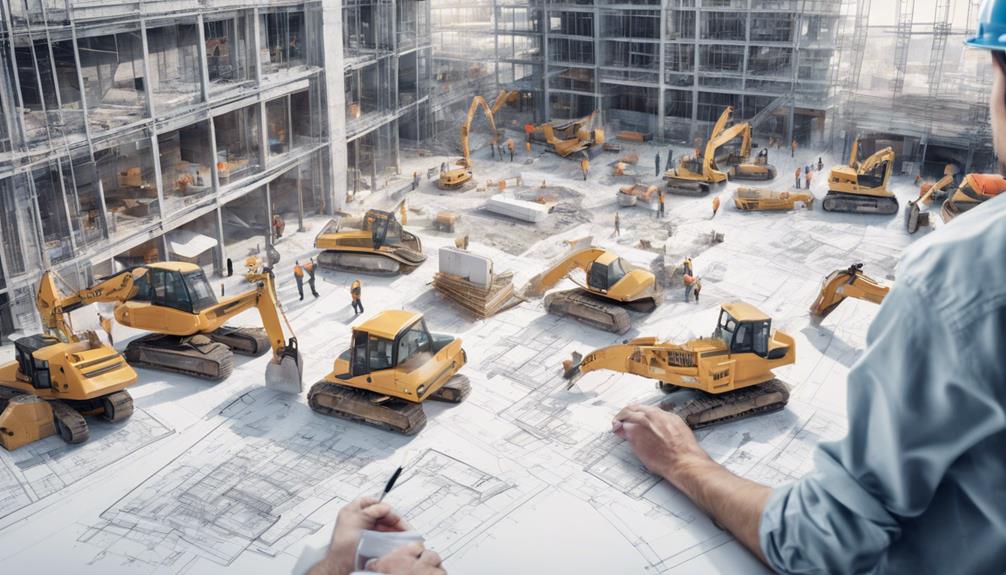
In commercial construction, implementing strategies is crucial because it helps you manage risks, coordinate projects, control budgets, and optimize timelines effectively. You'll identify potential problems early on and use modern tools for real-time updates, ensuring every team member is aligned with the project's goals. Moreover, strategic planning facilitates rigorous quality checks and the use of cutting-edge technology, thereby preventing costly reworks and meeting safety standards. By breaking down costs and using project management software, you ensure the project stays on track and within budget. As you explore further, you'll uncover even more insights on how these strategies significantly benefit your construction projects.
Understanding Risk Management
In commercial construction, effectively managing risk is crucial to your project's success. You've got to identify potential risks early, which can range from safety hazards to financial or legal challenges. It's your job to anticipate what might go wrong before it actually does. This means conducting thorough risk assessments during the planning phase and continuing to monitor for new risks throughout the project.
You'll want to prioritize these risks, determining which ones could have the most impact on your project. This is where your ability to make strategic decisions comes into play. You've got to ask yourself, is it worth investing in higher-grade materials to avoid potential repairs later? Or should you allocate more funds towards safety training to prevent accidents?
Mitigation strategies are your next step. This involves developing specific plans to address the identified risks. For instance, you might decide to implement stricter safety protocols or choose more reliable subcontractors. Remember, the goal isn't just to react to problems as they occur, but to prevent them from happening in the first place.
Enhancing Project Coordination
Effective risk management sets the stage for the next critical step: enhancing project coordination. You're at a pivotal juncture where clear, streamlined communication across all team members becomes essential. Think of project coordination as the orchestra conductor, ensuring every section comes in at the right time, creating a harmonious performance.
You'll want to leverage modern tools and platforms that enable real-time updates and seamless information sharing. Imagine having all your project details, from architectural designs to subcontractor schedules, accessible with a click. This transparency not only keeps everyone on the same page but also significantly reduces errors that can arise from miscommunication.
Moreover, regular coordination meetings are a must. These aren't just check-ins; they're strategic sessions where you can anticipate challenges, align on priorities, and ensure that every team member, from engineers to builders, understands their role and the impact of their work on the overall project.
Effective coordination means you're not just managing a project; you're leading it. You're ensuring that every task, large or small, aligns with the project's timeline and quality standards, keeping the construction process smooth and synchronized. This approach doesn't just solve problems—it prevents them.
Budget Control Techniques
Managing your budget effectively is crucial for the financial health of any commercial construction project. As you dive into planning, it's vital to understand that every decision impacts your bottom line. Start by breaking down your costs at the outset. You'll need detailed estimates that encompass everything from materials to manpower. It isn't just about finding the cheapest options; it's about securing value that won't compromise quality.
You should also adjust for unforeseen expenses by setting aside a contingency fund. Typically, this is around 5-10% of your total budget. It covers you if material costs rise unexpectedly or if additional labor is necessary. This fund ensures that such surprises don't derail your entire project.
Regular monitoring is another key aspect. Don't just set your budget and forget it. Review financial reports weekly. This real-time feedback allows you to adjust your strategies proactively rather than reactively, which can save money in the long term.
Make use of software tools designed for budget management in the construction industry. They help track costs accurately and can alert you early to any discrepancies.
Timeline Optimization Methods
Just as controlling your budget is vital for your project's financial health, optimizing the timeline is key to ensuring everything runs smoothly. You'll find that effective scheduling is a cornerstone of successful project management in commercial construction. It's not just about setting dates; it's about strategically sequencing activities to maximize efficiency and avoid delays.
Start by breaking down the project into manageable phases. You'll want to identify critical milestones and the dependencies between tasks. This way, you can streamline operations and allocate resources more effectively.
It's also essential to integrate buffer times for each phase. Unexpected delays aren't uncommon, and these buffers can help absorb the impact without derailing the overall timeline.
Communication plays a pivotal role in keeping the timeline on track. Ensure you've got a clear line of communication among your team members and stakeholders. Regular updates and meetings will keep everyone aligned and swiftly address any emerging issues.
Lastly, adopt the latest project management tools. These can provide real-time updates and predictive analytics, helping you anticipate problems before they escalate. Leveraging technology not only keeps the project timeline sharp but also enhances your overall strategic approach. Don't underestimate the power of the right tools—they transform plans into reality, efficiently and effectively.
Importance of Quality Assurance
Quality assurance in commercial construction isn't just a checkbox on project requirements; it's the backbone that ensures durability and safety throughout the structure's lifespan. You need to understand that this isn't about ticking off tasks; it's about integrating systems and standards that guarantee every phase of the construction meets high-quality benchmarks.
Without rigorous quality checks, the risk of defects increases, potentially leading to catastrophic failures. These aren't just costly; they're dangerous.
Imagine you're overseeing a project where the materials used are subpar because someone skipped a quality check. The outcome? Weaker structural integrity and a tarnished reputation.
You're also looking at legal compliance. Building codes aren't just suggestions; they're mandates designed to protect both the public and your business. Adhering to these standards through thorough quality assurance processes ensures you're not cutting corners that could lead to legal battles or worse, endanger lives.
Moreover, think of the long-term benefits. Buildings that stand the test of time reduce the need for repairs and increase investor confidence. Your commitment to quality can become a key selling point, distinguishing your projects in a competitive market.
Effective Communication Strategies
Effective communication is essential in commercial construction, bridging the gap between various stakeholders and ensuring that everyone is on the same page. As a manager, you're tasked with keeping lines open and clear. This means you've got to know not only what to say but how and when to say it.
Firstly, hold regular meetings. These aren't just formalities but essential platforms for discussing progress, issues, and forecasts. Here, you can address concerns in real-time and adjust workflows as necessary. Make sure you're not just dictating; encourage feedback and discussions to foster a collaborative environment.
Next, think about your communication style. Are you clear and concise? You've got to tailor your message according to the audience. The way you explain technical details to engineers differs from how you update clients who may not be versed in construction jargon.
Lastly, remember that communication isn't just about speaking; it's equally about listening. Pay close attention to what's being said and what isn't—body language, tone, and hesitation can all clue you into underlying issues before they escalate. Effective listening helps you mitigate problems early, keeping your project smoothly on track.
Leveraging Technology Solutions
In today's fast-paced construction environment, embracing technology is crucial for staying competitive. You need to leverage the latest tech solutions to streamline your projects, enhance efficiency, and reduce costs. From advanced software for project management to AI and machine learning for predictive analytics, the right tools can transform how you manage construction sites.
Integrating Building Information Modeling (BIM) software isn't just an option; it's essential. BIM allows you to create more accurate building plans, coordinate better with stakeholders, and streamline the supply chain management. It reduces errors and the need for rework, saving both time and money.
Don't overlook mobile technology either. Apps that enable real-time communication and data sharing can keep everyone on the same page, whether they're in the office or on-site. This immediacy not only boosts productivity but also enhances decision-making processes.
Investing in cloud-based solutions is another smart move. They offer secure, scalable storage and access to project data from anywhere, which is invaluable for projects spread across different locations.
Conclusion
You've seen how crucial strategies are in commercial construction. By managing risks, coordinating projects effectively, controlling your budget, optimizing timelines, ensuring quality, communicating effectively, and leveraging technology, you set yourself up for success. Remember, each piece of the puzzle is vital. Embrace these strategies to not only survive but thrive in the competitive construction industry. It's your roadmap to delivering projects that are both profitable and exemplary. Don't underestimate the power of a well-strategized plan!
Related articles: Top 10 Construction Project Management Tips · Quiz: Commercial Construction Project Management Tips · Why Do Commercial Construction Projects Face Challenges?