
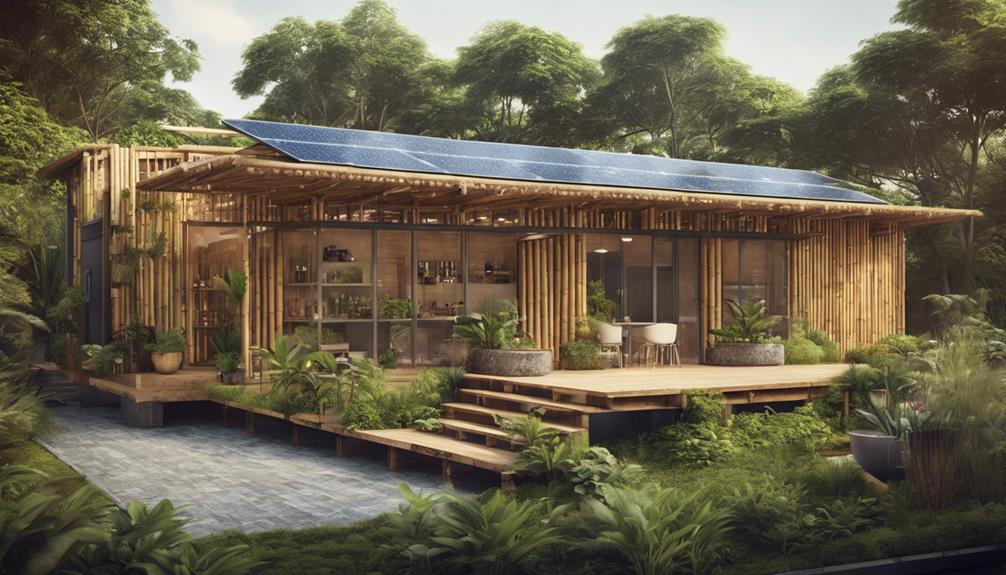
In commercial architecture, you'll find that bamboo, recycled steel, rammed earth, cork, and sustainable concrete options are leading the charge toward eco-friendlier building practices. Bamboo offers rapid growth and carbon absorption, making it an attractive, durable choice. Recycled steel cuts down on waste and energy consumption, while rammed earth provides exceptional durability and energy efficiency with minimal environmental impact. Cork, used as insulation, combines sustainability with functionality, and sustainable concrete incorporates waste byproducts to lower CO2 emissions. Each material not only supports the environment but also maintains modern aesthetic standards. Exploring these options might just transform your next project.
Bamboo: Eco-Friendly Versatility
Bamboo stands out as a leading choice in sustainable building materials due to its remarkable growth rate and versatility. You'll find that it's not only strong and durable but also regenerates rapidly without needing replanting or extensive irrigation. This makes it a standout option for eco-conscious projects like yours.
What's more, bamboo has a unique aesthetic that can transform any space. Its natural texture and warm color add a touch of organic elegance, seamlessly blending functionality with design. You're looking at a material that's adaptable to various architectural styles, from modern to traditional. It's ideal for flooring, paneling, and structural elements, offering you a broad range of applications.
You'll appreciate that bamboo is also inherently sustainable. It absorbs carbon dioxide at a higher rate than many trees, contributing positively to environmental efforts by reducing carbon footprints. This aspect alone can help meet your project's sustainability goals.
Moreover, the local communities involved in bamboo cultivation often benefit from its trade, promoting social sustainability by providing jobs and supporting local economies. By choosing bamboo, you're not just making a decision for the environment, but also for the betterment of people's lives.
Recycled Steel Benefits
Turning to recycled steel offers significant advantages for environmentally conscious building projects. You're not only utilizing a material that's strong and durable, but you're also contributing to a significant reduction in environmental impact. Recycled steel requires far less energy to produce compared to new steel, which involves the mining and processing of iron ore. By opting for recycled steel, you're cutting down on energy consumption by about 75%.
Moreover, steel is 100% recyclable—it can be reused endlessly without losing its quality or strength. This means you're part of a loop that keeps valuable materials out of landfills and reduces the need for new raw materials. It's a choice that supports the industry's move towards more sustainable practices.
You'll find that using recycled steel doesn't mean compromising on aesthetics or functionality. It can be used in a myriad of architectural applications from structural supports to exterior cladding. This versatility allows you to maintain a modern, sleek look for your building while being eco-friendly.
Rammed Earth Construction
Rammed earth construction, often overlooked, is making a strong comeback in modern architecture due to its remarkable sustainability features. You'll find that this technique, which involves compacting a mixture of natural materials like soil, clay, and gravel, isn't just eco-friendly; it's also aesthetically pleasing. Its thermal mass helps regulate indoor temperatures, keeping buildings cool in the summer and warm in the winter.
When you choose rammed earth, you're opting for materials that are abundantly available and often sourced from local sites, which significantly reduces the carbon footprint associated with transportation. Additionally, the walls are incredibly durable, capable of lasting centuries with minimal maintenance. This longevity means fewer resources are needed for repairs and rebuilding over time.
You might also appreciate how rammed earth construction can seamlessly integrate with other sustainable practices. For instance, incorporating passive solar design principles enhances energy efficiency further. The walls absorb heat from the sun during the day and release it slowly, providing natural heating.
Cork as Insulating Material
Cork stands out as an exceptional insulating material for both commercial and residential buildings. You'll find that its unique properties make it not only sustainable but also remarkably effective in reducing energy costs. Harvested from the bark of cork oak trees without harming the tree itself, cork is a renewable resource that you can feel good about using.
This material's cellular structure contains millions of tiny air pockets, which dramatically reduce the transfer of heat and sound. This means that by integrating cork into your building's design, you're enhancing thermal insulation and creating a quieter environment.
Plus, it's naturally resistant to mold, mildew, and termites, which adds to its durability and reduces the need for chemical treatments.
Cork's versatility allows you to use it in many forms, from expanded cork insulation panels to acoustic wall coverings. It's easy to install and works seamlessly with other construction materials, ensuring that you don't have to compromise on aesthetics for the sake of functionality.
Sustainable Concrete Options
While cork has proven its worth in eco-friendly insulation, another groundbreaking player in the realm of sustainable building materials is concrete. You might think of concrete as a standard, inflexible option, but sustainable concrete breaks that mold. It incorporates materials like fly ash, slag, and silica fume, which are byproducts from other industries, to reduce the cement content. This not only helps in recycling waste but also significantly cuts down on CO2 emissions associated with traditional concrete production.
You'll find that using sustainable concrete doesn't mean compromising on quality or durability. In fact, these eco-friendly alternatives often provide enhanced performance benefits such as improved strength and better resistance to weather and chemical attacks. They're also more thermally efficient, helping to regulate indoor temperatures and reduce energy costs in commercial buildings.
Moreover, the innovation doesn't stop at material composition. Methods like carbon capture and storage are being integrated during the concrete production process to further reduce its carbon footprint. These advancements make sustainable concrete a smart choice for your projects, aligning with global efforts to curb environmental impacts while maintaining the robust, versatile qualities you rely on in construction materials.
Conclusion
You've got a range of sustainable materials at your fingertips now. From the versatility of bamboo and the strength of recycled steel to the natural beauty of rammed earth and the insulation properties of cork, these choices not only reduce environmental impact but also add unique aesthetic value. Don't forget about sustainable concrete options which can significantly lower your project's carbon footprint. Embrace these materials to make your next commercial architecture project not just innovative but also eco-conscious.
Related articles: 5 Best Sustainable Materials for Modern Architecture · Top Sustainable Materials Revolutionizing Commercial Architecture · Quiz: Test Your Knowledge on Sustainable Architecture Materials