
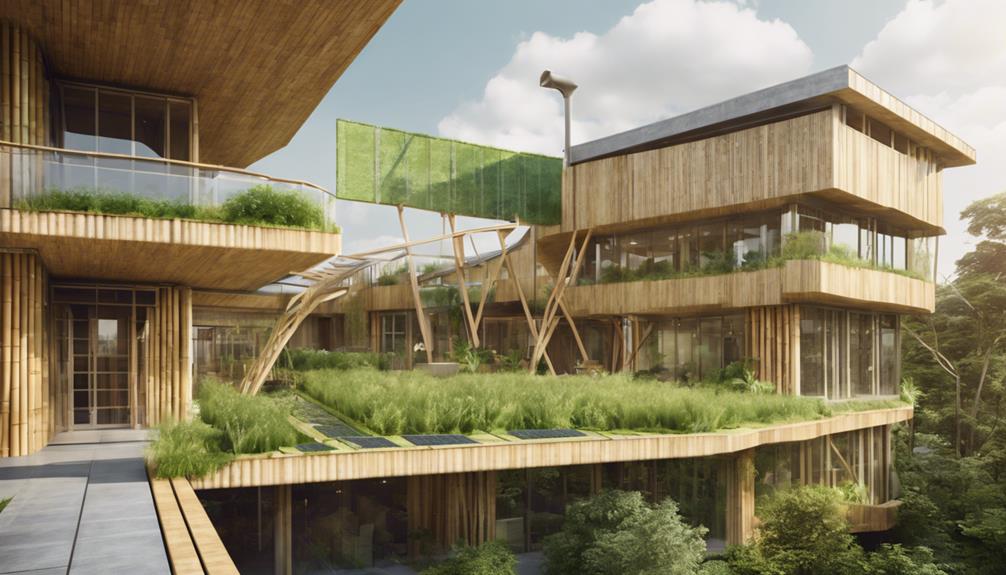
In modern architecture, you may consider using bamboo, recycled steel, cork, rammed earth, and cross-laminated timber, as these materials not only support sustainable practices but also enhance the efficiency and aesthetics of buildings. Bamboo grows incredibly fast, providing immense strength, while recycled steel offers durability without the environmental toll of fresh processing. Cork adds exceptional insulation and a unique visual appeal, and rammed earth creates sturdy, low-impact structures. Cross-laminated timber, meanwhile, combines carbon storage and flexible design. Exploring these materials further will unveil how they're paving the way towards a greener, more innovative architectural future.
Bamboo: The Green Strength
In the realm of sustainable materials, bamboo stands out for its remarkable strength and versatility. You've likely seen it used in everything from flooring to furniture, but its applications extend far beyond that. Bamboo's rapid growth rate makes it a superstar in sustainability circles. It can grow up to three feet in just 24 hours, meaning it reaches maturity in about three to five years—far quicker than hardwoods.
You'll find that bamboo isn't just fast-growing; it's also incredibly strong. Its tensile strength can rival that of steel, making it a robust choice for construction. This isn't just about physical strength; bamboo's flexibility allows it to bend without breaking, providing resilience in earthquake-prone areas.
Moreover, bamboo plays a crucial role in carbon sequestration. It absorbs carbon dioxide at a higher rate than many trees, converting it more efficiently into oxygen. This isn't just good for the atmosphere; it enhances the quality of the air you breathe.
Opting for bamboo can significantly reduce your carbon footprint. It's a choice that supports not only environmental sustainability but also promotes a healthier lifestyle through greener living spaces.
Recycled Steel: Eco-Friendly Durability
Recycled steel stands as a pillar of sustainability in modern architecture, offering remarkable durability and a significantly reduced environmental impact. You'll find that using recycled steel not only supports eco-friendly practices but also provides an exceptionally strong material that meets the demands of modern construction without sacrificing quality or aesthetics.
By choosing recycled steel, you're partaking in a circular economy. This process reduces waste and the need for new raw materials, which in turn, decreases the carbon footprint associated with mining and processing virgin steel. It's an efficient use of resources, as steel can be recycled repeatedly without degradation in quality. You're not just building, you're contributing to a sustainable future.
Moreover, the energy required to produce recycled steel is considerably less than that needed for producing new steel from ore. This reduction in energy consumption translates to lower greenhouse gas emissions, making your projects more environmentally friendly.
Recycled steel is versatile and can be used in a wide range of architectural applications—from structural frameworks to interior finishes. It adapts well to both traditional and innovative designs, ensuring that you don't have to compromise on your creative vision to achieve sustainability goals.
Cork: Natural and Renewable
Cork stands out as a superb choice for your sustainable building needs, renowned for its renewability and natural origins. Harvested from the bark of cork oak trees, primarily found in Mediterranean regions, it's an eco-friendly resource that doesn't harm the tree. This material regenerates every nine years, making it a stellar example of sustainability in action.
You'll find that cork isn't only renewable but also incredibly versatile. It offers excellent insulation properties, both thermal and acoustic, making it ideal for flooring, wall coverings, and even roofing materials in your eco-conscious projects. Its natural texture provides a unique aesthetic that can enhance the warmth and comfort of any space.
Furthermore, cork is naturally resistant to mold, mildew, and termites, which contributes to its longevity and durability. This reduces the need for frequent replacements or chemical treatments, lowering the environmental impact over the lifespan of your building.
Incorporating cork into your designs means you're choosing a material that supports forest biodiversity and the economy of rural communities dependent on cork harvesting. It's a choice that benefits not just your building, but the planet and people too.
Rammed Earth: Timeless and Efficient
Rammed earth construction harnesses the enduring beauty and natural strength of earth materials, creating structures that are both energy-efficient and aesthetically appealing. Imagine your home with walls that breathe naturally, regulating humidity and temperature, reducing your reliance on artificial heating and cooling. This isn't just a dream; it's what rammed earth offers.
You'll appreciate its low environmental impact. The primary material, soil, is abundantly available and often sourced directly from or near the construction site, minimizing transportation emissions. This method also significantly reduces the need for processed construction materials, which further decreases the carbon footprint.
Moreover, you're investing in durability. Rammed earth walls are known for their incredible longevity, standing firm for centuries if properly maintained. They resist fire, pests, and mold, making them a safe choice for your family. The thick walls also provide excellent sound insulation, creating a quiet, peaceful environment inside.
Choosing rammed earth isn't just about building a house; it's about creating a legacy. You're constructing a home that blends seamlessly with its natural surroundings and will endure through generations. It's a choice that reflects a commitment to sustainability, without sacrificing style or comfort.
Cross-Laminated Timber: Innovative and Sustainable
Cross-laminated timber (CLT) is revolutionizing the construction industry with its remarkable sustainability and versatility. Imagine constructing buildings that aren't only eco-friendly but also strong and aesthetically pleasing. That's where CLT comes into play. It's a multi-layered panel made from gluing layers of solid-sawn lumber at perpendicular angles.
The result? A material that can handle loads just as well as concrete or steel.
You'll find that CLT's ability to store carbon dioxide significantly lowers the carbon footprint of your projects. It's a breath of fresh air in efforts to combat climate change. Moreover, the production process of CLT uses less energy compared to traditional building materials, enhancing its green credentials.
CLT isn't just about the environment. It offers design flexibility that can ignite your creativity. Whether you're aiming for large, open spaces or intricate designs, CLT adapts to your vision without compromising on strength.
The speed of construction is another bonus. CLT panels are prefabricated, meaning they're quick to assemble on-site, reducing overall build times and labor costs.
Incorporating CLT into your projects positions you at the forefront of sustainable architecture. You're not just building structures; you're building a better future.
Conclusion
You've explored the top sustainable materials that not only promise durability and efficiency but also care for our planet. From the rapid renewability of bamboo and cork to the robustness of recycled steel, the age-old wisdom of rammed earth, and the innovative approach of cross-laminated timber, each material offers unique benefits. Incorporate these into your next project to not only lead in design but also in sustainability. Make a choice that future generations will thank you for.
Related articles: Top Sustainable Materials Revolutionizing Commercial Architecture · Quiz: Test Your Knowledge on Sustainable Architecture Materials · Why Embrace Cutting-Edge Office Building Designs?