
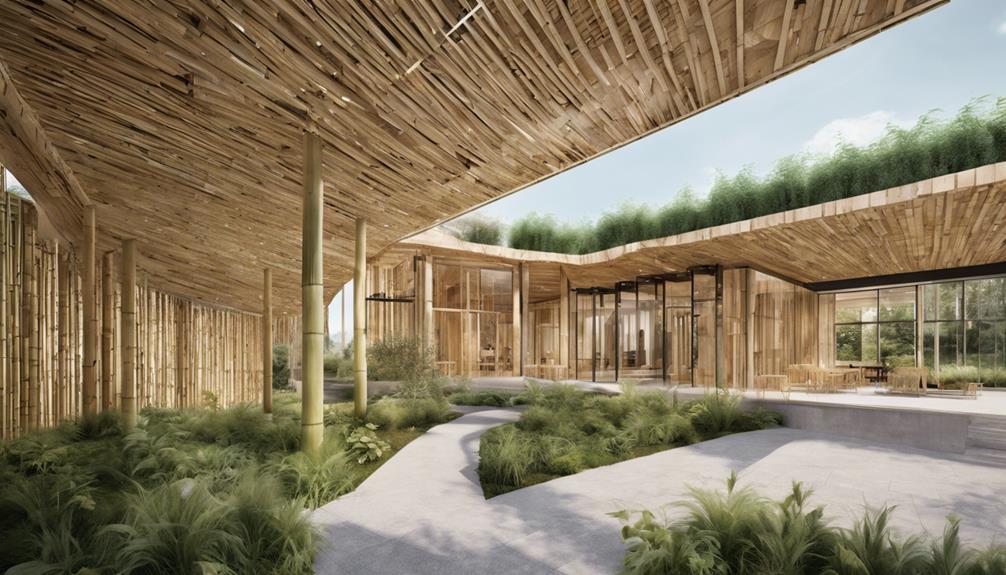
You're witnessing a revolution in commercial architecture with materials designed to lessen your environmental footprint. Bamboo offers a sustainable alternative with a strength comparable to steel, making it ideal for everything from beams to flooring. Recycled steel and cross-laminated timber not only reduce production energy but also contribute to sturdy, energy-efficient buildings. Innovations like low-E glass and hempcrete enhance thermal performance and indoor air quality, slashing your energy bills. Materials such as green roofs and reclaimed wood add ecological benefits and aesthetic appeal, paving the way towards more responsible construction practices. As you explore further, you'll discover how these materials are setting new standards in the industry.
Bamboo: The Green Steel
Bamboo, often hailed as the "green steel," is revolutionizing sustainable building practices. You've probably noticed its increasing use in modern construction. This versatile material isn't just aesthetically pleasing; it's tough, flexible, and grows rapidly, making it a superstar in sustainability circles.
Imagine a material that can mature in just three to five years, compared to decades for traditional hardwoods. That's bamboo for you!
You'll find bamboo making waves not only because it's environmentally friendly but also for its ability to meet the rigorous demands of construction. It has a tensile strength that rivals steel and can withstand considerable stress, making it ideal for structures requiring high durability. What's more, it's naturally resistant to pests and diseases, which reduces the need for harmful chemical treatments.
As you explore its applications, you'll see bamboo used in everything from flooring and wall paneling to structural beams and roofing. Its lightweight nature also cuts down on transport emissions, enhancing its green credentials. By choosing bamboo for your projects, you're not just opting for a material that's good for the planet; you're investing in one that delivers performance and sustainability hand in hand.
Recycled Steel Applications
Switching gears from the organic prowess of bamboo, let's delve into the world of recycled steel and its vital role in sustainable architecture. You're already familiar with steel's strength and durability, but did you know that recycled steel offers the same benefits while minimizing environmental impact? It's a prime choice for reducing carbon footprints in building projects.
Recycled steel comes from numerous sources, including old cars, appliances, and even demolished buildings. This means that instead of depleting raw materials, you're giving new life to what would otherwise be waste.
In fact, using recycled steel reduces the energy needed for steel production by about 75%, a significant saving that you can pass on to your clients in terms of both cost and environmental conservation.
Moreover, integrating recycled steel into your projects isn't just about being eco-friendly; it also supports a circular economy. Every ton of recycled steel conserves 2,500 pounds of iron ore, 1,400 pounds of coal, and 120 pounds of limestone.
Cross-Laminated Timber Features
Moving from the robust world of recycled steel, let's explore another sustainable building marvel: cross-laminated timber (CLT).
You'll find that CLT isn't just good for the planet; it's also transforming the way buildings are constructed. Made from layers of kiln-dried lumber stacked in alternating directions, bonded with structural adhesives, and pressed to form sturdy panels, CLT provides exceptional strength and stability.
You might wonder about its benefits beyond the environmental impact. Well, CLT significantly reduces construction time. Its panels are prefabricated and can be installed quickly, cutting down on-site building time.
Moreover, due to its layered structure, CLT boasts excellent thermal insulation, making your building energy-efficient and helping reduce heating and cooling costs.
Don't overlook its aesthetic flexibility either. CLT can be left exposed, showcasing its natural wood beauty and adding warmth to any design. It's a versatile material, compatible with a range of architectural styles, from modern to rustic.
Moreover, CLT's ability to absorb and sequester carbon dioxide during its growth cycle makes it a champion of carbon footprint reduction. By choosing CLT, you're not just building; you're contributing to a greener future.
Low-E Glass Innovations
From the natural charm of cross-laminated timber, we now turn our attention to another groundbreaking material: Low-E (low-emissivity) glass. You've likely come across this innovation, but you may not have realized its full potential in sustainable building. Low-E glass features a microscopically thin coating that reflects heat while allowing light to pass through. This isn't just any window; it's a smart way to reduce energy consumption.
Imagine you're designing an office space. By incorporating Low-E glass, you're not only ensuring that natural light brightens the workspace but also keeping heating and cooling costs down. This glass selectively filters the sun's energy, reflecting the unwanted infrared portions while embracing the visible light that brightens and warms.
This means during the winter, the warmth stays inside, and in the summer, it stays out, balancing the building's climate without overworking the HVAC systems.
Moreover, the benefits extend beyond just energy efficiency. Low-E glass also protects interiors from UV light, which can fade fabrics, artwork, and furnishings. You get the durability of traditional glass with added layers of comfort and efficiency. By choosing Low-E glass, you're stepping into a realm of smart, sustainable design that aligns with modern environmental standards and aesthetic demands.
Hempcrete for Insulation
Often overlooked, hempcrete is a sustainable building material that excels in providing exceptional insulation. You might find yourself wondering why it isn't more commonly used. Well, it's derived from the woody core of the hemp plant mixed with a lime-based binder, creating a lightweight, breathable composite. This unique combination not only regulates temperature effectively but also maintains air quality, reducing your reliance on mechanical ventilation.
You'll appreciate that hempcrete is carbon-negative over its lifecycle. As the hemp grows, it absorbs carbon dioxide from the atmosphere, encapsulating carbon within your building walls. This process significantly reduces the carbon footprint of your construction projects.
Moreover, hempcrete's moisture-handling properties are noteworthy. It's capable of absorbing and releasing moisture naturally, preventing mold and mildew buildup, which is crucial for maintaining a healthy indoor environment.
It also boasts excellent thermal properties, keeping interiors cool in summer and warm in winter, which can lower your energy bills considerably.
Consider hempcrete not just for its sustainability, but for its economic benefits too. Although initial costs may be higher than traditional materials, the long-term savings in energy and maintenance make it a wise choice for your next project.
Green Roofs and Their Benefits
While hempcrete offers a sustainable option for insulation, another innovative approach to eco-friendly construction involves the installation of green roofs. As you explore options to reduce your building's environmental impact, consider how green roofs can be a transformative choice.
Green roofs aren't just visually appealing; they serve crucial environmental roles. They act as natural insulators, reducing the need for heating in winter and cooling in summer. You'll notice a decrease in your energy consumption, which translates to lower utility bills.
Moreover, they absorb rainwater, reducing runoff and decreasing the burden on urban sewage systems during heavy downpours.
The benefits extend to enhancing biodiversity by providing habitats for various wildlife species, particularly in urban areas where green space is limited. This can help you meet local biodiversity targets and contribute positively to your community's ecological balance.
Additionally, green roofs can increase the lifespan of roofing materials by protecting them from harsh weather conditions. You'll find that the initial investment pays off as you save on maintenance and replacement costs over time.
Incorporating green roofs into your projects isn't just a nod to sustainability; it's a smart, long-term investment that boosts property value, appeals to eco-conscious tenants, and aligns with global trends towards greener building practices.
Straw Bale as a Building Material
Many architects and builders are now turning to straw bale as a primary building material due to its exceptional insulation properties and sustainability credentials. If you're considering environmentally conscious materials for your next project, you should explore the benefits of straw bale construction. This material isn't just for small, rustic homes; it's making waves in commercial buildings as well.
Straw bales provide superb natural insulation, keeping interiors cool in the summer and warm in the winter. This can drastically reduce your energy costs, a significant advantage you'll appreciate. Moreover, straw is a rapidly renewable resource, which means you're making a choice that supports agricultural sustainability and reduces waste.
You'll find that building with straw bales also offers excellent soundproofing qualities. This makes it ideal for environments where noise reduction is crucial, such as schools or office buildings. Additionally, the thickness of the walls contributes to a distinctive aesthetic that can set your project apart.
Construction with straw bale isn't only eco-friendly but also cost-effective, especially in rural areas where the material is readily available. By choosing straw bale, you're not just building structures; you're building a legacy of sustainability.
Reclaimed Wood Usage
As you explore sustainable materials for your architectural project, consider reclaimed wood not only for its aesthetic appeal but also for its environmental benefits. It's sourced from old buildings, structures, and unused timber, giving it a second life and reducing waste in landfills. This practice also limits the need for new timber harvesting, preserving forests and reducing carbon emissions associated with logging and transportation.
Reclaimed wood brings a unique character to your projects, with its rich history and distinctive imperfections adding depth and texture. It's versatile, ideal for flooring, paneling, and furniture, enhancing any design with its rustic charm. Moreover, it's incredibly durable, having been tested by time and elements, ensuring your structures aren't only beautiful but also sturdy.
Incorporating reclaimed wood can also earn your project points under sustainability certifications like LEED, contributing to higher building ratings and potential tax benefits. It's a choice that reflects a commitment to environmental stewardship and social responsibility.
Conclusion
You've just explored some of the top sustainable materials changing the face of commercial architecture. From the robust versatility of bamboo and recycled steel to innovative uses of cross-laminated timber and low-E glass, these materials aren't just eco-friendly, they're revolutionizing how buildings are designed and constructed. Whether it's using hempcrete for better insulation or incorporating green roofs, each choice you make pushes the envelope towards sustainability. Embrace these groundbreaking materials and be part of the movement shaping a greener future.
Related articles: Quiz: Test Your Knowledge on Sustainable Architecture Materials · Why Embrace Cutting-Edge Office Building Designs? · What Are the Latest Office Design Trends?