
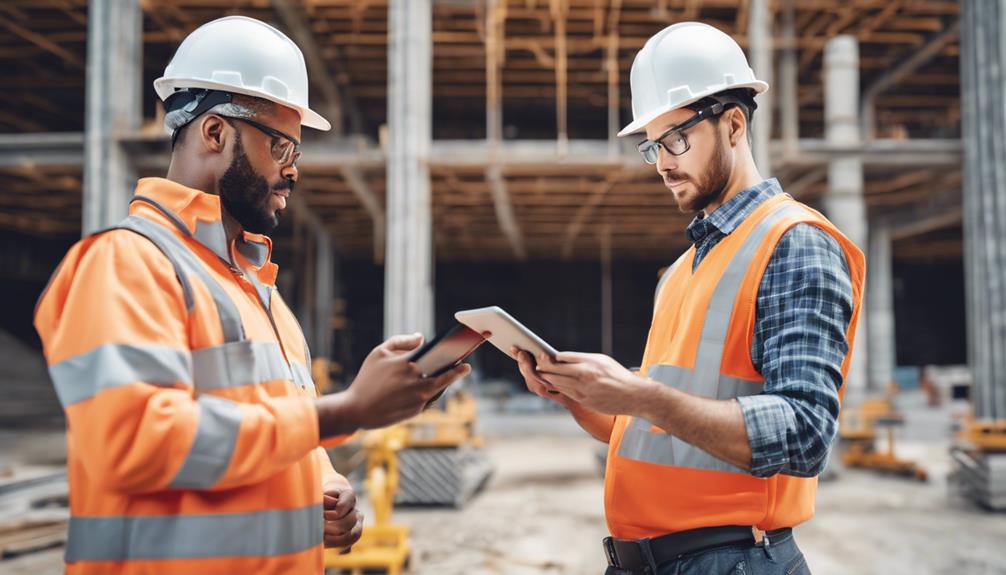
In 2024, you'll find construction safety compliance being revolutionized by digital documentation and wearable technology. Expect your safety records to be more accessible and accurate, thanks to digital platforms that provide real-time updates. You'll wear smart helmets and vests that monitor your vital signs and fatigue levels, effectively predicting and preventing potential site hazards. There's also a bigger emphasis on mental health with resources and regular check-ins becoming a norm to keep you safer and morale high. Moreover, AI and analytics will play a pivotal role in hazard prediction and safety training enhancements, ensuring protocols evolve with workplace demands. More insights await beyond just these upgrades.
Enhancing Digital Documentation
Amid the evolving landscape of construction safety compliance, enhancing digital documentation stands out as a critical trend for 2024.
You'll find that transitioning to digital platforms not only streamlines processes but also significantly boosts accuracy and accessibility in safety records.
As you dive deeper, you'll notice that digital tools offer real-time updates and easy retrieval of documents, crucial during inspections or audits. This shift means you're less likely to face compliance issues due to misplaced or incomplete paperwork. Moreover, integrating technologies like AI can help you predict potential site hazards, enhancing preventive measures.
Imagine reducing human error through automated forms and checklists that ensure every safety protocol is thoroughly documented and adhered to. These innovations aren't just about keeping track; they're about setting a new standard in construction safety that you can lead.
As you adopt these tools, you'll see a transformation not only in compliance rates but in the overall safety culture at your projects.
Focus on Mental Health Initiatives
As we harness technology to enhance safety protocols, it's equally important to prioritize mental health initiatives within the construction industry. You're in a field that's physically demanding and often stressful. Recognizing the mental strains that come with the job is crucial for your wellbeing and productivity.
Consider this: mental health issues can lead to decreased safety on site. If you're feeling overwhelmed, distracted, or fatigued, the risk of accidents increases. That's why it's vital to integrate mental health resources and support systems into your daily routine.
Regular mental health check-ins, accessible counseling, and stress management workshops can create a safer, more supportive workplace.
Moreover, fostering an open culture where you and your colleagues feel comfortable discussing mental health can lead to significant improvements in morale and efficiency. Implementing peer support programs where workers can share experiences and solutions can also enhance this aspect.
Advances in Wearable Technology
Several advancements in wearable technology are significantly enhancing safety in the construction industry. As you step onto a site, imagine wearing smart helmets that not only protect your head but also provide real-time data about site conditions. These helmets can alert you to potential hazards and ensure you're aware of your surroundings.
You might also wear smart vests equipped with GPS and biometric sensors. These vests monitor your vital signs and fatigue levels, sending alerts if signs of distress are detected. This immediate feedback can prevent accidents and health issues related to overexertion.
Moreover, consider the safety boots that connect with the rest of your wearable system. They're designed to detect excessive pressure or sudden impacts, helping to avoid injuries from falls or heavy machinery. By integrating these technologies, you're not just protected; you're connected to a network that actively watches over your well-being.
These tools aren't just gadgets; they're your guardians on the job. They provide a level of safety oversight that was unimaginable a few years ago. As you continue to work, let these advancements shield you and your team, ensuring everyone goes home safe every day.
Improving Worker Training Programs
Building on the integration of wearable technology, improving worker training programs is essential for maximizing construction safety. You've seen how tech can track movements and vital signs, now it's time to use this data to tailor training programs that address the specific needs and risks encountered on-site.
Personalized training scenarios can be developed based on the patterns observed, ensuring that you're not just going through the motions, but actually engaging with relevant, real-world problems.
Interactive simulations and virtual reality (VR) are transforming the way you learn safety protocols. Instead of reading about potential hazards, you're placed right in the middle of them, in a controlled environment where you can learn to react without real-world consequences.
This hands-on approach not only boosts your understanding but also helps in retaining crucial safety information.
Moreover, continuous learning platforms allow you to update your skills regularly and conveniently. These aren't one-off sessions but an ongoing process that adapts to the evolving nature of construction sites and technology.
Stringent Enforcement of Protocols
To ensure safety on construction sites, stringent enforcement of safety protocols is crucial. You've likely noticed more frequent inspections and increased penalties for non-compliance. This isn't just about following rules; it's about protecting lives. Every measure you implement directly decreases the risk of accidents and injuries.
You must understand the specific protocols in place. From wearing hard hats to securing harnesses properly, each guideline is a barrier against potential hazards. Regular training sessions are essential, but they're just the start.
You also need to actively participate in safety audits and encourage your peers to voice concerns. When everyone is vigilant, maintaining high safety standards becomes part of the daily routine.
Remember, the cost of cutting corners can be devastating. Heavy fines are a deterrent, but the real cost comes from accidents that could have been prevented. Compliance isn't just a legal requirement—it's a moral one.
Keep yourself updated with the latest safety regulations and best practices. Engage with them actively, not passively. It's your responsibility to foster an environment where safety is the norm, not the exception. Let's make sure everyone goes home safe every day.
Integration of AI and Analytics
While enforcing safety protocols is the foundation, integrating AI and analytics represents a significant advancement in monitoring and improving compliance on construction sites. As you navigate the complexities of construction safety, embracing this technology can transform how you manage risks.
AI systems, equipped with machine learning capabilities, can predict potential hazards and suggest preventive measures. They analyze historical data and real-time inputs from sensors on site to alert you about unsafe conditions before they result in accidents.
Moreover, you'll find that analytics tools offer insights that were previously unattainable. Through data visualization, you can identify patterns and trends in safety violations, allowing for targeted interventions. These tools also enable you to monitor the effectiveness of your safety protocols continuously, ensuring they adapt to changing conditions on site.
Implementing AI and analytics doesn't just help you comply with regulations; it also fosters a culture of safety that permeates every level of your operation. Workers become more aware of their environment, and management gets equipped with tools to enforce safety proactively rather than reactively.
Conclusion
You'll see major strides in construction safety compliance in 2024. As you adopt advanced digital tools and AI analytics, your documentation becomes flawless and insightful. Donning the latest wearables, you'll monitor health and safety like never before. Enhanced training programs will empower you, ensuring you're well-prepared for the job. With stricter protocol enforcement and a focus on mental health, you're set to experience a safer, more efficient worksite. Embrace these trends and watch your workplace transform.
Related articles: Ensuring Construction Safety Standards Compliance: A Guide · Effective Risk Strategies for Commercial Construction Safety · What Are Key Risk Management Strategies in Construction?