
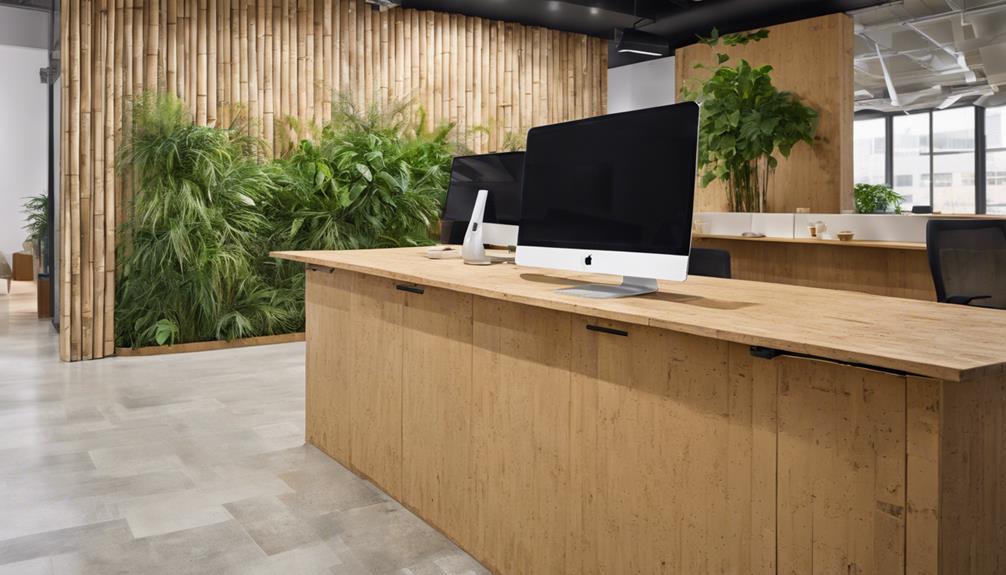
For your commercial office, consider opting for eco-friendly materials that not only enhance aesthetics but also support environmental sustainability. You can choose bamboo flooring, known for its rapid regeneration and durability, or recycled glass surfaces that reduce waste. Low-VOC paints and water-based options will freshen up your space while maintaining good indoor air quality. Don't overlook cork wall coverings and reclaimed wood, each offering unique textures and robustness. Additionally, natural fiber carpets like wool or sisal provide comfort and are sustainability-minded choices. Integrating these materials can significantly influence the environmental footprint of your office. As you explore further, you'll discover more about harnessing these innovative solutions for a greener workspace.
Bamboo Flooring Options
When considering eco-friendly materials for your office, bamboo flooring stands out as an excellent choice. It's not only aesthetically pleasing but also incredibly sustainable. Bamboo can regenerate itself in just three to five years, much faster than hardwood trees, which can take decades. This rapid growth cycle makes it a superstar in sustainable building materials.
You'll find that bamboo flooring offers remarkable durability. It's harder than many traditional hardwoods, making it ideal for high-traffic areas in your office. Plus, it's naturally resistant to moisture and insects, ensuring longevity and ease of maintenance.
You won't have to replace it as often as other flooring options, which saves you money and reduces waste.
Choosing bamboo also means you're opting for a material that has minimal impact on air quality. It doesn't require harmful pesticides or fertilizers during cultivation, and it's typically processed with fewer chemicals than other engineered flooring. This aspect is crucial, especially if you're aiming to maintain a healthy indoor environment for your team.
Recycled Glass Surfaces
Recycled glass surfaces are transforming the way commercial offices approach eco-friendly design. By incorporating these materials, you're not only embracing aesthetics but also endorsing environmental responsibility. These surfaces are crafted from recycled glass bottles and other glass products, which are then converted into stunning countertops, backsplashes, and even flooring options.
The beauty of recycled glass surfaces lies in their uniqueness. Each piece you choose won't just add style to your office; it'll also tell a story of sustainability. You're looking at a range of vibrant colors and patterns that traditional materials can't offer. This variety allows you to customize your workspace in a way that reflects your company's values and commitment to the environment.
Moreover, using recycled glass is incredibly beneficial for the environment. It reduces the waste that ends up in landfills and cuts down on the use of natural resources required to produce new glass.
This process also saves energy, as melting down recycled glass consumes less energy than creating new glass from raw materials.
Low-VOC Paints
Consider upgrading your commercial office with low-VOC paints to significantly improve indoor air quality and reduce environmental impact. Volatile organic compounds (VOCs) are notorious for their negative effects on health, contributing to issues like headaches, dizziness, and respiratory problems. By choosing low-VOC options, you're opting for a safer, cleaner alternative that doesn't compromise on quality or durability.
Low-VOC paints release fewer airborne chemicals during and after application, making your office a more pleasant place to work. You'll notice less of that harsh "new paint" smell, which means you can return to normal operations sooner without discomfort. Additionally, these paints contribute to a greener building certification score, enhancing your office's marketability and potentially increasing its value.
You're not just making a healthier choice for your team but also taking a step towards sustainability. Most low-VOC paints are water-based, which simplifies cleanup and reduces hazardous waste.
With a variety of colors and finishes available, you won't have to sacrifice style for sustainability. Start exploring your options today and make a positive impact on both the environment and your workplace's health.
Cork Wall Coverings
Transitioning from low-VOC paints, explore the benefits of cork wall coverings for your commercial office. Cork, derived from the bark of the cork oak tree, offers exceptional sustainability since it's harvested without harming the tree. This renewable source regenerates every nine years, making it an eco-friendly choice.
Cork's natural properties make it an ideal material for busy office environments. It's an excellent insulator, both thermally and acoustically, ensuring your space remains energy efficient and quieter. These insulation qualities can help you save on heating and cooling costs, while also keeping office chatter and outside noise to a minimum.
Additionally, cork is naturally resistant to mold, mildew, and termites, which enhances its durability and reduces the need for frequent replacements or chemical treatments. Its inherent softness adds a layer of comfort underfoot if used as flooring, and it can also reduce the risk of injury from falls.
Aesthetically, cork can be finished in a variety of textures and colors, complementing any office decor. It adds a warm, organic feel to spaces, which can boost mood and productivity. Opting for cork wall coverings isn't just a practical decision but a stylish one too, aligning with green building trends and contributing to a healthier office environment.
Reclaimed Wood Features
Building on the theme of sustainable materials, reclaimed wood features offer an equally compelling choice for commercial office design. You'll find that integrating these elements not only enhances aesthetic appeal but also champions environmental responsibility. Reclaimed wood, sourced from old barns, warehouses, and decommissioned ships, has a rich history and a unique character that new materials can't match.
Using reclaimed wood helps reduce the demand for new timber, thus conserving forest resources and reducing the impact on the environment. It also minimizes waste by repurposing old wood, which might otherwise end up in landfills. You're not just choosing a stylish material—you're making an eco-friendly decision that contributes to sustainability.
Consider reclaimed wood for flooring, wall paneling, or custom furniture pieces in your office. Each installation is unique, bearing marks of its past life, such as nail holes or weathering, which add to its charm and authenticity. This can create a warm, inviting atmosphere that boosts both the comfort and productivity of your workspace.
Moreover, reclaimed wood can often be more durable than new wood because it comes from old-growth trees, offering you a blend of longevity and style. So, when you're planning your next office renovation, remember that reclaimed wood isn't just good for the planet; it's great for your work environment too.
Eco-Friendly Insulation Choices
Shifting focus to the walls that surround us, choosing eco-friendly insulation is crucial for maintaining a sustainable commercial office. You're not just selecting a product that keeps energy costs down; you're also making a statement about your company's commitment to environmental responsibility.
One of the top choices you can consider is cellulose insulation. It's made from recycled paper, primarily newspapers, and it's treated with borate for fire and pest resistance. Not only does it have a high R-value, which measures thermal resistance, but it also helps in soundproofing your office. You'll find it's a breeze to install in existing or new walls without major disruption.
Another fantastic option is sheep's wool insulation. It naturally provides excellent insulation and moisture control. Sheep's wool can absorb indoor pollutants like formaldehyde, making your office air cleaner. Plus, it's completely renewable.
Lastly, don't overlook cotton batts, made from recycled denim. They're easy to handle and contain no irritants or carcinogens, making them safe for installers and office occupants alike.
Choosing any of these materials ensures you're building an office that's not only energy-efficient but also health-conscious and aligned with green building principles.
Sustainable Ceiling Materials
As we continue to explore green materials, let's consider the importance of sustainable ceiling options for your commercial office. Choosing the right materials can significantly impact both the environmental footprint and the indoor air quality of your workspace.
One of the top choices for sustainable ceiling materials is recycled metal tiles. These tiles are made from post-consumer or post-industrial metals, offering a durable and recyclable solution that also contributes to a modern aesthetic. You'll not only benefit from their long lifespan but also from their ability to be fully recycled at the end of their use.
Another excellent option is bamboo panels. Bamboo grows incredibly fast, making it a highly renewable resource. It's also strong and versatile, ideal for creating an attractive ceiling that stands the test of time. Plus, bamboo has natural sound-absorbing properties, enhancing the acoustic comfort of your office.
Don't overlook the potential of reclaimed wood either. It adds a warm, organic feel to any space and comes with the story of its previous life. Using reclaimed wood helps reduce deforestation and the wood's seasoned stability means it's less prone to warping.
Incorporating these sustainable materials into your office design not only supports environmental sustainability but also creates a healthier and more aesthetically pleasing workplace.
Natural Fiber Carpets
Many commercial offices are now choosing natural fiber carpets as an eco-friendly flooring option. You're likely seeking materials that not only support sustainability but also maintain an aesthetic appeal and functionality in your workspace. Natural fiber carpets, made from materials like wool, sisal, and jute, offer just that.
These carpets aren't only biodegradable, reducing your office's environmental footprint, but they also provide a timeless look that synthetic fibers can't match. You'll find that they improve indoor air quality too, as they don't emit volatile organic compounds (VOCs) like many synthetic carpets do.
Moreover, natural fiber carpets are highly durable. Wool, for instance, has a natural resilience to crushing and can maintain its appearance for years, making it a cost-effective choice over time.
Jute and sisal, while slightly less durable than wool, still offer significant longevity and can withstand the wear and tear of high traffic areas in your office.
Choosing natural fiber carpets also means you're supporting sustainable agriculture practices. These fibers are sourced from plants and animals that are farmed with a lower impact on the environment, aligning your office space with broader sustainability goals. Opting for these materials can help you create a healthier, more environmentally responsible workplace.
Solar Energy Systems
Commercial offices are increasingly harnessing solar energy systems to cut operational costs and reduce their carbon footprint. As you explore sustainable options for your office, consider the significant benefits solar panels can offer. Beyond merely slashing electricity bills, they're a public testament to your commitment to sustainability, enhancing your brand's image among eco-conscious consumers.
Installing solar panels also allows you to take advantage of government incentives, including tax credits and rebates, which can substantially offset the initial costs. You'll find that these systems aren't only beneficial for the environment but also for your finances in the long run.
Moreover, modern solar energy systems are more efficient than ever. They can be installed on various parts of your building, not just the roof. This flexibility means you can maximize your property's solar potential regardless of its design.
Additionally, advancements in technology have led to sleeker, more aesthetically pleasing options that won't detract from your building's appearance.
Green Roofing Solutions
Switching to green roofing solutions not only enhances your building's sustainability but also improves its energy efficiency. By integrating vegetation layers atop your commercial space, you're actively reducing heat absorption, a process that substantially lowers cooling costs during warmer months. Imagine the benefits as you cut down on your air conditioning needs, directly decreasing energy consumption and utility bills.
But it's not just about energy savings. Green roofs absorb rainwater, reducing runoff and decreasing the burden on urban sewage systems during heavy rains. Moreover, these eco-friendly roofs can extend the lifespan of your roofing materials by protecting against UV radiation and physical wear. This means you'll face fewer maintenance issues and replacements over time.
You'll also contribute to urban air quality improvement. The plants on green roofs capture airborne pollutants and carbon dioxide, transforming them into oxygen. As a result, you're not just investing in your building's performance and aesthetics, but also in a healthier environment for everyone.
Consider the added aesthetic value too. A lush, green rooftop can provide a serene retreat in dense urban settings, enhancing your property's appeal to potential renters or buyers. In embracing green roofing, you're choosing a cost-effective, sustainable, and visually appealing option for your commercial office.
Conclusion
You've seen the best green materials for your commercial office. Embrace bamboo flooring for its durability, opt for recycled glass surfaces, and choose low-VOC paints to improve air quality. Cork wall coverings and reclaimed wood add unique charm, while sustainable ceiling materials and natural fiber carpets underscore your eco-commitment. Don't forget to install solar energy systems and green roofing solutions to maximize efficiency. By integrating these options, you'll create a healthier, more sustainable workspace that truly stands out.
Related articles: 7 Tips for Eco-Friendly Office Building Materials · Why Choose Weatherproofing Products for Commercial Construction? · Top 3 Weatherproofing Tips for Construction