
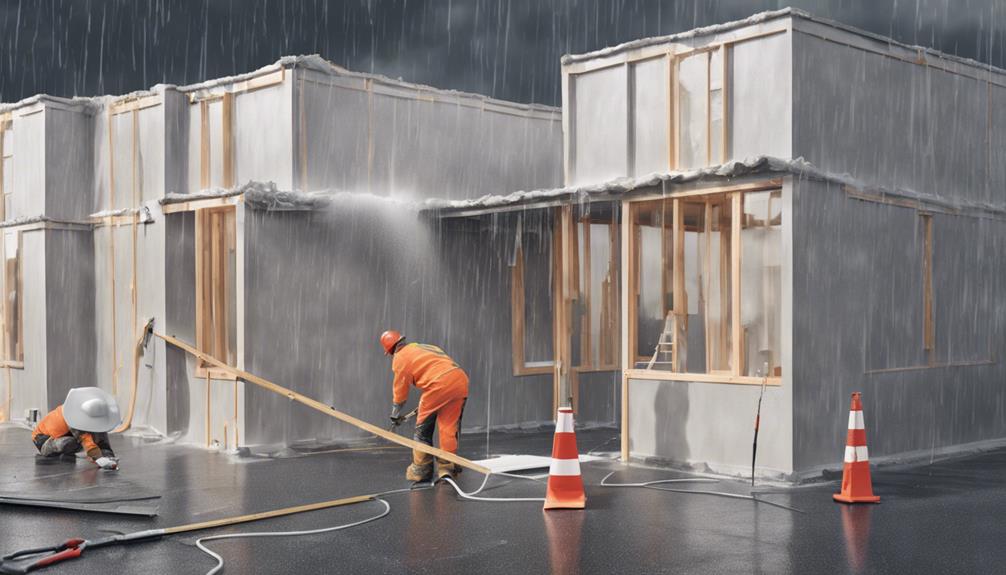
To weatherproof your construction projects effectively, start by choosing high-quality sealants that match the specific materials and climatic conditions of your site. Silicone and polyurethane options are great, offering water resistance and flexibility. Next, employ durable waterproof membranes, ensuring they're applied cleanly and overlap extensively for maximum protection. Lastly, enhance site drainage with properly implemented gradients and systems like French drains to manage water flow and prevent accumulation. These strategic steps are fundamental, but there's more to explore that can optimize your project against the elements.
Selecting High-Quality Sealants
When weatherproofing your construction project, it's crucial to choose high-quality sealants. The right type can prevent water damage and ensure the longevity of your structure. You'll want to consider the material compatibility and the environmental conditions your project faces.
First, identify the types of surfaces you're working with. Different materials like wood, concrete, or metal require specific sealants to ensure optimal adhesion and effectiveness. Silicone sealants are versatile and provide strong water resistance, making them ideal for various surfaces.
However, polyurethane sealants are better for areas that endure more movement or weather extremes, as they offer greater flexibility.
Next, think about the climate. If you're in a region with extreme temperatures, choose a sealant that withstands thermal expansion. For humid or rainy climates, look for options with excellent mold and mildew resistance.
Implementing Durable Waterproof Membranes
After selecting the right sealants, the next step in ensuring comprehensive weatherproofing is to implement durable waterproof membranes. You'll want to choose membranes that stand up to both environmental stress and chemical exposure. Start by assessing the specific needs of your construction project. Are you dealing with high moisture areas or regions with extreme weather conditions? Answering these questions will guide your choice.
The installation process is crucial. Ensure the surface is clean and dry before you begin. This prevents any potential failures in adhesion. Apply the membrane evenly across surfaces; this might include foundations, roofs, or walls, depending on your project's scope. Overlapping the edges by at least six inches minimizes the risk of water seepage.
Don't skimp on quality. Investing in high-grade waterproof membranes pays off in longevity and durability. Look for products with proven track records and robust warranties. They might cost more upfront, but the reduction in maintenance and repair costs makes them more economical over time.
Effective Drainage Solutions Installation
To ensure your construction project remains dry and damage-free, installing effective drainage solutions is crucial. You'll want to start by assessing your site's natural drainage patterns and tailor your approach accordingly. It's vital to integrate proper grading techniques, sloping the terrain away from your building to avoid water pooling at the foundation.
Next, consider installing French drains or trench drains. These systems effectively redirect water, preventing it from seeping into areas where it can cause structural damage.
You'll need to dig a trench, line it with filter fabric, lay a perforated pipe, and cover it with gravel. Make sure the pipe slopes at least one percent away from your structure for optimal water flow.
For areas prone to heavy rainfall, sump pumps are a reliable option. They're installed at the lowest point of your property to collect and pump out water that accumulates during storms. Regular maintenance, such as checking for debris and ensuring the pump is operational before rainy seasons, will keep it functioning effectively.
Lastly, don't overlook the importance of gutters and downspouts. They channel roof runoff safely away from your building, reducing the risk of water damage. Ensure they're securely attached and free from clogs to maintain their efficiency.
Conclusion
You've got the essentials to shield your construction projects from the elements. So don't skimp on quality when picking sealants; they're your first line of defense. A robust waterproof membrane is your next layer of protection, ensuring durability through the seasons. And remember, installing effective drainage solutions can save you from costly water damage down the line. Tackle these steps confidently, and you'll ensure your project stands strong against whatever weather comes its way.
Related articles: 7 Best Weatherproofing Products for Commercial Construction · The Evolution of Weatherproofing in Construction · Ultimate Weatherproofing Solutions for Commercial Construction