
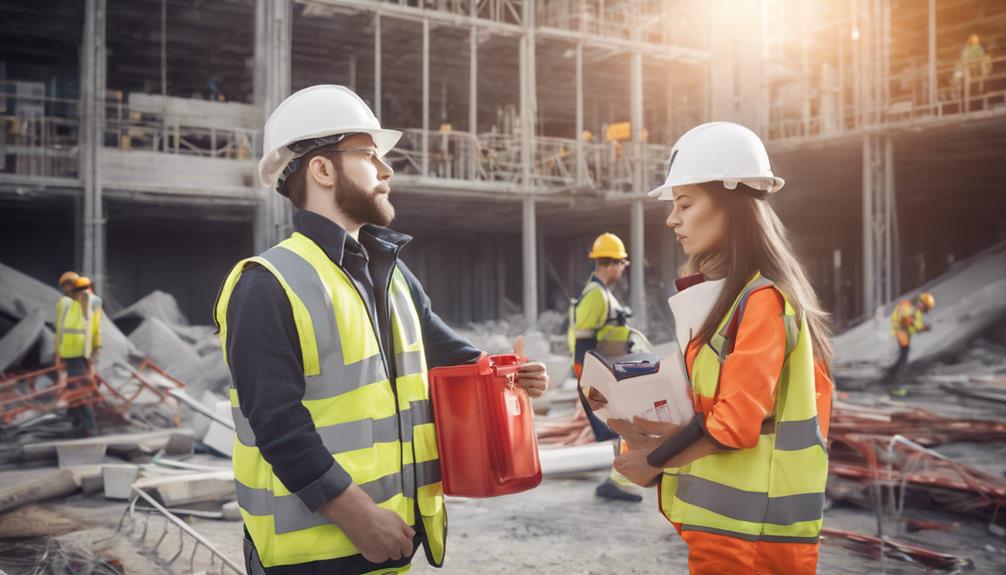
In managing your commercial construction projects, you must adhere to key safety protocols to ensure team and site welfare. Start by implementing OSHA guidelines, providing regular training, and ensuring all staff understands and utilizes personal protective equipment. Conduct thorough safety audits routinely, prepare site-specific training that addresses unique hazards, and establish proper protocols for handling hazardous materials. Always equip your team with necessary safety gear including helmets, safety glasses, gloves, high-visibility clothing, and steel-toed boots. Adapting these measures significantly mitigates risks. As you explore further, you'll uncover effective strategies that further enhance site safety and compliance.
Implementing OSHA Compliance
Ensuring compliance with OSHA standards is crucial for maintaining safety on any commercial construction site. You've got to understand the specific regulations that apply to your projects, such as fall protection, scaffolding safety, and hazard communication. It's not just about following rules; it's about fostering a safe working environment that prevents injuries and fatalities.
You need to start by educating your team. This means regular training sessions that are updated with the latest OSHA guidelines. Make sure everyone from the site manager to the newest worker knows their responsibilities and the safety measures they must follow.
It's your job to ensure that this information isn't only provided but understood and implemented by all.
Don't overlook the importance of the right equipment. You must provide personal protective equipment (PPE) like helmets, goggles, and safety harnesses. Each piece should meet OSHA's rigorous standards and be in good condition.
Regular checks to confirm that equipment is compliant and functional are essential, but remember, the specifics of these checks will be covered later in discussions about regular safety audits.
Staying on top of these elements will help you maintain a safe site and avoid costly violations. Keep your team informed, equipped, and ready to work safely every day.
Conducting Regular Safety Audits
After establishing a solid foundation in OSHA compliance, your next step is to conduct regular safety audits to ensure ongoing adherence to safety standards. You'll want to integrate these audits into your project's routine to catch and rectify potential hazards before they lead to accidents.
Start by developing a comprehensive audit checklist that covers all areas of your site. This list should include equipment checks, site cleanliness, employee compliance with safety protocols, and any hazard communication. You're not just looking for obvious risks but also subtler issues that could escalate over time.
You should schedule these audits regularly, depending on the scale and phase of the construction project. It's best if you can perform these evaluations monthly or even weekly for larger projects.
Don't hesitate to bring in third-party safety consultants if the situation demands a fresh set of eyes or specialized knowledge.
Utilizing Proper Protective Gear
Proper protective gear, including helmets, gloves, and safety glasses, is crucial for every worker on a construction site. You're not just protecting yourself from minor scrapes and bruises; you're guarding against life-threatening injuries. Helmets, for instance, shield you from head injuries caused by falling objects. Safety glasses prevent debris from damaging your eyes, while gloves protect your hands from cuts and abrasions.
Don't overlook the importance of wearing high-visibility clothing, especially if you're working at night or in poor light conditions. This simple yet effective gear makes you visible to machinery operators and other workers, reducing the risk of accidents.
It's also essential that you wear the right kind of footwear. Steel-toed boots, for example, protect your feet from heavy falling objects and sharp protrusions on the ground. They also provide better grip on slippery surfaces, keeping you steadier on your feet.
Enforcing Site-Specific Training
While protective gear offers individual safety, site-specific training equips you with the knowledge to handle the unique challenges and hazards of each construction site. It's crucial that you don't just show up; you need to understand the specifics of the environment you're working in. This isn't just about general safety practices but about knowing what's specific to your current project—everything from the layout of the site to the types of equipment you'll be using.
Think of site-specific training as your roadmap. Before you start, you'll be briefed on emergency procedures, potential site hazards, and any unusual conditions you might face.
This kind of training is often dynamic, adapting to the project's phase and any changes in the team or equipment.
Remember, each site has its quirks. You might be used to working at heights, but what if your new site has confined spaces or requires specialized lifting techniques? That's where tailored training comes in.
You'll be shown how to navigate these differences safely and efficiently.
Don't overlook this training as a mere formality. Engage actively, ask questions, and ensure you're fully prepared before you step onto the site.
It's not just about your safety—it's about ensuring everyone on the site can rely on you to know your part inside out.
Managing Hazardous Materials
Managing hazardous materials on a construction site demands your utmost attention and precision. You're responsible for identifying, handling, and disposing of these substances correctly to ensure everyone's safety. It's crucial that you're familiar with the Material Safety Data Sheets (MSDS) for each hazardous substance you encounter. These sheets provide vital information on the properties of each material, potential hazards, and the necessary safety precautions.
You'll need to ensure all hazardous materials are properly labeled and stored according to regulatory requirements. This isn't just about compliance; it's about preventing accidents. Make sure storage areas are secure, well-ventilated, and accessible only to trained personnel.
When you're transporting these materials, whether within the site or off-site, follow the guidelines to the letter. Use appropriate containers and handling equipment designed for the specific type of material. Don't cut corners—improper handling can lead to leaks, spills, and contamination.
Lastly, equip yourself and your team with the right personal protective equipment (PPE). Gloves, goggles, and respirators might be required, depending on the material you're handling. Always wear the PPE as instructed and ensure it's in good condition. Remember, your safety and the safety of your coworkers depend on these practices.
Reporting and Investigating Incidents
After an incident involving hazardous materials, it's crucial that you report and investigate the event thoroughly. Quick and precise action ensures that similar incidents can be prevented in the future.
First off, you'll want to notify the appropriate on-site safety officer immediately. This ensures the incident is officially logged and that the response protocol kicks into gear without delay.
Documentation is key. You should capture details such as the type of material involved, the quantity, how the incident occurred, and who was present. Photos or videos can be invaluable here, providing clear evidence for the investigation phase. Make sure you're also noting the time and specific location within the project site.
Next, cooperate fully with the investigative team. Their job is to dissect what happened and why, so your honest, detailed input is vital. You might also need to participate in interviews or provide additional documentation.
Conclusion
You've got the tools to enhance safety on your construction site. Always follow OSHA standards and conduct regular safety audits to spot potential risks. Make sure everyone's using the right protective gear and understands the importance of site-specific training. Manage hazardous materials with care, and don't hesitate to report and investigate any incidents. By implementing these protocols, you're not just complying with regulations; you're actively protecting your team and ensuring the success of your project. Stay safe out there!
Related articles: Top Safety Protocols for Building Projects · Why Follow Safety Protocols in Commercial Construction? · Top 5 Construction Safety Standards to Follow