
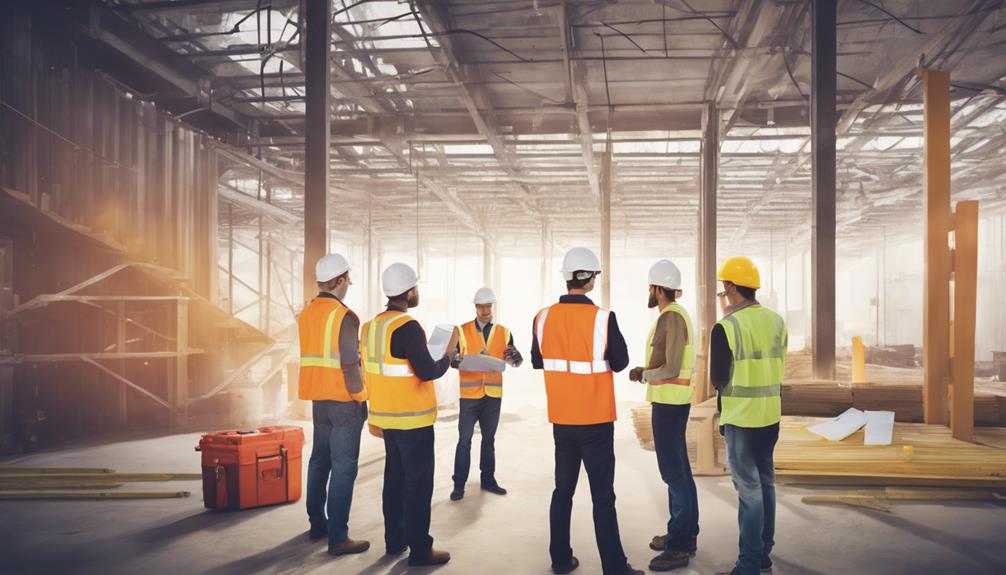
To ensure your safety and meet OSHA regulations on your construction site, you'll need to implement several crucial safety measures. Always use fall protection, including personal fall arrest systems, when working at heights of 6 feet or more. Make sure scaffolding is secure before use, and don't forget daily checks for stability and damage. All electrical tools must be inspected before use, especially in wet conditions. Always wear appropriate personal protective gear like helmets, safety glasses, and steel-toed boots. Don't overlook health hazards; provide proper documentation and training for handling hazardous materials. Educating yourself and your team on these guidelines will significantly enhance site safety.
Understanding Fall Protection Requirements
Fall protection is crucial on construction sites to prevent injuries from falls, which are among the most common accidents in the industry. You've got to understand the importance of using the right equipment and adhering to safety standards to keep everyone safe.
First off, you need to know when fall protection is required. OSHA mandates that any time you're working at heights of six feet or more, fall protection must be used. This rule isn't just a suggestion; it's a strict requirement meant to protect you from potential hazards.
So, what kind of equipment are we talking about? Well, personal fall arrest systems (PFAS) are your first line of defense. These systems include a full-body harness, a lanyard, and an anchor point. The harness distributes the forces over your body if you fall, while the lanyard has a shock-absorber to reduce the impact. It's crucial that you check these components regularly for wear and tear.
Moreover, you need to be trained on how to properly use and maintain this equipment. Don't just strap on a harness and think you're good to go. Understand how it functions, and always inspect your gear before use, because your life literally hangs in the balance.
Guidelines for Scaffold Safety
Nearly every construction project involves the use of scaffolding, making it essential to understand and adhere to specific safety guidelines. You must ensure that all scaffolding is stable and secure before anyone climbs on it. Start by inspecting the footing; it needs to be solid, level, and capable of supporting the scaffold's load without settling or displacement.
You're also responsible for checking the scaffolding each day before use—look for any signs of damage or wear. Make sure all planking is tightly secured and in good condition, free from cracks or splits.
Don't forget to install guardrails, midrails, and toeboards on all open sides at heights over 10 feet to prevent falls.
Training is crucial. You and your team need to know how to safely erect, move, and dismantle scaffolding. This includes understanding the load capacities and ensuring that the scaffold isn't overloaded with equipment or materials.
Lastly, keep the area around scaffolding clear of debris, tools, and other hazards that could cause trips or falls. Scaffolding safety isn't just about preventing falls from the structure itself; it's also about maintaining a safe environment around it.
Electrical Safety Standards
After ensuring your scaffolding is safe and secure, it's equally important to address electrical hazards on construction sites. You've got to be vigilant about the risks posed by live wires, power tools, and electrical equipment.
First up, always check that the power supply matches the voltage requirements of your tools to prevent overload. If you're uncertain, don't hesitate to consult an electrician.
Next, make sure all electrical tools and cords are inspected for wear and tear before use. Frayed cords or damaged tools can lead to disastrous electrical accidents. Don't take shortcuts; replace any faulty equipment immediately.
Keep your work area dry. Water is a conductor of electricity, so introduce measures to keep the site as dry as possible, especially in areas where electrical tools are used. When you're working in damp conditions, use portable Ground Fault Circuit Interrupters (GFCIs) to cut the power swiftly in case of a fault.
Lastly, ensure all power lines and installations are clearly marked and there's a safe clearance from any conductive materials. You should also enforce a strict protocol for locking out and tagging out circuits when working in proximity to them. This helps prevent accidental energization, keeping you and your team safe.
Proper Use of Personal Protective Equipment
Switching gears to personal protective equipment (PPE), it's crucial you understand its proper use to ensure your safety on the job. PPE includes items like helmets, goggles, and protective clothing designed to shield you from various hazards encountered in construction work.
First off, you've got to wear a helmet at all times to protect against falling objects and bumps. Make sure it fits snugly and is in good condition.
Similarly, eye protection is non-negotiable. Whether it's flying debris or dust, safety glasses or goggles are your best friends to prevent eye injuries.
Don't overlook the importance of gloves that suit the task at hand. For handling rough materials, choose heavy-duty gloves. If you're dealing with chemicals, ensure they're resistant to chemical exposure.
Proper footwear, typically steel-toed boots, is essential too. They protect your feet from falling objects, sharp implements, and even slips or falls.
Lastly, if your job involves visibility hazards, wearing high-visibility clothing is key to ensure you're seen by drivers and machine operators.
Health Hazards and Communication
While personal protective equipment plays a significant role in safeguarding you against physical injuries, it's equally important to address the health hazards present at construction sites. You're constantly exposed to a variety of risks ranging from hazardous chemicals to noise pollution. Understanding these risks and knowing how to communicate about them effectively is crucial for maintaining a safe work environment.
OSHA requires your employer to implement a Hazard Communication Standard (HCS). This means they must inform you about the identities and hazards of the chemicals you're working with. They'll provide Safety Data Sheets (SDS) that detail the properties of each chemical, the potential hazards, and the procedures for safe handling and emergency measures. You should make sure you're familiar with where these SDS are kept and take the time to read them.
Besides chemical exposure, you should be aware of other health risks like prolonged exposure to high noise levels which can lead to hearing loss. Wear your hearing protection as required and participate in hearing conservation programs if they're offered.
Regular training sessions are also part of OSHA's requirements, ensuring you're not just aware of the hazards, but also know how to avoid or mitigate them effectively.
Trenching and Excavation Safety
Digging into the specifics of trenching and excavation, it's crucial to recognize these activities as some of the most hazardous operations on construction sites. As you plan your next project, remember that each step you take can significantly impact safety.
OSHA requires that all trenches deeper than five feet must have protective systems in place, unless the excavation is made entirely in stable rock. If you're working in trenches four feet or deeper, you'll also need to provide safe entry and exit routes, such as ladders or steps, within 25 feet of all workers.
You've got to inspect trenches daily before work begins, especially after any event that could have changed conditions, like rainfall. A competent person must conduct these inspections to identify and mitigate potential hazards such as cave-ins, hazardous atmospheres, or materials that could fall or roll into the excavation.
Managing Hazardous Materials
How do you handle hazardous materials on a construction site? It's crucial to know the ropes to ensure everyone's safety and compliance with OSHA regulations.
First up, you've got to properly identify and label all hazardous materials. This isn't just good practice; it's a must. Labels should be clear, durable, and prominently displayed.
Next, you need to store these materials correctly. Segregate incompatible substances to prevent dangerous reactions and store them in containers designed for their specific chemical properties. Make sure these areas are well-ventilated and accessible only to trained personnel.
Training is another key component. You and your team must be trained in handling hazardous materials safely. This includes understanding Material Safety Data Sheets (MSDS) and knowing emergency procedures. Don't skimp on this training; it's your frontline defense against accidents.
Speaking of emergencies, have a solid response plan in place. Equip your site with appropriate spill cleanup kits and ensure workers know how to use them effectively. Regular drills can make a big difference in response times during an actual event.
Crane Operation Regulations
Navigating crane operation regulations is essential for maintaining safety and compliance on construction sites. You must understand and adhere to specific standards to protect everyone involved. OSHA requires that all crane operators are certified or qualified, ensuring they've got the necessary skills to operate safely. You'll need to verify that operators have undergone appropriate training and certification before they handle any crane activities.
In addition, crane inspections are mandatory before use. You're responsible for examining cranes daily to identify any potential mechanical or safety issues. Pay special attention to the crane's hooks, wires, and safety latches, as these are prone to wear and tear. If you spot any defects, you're required to report them immediately and halt operations until repairs are made.
Moreover, setting up a crane involves assessing the environment. You'll need to check that the setup area is stable and capable of supporting the crane's weight and operations.
Also, be aware of overhead hazards like power lines, as cranes can create an electrocution risk if they come into contact with them.
Conclusion
You've got the basics covered—now make them work for you on-site. Remember, adhering to OSHA's rules isn't just about avoiding fines; it's about keeping everyone safe. Always use the right PPE, double-check your scaffolds, and keep clear communication on hazardous materials. Don't cut corners with electrical setups or crane operations. Safety is a daily commitment. Embrace these guidelines to ensure every day ends as safely as it begins. Stay informed, stay safe.
Related articles: OSHA Rules for Commercial Construction Safety FAQs · 7 Tips for OSHA Compliance in Construction · What Are Key Safety Protocols in Commercial Construction?