
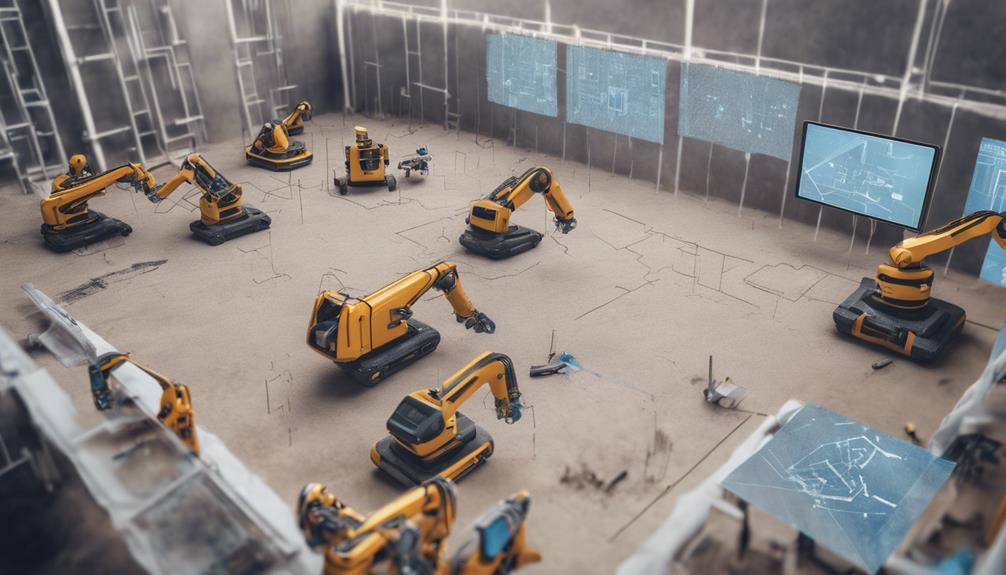
AI is revolutionizing your world in commercial construction through seven key innovations. You'll see more precise project planning and management, as AI tools predict timelines and resource needs to help you avoid scheduling conflicts. Equipment usage is optimized, reducing bottlenecks and adapting to unforeseen changes. Safety is enhanced with AI monitoring potential hazards and compliance, drastically cutting down accidents. Real-time design adjustments, predictive maintenance, smarter supply chain management, and energy cost reductions are all game-changers. These advancements ensure projects are safer, quicker, and more cost-effective. Each step forward brings new insights that could transform your future projects.
AI-Driven Project Planning
In the realm of commercial construction, AI-driven project planning significantly streamlines processes, ensuring projects stay on schedule and within budget. You'll find that AI tools analyze vast amounts of data much faster than traditional methods, predicting project timelines and resource needs with remarkable accuracy. This means you're no longer at the mercy of guesswork or unforeseen delays.
AI's predictive capabilities can foresee potential scheduling conflicts before they become problematic. For instance, if a delay on one task is predicted, AI can adjust the workflow in real-time, reallocating resources efficiently to keep everything moving smoothly. This proactive approach saves you time and money, reducing the stress commonly associated with managing large-scale construction projects.
Moreover, AI enhances communication across various teams. By integrating data from different sources—like weather reports, material delivery schedules, and labor availability—it keeps everyone on the same page.
You'll notice fewer miscommunications and discrepancies, as AI provides a unified view of the project status, accessible to all stakeholders at any time. This transparency not only boosts efficiency but also builds trust among team members and clients, making your project management efforts more effective and appreciated.
Automated Equipment Coordination
Transitioning from AI-driven project planning, automated equipment coordination further revolutionizes commercial construction by optimizing the use and scheduling of machinery. Imagine you're managing a large building site. You've got diggers, cranes, trucks, and myriad specialized equipment humming around.
Now, instead of manually scheduling each piece, AI systems can automatically coordinate all these moving parts in real-time. You'll see a dramatic drop in idle times and a spike in productivity.
This isn't just about having robots on site; it's about smart algorithms that predict equipment needs, calculate optimal usage patterns, and prevent bottlenecks before they occur. You're no longer getting calls about a crane that's double-booked or a concrete mixer sitting unused. Instead, you've got a seamless flow of operations, with each piece of equipment scheduled at its most effective time.
Moreover, this technology adapts to on-the-fly changes. Say it rains, or a delivery gets delayed—your AI system recalibrates all associated schedules. This minimizes downtime and keeps your project on track. You're not just working faster; you're working smarter, ensuring that every dollar spent on equipment rentals delivers maximum value. This is how you leverage AI to stay ahead in the competitive world of commercial construction.
Enhanced Safety Monitoring
Beyond the realm of efficiency, AI also significantly boosts safety on construction sites. You've likely heard about AI's impact on productivity, but its role in safeguarding workers is equally revolutionary. Through advanced algorithms and machine learning, AI systems can now monitor sites in real-time, detecting potential hazards that might escape human oversight.
Imagine cameras and sensors scattered across a site, constantly feeding data back to an AI system. This system isn't just passively recording; it's actively analyzing the environment for signs of danger.
You'll receive alerts about anything from a worker nearing an unsafe zone to machinery operating unsafely close to human operators. And it's not just about catching risks as they happen. AI can predict and mitigate risks before they even arise, learning from past incidents and site-specific conditions to tailor safety measures.
Moreover, this technology isn't static. It keeps learning and adapting, ensuring safety protocols evolve as the site changes. This continuous monitoring and analysis reduce accidents and enhance overall safety compliance, making construction sites safer for everyone involved.
Real-Time Design Adjustments
Many construction projects now benefit from AI's ability to make real-time design adjustments. As you're managing your construction site, imagine being able to tweak building designs on the fly to optimize space, materials, and structural integrity. AI tools integrate with building information modeling (BIM) systems, enabling you to see the impacts of changes instantly, without manual recalculations.
This capability is crucial when you're faced with unforeseen site conditions. Say you hit an unexpected underground water pipe or soil instability could threaten the foundation. Instead of halting progress for days or weeks to redesign, AI quickly assimilates the new information, proposes optimized solutions, and lets you continue with minimal downtime.
Moreover, real-time design adjustments allow for better utilization of resources. You can adjust plans to accommodate material availability or labor constraints, reducing waste and cost overruns. This adaptability isn't just about solving problems; it's about enhancing efficiency.
You're able to respond to client demands for customization without the typical delays and added expenses associated with significant design changes.
Embrace this AI-driven flexibility, and you'll not only keep your project on track but also deliver a product that's truly tailored to your client's needs.
Predictive Maintenance Insights
Harnessing predictive maintenance insights, you can anticipate equipment failures before they disrupt your construction schedule. AI-driven tools analyze data from your machines, predicting when they'll need repairs. This not only saves you from unexpected downtimes but also extends the lifespan of your valuable equipment.
Imagine getting alerts about a crane's potential malfunction weeks before it happens. You can schedule repairs during downtime, ensuring projects stay on track without compromising safety. This foresight isn't just convenient; it's cost-effective, reducing the hefty sums usually spent on urgent repairs.
Moreover, predictive maintenance isn't just about fixing what's about to break. It's about optimizing the performance of your equipment throughout the project. By analyzing trends and usage patterns, AI helps you understand how to better use your assets, potentially lowering energy costs and minimizing wear and tear.
You'll find that integrating these insights into your operations not only boosts productivity but also enhances your team's morale. They spend less time troubleshooting and more time on what they do best—building. With predictive maintenance powered by AI, you're not just constructing buildings; you're building a smarter, more efficient operation.
AI Optimized Supply Chain
While predictive maintenance revolutionizes equipment management, AI also plays a pivotal role in refining your supply chain operations. By integrating AI, you're not just streamlining processes; you're transforming them. AI's ability to analyze vast amounts of data in real-time helps you predict supply needs, manage inventory more effectively, and reduce waste. This isn't just about keeping shelves stocked; it's about understanding patterns and anticipating demands before they become urgent.
With AI, you can optimize routing and distribution strategies, which means products reach their destinations more efficiently and with fewer delays. This is crucial in construction, where timing and precision are everything. Imagine having materials delivered exactly when and where you need them, minimizing downtime and boosting productivity.
Moreover, AI enhances supplier selection and negotiation by providing insights into supplier performance and market conditions. You'll make smarter decisions based on data, not just gut feelings or past experiences. This leads to better relationships with suppliers and can significantly lower costs.
In essence, AI doesn't just help you manage your supply chain; it reinvents how you interact with every element of it, ensuring that you're always a step ahead. This is how you build smarter, not harder.
Smart Energy Management
In the realm of commercial construction, smart energy management empowered by AI dramatically cuts costs and boosts efficiency. As you delve into this tech-driven approach, you'll find that AI algorithms are crucial for analyzing vast amounts of data from building sensors. They optimize heating, ventilation, and air conditioning systems (HVAC) in real time, adapting to both external weather conditions and the number of occupants.
You're not just saving money; you're also enhancing the comfort of everyone inside the building. AI's predictive capabilities mean maintenance can be scheduled efficiently, preventing breakdowns and reducing downtime. This isn't about reacting to problems—it's about foreseeing and preventing them.
Furthermore, integrating AI with renewable energy sources, like solar panels, allows for smarter energy consumption. The system learns the best times to store energy or feed it back into the grid based on usage patterns and peak tariff times. You're not only optimizing energy use but also helping to build a sustainable future.
Adopting AI in smart energy management isn't just a trend; it's a transformative shift that redefines how buildings operate. It's about making smarter decisions that lead to substantial savings and a lesser environmental impact. Imagine the possibilities as these technologies evolve.
Conclusion
As you embrace these AI innovations in your commercial construction projects, you'll find that managing complexities becomes more streamlined and efficient. From the initial planning stages to the final touches of energy management, AI has got your back, ensuring safety, enhancing accuracy, and optimizing resources. These tools aren't just about keeping up with technology—they're about setting new standards and staying ahead in a competitive market. So, dive into the future of construction, where AI leads the way to innovation and excellence.
Related articles: How AI Transforms Commercial Construction Industry · How AI Is Transforming Commercial Construction · Why Is AI Transforming Commercial Construction?