
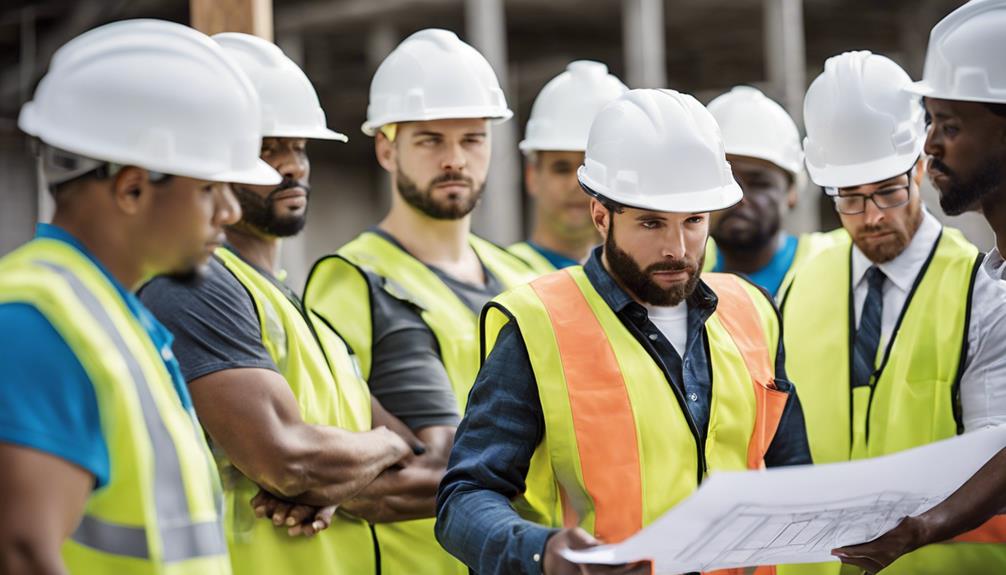
To boost safety in commercial construction, you should implement a comprehensive training program that includes both fundamental safety principles and specialized equipment handling. Make sure you're also focusing on hazard recognition to spot potential issues early. Holding regular safety meetings keeps everyone aligned and accountable, while modern training technologies like VR and AR can make learning more interactive and practical. Finally, fostering a culture of safety accountability encourages every team member to own their actions and maintain a safe working environment. Each strategy plays a crucial role in safety and, as you explore further, you'll see how they interact to enhance overall site security.
Implement Comprehensive Training Programs
To ensure safety on-site, it's essential you undergo comprehensive training programs designed specifically for the commercial construction sector. These sessions aren't just about ticking boxes; they're about equipping you with the knowledge and skills you need to handle the complexities of your job.
You'll start with basic safety principles, learning how to use personal protective equipment (PPE) effectively. It's crucial you understand the proper ways to don and maintain this gear, as it forms your first line of defense against onsite hazards.
Training will also cover the operation of machinery and tools, ensuring you're proficient before you ever lay hands on them during actual construction tasks.
Moreover, these programs often include simulations and practical exercises that mimic real-life scenarios. You'll get a chance to apply what you've learned in a controlled environment, which helps in cementing this knowledge.
It's vital you attend these sessions regularly, not just as a newbie but throughout your career. Ongoing education is key to adapting to new technologies and methods that continually reshape the construction landscape.
Focus on Hazard Recognition
Building on comprehensive training, focusing on hazard recognition is crucial for maintaining safety in commercial construction. You've got to be able to spot potential dangers before they become real problems. This means you'll need to sharpen your skills in identifying both obvious and hidden hazards at your worksite.
Start by understanding the types of hazards typically found in commercial construction. These include physical hazards like unsecured scaffolding or exposed electrical wiring, health hazards such as airborne toxins, and safety risks from improperly used machinery.
You'll also need to be aware of less obvious risks, like ergonomic strains from repetitive tasks or psychological stress from high-pressure environments.
Training should be hands-on wherever possible. Use real-world scenarios to practice spotting hazards. This isn't just about ticking boxes during training sessions; it's about developing a keen eye for safety every day on the job.
Make it a habit to conduct regular walk-throughs of the site, challenging yourself and your team to identify new risks.
Encourage Regular Safety Meetings
Regular safety meetings are essential in reinforcing the importance of hazard recognition and ensuring that safety practices evolve with the changing dynamics of a construction site. You'll find that regular engagement keeps safety at the forefront of everyone's mind, reducing the risk of accidents and improving response procedures.
You should schedule these meetings at consistent intervals—perhaps weekly or biweekly—depending on the project's scale and complexity. It's your chance to review procedures, introduce new regulations, and discuss any incidents or near misses. Open the floor to feedback; your team's insights are invaluable for identifying unseen risks and proposing practical solutions.
Make these meetings mandatory for all staff, from the newest laborer to the project managers. Everyone's participation is crucial because it builds a culture of safety that permeates every level of the workforce.
You'll also want to keep records of what was discussed, any decisions made, and who attended. This documentation can be vital in understanding trends over time and demonstrating your commitment to safety during audits or inspections.
Utilize Modern Training Technologies
While you keep safety meetings on your calendar, integrating modern training technologies into your program can significantly enhance learning outcomes. Imagine replacing outdated manuals with interactive Virtual Reality (VR) scenarios where you're walking through a digital construction site, identifying hazards in real-time. This isn't just engaging; it boosts retention and prepares you for real-world challenges.
Augmented Reality (AR) is another game-changer. By overlaying digital information onto the physical environment, AR can guide you through complex machinery operations or hazard recognition exercises right at the job site. It's hands-on learning without the risk, ensuring you're not just watching, but actively participating.
Don't overlook mobile learning apps. These can provide quick access to safety protocols, checklists, and instructional videos, making it easy to reference information on-the-go. You can even receive instant updates and reminders, keeping safety top-of-mind.
Investing in e-learning platforms also allows for tracking your progress and tailoring the training to focus on areas needing improvement. This personalized approach ensures no one falls behind, and everyone remains sharp and prepared.
Incorporating these technologies not only modernizes your training but also deepens your understanding and application of safety practices in construction environments.
Foster a Culture of Safety Accountability
Creating a culture of safety accountability isn't just the company's responsibility; it's yours as well. You're a critical part of the equation, and your actions set standards for safety that resonate throughout the worksite. When you actively participate in safety protocols and encourage others to do the same, you're not just following rules, you're leading by example.
You've got to take ownership of your actions and understand how they impact the overall safety of your team. It's not enough to assume someone else will report a hazard or correct a risky behavior. If you see something, it's imperative you say something. This proactive approach helps prevent accidents and builds a workplace where everyone feels responsible for safety.
Hold regular training sessions and safety meetings to keep safety at the forefront of everyone's minds. Make it clear that everyone's input is valuable and that safety is a collective responsibility. By fostering an environment where every worker feels empowered and accountable, you're not only enhancing safety but also promoting a culture of mutual respect and teamwork.
Conclusion
You've learned the essentials, so now it's time to put them into action. Start by implementing comprehensive training programs that don't just inform but also engage. Make hazard recognition a daily practice, not just a checkbox. Hold regular safety meetings to keep everyone alert and informed. Embrace modern technologies that make learning interactive and impactful. Most importantly, foster a culture where everyone feels accountable for safety. Remember, your commitment to these practices doesn't just create a safer workplace—it saves lives.
Related articles: What Are Key Safety Training Requirements for Projects? · 5 Cutting-Edge Trends in Commercial Construction Tech · Newest Innovations in Construction Technology 2023