
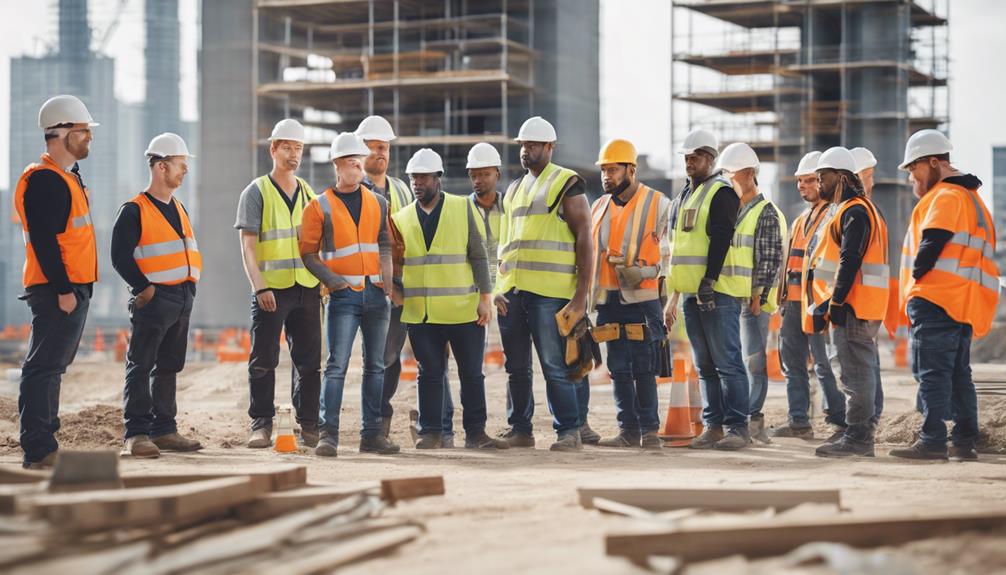
To enhance your commercial construction safety training, start by prioritizing regular safety meetings to keep everyone alert and informed. Implement hands-on training techniques with real-life scenarios to build practical skills. Focus on hazard recognition to develop an eye for dangers, and don't skimp on personal protective equipment—train your team on proper use and maintenance. Develop comprehensive emergency response plans, and integrate technology to keep training materials up to date. Finally, cultivate a safety-first culture to embed safety as a core value in your team. Each of these steps promises to significantly strengthen your safety practices, offering more insights as you explore further.
Prioritize Regular Safety Meetings
To effectively enhance workplace safety in the construction industry, it's essential to prioritize regular safety meetings. You'll find that these gatherings are crucial for reinforcing a culture of safety among your team. By holding these meetings consistently, you're not just going over the routine checks, but you're also addressing any recent incidents or near misses. This keeps everyone informed and alert to potential hazards.
It's vital to encourage open communication during these meetings. You want your team to feel comfortable sharing their concerns and suggesting improvements without fear of retribution. This openness not only promotes a safer working environment but also fosters a sense of ownership and responsibility among workers. They're more likely to adhere to safety protocols they've had a hand in developing.
Implement Hands-On Training Techniques
Nearly all workers benefit significantly from hands-on training techniques in commercial construction safety training. As you're aware, understanding safety protocols theoretically is one thing, but applying them practically can quite often be a different ball game. That's why it's crucial you incorporate practical exercises into your safety training program.
Start with simulating real-life scenarios that you'll likely encounter on the job. This approach not only makes the training more engaging but also enhances your ability to retain and apply the safety skills learned. For instance, you can use mock-ups or real equipment for demonstrations, allowing you to practice responding to emergencies.
It's one thing to read about how to wear a harness, but actually putting it on correctly under the supervision of a seasoned professional can make a big difference in your safety on a high-rise construction site.
Also, include skill-based training that requires physical practice. Activities like correctly assembling scaffolding or conducting safety equipment checks can be far more effective when done hands-on. Remember, the goal is to ensure you're not just familiar with the procedures but are adept at executing them safely and efficiently.
This hands-on practice solidifies learning and builds your confidence, making you well-prepared to tackle real-world challenges safely.
Focus on Hazard Recognition
Building on hands-on training techniques, recognizing hazards is another key skill you need to master in commercial construction safety training. It's about developing an eye for identifying potential dangers before they evolve into accidents. You'll need to learn how to anticipate and mitigate risks that aren't always obvious.
Start by understanding the common hazards in your specific construction field. These can range from exposed wiring and unsecured scaffolding to slippery surfaces and operational heavy machinery. Each site has its unique set of risks, influenced by factors like weather conditions, site layout, and the types of materials used.
Next, actively engage in situational awareness exercises. These are designed to sharpen your ability to notice what's out of place or potentially dangerous. You'll practice scanning the environment methodically, not just glancing around. It's about seeing, not just looking.
Enhance Personal Protective Equipment Usage
While focusing on hazard recognition is crucial, enhancing your use of personal protective equipment (PPE) is equally important in maintaining safety on a commercial construction site. You've got to ensure that everyone on your team not only has access to the right PPE but also knows exactly when and how to use it properly.
Start by conducting a thorough assessment of the specific risks associated with your project. This will help you figure out which types of PPE are necessary. You'll likely need items like helmets, eye protection, high-visibility clothing, and steel-toed boots, among others.
Once you've identified the needed PPE, invest in quality materials. Cheap alternatives might save you money upfront, but they won't offer the same level of protection and can end up costing more if they need frequent replacements.
Training is key. Don't just hand out the equipment; make sure your team understands the importance of each item. Conduct regular training sessions that include demonstrations on the proper use and maintenance of PPE. It's not enough to wear the gear; you've got to wear it right.
Develop Emergency Response Plans
After ensuring your team is equipped with the necessary personal protective equipment, it's vital to establish comprehensive emergency response plans. You'll need to identify potential emergencies specific to your site, such as fires, structural failures, or hazardous material spills. Once identified, develop protocols that address these risks with clear, actionable steps.
Start by mapping out escape routes and safe zones clearly visible to all workers. You'll also want to install emergency signage and lighting that can operate during a power failure.
Regularly train your team on these procedures, ensuring everyone knows their role and the fastest routes out of the construction area.
Next, set up a communication plan that includes a list of internal and external contacts. Everyone should know who to call and what information to relay in the case of an emergency. Equip your site with adequate first-aid supplies and ensure that several team members are trained in basic first aid and CPR.
Promote a Safety-First Culture
Creating a safety-first culture is crucial to the success of any construction project. You've got to ensure everyone, from the top brass to the newest recruit, prioritizes safety above all else. It's about embedding a mindset where safety becomes as natural as clocking in for the day.
Start by making safety training a regular part of the job, not just a one-off event. Hold frequent refreshers and workshops that reinforce safety protocols. This keeps safety at the forefront of everyone's minds, ensuring they don't get complacent.
You also need to lead by example. If you're a manager or supervisor, show your commitment to safety through your actions. Wear your protective gear, adhere strictly to safety guidelines, and promptly address any hazards. Your team will notice and follow suit.
Encourage open communication about safety. Make it easy for your team to come forward with concerns and suggestions without fear of repercussions. A transparent reporting system helps identify and mitigate risks early.
Lastly, recognize and reward safe behavior. Celebrating those who uphold safety standards motivates others to do the same. It's about creating an environment where everyone feels responsible for keeping the workplace safe.
Utilize Technology for Training Updates
Building on the foundation of a safety-first culture, it's important to leverage modern technology to keep your training programs up to date. As you're managing your construction projects, integrating the latest tech tools can revolutionize how you handle safety training.
Start by exploring online training platforms that offer real-time updates and interactive modules. These platforms allow you to tailor content specifically to your team's needs and the specific risks associated with your current projects.
You'll find that using videos, simulations, and virtual reality can make complex safety protocols easier to grasp and remember.
Don't overlook mobile apps designed for safety training. These apps can send push notifications to remind your team of safety practices or alert them to new hazards. They're accessible right on their smartphones, which means they can review crucial information right on the job site, enhancing immediate compliance and response.
Lastly, utilize data analytics tools to track training progress and identify areas where your team might be struggling. This insight allows you to focus your efforts more effectively and ensure everyone is up to speed. By embracing these technological tools, you'll keep your safety training engaging, comprehensive, and most importantly, up-to-date.
Conclusion
You've got the tools to elevate safety training in your commercial construction projects. Remember to hold regular safety meetings and use hands-on techniques that keep everyone engaged. Don't just hand out gear; ensure every team member understands their equipment's importance. Recognize hazards, develop solid emergency plans, and foster a safety-first mindset. Embrace technology to keep your training fresh and relevant. By applying these tips, you're not just complying with regulations; you're protecting lives. Let's build safely and smartly!
Related articles: Why Is Safety Training Vital for Large-Scale Projects? · 5 Best Practices for Commercial Construction Safety Training · What Are Key Safety Training Requirements for Projects?