
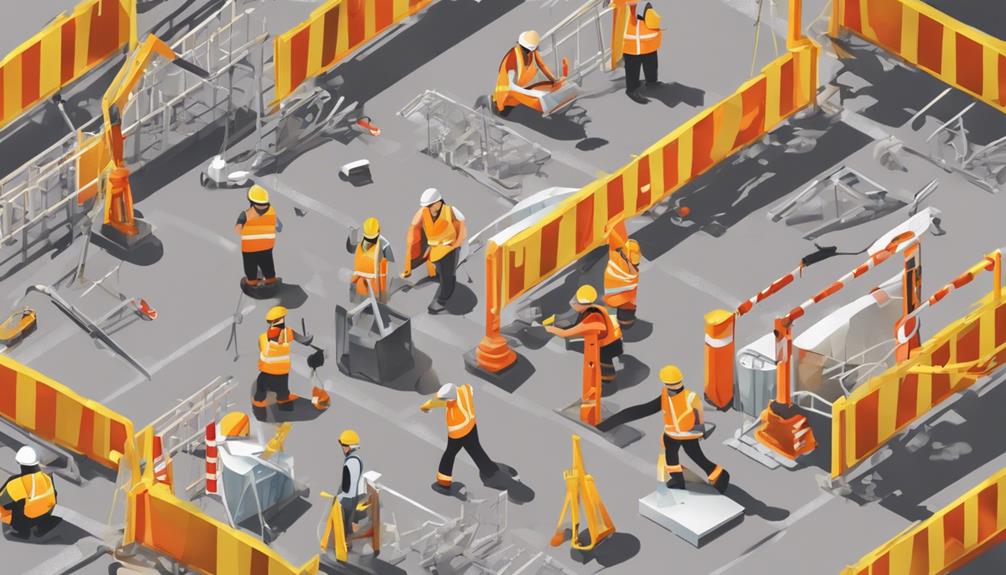
In the construction industry, you're required to meet several safety compliance requirements to ensure a secure work environment. You must report any workplace incidents within 24 hours and provide thorough training and personal protective equipment (PPE) at no extra cost to your workers. It's crucial to use fall protection for jobs over six feet high and ensure that all scaffolding is stable and inspected daily. Additionally, you need to handle electrical equipment safely and maintain clear emergency response plans. Regular training refreshers help keep everyone updated on safety protocols. There's much more to understand about staying compliant and safe in construction.
Understanding OSHA Standards
Nearly every construction professional must grasp OSHA standards to ensure not just compliance but also worker safety. You're on the front lines, responsible for maintaining a site that adheres to these rules, which cover a wide range of safety issues, excluding personal protective equipment, to be discussed later.
First, you need to understand that OSHA requires you to report any serious workplace injuries or fatalities within 24 hours. This is crucial in maintaining not only legal compliance but also transparency and safety in your operations.
Additionally, OSHA's Hazard Communication Standard mandates that you keep your team informed about the chemicals they might be exposed to on the job. This includes proper labeling and the provision of Safety Data Sheets.
You're also responsible for providing training in a language and vocabulary workers can understand. This ensures everyone knows the risks and safety procedures relevant to their tasks and equipment, which are critical in preventing accidents and ensuring a response-ready workforce.
Personal Protective Equipment Rules
Shifting focus to personal protective equipment (PPE), it's crucial you understand the specific rules that govern its use on construction sites.
Firstly, wearing the correct PPE is mandatory. You're expected to don helmets, eye protection, and high-visibility clothing as basic requirements. Specific tasks might require additional gear, like gloves, safety boots, or hearing protection. It's your responsibility to wear PPE as instructed and to ensure it fits properly and is in good condition.
Employers must provide appropriate PPE at no cost to you. They're also responsible for training you on correct usage, maintenance, and replacement procedures. Remember, using PPE incorrectly can be just as hazardous as not using it at all.
You should conduct regular checks on your equipment. If you find any defects or wear and tear that could compromise safety, you're obliged to report it immediately. Don't just make do; get it replaced or repaired.
Lastly, while it might seem cumbersome, PPE is your last line of defense against onsite hazards. It protects you from injuries that could otherwise affect your ability to work or lead a quality life. Always prioritize safety and stick to the PPE rules—it's worth it for your well-being.
Fall Protection Requirements
While personal protective equipment serves as your initial shield against onsite dangers, fall protection systems are equally vital to prevent severe injuries or fatalities from height-related incidents. As you work above ground, you're required to use appropriate fall protection measures that comply with strict safety standards.
Firstly, any work over six feet in height mandates the use of fall protection gear. You'll need to select from options like guardrails, safety nets, or personal fall arrest systems, depending on the specific situation and environment.
It's crucial to ensure that the equipment you use is well-maintained and inspected regularly for any signs of wear or damage.
Moreover, you must receive proper training on how to use this equipment effectively. This includes understanding the limitations of each type of fall protection, how to fit and wear the gear correctly, and how to respond in an emergency.
Employers are responsible for providing this training and for enforcing the use of fall protection gear consistently.
Your adherence to these rules isn't just about regulatory compliance; it's about safeguarding your life and the lives of those around you. Always remember, cutting corners on fall protection can lead to irreversible consequences.
Scaffolding Safety Regulations
How safe is your work environment when you're on scaffolding? Ensuring your safety starts with adhering to strict scaffolding safety regulations, crucial for preventing accidents and injuries. You must know these guidelines inside out.
Firstly, always check that the scaffolding is stable and securely braced. Don't work on scaffolding that wobbles or feels unstable. The base must be solid, level, and capable of supporting the weight it'll carry.
Next, make sure the scaffolding has guardrails, midrails, and toeboards to protect you from falls and falling objects. These components aren't just recommendations; they're mandatory.
You're also required to inspect the scaffolding daily before use. Look for any wear, damage, or alterations. If you spot issues, don't use the structure until repairs are made.
Additionally, keep the work area clear of debris and tools that could cause tripping or clutter.
Lastly, while working on scaffolding, wear your personal protective equipment, including hard hats, non-slip work boots, and harnesses where necessary. Remember, your safety is in your hands, and being vigilant with these regulations is non-negotiable. Stay informed, stay safe, and ensure compliance to avoid potential hazards.
Electrical Safety Protocols
When working around electrical equipment, it's crucial to adhere to specific safety protocols to prevent accidents and injuries. You must first ensure that all equipment is properly grounded before use. This simple step can significantly reduce the risk of electrocution or electric shock.
Always check that power tools and cords are in good condition; frayed cords or damaged tools can be hazardous.
You should also be aware of your surroundings. Stay clear of water sources when handling electrical equipment, as water conducts electricity and increases the risk of electrocution. If you're working in damp or wet conditions, use portable Ground Fault Circuit Interrupters (GFCIs) to protect against electrical shock.
It's also essential to wear the right personal protective equipment (PPE). Rubber-soled shoes can provide an additional layer of insulation, reducing your risk of shock. Similarly, gloves and eye protection should be worn when necessary to protect against sparks or sudden bursts of electricity.
Lastly, never attempt electrical repairs unless you're qualified. If you encounter wiring issues or faulty equipment, report it to a certified electrician immediately. Ignoring or mishandling electrical problems can lead to severe injuries or even fatalities. Stay safe by following these guidelines and ensuring your team does the same.
Hazard Communication Standards
Understanding Hazard Communication Standards is another key aspect of maintaining safety on construction sites. As you manage or work on these sites, you're bound to handle various hazardous chemicals. It's crucial that you're aware of what substances you're dealing with and the associated risks.
First, ensure all chemicals are clearly labeled. Manufacturers usually provide these labels, but it's your job to keep them intact and legible. Labels should include specific information like the chemical's identity, hazard warnings, and the manufacturer's details. You can't afford to overlook this; it's essential for preventing accidents.
Next, Safety Data Sheets (SDS) must be accessible to everyone on site. These sheets provide detailed information about the chemicals, including their properties, physical and health hazards, safety precautions, and first aid measures. Make sure they're up-to-date and stored where they can be easily reached.
Training is another pillar of the Hazard Communication Standards. You need to be trained not only to understand the SDS but also how to handle chemicals safely. Regular training sessions help ensure that everyone's on the same page and can respond correctly in case of chemical exposure.
Emergency Response Plans
You must have a robust emergency response plan in place to effectively address any incidents that arise on the construction site. This plan is your blueprint for anticipating and tackling emergencies, from minor injuries to major disasters. It's not just about compliance; it's about ensuring everyone's safety.
First, identify potential emergency scenarios specific to your site. These could range from fires and explosions to severe weather conditions. Each scenario requires a unique set of responses.
Next, designate clear roles and responsibilities. Who calls for help? Who administers first aid? Who's in charge of evacuation? Establishing these roles beforehand avoids confusion and delays during an actual emergency.
Your plan must also include evacuation procedures. Map out escape routes and ensure they're well marked and unobstructed. Regularly review these routes with your team to keep everyone informed.
Communication is key. Equip your site with effective communication tools to alert everyone about an emergency. Consider how you'll communicate with people with hearing or visual impairments as well.
Lastly, keep your emergency response plan accessible. It should be easy for all workers to find and understand. Regular updates and reviews are crucial to adapt to any changes in your working environment or updated regulations.
Training and Education Essentials
Effective training and education are crucial for maintaining safety and compliance on construction sites. As you step into a construction role, whether you're a seasoned professional or new on the job, you'll need to be up to speed with current safety protocols and regulations. This isn't just about ticking boxes; it's about ensuring you and your colleagues return home safely every day.
You'll undergo a variety of training sessions that cover everything from the use of personal protective equipment (PPE) to hazard recognition and avoidance. These training sessions aren't one-off events. You'll find that retraining and continuous professional development are part of your journey, adapting to new technologies and regulations as they arise.
Moreover, it's essential that the training is specific to the particular risks associated with your job tasks.
For instance, if you're working at heights, you'll receive targeted training on fall protection systems. This specialized training ensures you're not just aware of the risks but also competent in mitigating them effectively.
Reporting and Record Keeping
While training equips you with the necessary skills for safe construction work, equally important is your role in reporting and record keeping. You're tasked with documenting a wide range of data, from daily safety checks to incident reports. This isn't just paperwork; it's a critical tool to ensure ongoing compliance with safety regulations and help prevent future accidents.
You'll need to keep records of any injuries, exposure to hazardous materials, and equipment failures. It's crucial these records are accurate and updated promptly. If an incident occurs, detailed reports can be vital for investigations and insurance claims. They also serve as a basis for improving safety protocols.
Don't forget, you're also responsible for maintaining training logs and safety meeting minutes. These documents should be easily accessible and regularly reviewed by both management and safety auditors.
Staying on top of this paperwork might seem daunting, but it's essential for maintaining a safe working environment. Use digital tools and software designed for construction reporting to streamline the process. They'll help you keep track of everything and ensure you're always in compliance with safety standards. Remember, effective record keeping is as important as the physical safety measures you put in place.
Conclusion
You've now got a solid grasp on the essentials of construction safety compliance. Remember to always adhere to OSHA standards and equip yourself with the necessary personal protective gear. Ensure your scaffolds and electrical setups meet safety regulations, communicate hazards clearly, and have an emergency response plan ready. Don't forget, continuous training and accurate record-keeping are your best tools in maintaining compliance. Stay safe, stay informed, and keep building safely and responsibly.
Related articles: 2024 Trends in Construction Safety Compliance · Ensuring Construction Safety Standards Compliance: A Guide · Effective Risk Strategies for Commercial Construction Safety