
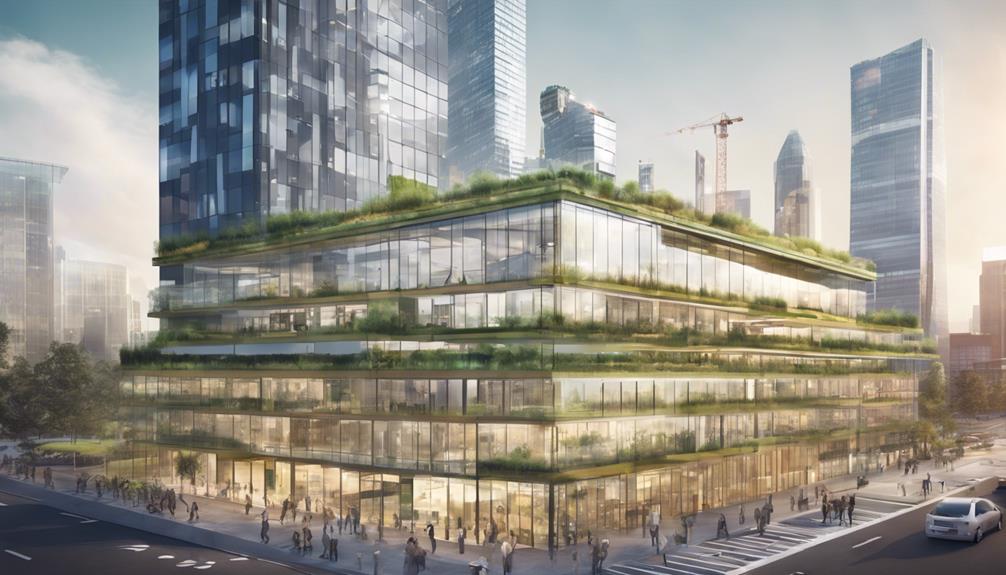
You've seen a significant shift in commercial construction as smart building technologies have advanced. Initially focused on efficient HVAC management during the 1970s energy crises, these systems now integrate advanced sensors and IoT to create buildings that dynamically adjust to both environmental conditions and occupant needs. Today's smart buildings do more than save energy; they optimize lighting, security, and maintenance through real-time data, making operations more efficient and reducing the carbon footprint. Intrigued by how these technologies interact and the challenges of integrating them with existing systems? There's a lot more for you to uncover in this evolving field.
Origins of Smart Building Technology
While smart building technology may seem like a product of the digital age, its roots extend back to the development of building automation systems in the 1970s. These initial systems focused primarily on basic tasks like managing heating, ventilation, and air conditioning (HVAC) more efficiently than ever before. As you delve deeper, you'll find that the energy crises of the 1970s played a significant role in this tech evolution. Builders and developers were driven to create systems that could reduce power usage without sacrificing comfort.
By the 1980s, the integration of microprocessors and computers into building management brought a new level of sophistication to these systems. You weren't just turning down a thermostat manually anymore. Instead, buildings began to respond to their environments and the people within them in more nuanced ways. This era marked the beginning of buildings that could learn from behaviors and adjust themselves accordingly.
These foundational technologies set the stage for the advanced smart building technologies you see today. They weren't just about convenience; they addressed real world needs for energy efficiency and operational cost reductions. This historical perspective shows that what might seem like a sudden explosion of tech in buildings has been a long time coming.
Key Components of Smart Buildings
Building on the developments from the 1980s, today's smart buildings incorporate several key components that make them highly efficient and responsive to occupants' needs. You'll find that these buildings are equipped with advanced sensors and IoT devices. These tools continuously gather data on everything from temperature and humidity to occupancy patterns. This data isn't just collected; it's the backbone of how the building operates, adjusting environments to suit your needs in real-time.
Another crucial component is the Building Management System (BMS). It's your building's brain, integrating all the data from various sensors to control heating, ventilation, air conditioning (HVAC), lighting, and other systems. It ensures optimal performance and energy efficiency, which not only reduces your carbon footprint but also slashes your energy bills.
You also can't overlook the importance of smart security systems in these buildings. They go beyond traditional security measures by integrating biometric scanners and facial recognition technology, providing a level of security that's both high-tech and highly reliable.
Lastly, smart buildings often feature automated systems for predictive maintenance, using AI to anticipate and address potential issues before they become problems. This proactive approach minimizes downtime and extends the lifespan of the building's critical systems.
Integration Challenges and Solutions
Integrating smart technology into existing building infrastructures presents several challenges. You'll often find that legacy systems aren't compatible with new tech, creating a significant hurdle. It's crucial to evaluate the compatibility of old and new systems early in your planning process.
You might face issues with data silos where information isn't seamlessly shared across systems. This can hinder the performance of smart technologies that rely on real-time data.
To overcome these challenges, you need robust solutions. Start by choosing technology that offers flexible integration capabilities. Look for systems designed with open standards; these allow easier incorporation with existing infrastructure.
Additionally, investing in middleware can bridge the gap between old and new technologies. This software layer helps translate and transfer data across disparate systems, smoothing out integration bumps.
You also need to consider the physical aspects of integration. Sometimes, the existing spatial layout doesn't accommodate new tech without significant alterations. In such cases, work with architects and engineers who specialize in retrofit projects. They can devise innovative solutions that minimize the need for physical modifications while maximizing the benefits of smart technologies.
Impact on Energy Efficiency
Successfully addressing integration challenges not only enhances system compatibility but also significantly boosts the energy efficiency of commercial buildings. When you integrate advanced smart technologies, you're not just streamlining operations; you're actively reducing the energy footprint of your property.
Think about it: smart sensors and automated systems optimize the use of lighting, heating, and cooling based on real-time occupancy and environmental data. This means you're only using energy when and where it's needed.
Moreover, these smart systems adapt continuously. For instance, during peak hours, your building can automatically adjust to lower power consumption, while maintaining comfort. This dynamic adjustment isn't just good for your wallet—it's crucial for the environment.
Consider the broader implications. By reducing your building's energy demand, you're also lessening the strain on local power grids, which can lead to broader societal benefits like reduced power outages and lower regional energy costs.
It's a win-win: you save on operational costs, and you contribute to a more sustainable, energy-efficient future. Remember, every kilowatt saved by your smart building reduces the overall carbon footprint, making a direct impact on urban sustainability.
Future Trends in Smart Construction
As you look ahead, the horizon of smart construction reveals promising advancements that promise to reshape the commercial building landscape. You're about to see technologies that not only increase efficiency but also significantly enhance the functionality and sustainability of buildings.
Imagine buildings that learn from their occupants, adapting to optimize energy use and comfort. You'll soon encounter smart sensors integrated deeper into construction materials, providing real-time data on structural health. This isn't just about preventing failures; it's about predictive maintenance, saving you time and money before issues escalate.
You'll also witness the rise of robotics in construction. These aren't just labor-saving devices; they bring precision and speed to tasks that are currently manual, reducing construction times dramatically.
Moreover, 3D printing is set to revolutionize how building components are produced, offering unprecedented customization options and further cutting down waste.
Conclusion
You've seen how smart building technology has evolved from simple automated systems to complex, integrated networks that transform commercial construction. As you look ahead, you'll find that these technologies not only make buildings more energy-efficient but also more responsive to human needs. Embrace the challenges of integration, for the solutions you develop will shape the future of construction, making it smarter, greener, and more efficient. Get ready, because the future of smart construction is just around the corner.
Related articles: 10 Innovative Materials Transforming Commercial Construction