
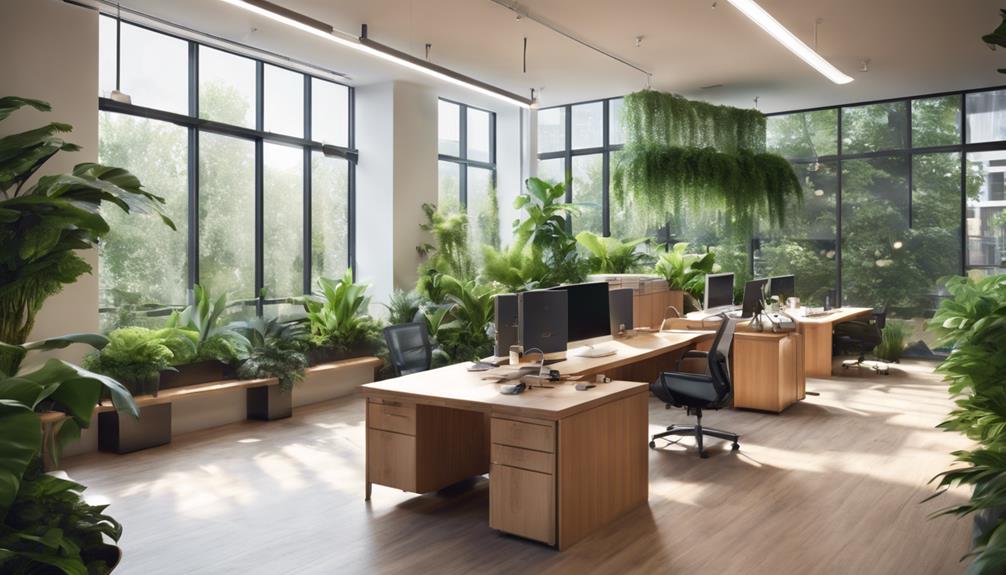
To elevate your workspace, consider these top seven biophilic design trends: incorporate living green walls for a fresh, airy feel; maximize natural light exposure to boost mood and productivity; add soothing water features; opt for natural, sustainable materials; embrace nature-inspired colors and textures; utilize dynamic and diffuse lighting for a calm environment; and foster indoor-outdoor spaces to blend the best of both worlds. These elements not only enhance aesthetics but also promote wellbeing. Curious about how these features can transform your work environment? Discover the profound impact each element can have on your daily work life.
Incorporating Living Green Walls
Living green walls are increasingly becoming a staple in modern workspaces. You'll find these vibrant installations transforming dull office environments into lively, inspiring settings. By integrating dense foliage vertically, they not only enhance the aesthetic appeal but also contribute significantly to the psychological and physical well-being of everyone in the office.
You might wonder how a wall filled with plants could impact your day-to-day work life. Well, studies show that being surrounded by greenery reduces stress and increases worker productivity. These walls act as natural air filters, pulling contaminants out of the air and releasing oxygen, making your office a fresher, healthier place to work.
Additionally, if you're concerned about acoustics, these green walls can help. They naturally absorb sound, reducing noise levels in open-plan offices. This means you're less likely to be distracted by the conversations of your colleagues and more able to concentrate on your tasks.
Incorporating a living green wall isn't just a design trend; it's a smart, sustainable choice that supports a healthier, more productive workplace. Consider convincing your management to invest in this green infrastructure. It's not just good for the environment; it's great for your work experience too.
Maximizing Natural Light Exposure
While living green walls offer a unique approach to bringing nature indoors, maximizing natural light exposure is equally crucial for creating an engaging and productive workspace. You'll find that natural light not only enhances the aesthetic appeal of your office but also boosts your mood and energy levels, essential for maintaining productivity throughout the day.
To start, consider the placement of your workspace's windows. You'll want to position desks and seating areas where they can benefit from the maximum amount of daylight without being hindered by harsh glares. Adjustable window treatments, like blinds or sheer curtains, can help you manage the light intensity and distribute it evenly across the room.
Next, think about using reflective surfaces to enhance light distribution. Mirrors strategically placed opposite windows can double the natural light in a room, making the space feel larger and more open.
Similarly, choosing furniture and flooring with lighter colors can help reflect light, brightening up the area effectively.
Lastly, if you're planning a renovation or new build, incorporating larger windows or even skylights can dramatically increase your natural light exposure, tying the whole biophilic design together. Remember, the goal is to create a space that feels both invigorating and connected to the natural world outside.
Integrating Water Features
Transitioning from enhancing natural light, integrating water features into your workspace can significantly boost the calming ambiance. Imagine the soothing sound of water flowing gently beside your desk, creating a peaceful environment that encourages focus and reduces stress. You're not just adding an aesthetic element; you're enhancing your mental well-being and productivity.
Incorporating small tabletop fountains or wall-mounted waterfalls doesn't require massive renovations. These features can be compact, self-contained, and easy to maintain. They add a dynamic visual element while the sound of water masks distracting noises, such as background chatter or traffic.
Consider the placement of these water features carefully. Positioning a small fountain near the entrance or in common areas where you and your colleagues often gather for breaks can maximize its benefits.
The visual and auditory experience of the water feature can become a central relaxing point in the workspace.
Moreover, think about the type of water feature that best suits your office's overall design. Whether it's a minimalist modern piece or something that mimics nature with rocks and plants, it should align with the aesthetic of your workspace to enhance the overall biophilic effect. This integration not only boosts morale but also brings a slice of nature right to your doorstep.
Choosing Natural, Sustainable Materials
After exploring how water features can transform your workspace, let's focus on another key aspect of biophilic design: choosing natural, sustainable materials. You're not just creating a space that looks good; you're building an environment that sustains both health and the planet.
Firstly, consider the basics: wood, bamboo, and cork. These materials aren't just aesthetically pleasing; they're also renewable and carry minimal environmental footprints when sourced responsibly. You'll want to look for certifications like FSC (Forest Stewardship Council) to ensure the wood is harvested sustainably.
Next, think about the stone. Whether it's a marble coffee table or granite countertops, natural stone offers durability and a unique connection to the earth without the need for synthetic materials. Plus, its longevity means you won't be replacing items frequently, reducing waste.
Don't forget about lesser-known materials like hemp and jute. These can be fantastic for items like rugs or window treatments. They aren't only sustainable but also add a raw, natural texture to your space.
Utilizing Nature-Inspired Colors and Textures
Incorporating nature-inspired colors and textures into your workspace not only enhances aesthetic appeal but also fosters a deeper connection to the natural world. You'll find that using soft greens, earthy browns, and muted blues can transform the feel of your environment, making it more calming and inviting. These colors mimic the outdoors and can significantly reduce stress and increase creativity.
Don't stop at just colors; integrating natural textures amplifies this effect. Consider materials like bamboo, reclaimed wood, or stone. These elements bring an authentic touch of nature into your space, making it feel more organic and less manufactured.
Textures that replicate the outdoors, such as rough wood grains or smooth pebbles, add depth and interest, engaging your senses on a deeper level.
Incorporate these elements through furniture choices, wall finishes, or decorative accents. For example, a bamboo desk, stone coasters, or woolen throws not only serve their functional purposes but also contribute to a biophilic environment.
Designing With Dynamic and Diffuse Light
As you explore the benefits of biophilic design, consider the impact of dynamic and diffuse light in your workspace. Dynamic lighting mimics the natural variability you'd experience outdoors, enhancing your connection to the natural world even while indoors. It adjusts in intensity and color temperature throughout the day, aligning with your body's circadian rhythms, thus boosting your mood and productivity.
Diffuse light, on the other hand, is soft and gentle, reducing glare and the harsh contrasts that often lead to eye strain. You can achieve this by using materials like frosted glass or light-diffusing window treatments. These not only soften the light but also help distribute it more evenly throughout the space, creating a calm, inviting atmosphere.
Incorporating these lighting techniques isn't just about placing a few well-designed lamps or installing new windows. It's about creating a lighting scheme that shifts and changes, reflecting the time of day and seasonal changes, much like the natural environment does.
This approach can reduce your reliance on artificial lighting, which not only cuts down on energy costs but also enhances your overall well-being. Remember, good lighting is key to a truly biophilic environment.
Fostering Indoor-Outdoor Workspaces
You can enhance your workspace by creating seamless transitions between indoor and outdoor environments. Imagine sliding doors that open to a courtyard or large windows that blur the lines between inside and outside. By incorporating elements like retractable walls or elevated decks, you're not just adding aesthetic value but also promoting a healthier, more dynamic workspace.
Consider integrating natural materials such as wood, stone, and bamboo in both areas. These materials can harmonize indoor furnishings with outdoor greenery, creating a cohesive look that soothes the mind and boosts creativity. Adding planters or green walls inside that mimic the plants outside can further strengthen this connection.
Don't forget about the practical aspects. Ensure that outdoor seating is comfortable and functional, suitable for both relaxed and formal work settings. Weatherproofing is crucial to protect against the elements, ensuring that the outdoor space is as usable as the indoor.
Lastly, think about the sensory experiences. The sound of water features, the scent of blooming flowers, and the tactile nature of outdoor materials can all enhance the biophilic benefits, making your workspace a place where people thrive. By fostering these indoor-outdoor workspaces, you're not just designing; you're transforming how work feels.
Conclusion
You've explored the top biophilic design trends that can transform your workspace into a vibrant, nature-inspired haven. By integrating living green walls, maximizing natural light, incorporating water features, using sustainable materials, and embracing nature-inspired aesthetics, you're setting the stage for a healthier, more productive environment. Remember, it's not just about aesthetics; it's about fostering a space where you can thrive. Embrace these trends and watch your workspace come alive!
Related articles: Is Biophilic Design Really Architect-Approved for Offices? · Authentic Biophilic Design Trends in Workspaces · 5 Best Smart Technologies in Commercial Architecture