
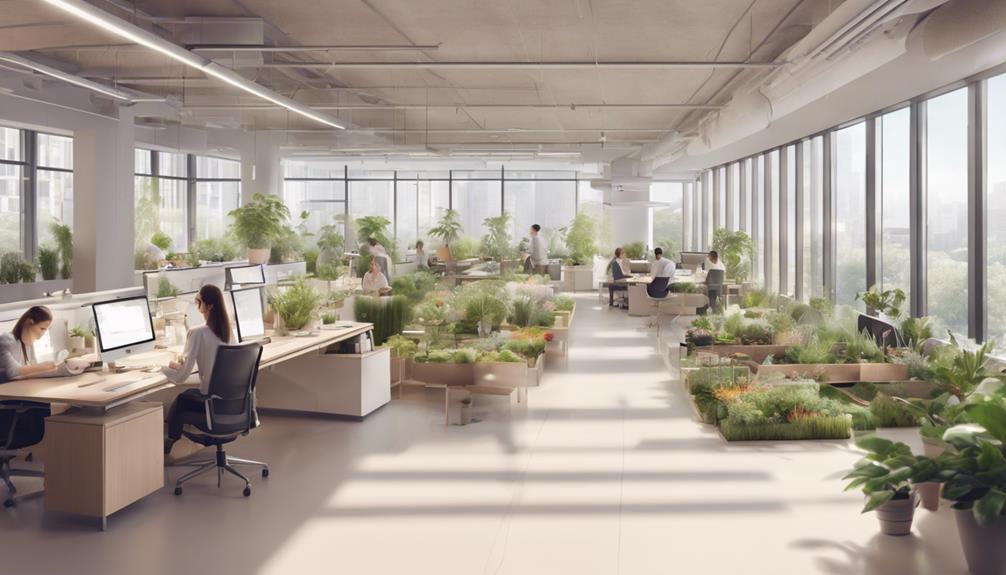
Yes, biophilic design is indeed architect-approved for office spaces. By integrating elements of nature into your work environment, you'll not only enjoy aesthetic enhancements but also reap significant health and productivity benefits. Architects recognize that incorporating natural light, plants, and materials like wood or stone can reduce stress and revitalize your workplace. Despite challenges such as integrating these elements into existing structures, the overall impact on wellbeing and creativity makes it a sought-after design approach. Successful examples, like Etsy's headquarters and Microsoft's campus, underline its effectiveness. There's much to explore about how this trend can transform your own office space.
Defining Biophilic Design
Integrating nature into indoor spaces, biophilic design focuses on enhancing connectivity between humans and the natural environment through the use of direct nature, indirect nature, and space and place conditions. When you bring elements like plants, water features, or natural light into your workspace, that's direct nature at work.
Indirect nature involves using materials, colors, and textures that evoke the outdoors, like wood finishes, stone surfaces, or botanical motifs.
Space and place conditions go a bit deeper. They're about creating environments where you feel a spatial harmony akin to what you might experience in nature. This could be achieved through the use of scale, proportion, and layout that mimic the natural world.
For instance, arranging office spaces so they open up to outdoor views or incorporating pathways that mimic meandering rivers can help.
It's about more than just aesthetics; it's about creating a sense of environment where comfort and productivity meet naturally. You're not just putting a plant on your desk; you're transforming your workspace into a place that feels more alive and connected to the natural world.
This approach can redefine how you interact with your office and how you feel while you're there.
Benefits for Office Workers
Understanding the principles of biophilic design leads us to appreciate how it benefits office workers specifically. By integrating natural elements into your workplace, you're not just adding aesthetic value; you're enhancing your overall well-being.
Imagine stepping into an office that doesn't just house desks and computers, but also living plants, natural light, and materials that mimic the outdoors. It's not just about beauty; it's about creating an environment where you can thrive.
Studies show that offices featuring natural elements can reduce stress and increase productivity. When you're surrounded by greenery and sunlight, your mental health improves, leading to better focus and lower fatigue. This isn't just speculation; it's backed by research.
Natural settings have a proven effect on reducing cortisol levels, the stress hormone, which in turn can boost your creativity and problem-solving skills.
Moreover, biophilic design can improve air quality in your office. Plants are known to filter pollutants, providing you with cleaner air to breathe. Cleaner air means fewer toxins in your body, less sickness, and more energy to tackle your tasks.
Ultimately, working in a biophilic-designed space isn't just good for your health; it enhances your work performance by creating a more invigorating and restorative environment.
Architectural Integration Challenges
While biophilic design offers numerous benefits, incorporating it into existing office architectures poses significant challenges. You're faced with structural limitations when retrofitting older buildings with natural elements. It's not just about placing plants or adding a water feature; it involves integrating these elements in a way that doesn't compromise the building's structural integrity or functionality.
You also have to consider the existing layout. Many offices weren't designed with natural light or airflow in mind, which are crucial for biophilic design. You might find it tough to create open spaces that allow for adequate sunlight without undertaking major renovations.
Additionally, integrating advanced systems for water recycling or energy efficiency, which complement biophilic elements, can be complex and costly.
Maintenance is another hurdle. Integrating natural elements means more than just installation; it's about ensuring they thrive. This requires ongoing commitment and resources which mightn't always be feasible in your budget or schedule.
Lastly, there's the issue of aesthetics. While you aim for a design that's both functional and appealing, not every attempt at biophilic design fits well with the existing architectural style. You need to strike a balance that respects the building's character while incorporating new, naturalistic elements.
Key Elements in Biophilic Offices
Biophilic design transforms your office into a vibrant, nature-infused space that promotes well-being and productivity. Key elements include natural lighting, vegetation, natural materials, and nature views. These components don't just beautify the space; they fundamentally change how you feel and function within it.
Natural lighting is crucial. It not only saves energy but also syncs with your circadian rhythms, enhancing your alertness and reducing eye strain. Incorporate large windows and skylights wherever possible to maximize daylight exposure.
Vegetation is another vital component. Integrating plant life, whether through indoor gardens, living walls, or simple potted plants, improves air quality and adds a calming, natural aesthetic. This connection to nature can significantly reduce stress and boost your mood.
Using natural materials like wood, stone, and bamboo can also enhance biophilic design. These elements bring the outside in and create a sense of warmth and authenticity in your workspace.
Lastly, ensure your office layout provides nature views. Even pictures of landscapes can help, but real, direct views through windows are ideal. They provide a visual escape and a reminder of the world outside, keeping you refreshed and focused.
Case Studies of Successful Implementations
Numerous companies have successfully integrated biophilic design into their workspaces, showcasing significant improvements in employee well-being and productivity. Take, for instance, Etsy's headquarters in Brooklyn. They've embraced natural elements extensively, incorporating living walls, reclaimed wood furnishings, and ample natural lighting. This hasn't just boosted the aesthetic appeal but also enhanced the overall office atmosphere.
Similarly, Microsoft's campus in Redmond underwent a transformation that prioritized biophilic design. They introduced treehouse meeting spaces and natural light-filled atriums. These changes have made the workspace not just a place to work, but a place where creativity is nurtured through nature's presence.
In London, the global marketing firm Octopus Energy took a unique approach by installing solar panels and green roofs. These features, combined with indoor gardens, create a sustainable environment that reinforces their brand's commitment to renewable energy.
These examples illustrate how integrating nature into office design doesn't just look good – it works effectively. You'll see that these aren't isolated cases; they're part of a growing trend that's reshaping how companies think about the workplace. This move towards biophilic design isn't just a passing fad, it's becoming a fundamental part of modern architectural practice in office environments.
Feedback From Office Employees
From the perspective of the office employees, the introduction of biophilic elements has been met with overwhelming positivity. You've likely noticed the changes yourself. Natural light now floods your workspace, live plants soften the once stark office corners, and perhaps there's even a soothing water feature that greets you as you step in. It's not just aesthetic; you feel different, don't you?
Your coworkers echo these sentiments. During breaks, the conversations often drift to how these new, green additions have transformed the mood and atmosphere. You're not imagining it—studies suggest that workspaces with natural elements can boost well-being and productivity.
Your colleague, who once complained about constant headaches, now remarks on fewer occurrences, attributing this change to the improved air quality from the plants.
Feedback forms circulated last month reveal a significant approval rate. You might remember ticking off 'highly satisfied' regarding your enhanced work environment. It's clear that these biophilic modifications aren't just a fleeting trend within your office, but a deeply appreciated transformation that has tangibly improved your daily work experience.
Future Trends in Office Design
As we look ahead, office design is set to evolve even further, embracing technology and sustainability to meet changing demands. You'll see more dynamic spaces that not only adapt to functional needs but also promote well-being and productivity. Imagine walking into an office where the layout, lighting, and even the temperature adjust automatically to optimize your comfort and efficiency throughout the day.
You're likely to encounter more integrated green spaces, not just for aesthetic appeal but as critical elements that enhance air quality and provide natural stress relief. Offices will incorporate advanced biophilic designs, where elements of nature are intertwined with the work environment, going beyond mere houseplants to include living walls, water features, and ample daylight.
Moreover, technology will play a crucial role. You'll interact with smarter, more intuitive systems. From AI-driven air purifying systems to responsive acoustic panels that adjust based on noise levels, the office of the future is designed to be as responsive as it's functional.
Sustainability won't just be an option; it'll be the standard. Offices will use materials and technologies that minimize environmental impact, supporting a greener planet. You'll work in spaces that not only look good but also do good, fostering a deeper connection to the environment.
Conclusion
As you consider revamping your office, embracing biophilic design isn't just a trend; it's architect-endorsed and beneficial. Integrating natural elements can transform your workspace, boosting productivity and well-being. While challenges exist, successful case studies provide a clear roadmap. Employees' positive feedback underscores its value. Looking ahead, expect biophilic principles to become increasingly central in office design. So, why not start planning your office's connection to nature today? It's a step towards a healthier, more vibrant workplace.
Related articles: Authentic Biophilic Design Trends in Workspaces · 5 Best Smart Technologies in Commercial Architecture · Integrating Smart Tech in Modern Architecture