
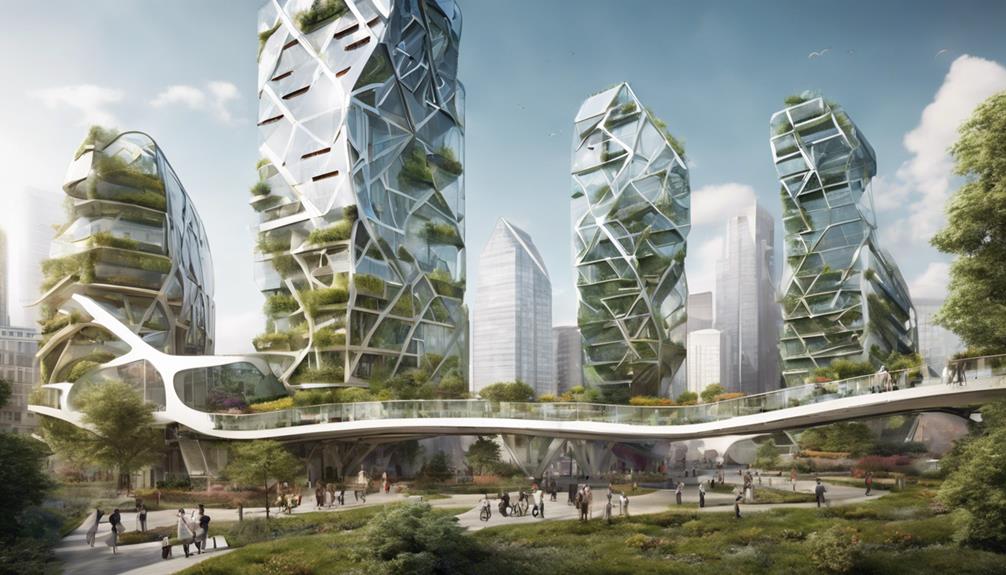
In 2023, you'll see modern architectural design trends prioritizing sustainability, employing eco-friendly materials like recycled steel and bamboo, and integrating smart technology to enhance energy efficiency and security. Your space may feature biophilic elements, such as natural lighting and plant life, fostering well-being and creativity while embracing a minimalist aesthetic with clean lines and monochromatic color schemes. Flexible layouts with movable walls and multipurpose furniture cater to dynamic lifestyle needs, offering versatility and functionality. Mixed-use developments encourage community interaction and reduce your carbon footprint, while advanced prefabrication techniques promise precision and reduced waste. Exploring these trends further could significantly enrich your understanding of contemporary architecture.
Sustainable and Eco-Friendly Materials
In modern architecture, the trend towards sustainable and eco-friendly materials isn't just a fad—it's a fundamental shift. You're witnessing a transformation in how buildings are conceived, designed, and constructed. Architects and developers are increasingly opting for materials that reduce environmental footprints and promote energy efficiency.
You'll see more use of recycled steel, which cuts down on the energy-intensive process of producing new steel. Bamboo is another favorite—it grows quickly, making it a highly renewable resource. It's not only strong but also versatile, suitable for flooring, cabinetry, and wall paneling.
Then there's cork, known for its sustainability and natural ability to insulate, reducing energy costs in buildings.
You're also observing a rise in the use of reclaimed wood. This material isn't just about aesthetic appeal; it's about reducing the need for new timber, thereby preserving forests.
Additionally, the use of plant-based polyurethane rigid foam for insulation showcases how innovation is driving sustainability. It offers superior insulation and is made from renewable sources, significantly reducing harmful emissions.
Smart Building Technologies
Shifting focus to Smart Building Technologies, you'll discover how they revolutionize interactions between you and your living spaces. These innovations aren't just about convenience; they're about creating environments that adapt to your needs, optimizing energy usage, and enhancing security.
Think about walking into a room that adjusts the lighting, temperature, and even the ambiance based on your predetermined preferences, all controlled via your smartphone or voice commands.
You're not just an occupant in these spaces; you're a participant in a dynamic interaction with your environment. Smart buildings use a range of sensors and IoT devices that collect data on how spaces are used, which in turn helps to minimize waste and improve energy efficiency.
For instance, heating systems in smart buildings can detect when a room is unoccupied and adjust the temperature accordingly, saving energy without you needing to lift a finger.
Moreover, the integration of these technologies also means enhanced security features. From facial recognition software for entry systems to motion sensors and automated alerts, your home becomes a safer place. You get real-time updates on your devices, giving you peace of mind wherever you are.
Biophilic Design Elements
Biophilic design elements seamlessly integrate nature into your surroundings, fostering a deeper connection between you and the natural environment. By incorporating aspects such as natural lighting, plant life, and materials that mimic the outdoors, you're invited to enjoy a space that not only looks good but feels good.
Imagine working in an office where daylight replaces harsh fluorescent lights, and green walls purify the air you breathe.
These elements do more than beautify a space; they boost your well-being. Research shows that natural features in design can significantly reduce stress and enhance creativity and clarity of mind.
You'll find that incorporating wood, stone, and water features can evoke a sense of tranquility that synthetic materials simply can't match.
Moreover, the use of living plants in your living or workspaces isn't just for aesthetics. They play a crucial role in cleaning the air and offering a subtle yet constant reminder of the world outside, blurring the lines between indoor and outdoor living.
This connection to nature doesn't just make your environment more pleasant; it makes you healthier, more productive, and more at peace.
Minimalist Aesthetic
Many modern architects champion a minimalist aesthetic, focusing on the essentials to create a sense of order and tranquility. You'll notice the emphasis on clean lines and monochromatic color schemes, stripping away the unnecessary to highlight what's truly important. This isn't just about less clutter or fewer decorations; it's a philosophy that simplifies life, making your living space a calm, efficient haven.
Imagine walking into a room where every piece of furniture serves a purpose, where nothing is superfluous. The beauty in minimalist design lies in the way it enhances the functionality of each space. You're not distracted by ornate details or overwhelmed by bold colors. Instead, the muted tones and streamlined forms encourage a sense of peace and focus.
Materials in minimalist architecture often include glass, steel, and concrete, offering clean, sleek surfaces that reflect light and create an open, airy feel.
The integration of technology is subtle yet sophisticated, ensuring that these homes aren't only beautiful but also smart.
As you embrace this trend, you'll find that minimalist design isn't about giving up things; it's about valuing quality over quantity. You learn to live with what you truly need, finding beauty in simplicity and sustainability in the essentials.
Flexible and Adaptive Spaces
As homes and workplaces evolve, the demand for flexible and adaptive spaces has become paramount. You'll find that modern designs now prioritize versatility in every corner of your living and working environments. This means rooms that seamlessly transform to meet your changing needs, whether you're hosting a meeting, requiring a quiet area, or setting up a space for your hobbies.
Architects are incorporating movable walls and multipurpose furniture to make this adaptability possible. Imagine sliding a wall aside to expand your living room for a large family gathering, or converting the same space into a home office during the day. It's all about making the most out of every square foot you have.
This trend also extends to the use of modular furniture that can be easily reconfigured. You might see sofas that turn into beds, desks that fold up into the wall, and adjustable shelving that can accommodate items of various sizes.
The goal here isn't just to save space, but to create environments that align with your lifestyle. It's about ensuring that your home or office can keep up with the dynamic pace of life today, making every area functional and responsive to your needs.
Emphasis on Natural Light
Nearly all modern architectural designs now emphasize natural light, enhancing both the aesthetic and functional qualities of spaces. You'll find that expansive windows, glass walls, and strategically placed skylights are becoming norms in new buildings. This isn't just for looks; it's about leveraging daylight to reduce reliance on artificial lighting, which, in turn, lowers energy consumption and costs.
You might also notice how architects plan the orientation of buildings to maximize sun exposure during colder months, minimizing the need for heating.
Conversely, during warm periods, thoughtful positioning and innovative shading solutions prevent overheating, maintaining comfort without excessive air conditioning use.
In residential projects, for example, larger windows and open floor plans allow light to permeate deeper into homes, creating a sense of openness and connection with the outdoors.
In workplaces, natural light has been shown to boost productivity and enhance employee well-being. It's clear that this trend isn't just a passing fad but a sustainable approach that impacts well-being and energy efficiency.
Mixed-Use Developments
Mixed-use developments are reshaping urban landscapes by combining residential, commercial, and sometimes industrial spaces within a single property. This trend invites you to reimagine how space is utilized, making your daily routine more convenient and sustainable.
Imagine living in an apartment above a bustling cafe and a tech startup. You could enjoy your morning coffee downstairs, head to work just a floor away, and shop for groceries all within the same block.
This architectural approach not only saves you time but also significantly reduces your carbon footprint. With everything so close, you're less likely to rely on a car, easing traffic congestion and decreasing urban air pollution.
Moreover, these developments encourage a stronger sense of community. Shared spaces, like rooftops and gardens, become places where you can mingle with neighbors from a mix of backgrounds and industries.
Economically, mixed-use spaces are a boon. They boost property values and attract a diverse range of tenants and businesses. As a resident, you'll find that these vibrant communities offer a dynamic and enriched urban living experience that standalone residential or commercial buildings can't match.
Advanced Prefabrication Techniques
Shifting focus to construction innovation, advanced prefabrication techniques are revolutionizing how buildings come to life. You're now seeing structures that not only rise faster but also boast enhanced precision and quality. This isn't just about saving time; it's about transforming the construction landscape into a more efficient and sustainable field.
Imagine components of a building—walls, floors, roofs—all made in a controlled factory setting. You're not battling weather delays or onsite logistical nightmares. Everything's crafted offsite and simply assembled like a giant jigsaw puzzle at the building site. This method isn't just speedy; it reduces waste and minimizes environmental impact.
You might wonder about the scope of design. Here's where it gets exciting: modern prefabrication doesn't mean cookie-cutter. With advancements in technology, customizable options are vast, allowing unique architectural features that stand out. You're not compromising on aesthetics; you're enhancing them.
Moreover, the integration of technology with prefab techniques allows for smarter buildings. Think automated systems seamlessly integrated from the start—energy efficiency is built-in, not tacked on.
As you delve deeper into this trend, you'll see it's not the future—it's the present, reshaping how you live, work, and interact with your surroundings.
Conclusion
As you explore the top architectural trends of 2023, you'll find sustainability at the core. Whether it's integrating smart technologies or utilizing eco-friendly materials, each trend aims to enhance your living space while respecting the environment. From the allure of minimalist aesthetics to the practicality of flexible spaces, these trends promise not only to meet modern needs but also to anticipate future demands. Embrace these innovations and see how they transform your approach to modern living and building.
Related articles: What Are 2023 Modern Architectural Design Trends? · Why Are 2023 Architectural Designs So Innovative? · Top 3 Modern Architectural Design Trends 2023