
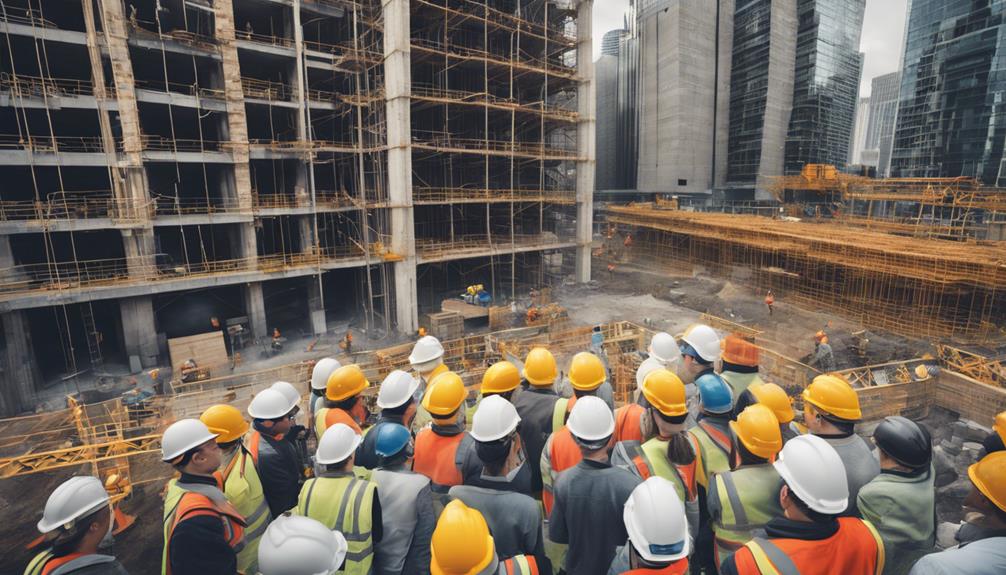
Ensuring compliance with construction safety standards is crucial for you. It reduces workplace accidents by reinforcing training and maintaining a rigorous safety culture. You'll face fewer legal consequences like hefty fines, potential criminal charges, and destabilizing legal proceedings if you adhere strictly to regulations. Also, abiding by these standards boosts worker morale, creating a more productive and satisfied workforce. Financially, it cuts costs associated with accidents and legal fees, increasing your overall profitability. Plus, it elevates your reputation within the industry, attracting more clients and lucrative projects. By staying informed on this topic, you'll set yourself up for success and safety.
Reducing Workplace Accidents
To effectively reduce workplace accidents in construction, you need to prioritize rigorous training and adherence to safety protocols. It's essential that you ensure every worker's competency in handling machinery and understanding the specific risks associated with their tasks. Regular training sessions not only refresh essential skills but also introduce updated safety measures and equipment.
You'll find that fostering a culture of safety goes a long way. Encourage your team to actively participate in safety meetings and contribute to hazard assessments. This proactive approach helps in identifying potential risks before they escalate into accidents.
Remember, it's crucial that everyone feels responsible for not just their safety but also that of their colleagues.
Implementing a comprehensive safety program isn't just about compliance; it's about creating a work environment where safety is ingrained in every action. Utilize visual aids, such as signage and color-coded equipment, to keep safety at the forefront of everyone's mind.
Regularly inspect your site and equipment to ensure they meet safety standards. Don't overlook the importance of these audits, as they're key in catching hazards that could have been missed during routine operations.
Legal Consequences of Non-Compliance
Failing to comply with construction safety standards can lead to severe legal consequences. If you're overseeing a construction project, be aware that negligence isn't just about fines; it can escalate to criminal charges. Imagine facing a lawsuit because someone got hurt due to overlooked safety protocols. It's not just a legal headache—it can tarnish your reputation.
You could be hit with hefty fines that destabilize your financial standing. Regulatory bodies like OSHA can impose sanctions that mightn't just dent your wallet but also your ability to secure future projects. Non-compliance can trigger a cascade of legal issues, from penalties to stop-work orders, which halt your project unexpectedly.
You're not just looking at immediate costs but also at delays that can inflate the project budget significantly.
Moreover, if your negligence leads to severe injury or death, the situation worsens. Legal proceedings could see you in court, defending your actions—or lack thereof—against claims of unsafe practices. You'd be responsible for legal fees, compensation, and possibly, punitive damages. It's clear: skimping on safety isn't worth the risk. Ensure you're always on the right side of the law.
Enhancing Worker Morale
Beyond the legal implications of non-compliance, prioritizing safety measures significantly boosts worker morale. When you ensure a safe working environment, you're telling your team that their health and well-being are top priorities. This recognition builds trust and respect, which are crucial for a motivated workforce.
Imagine working in a place where you're constantly worried about potential accidents. It's stressful, isn't it? Now, think about working somewhere where safety protocols are clear and practiced consistently. You'd feel valued, secure, and more focused on your tasks, wouldn't you? This is the environment you create when you adhere to safety standards.
Moreover, when employees see that safety is taken seriously, they're more likely to take pride in their work. They become ambassadors of your safety culture, contributing to a cycle of positivity that enhances overall job satisfaction. This isn't just good for the workers; it's great for productivity and the quality of work.
Financial Benefits of Compliance
Adhering to construction safety standards can significantly reduce your project's overall costs. By ensuring compliance, you're not just avoiding hefty fines for violations, but you're also mitigating the risk of costly accidents and injuries.
Think about it: every incident on site can lead to work stoppages, legal liabilities, and increased insurance premiums—all of which can strain your budget.
Investing in safety training and equipment might seem like an upfront cost, but it pays off. Proper training ensures that your workers know how to handle equipment safely and recognize hazards before they lead to problems. This reduces the likelihood of accidents that can cause serious injury and even death, which in turn minimizes your liability and potential for facing lawsuits or worker compensation claims.
Moreover, maintaining a safe site means less downtime. When you don't have to pause operations to deal with emergencies or investigations, you maintain productivity, which keeps your project on schedule and within budget.
Efficient, safe practices streamline operations and cut unnecessary costs, making your construction project more profitable in the long run. Remember, every dollar you save on avoiding problems increases your bottom line.
Reputation and Trust in Industry
Maintaining a stellar safety record does more than just keep your project costs down; it also boosts your company's reputation within the construction industry. When you prioritize safety, you're not just protecting your team—you're also sending a powerful message to your clients and competitors. This commitment can set you apart as a leader, one who values human life and well-being above all.
Consider the trust you build when accidents are rare on your sites. Clients notice these things. They talk, and word gets around. Before you know it, you're not just a company; you're a benchmark for safety in your field. This type of reputation is invaluable. It cements your status in the industry and establishes a foundation of reliability that can endure the toughest scrutiny.
Moreover, regulatory bodies will take note of your exemplary practices. Staying on their good side means fewer disruptions due to compliance issues or legal entanglements. It's a smoother path, where you spend less time tangled in red tape and more time innovating and advancing your business.
Future Project Opportunities
Your company's commitment to safety not only solidifies your reputation but also opens the door to future project opportunities. When you prioritize safety standards, you're not just complying with regulations; you're showcasing a reliability that attracts new clients and high-value projects. Potential partners and investors often seek out companies that demonstrate rigorous safety protocols because it reduces risk and indicates a high level of professionalism.
Sticking to these standards can also streamline your operations. You'll find that with fewer accidents or disruptions, your projects are more likely to be completed on time and within budget. This efficiency is something clients remember and value when considering future collaborations.
Moreover, maintaining a focus on safety can help you leverage technological advancements and innovation in the field. As you adopt newer, safer construction methods and tools, you become more competitive in the market. This not only enhances your capability to handle diverse projects but also positions you as a forward-thinking leader in the industry.
Conclusion
You've seen how crucial it is to adhere to construction safety standards. By reducing workplace accidents, you're not only safeguarding your team but also shielding your business from legal repercussions. Compliance boosts worker morale and trust, which in turn enhances productivity and quality. Financial benefits follow as you save on costly accidents and fines. Ultimately, maintaining a strong safety record builds your reputation, attracting more business opportunities. Don't overlook the importance of compliance—it's indispensable for your success.
Related articles: What Are Construction Safety Compliance Requirements?