
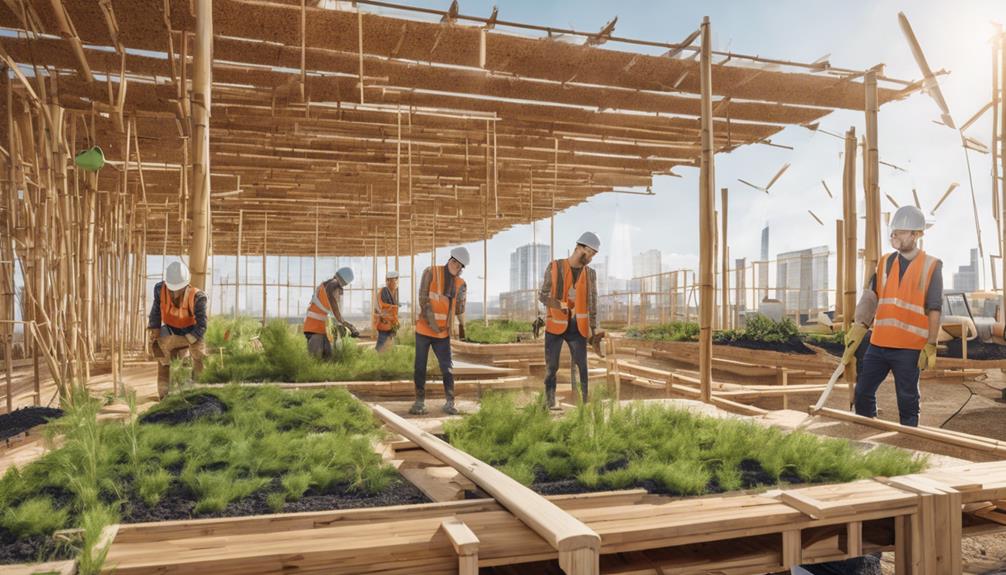
When you're selecting sustainable building materials for your construction project, consider recycled steel, bamboo, and reclaimed wood. Recycled steel saves on energy and drastically cuts carbon emissions compared to new steel production. Bamboo is not only robust and versatile but grows back quickly without needing replantation, making it highly renewable. Reclaimed wood adds unique character and history to your space while reducing waste and minimizing landfill use. These choices aren't just eco-friendly; they're durable and aesthetically pleasing too. Exploring these materials further might give you insights into how you can integrate them creatively into your construction projects.
Benefits of Recycled Steel
Recycled steel offers several compelling benefits that can significantly contribute to sustainable building practices. When you choose recycled steel, you're not just opting for a robust material; you're also embracing an eco-friendly solution. This choice dramatically reduces the need for new raw materials, thereby conserving the energy and resources required for steel production from virgin sources.
The process of recycling steel uses considerably less energy compared to manufacturing new steel. This reduction is crucial as it leads to lower carbon emissions. By incorporating recycled steel in your projects, you're directly contributing to a decrease in global greenhouse gas emissions. It's a pivotal step towards combating climate change.
Moreover, steel is endlessly recyclable without loss of quality. This means that the steel beams used in one building can be repurposed for another project decades later, without compromising structural integrity. You're not just building for today; you're investing in a cycle of reuse that benefits future generations.
Choosing recycled steel also supports the recycling industry, which is vital for sustainable development. By prioritizing recycled materials, you're helping to ensure that the steel recycling sector remains robust and innovative, continually improving its processes and increasing its efficiency.
Advantages of Bamboo
While recycled steel serves as a cornerstone for sustainable construction, bamboo emerges as another remarkable material, bringing its own set of unique advantages. You'll find that bamboo isn't only sustainable but also incredibly strong and flexible. This natural versatility makes it an excellent choice for a variety of building applications.
One of bamboo's most compelling features is its rapid growth rate. Unlike hardwoods, which can take decades to mature, bamboo can be harvested every three to five years. This makes it a highly renewable resource that you can rely on for ongoing projects without the guilt of environmental degradation.
Additionally, bamboo has a natural resistance to pests and diseases, which reduces the need for harmful pesticides that can degrade the environment. It's also capable of regenerating without needing to be replanted, minimizing soil disruption and erosion. You'll appreciate how this decreases the need for ongoing agricultural interventions.
Moreover, the lightweight nature of bamboo makes it easy to transport and work with, potentially lowering construction costs and energy use. It's also remarkably strong, sometimes compared to steel in terms of tensile strength. This combination of lightweight and strength means you can use bamboo to create structures that are both durable and elegant.
Uses of Reclaimed Wood
As you explore sustainable building materials, consider the versatile applications of reclaimed wood. This material isn't just an environmentally friendly option; it's also steeped in character and history, which can add unique charm to any project.
You'll find that reclaimed wood is perfect for flooring, where its aged look provides a warm, rustic feel that newer materials can't match. It's not just about aesthetics, either. Reclaimed wood floors are durable and can handle the wear and tear of daily life.
You can also use reclaimed wood in structural elements like beams and posts. Its proven resilience over years—or even centuries—means it's up to the task of supporting your building.
For a more creative touch, consider using reclaimed wood for furniture or decorative accents. From tables and chairs to wall panels and frames, this material brings a story to every item.
Moreover, by incorporating reclaimed wood into your construction or remodeling projects, you're not only opting for a high-quality material but also contributing to waste reduction. Every plank you use is one less piece of debris in our landfills, making your project part of the solution in a world rife with waste.
Conclusion
You now know the top sustainable materials to consider for your next construction project. Recycled steel lessens your environmental impact, while bamboo offers incredible durability with rapid renewal. Don't overlook reclaimed wood; it adds unique character and history to any build. By choosing these materials, you're not just constructing buildings; you're building a better, more sustainable future. Start planning your eco-friendly project today and lead the way in green construction.
Related articles: Eco-Friendly Innovations in Building Materials · Choosing Sustainable Materials for Commercial Construction · What Are the Best Affordable High-Rise Construction Supplies?