
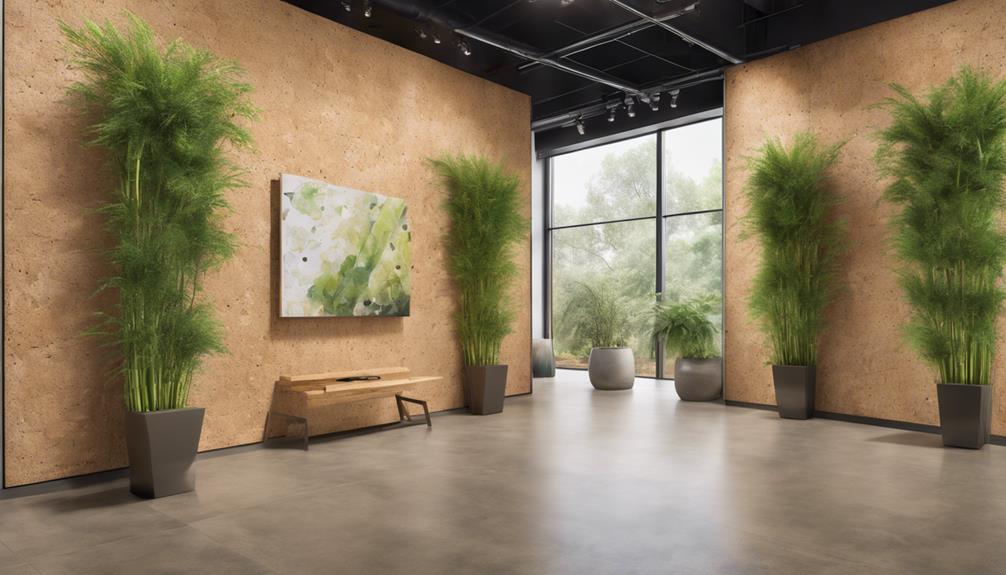
You'll find that top sustainable materials like bamboo, recycled steel, and cork can significantly boost your commercial construction project's environmental credentials. Bamboo grows quickly, making it a readily renewable resource. Recycled steel reduces carbon emissions and saves energy compared to producing new steel. Cork, harvested from the bark of cork oak trees without damaging them, offers excellent insulation, helping you cut down on energy costs. These materials not only help preserve the environment but also enhance the aesthetic and functional qualities of your buildings. By incorporating these innovative solutions, you'll set the stage for healthier, more sustainable living spaces.
Bamboo: The Renewable Wonder
While many materials are touted as eco-friendly, bamboo stands out for its exceptional sustainability. You'll find that bamboo isn't only abundant but also incredibly fast-growing. It can mature in about three to five years, compared to hardwoods like oak, which might need up to forty years. This rapid growth cycle means bamboo can be harvested frequently without causing environmental damage.
Bamboo's benefits don't stop at its growth rate. You'll appreciate that it doesn't require fertilizers or pesticides to thrive. This natural resistance to pests reduces the need for chemicals that harm the environment.
Moreover, bamboo produces more oxygen and absorbs more carbon dioxide compared to many other plants, actively improving air quality.
Its versatility in design and application makes it an ideal choice for commercial construction. You can use it for everything from flooring and wall paneling to structural elements.
Additionally, bamboo's natural aesthetic adds a warm, organic feel to any space, enhancing the overall design.
When you choose bamboo for your construction projects, you're not just opting for a durable and attractive material. You're making a decision that supports sustainable practices and contributes to a healthier planet.
Recycled Steel Attributes
Recycled steel stands as a pillar of sustainability in commercial construction. You'll find that using this material not only supports environmental conservation but also enhances the efficiency and overall sustainability of your projects.
When you choose recycled steel, you're opting for a material that requires significantly less energy to produce compared to new steel. This substantial energy reduction translates to lower carbon emissions, making it a critical choice for eco-conscious builders like you.
Moreover, the robust recycling infrastructure for steel means that it can be recycled repeatedly without loss of quality. You're not just using a product; you're contributing to a cycle of reuse that extends the material's lifespan and reduces waste.
This aspect is particularly beneficial in commercial construction where large quantities of materials are used and the environmental impact is significant.
Additionally, integrating recycled steel into your projects can boost their green credentials, an appealing factor for clients and investors increasingly drawn to sustainable building practices. This choice not only furthers your commitment to environmental stewardship but also positions you as a forward-thinking builder, ready to meet the demands of a rapidly evolving construction landscape.
Cork: Eco-Friendly and Versatile
Cork stands out as another stellar choice for sustainable commercial construction. You'll find that its remarkable properties extend far beyond the familiar role as wine stoppers.
Harvested from the bark of the cork oak tree, primarily found in Mediterranean regions, cork is a renewable resource that doesn't require the tree to be cut down. This means you can enjoy its benefits without compromising forest health.
As you consider cork for your building projects, you'll appreciate its natural resilience and durability. It's naturally fire resistant and can serve as a form of insulation, helping to regulate the temperature and acoustics of a building. This can significantly cut down your energy costs, making it an economically appealing option as well.
Moreover, cork is highly versatile. It can be used in flooring, wall coverings, and even as a roofing material. Each application offers a unique aesthetic that can elevate the design of any commercial space.
You're not just choosing a material that's good for the planet; you're also opting for one that's stylish and functional.
Reclaimed Wood Benefits
Reclaimed wood, with its rich history and unique character, offers significant advantages for sustainable commercial construction. As you explore eco-friendly materials, you'll find that reclaimed wood not only reduces the demand on forests but also decreases landfill waste. This material has already stood the test of time, proving its durability and strength, which means it's built to last in your upcoming projects.
Moreover, each piece of reclaimed wood carries a distinctive look, with weathered textures and varied patinas that can't be replicated artificially. This uniqueness allows you to create eye-catching designs that stand out. It's perfect for flooring, paneling, or even structural elements, providing a touch of authenticity and warmth that's highly sought after in modern architecture.
Using reclaimed wood also helps you gain points under sustainability certifications like LEED. It's treated as a recycled content, enhancing your building's environmental credentials. You're not just building; you're preserving history and making an impactful statement about resource conservation.
Insulated Concrete Forms Efficiency
Insulated concrete forms (ICFs) offer an innovative solution for your construction needs, dramatically enhancing energy efficiency and reducing utility costs. These forms consist of hollow foam blocks or panels that are stacked to shape the exterior walls of a building, then filled with reinforced concrete. This not only boosts structural strength but also significantly improves insulation.
You'll find that ICFs can cut down on the heating and cooling demands of your building. Due to their high thermal resistance, ICF walls drastically lessen the amount of energy lost compared to traditional wood or metal framing. This means you're not just saving money, but also contributing to a reduction in the building's carbon footprint.
Moreover, the airtight nature of ICF construction minimizes air leaks, which further aids in maintaining consistent indoor temperatures. This can be a game changer in climates that experience extreme weather, ensuring comfortable interiors regardless of the season.
Additionally, ICFs offer excellent sound insulation, making them ideal for areas where noise pollution is a concern. They're also known for their resistance to fire, pests, and mold, enhancing the durability and safety of your structure. By choosing ICFs, you're opting for a smarter, more sustainable way to build.
Rammed Earth Construction
Building on the theme of sustainable construction, rammed earth offers another fascinating approach that prioritizes environmental stewardship while delivering robust structural benefits. You'll find that this technique involves compacting a mixture of natural materials such as soil, clay, and gravel. These are layered and mechanically compressed to form walls that aren't only aesthetically pleasing but also incredibly durable.
Rammed earth is a testament to both timelessness and innovation. It's been used for thousands of years, yet it fits seamlessly into modern architecture. You'll appreciate how it naturally regulates temperature, keeping interiors cool in the summer and warm in the winter. This passive energy efficiency reduces the need for mechanical heating and cooling, slashing energy costs and your building's carbon footprint.
Moreover, the materials required for rammed earth construction are often sourced locally. This reduces transportation emissions and supports local economies. You're not just building structures; you're nurturing the community and preserving local landscapes.
Embrace rammed earth for its low environmental impact, resilience, and unique aesthetic qualities. It's not just about building for today but creating a legacy of sustainability for future generations to admire and inhabit.
Green Roofing Options
Transitioning from traditional roofing, consider the benefits of green roofing options for your next project. These innovative systems not only enhance the aesthetic appeal of your building but also contribute significantly to environmental sustainability.
You're looking at a setup that can reduce your building's heat absorption, thanks to the layer of vegetation that acts as an insulation layer on the roof. This means lower cooling costs and a significant reduction in your energy consumption.
Moreover, green roofs are excellent for managing stormwater. They absorb rainfall, which reduces runoff and decreases the stress on urban sewage systems.
You'll appreciate how this system naturally filters rainwater, potentially even repurposing it for building use. It's an effective way to mitigate the "heat island" effect common in urban areas, where buildings and pavements absorb and re-emit the sun's heat more than natural landscapes.
Beyond the practical benefits, installing a green roof can elevate your property value and attract tenants who are environmentally conscious. It's a forward-thinking choice that signifies your commitment to sustainable building practices.
Imagine your building not just housing businesses, but also a thriving ecosystem that supports local wildlife and provides a serene spot for occupants to enjoy.
Low-E Glass Technology
Shifting focus to window technology, consider the advantages of Low-E (low-emissivity) glass for your next construction project. This innovative glass isn't just your typical window pane; it's designed to minimize the amount of infrared and ultraviolet light that comes through your windows without compromising on light transmission. This means you'll enjoy natural light without the associated heat and UV damage to interiors.
Low-E glass works by reflecting heat back to its source, thanks to a thin metallic coating. During winter, the heat inside your building is reflected back inside, keeping spaces warmer without cranking up the thermostat.
In the summer, it does the opposite by reflecting exterior heat, reducing your need for air conditioning. This dual action makes Low-E glass a year-round ally against energy waste.
You'll also appreciate that Low-E glass can significantly reduce your energy bills. By maintaining a more consistent interior temperature, your heating and cooling systems won't have to work overtime. Additionally, this glass type protects against fading of fabrics and paint caused by UV exposure, which means your interior furnishings and walls stay looking fresh and vibrant longer.
Opting for Low-E glass is a smart, energy-efficient choice that aligns perfectly with sustainable building practices.
Straw Bale Insulation Properties
While Low-E glass optimizes your building's interaction with sunlight, another sustainable material focuses on harnessing natural resources for superior insulation. Straw bale, a byproduct of grain farming, offers exceptional insulating properties that could significantly reduce your energy costs. You're not just choosing an eco-friendly option; you're investing in long-term sustainability.
Straw bale's high R-values, typically ranging from R-30 to R-35, mean it outperforms many conventional insulation materials. This robust insulation helps maintain a consistent indoor temperature, whether it's shielding you from the blistering summer heat or the biting cold of winter.
Moreover, it's not just about thermal performance; straw bale also provides excellent soundproofing qualities. You'll find that noise pollution is markedly reduced, creating a quieter, more peaceful environment.
Installing straw bale is straightforward. You can stack the bales within a timber frame, which speeds up the construction process and reduces labor costs. It's crucial, however, to ensure proper sealing and moisture control to prevent decay.
With the right installation, straw bale walls can last as long as other conventional materials, all while keeping your building's carbon footprint to a minimum. Isn't it time you considered straw bale for your next project?
Conclusion
You've just explored some of the top sustainable materials for commercial construction. From the rapid renewability of bamboo to the energy efficiency of low-E glass, each option offers unique benefits. Whether you're considering the thermal insulation of straw bale or the durability of recycled steel, integrating these materials can significantly reduce your project's environmental impact. Embrace these eco-friendly choices to not only conserve resources but also to potentially lower long-term operating costs for your construction projects.
Related articles: Innovative Energy-Saving Building Techniques · Top Techniques for Energy-Efficient Commercial Construction · What Are Energy-Efficient Building Techniques?