
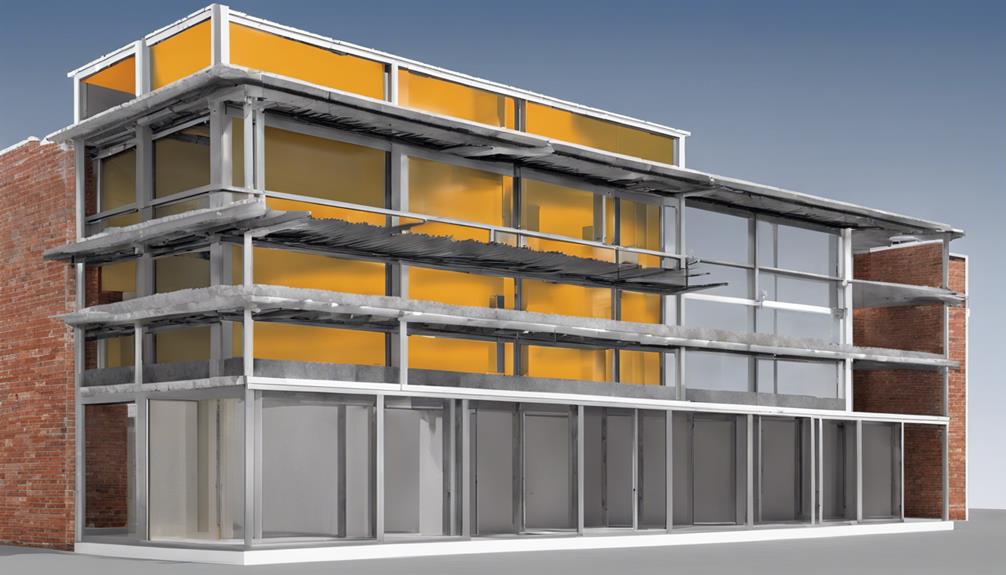
When building or renovating, you should consider fire-resistant materials to enhance safety and resilience. Concrete, for instance, significantly slows down the spread of flames and improves fire containment due to its low thermal conductivity. Gypsum board is another great choice; it releases water vapor under high heat, helping to control fires. You can also opt for fire-retardant wood, which resists ignition and can be used similarly to regular wood. For windows, laminated or ceramic glass can resist high temperatures, and steel framing offers exceptional strength and fire resistance. These materials not only secure your structure but also ensure long-term sustainability. Discover more benefits these materials can bring to your project.
Concrete: A Robust Barrier
Concrete serves as a formidable barrier against fire, enhancing the safety of buildings. When you're considering materials for construction, it's crucial to note how effectively concrete withstands high temperatures. Its ability to resist fire isn't merely about withstanding heat; it also significantly slows the spread of flames, providing crucial time for evacuation and response.
You'll find that unlike many other materials, concrete doesn't emit toxic fumes when exposed to fire. This characteristic is vital for maintaining safer environments during a fire event.
Moreover, concrete's composition — primarily cement, water, and aggregates — inherently possesses low thermal conductivity. This means it doesn't transfer heat quickly, helping to contain any fire to one area and preventing it from spreading rapidly throughout a structure.
As you plan your next construction project, remember that using concrete can also potentially lower insurance premiums due to its high fire resistance. It's a smart choice not only for safety but also for long-term savings. Consider how integrating concrete into your building design not only enhances structural integrity but also adds a crucial layer of fire protection. It's a robust, reliable choice that offers peace of mind.
Gypsum Board Installations
Shifting focus to gypsum board, you'll find it's an incredibly versatile material used primarily for interior walls and ceilings. This product not only offers a smooth finish but also provides significant fire resistance, thanks to its core composed of calcium sulfate dihydrate. When exposed to high heat, gypsum board releases water vapor, which helps control the spread of fire and lowers the temperature in the affected area.
You can choose from various types of gypsum boards depending on your specific needs. Type X gypsum board is especially popular for its enhanced fire-resistance qualities. It contains glass fibers that reinforce the board, allowing it to withstand fire for longer periods. Typically, you'll see this type used in areas requiring additional safety measures, like between apartments or in commercial kitchens.
Installing gypsum board is straightforward. You'll fasten the boards directly to the structure's framework using screws or nails. For improved fire protection, ensure all joints and seams are properly sealed with joint compound and tape. This not only enhances the fire-resistant properties but also ensures a uniform, polished appearance. Remember, correct installation is key to maximizing gypsum board's efficiency in fire protection.
Fire-Retardant Wood Applications
While gypsum board is a standout choice for fire-resistant wall and ceiling finishes, fire-retardant wood products bring similar safety features to a range of other construction elements. You'll find these specially treated woods ideal for framing, siding, and even roofing, where traditional wood might pose a fire hazard.
Here's the scoop: fire-retardant wood isn't your typical lumber. It's treated with chemicals that significantly slow down the combustion process. This means that in the event of a fire, it'll resist ignition longer than untreated wood, giving you more time to react and potentially reducing the damage to your property.
You're probably wondering about appearance and usability. Well, good news! Fire-retardant wood can be painted or stained just like regular wood, so it blends seamlessly with other materials in your building. Plus, it machines and works just like traditional lumber, making it a versatile choice for various architectural styles.
Glass Reinforcement Techniques
In modern architecture, glass plays a crucial role, but its fragility can be a concern. To boost its resilience and fire resistance, you'll want to consider various glass reinforcement techniques.
Laminated glass, one of the most effective options, involves bonding two or more glass sheets with a layer of resin or polyvinyl butyral (PVB) in between. This interlayer keeps the glass intact even when shattered, preventing it from breaking into dangerous shards during a fire.
Another robust technique is the use of tempered glass. It's heated to a high temperature and then rapidly cooled, strengthening it significantly compared to normal glass. This process makes it harder and more resistant to high temperatures, reducing the likelihood of breakage under fire conditions.
Ceramic glass, also essential, offers remarkable heat resistance. It withstands extreme temperatures without melting, making it ideal for high-risk fire zones in buildings. You might consider it for areas like fire doors or windows close to potential fire sources.
Incorporating these glass reinforcement techniques not only enhances safety but also maintains the aesthetic appeal of your building. Opt for these solutions to ensure durability and fire resistance without compromising on design.
Steel Framing Advantages
Beyond its aesthetic appeal, steel framing offers significant structural advantages for building construction. You'll find that it provides superior strength and durability, crucial in areas prone to severe weather or seismic activity. Steel's impressive strength-to-weight ratio means your building can withstand higher stresses while using less material than traditional wood framing, which not only saves you money but also speeds up the construction process.
Steel framing isn't just tough; it's also remarkably fire-resistant. It can withstand temperatures far higher than those that would cause wood frames to collapse. This feature alone makes steel an invaluable material in designing buildings where safety is a top priority. Additionally, steel doesn't contribute fuel to a fire, helping to limit the spread and intensity should one occur.
You'll also appreciate steel's adaptability. It can be molded into nearly any shape, allowing for innovative designs and architectural freedom. This flexibility ensures that your building can meet specific aesthetic and functional requirements without compromise.
Moreover, steel framing is environmentally friendly. It's fully recyclable, reducing waste and often incorporating recycled materials in its production. Choosing steel helps you contribute to a more sustainable construction model, aligning with modern eco-friendly building practices.
Conclusion
You've explored the top fire-resistant materials that can safeguard your building against fire hazards. Concrete offers robust protection, while gypsum board provides essential barriers. Fire-retardant wood and reinforced glass enhance safety without compromising aesthetics. Steel framing rounds out your options, combining strength and resistance. Choosing any of these materials will significantly boost your building's resilience to fire, ensuring peace of mind and safety for everyone inside. Make an informed decision and prioritize fire resistance in your construction plans.
Related articles: What Are Fire-Resistant Materials for Commercial Buildings? · Top Fire-Resistant Materials for Your Building · 3 Best Fire-Resistant Materials for Commercial Buildings