
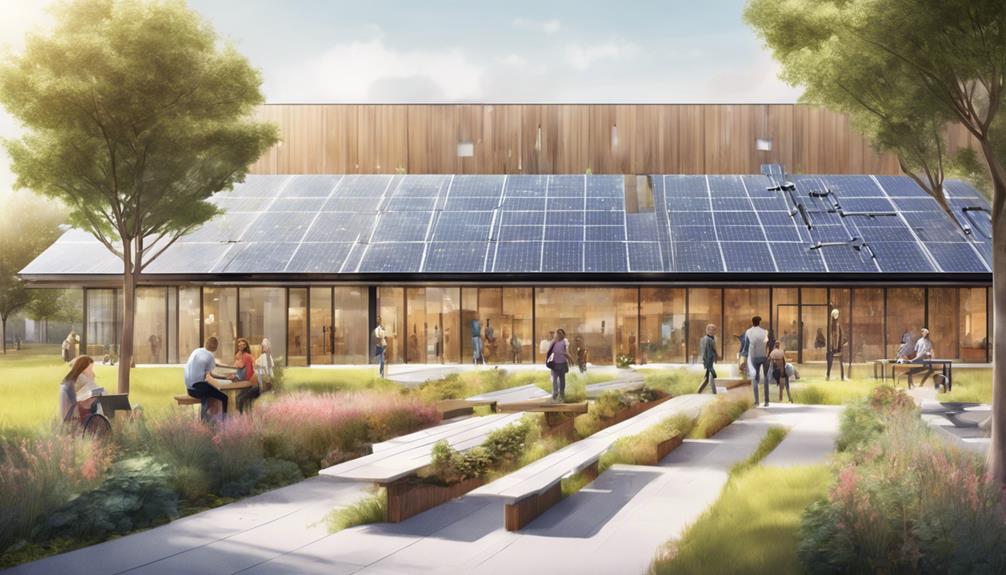
You're in luck if you're hunting for the top energy-saving designs for commercial buildings. Start with passive solar design, leveraging the sun's energy through strategically placed windows and heat-absorbing materials. Upgrade to high-performance glass and glazing to further enhance your building's insulation. Don't forget the benefits of green roofs and living walls, which not only beautify your building but also improve its sustainability. Consider advanced insulation techniques using materials like aerogels for superior thermal performance. Lastly, integrate smart lighting and HVAC systems to automatically adjust energy use based on occupancy and ambient conditions. Exploring these options will unveil even more insights on how to transform your commercial space into a model of efficiency.
Passive Solar Building Design
Passive solar building design optimizes the use of the sun's energy to heat and light spaces naturally, significantly reducing reliance on artificial heating and cooling systems. By focusing on the building's orientation, you can maximize solar gain in the cold months while minimizing it during the hot summer. It's all about making the sun work for you.
You'll want to design with materials that have high thermal mass, like concrete or brick, which absorb and store heat during the day and release it slowly when temperatures drop. This helps keep indoor temperatures steady, reducing the need for additional heating or cooling.
Consider the placement of windows and overhangs. Properly positioned, they allow winter sunlight to fill the space while blocking the high summer sun, keeping your building naturally comfortable. It's a game of angles and seasons.
Landscaping plays a role too. Deciduous trees, for example, provide shade in summer but allow sunlight through in winter when their leaves have fallen. This natural solution not only saves energy but also enhances the aesthetic and value of your property.
High-Performance Glass and Glazing
Building on the concept of using natural resources effectively, high-performance glass and glazing technologies are key to further enhancing energy efficiency in commercial buildings. You'll find that these technologies not only reduce the reliance on artificial heating and cooling but also maximize natural light, cutting down on electricity usage during the day.
High-performance glass, often featuring low-emissivity (low-E) coatings, plays a pivotal role. It's designed to reflect infrared light, keeping heat inside during winter and outside during summer, which dramatically improves the thermal efficiency of your building.
Additionally, advancements in glazing involve multiple layers of glass with inert gas fills like argon or krypton between them, boosting insulation.
You should also consider the orientation and size of windows. Properly oriented windows maximize solar gain in colder months and minimize it in hotter months, complementing the thermal regulation properties of high-performance glass.
Moreover, modern technologies allow for the integration of smart tinting features, which adjust the transparency of the glass based on the intensity of incoming sunlight, providing dynamic control over light and heat entering the building.
Adopting these technologies ensures that your building not only serves as a comfortable space but also adheres to stringent energy efficiency standards, reducing both your carbon footprint and operational costs.
Green Roofs and Living Walls
Exploring the potential of green roofs and living walls can significantly boost your building's sustainability. These features not only enhance the aesthetic value of your property, but they also contribute to environmental conservation and energy efficiency.
Green roofs, also known as living roofs, are layers of vegetation planted over a waterproof membrane on your building's top. They're fantastic at insulating your building, reducing the need for heating in winter and cooling in summer. This means you'll see a drop in your energy bills. Additionally, green roofs absorb rainwater, decreasing stormwater runoff and lessening the burden on urban sewage systems.
Living walls, or vertical gardens, can be installed both inside and outside your building. They improve air quality by naturally filtering pollutants and carbon dioxide, converting them into oxygen. You'll find that they also help to regulate humidity levels, making your indoor environment more comfortable and reducing the reliance on humidification and dehumidification systems.
Both green roofs and living walls can extend the lifespan of your building materials. By protecting exterior surfaces from harsh weather and UV rays, these green installations slow the deterioration of roofing and wall materials. Investing in these green solutions not only promotes sustainability but also brings long-term economic benefits through reduced maintenance costs.
Advanced Insulation Techniques
Shifting focus to advanced insulation techniques, you'll discover that these methods are pivotal in enhancing your building's energy efficiency. By integrating materials like aerogels and vacuum insulation panels, you're not just filling gaps; you're setting a new standard in thermal performance. These high-tech options offer superior R-values—a measure of resistance to heat flow—while taking up less space than traditional materials.
You'll find that spray foam insulation adapts to your building's unique contours. It expands to fill every nook, reducing air leaks more effectively than standard batts or rolls. This adaptability not only seals your building envelope against weather extremes but also significantly cuts heating and cooling costs.
Consider the benefits of reflective insulation in climates with intense sun. By installing it beneath your roofing or in the walls facing the sun, you reflect radiant heat, maintaining a cooler interior without overworking your air conditioning system.
Lastly, don't overlook recycled materials. Cotton denim and sheep's wool, treated for fire and pest resistance, provide eco-friendly options that support sustainable building practices without compromising on thermal efficiency. These innovations in insulation are key to achieving a greener, more cost-effective future for your commercial space.
Smart Lighting and HVAC Systems
Turning to smart lighting and HVAC systems, you'll find these technologies are essential for reducing your building's energy consumption.
Smart lighting systems utilize sensors and programmable controls to adjust lighting based on occupancy and natural light availability. This means you're not wasting energy lighting unoccupied spaces or over-lighting areas during daylight hours.
Similarly, smart HVAC systems optimize heating, cooling, and ventilation to match real-time needs, significantly cutting down on unnecessary energy use.
You can integrate these systems into your building management system (BMS) for centralized control. This integration allows for more precise adjustments and real-time monitoring, which not only reduces energy costs but also extends the life of your equipment by preventing overuse.
Moreover, adopting these smart systems can enhance your building's comfort levels. They adjust conditions based on the number of people in a room and the current weather conditions, ensuring a consistently comfortable environment. This not only boosts occupant satisfaction but can also increase productivity in workplace settings.
Conclusion
You've explored the top energy-saving designs that can transform any commercial building into a model of efficiency. From harnessing the sun's power with Passive Solar Design to integrating Green Roofs, your building can significantly cut energy costs. Don't overlook the impact of High-Performance Glass, advanced insulation, or smart systems for lighting and HVAC. Each step you take not only saves money but also contributes to a healthier planet. It's time to rethink your space and invest in sustainable innovation.
Related articles: Top Architectural Trends for Energy-Efficient Buildings · Revolutionary Trends in Energy-Efficient Commercial Architecture · What Are Today’s Top Energy-Saving Building Designs?