
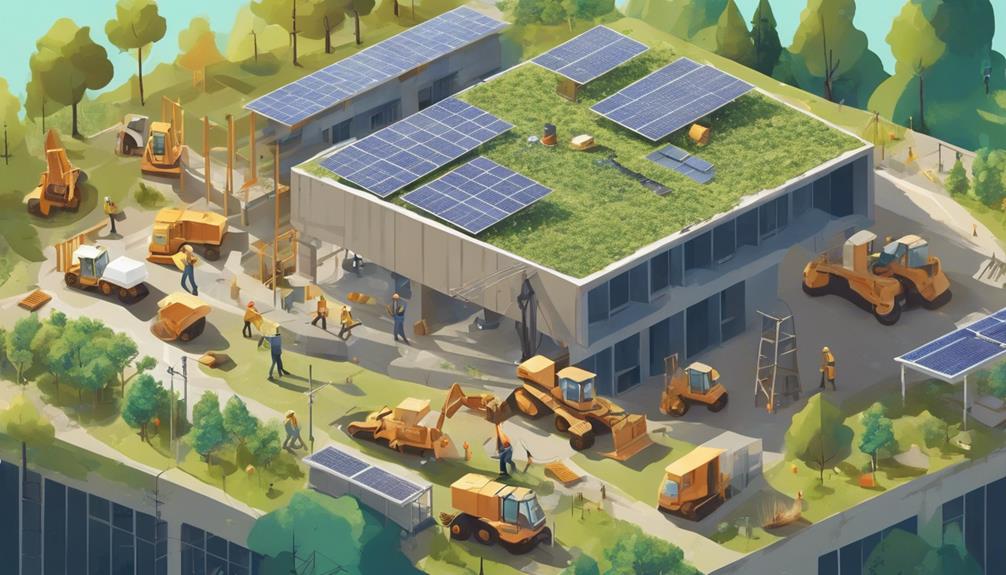
To save on sustainable construction, you should start by optimizing resource efficiency with thorough planning and effective waste management. Consider choosing renewable energy sources like solar panels to cut down on operational costs. Implementing green roof systems can reduce heating expenses and extend roof life, while sourcing materials locally minimizes transportation costs and boosts the local economy. Utilizing passive solar design and investing in high-quality insulation will significantly lower your energy needs. Lastly, don't forget to evaluate the lifecycle costing to ensure you're making cost-effective decisions for the long term. These strategies not only lower costs but also add value to your property, ensuring a smarter investment. Discover more ways to optimize your approach to sustainable construction with further exploration.
Optimize Resource Efficiency
To optimize resource efficiency in sustainable construction, you'll need to start with a thorough planning process. This involves evaluating your project's requirements and meticulously selecting materials that not only meet sustainability standards but also are just enough to avoid waste.
You've got to consider the lifecycle of the materials you choose, focusing on those that offer durability and can be recycled or reused at the end of their life.
You'll also want to implement efficient waste management strategies right from the start. Plan how you'll dispose of waste materials and set up recycling protocols. It's not just about reducing costs; it's about reducing your footprint.
Think about how you can minimize waste by ordering precise measurements and using prefabricated materials which are made to measure.
Moreover, managing your resources wisely means keeping a tight schedule and coordinating your workforce effectively. Delays can lead to material wastage and additional costs. Ensure everyone's on the same page with clear communication and real-time updates.
Lastly, consider the logistics of material delivery and storage. Efficient scheduling can prevent unnecessary energy use and material spoilage. By keeping these aspects in check, you're not just saving money, you're paving the way for a more sustainable construction practice.
Choose Renewable Energy Sources
Building on the foundation of efficient resource management, adopting renewable energy sources is your next step toward sustainable construction. Integrating solar panels, wind turbines, or geothermal systems reduces your reliance on non-renewable energy and decreases long-term operational costs. You'll not only save on utility bills but also enhance your building's market value and appeal.
Consider solar panels; they're versatile and can be installed on various types of buildings, from residential homes to large commercial complexes. Solar energy is clean, abundant, and significantly cuts down emissions associated with conventional electricity generation. Plus, with advancements in technology, the cost of solar installations has dropped, making it more accessible than ever.
Wind power is another excellent option, particularly if you're located in an area with high wind speeds. Small-scale wind turbines can be an effective solution for generating energy onsite, contributing substantially to your energy independence.
Lastly, explore geothermal heating and cooling systems, which utilize the earth's stable underground temperature to regulate building climate more efficiently than traditional systems. Though the initial investment may be higher, the long-term savings and low maintenance costs make it a worthwhile choice.
Adopting these renewable options positions you at the forefront of sustainable building practices, paving the way for a greener future.
Implement Green Roof Systems
Continuing with the momentum gained from renewable energy sources, consider implementing green roof systems as your next step in sustainable construction. You're not just adding a layer of plants on top of a building; you're integrating a whole new eco-friendly feature that significantly reduces heating and cooling costs. Green roofs insulate buildings so well that you could see a decrease in your energy consumption by up to 25%.
Think about the environmental benefits, too. Green roofs absorb rainwater, which reduces runoff and lessens the burden on urban sewage systems during heavy downpours. They also combat the urban heat island effect by cooling the air, making your building a little oasis in the concrete jungle.
Moreover, these living roofs can extend the lifespan of your roofing materials. By protecting the underlying structure from the harsh elements, a green roof can double or even triple the life expectancy of your roof. You'll save money in the long-run with fewer repairs and replacements.
Lastly, green roofs can enhance the aesthetic appeal and potentially increase the market value of your property. They provide a natural habitat for wildlife, offering a slice of nature in urban settings. This isn't just a building upgrade—it's a long-term investment in sustainability.
Focus on Local Material Sourcing
While exploring sustainable construction methods, don't overlook the importance of sourcing materials locally. It's not only about reducing the environmental impact but also about tapping into numerous cost-saving opportunities.
When you source bricks, timber, stone, and other construction materials from local suppliers, you're cutting down on transportation costs significantly. This reduction in fuel consumption and emissions contributes to both lower expenses and a smaller carbon footprint.
Furthermore, using local resources often means supporting local economies. You're not just building a structure; you're boosting the local industry and creating jobs, which can lead to more stable economic conditions in your area.
This approach not only fosters community goodwill but might also smooth over obtaining permits and approvals, as local governments tend to favor projects that benefit the regional economy.
Consider also the adaptability of local materials—they're naturally suited to the local climate and environmental conditions. This can result in longer-lasting buildings and fewer maintenance issues down the line.
Utilize Passive Solar Design
Many sustainable construction projects benefit significantly from incorporating passive solar design. By harnessing the sun's energy, you can reduce reliance on mechanical heating and cooling systems, slashing your utility bills and environmental footprint.
You'll want to start by orienting your building to maximize southern exposure. Winter sun is low in the sky, so large, south-facing windows capture valuable rays to warm your space naturally.
But it's not just about adding windows. You need to consider how your building stores and distributes that heat. Materials like concrete and brick absorb and slowly release heat, maintaining a comfortable indoor temperature.
During the summer, overhangs or awnings above these windows can block the high sun, keeping your space cool without extra air conditioning.
Moreover, landscaping plays a crucial role. Deciduous trees planted on the south and west sides will provide shade in the summer while allowing sunlight to warm the building in the winter once they shed their leaves.
Invest in High-Quality Insulation
Investing in high-quality insulation is crucial for maximizing the energy efficiency of your sustainable construction project. Effective insulation keeps your building warm in the winter and cool in the summer, reducing the need for extensive heating and cooling. This not only cuts down your energy consumption but also lowers your utility bills significantly.
You'll want to choose insulation materials that have a high R-value — a measure of thermal resistance. Higher R-values mean better insulating effectiveness. Materials like spray foam, rigid foam boards, and batt insulation are excellent choices due to their high R-values and durability. While these options might be pricier upfront, the energy savings over time can be substantial.
Don't overlook areas like attics, basements, and crawl spaces, as these are critical points where heat tends to escape. Sealing these spots can prevent energy leaks and further boost your savings.
Consider Lifecycle Costing
After focusing on the benefits of high-quality insulation, you should also consider lifecycle costing as a key component in your sustainable construction efforts. This method isn't just about looking at the initial costs; it's about evaluating the total cost of building ownership over its lifespan. You'll need to factor in maintenance, operation, and eventual disposal costs of the materials and systems you choose.
Think about it: opting for cheaper materials might save you money upfront, but if they require frequent repairs or replacements, you're not really saving in the long run. Instead, investing in more durable, albeit slightly more expensive, materials can actually be more cost-effective over time. You'll not only save on future maintenance but also enhance the building's energy efficiency, further reducing operating costs.
Moreover, consider the end of life for the materials. Choosing those that can be recycled or repurposed reduces waste and may even provide a return on investment when they're sold or reused.
Lifecycle costing encourages you to think ahead, making decisions that benefit both your wallet and the environment over the entire life of your building. Remember, sustainable construction isn't just about the now; it's about planning for the future.
Conclusion
You've got the tools to make sustainable construction work for you and your wallet. By optimizing resource efficiency and choosing renewable energy, you're setting a solid foundation. Incorporate green roofs, source materials locally, and harness passive solar design to cut costs further. Don't skimp on insulation—it pays off in the long run. Remember, considering the lifecycle costs of your choices isn't just smart; it's essential for sustainability. Build wisely, and watch both your budget and the planet benefit.
Related articles: Why Choose Sustainable Commercial Construction for Savings? · Maximizing Cost Savings in Sustainable Commercial Construction · Unlock Hidden Savings With Sustainable Construction