
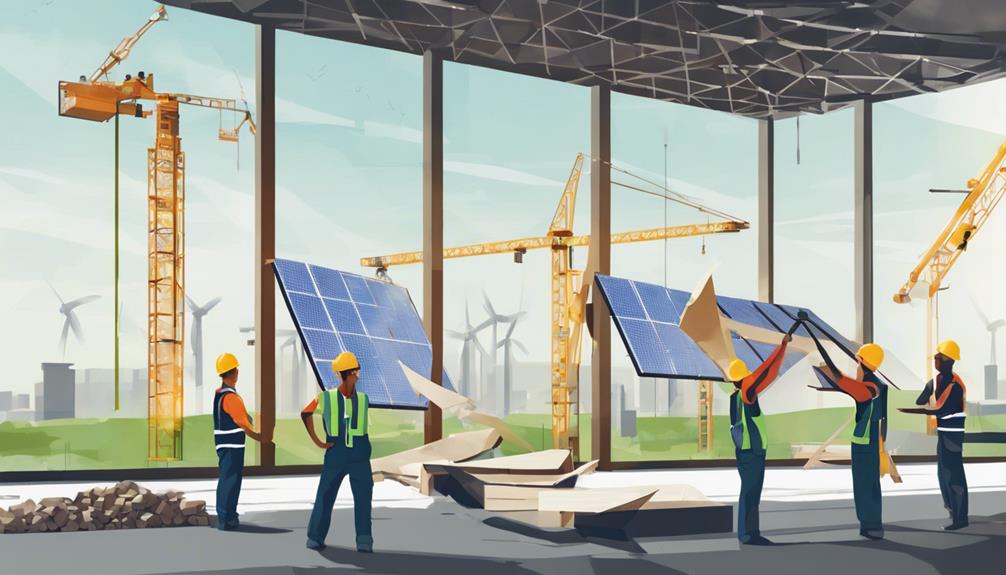
As you consider building sustainably, it's essential to know the leading technologies reshaping the industry. You can incorporate green building materials like bamboo and recycled steel, which support our planet while catering to efficiency. Consider energy-efficient HVAC systems that could slash energy use by up to 40%, and don't overlook the benefits of integrating solar power, which not only reduces utility bills but also taps into enticing government rebates. Smart glass and water reclamation systems are innovative choices, reducing dependence on conventional energy and water sources. Exploring these options offers more than immediate gains; they ensure a greener future with each project you undertake.
Green Building Materials
In the realm of sustainable construction, green building materials stand out as essential tools for reducing environmental impact. You're tasked with choosing materials that not only support the health of the planet but also cater to the well-being and safety of future building occupants. Consider bamboo, a rapidly renewable resource that's as durable as traditional hardwoods. It's not just about picking eco-friendly materials; it's about understanding their lifecycle impacts.
Recycled steel is another cornerstone of green building. By opting for steel that's been given a second life, you're reducing the need for new iron ore extraction, which significantly lowers energy consumption and mining pollution. This choice doesn't compromise on strength or versatility, making it ideal for a variety of construction needs.
You should also look into recycled concrete, which uses demolished construction waste as an aggregate. This practice not only saves natural resources but also reduces landfill waste. Plus, it cuts down on the emissions involved in transporting raw materials.
Energy-Efficient HVAC Systems
Why consider upgrading to energy-efficient HVAC systems? You're not only cutting down your energy bills but also enhancing indoor air quality and reducing your carbon footprint. Energy-efficient systems use advanced technology to minimize waste and optimize performance. They're designed to use less energy by incorporating high-efficiency filters and smart thermostat controls that adapt to your lifestyle and weather conditions.
Imagine a system that adjusts itself based on real-time data like occupancy and external temperatures. This isn't just about comfort; it's about being smart with your energy use.
You'll see significant savings on utility bills as these systems can reduce energy consumption by up to 40% compared to older models.
Moreover, investing in such technology increases your property value. Today's market increasingly values sustainable homes, making this a savvy long-term investment. Additionally, many local governments offer incentives for energy-efficient upgrades, which can help offset the initial cost.
Solar Power Integration
Building on the theme of energy efficiency, integrating solar power into your construction projects offers another robust avenue for reducing reliance on non-renewable energy sources. By harnessing the sun's energy through photovoltaic panels, you're not only cutting down on utility bills but also contributing to a greener planet. It's a step that aligns with global trends towards sustainability and energy independence.
Solar panels are versatile. You can install them on rooftops, integrate them into building facades, or even use them as part of the parking structures. This flexibility means you can incorporate solar power into a wide range of projects, from residential homes to large commercial buildings.
Plus, advancements in solar technology have significantly increased efficiency and decreased the cost of these systems, making solar integration more accessible than ever.
Moreover, government incentives and rebates can further reduce the initial investment, enhancing the financial viability of solar installations. These benefits make it an attractive option for both builders and clients looking to invest in long-term savings and environmental stewardship.
Smart Glass Technology
Smart glass technology revolutionizes how buildings manage light and heat, offering you dynamic control over environmental factors with just the touch of a button. Imagine you're in your office and the sun starts to glare on your computer screen. Instead of reaching for blinds or curtains, you simply adjust the opacity of your windows electronically. This isn't just convenient; it's also a game-changer in energy efficiency.
This innovative tech, also known as electrochromic glass, can switch between clear and tinted states. When it's sunny and hot, the glass tints to block UV rays and reduce cooling costs. On colder days, it clears up to let in sunlight, tapping into natural warmth and light.
You're not just cutting down on energy usage; you're enhancing your comfort without relying heavily on HVAC systems.
Moreover, smart glass integrates seamlessly with smart home systems, allowing automated adjustments based on weather forecasts or time of day. You can also manually control them via smartphone apps, making it easier than ever to maintain an optimal indoor environment.
Water Reclamation Systems
Water reclamation systems are vital technologies that allow you to recycle used water, turning what would be waste into a valuable resource. These systems collect and treat water from various sources, including rainwater, greywater from sinks and showers, and blackwater from toilets. By treating this water, you're not only reducing your overall consumption but also lessening your building's impact on the local water system.
You might wonder how this fits into your daily life. Imagine reusing water for landscaping, flushing toilets, and even cooling systems in large buildings. It's all possible with modern water reclamation technology, which uses sophisticated treatment processes to ensure the water is safe and effective for reuse. This not only saves you money on water bills but also promotes a sustainable approach to resource management.
As a stakeholder in sustainable construction, you play a critical role. By integrating water reclamation systems into your projects, you're contributing to a more sustainable future. These systems are adaptable to both residential and commercial buildings, making them a versatile solution in the fight against water scarcity.
Prefabricated Construction Methods
As you explore sustainable construction technologies, consider the advantages of prefabricated construction methods. Prefabrication involves assembling parts of a building in a factory before transporting them to the construction site for installation. This method isn't just efficient; it significantly reduces construction waste and site disturbances.
By choosing prefabricated methods, you're opting for a process where materials can be managed more effectively. There's less waste of resources like wood and metal, as excess materials are recycled in the plant rather than discarded at the site. This approach not only conserves materials but also minimizes the environmental impact of your construction project.
Furthermore, because components are made in controlled environments, the precision is higher, which enhances the building's quality. This controlled assembly means fewer mistakes and reworks, speeding up construction times and reducing the overall carbon footprint of the build.
Additionally, with most of the work done offsite, the on-site construction activity is greatly reduced, which lessens noise and air pollution. This makes prefabricated construction particularly beneficial in dense urban areas where minimizing disruption is crucial.
Incorporating prefabricated methods into your project isn't just a nod to efficiency; it's a step toward more sustainable building practices.
Eco-Friendly Insulation Options
Switching to eco-friendly insulation options is another crucial step towards a more sustainable construction project. These materials not only reduce your carbon footprint but also enhance the energy efficiency of buildings. You'll find that options like sheep's wool, recycled cotton, and hemp aren't only renewable but also boast low embodied energy, which means less environmental impact during their production.
Consider sheep's wool, which is naturally fire-resistant and can regulate humidity effectively. It's a fantastic choice if you're looking to maintain indoor air quality while keeping energy costs down.
Recycled cotton, made from textile scraps and denim, is another superb option. It's treated to be fire-retardant without the use of harmful chemicals, making it a safe bet for both residential and commercial spaces.
Hemp insulation is gaining traction due to its durability and mold-resistant properties. It's easy to install and provides excellent thermal performance, which can significantly cut heating and cooling expenses. Moreover, these materials often provide better soundproofing than traditional fiberglass insulation.
Sustainable Landscaping Practices
Incorporating sustainable landscaping practices into your construction project not only enhances the aesthetic appeal of the property but also significantly reduces its environmental impact. By choosing native plants, you're opting for species that are adapted to the local climate and soil conditions, requiring less water, fertilizers, and pesticides. This choice supports local biodiversity and provides habitats for native wildlife.
You should also consider implementing rain gardens or bioswales, which are effective in managing stormwater runoff naturally. These features filter pollutants and prevent them from reaching water bodies, while also replenishing local groundwater supplies.
Additionally, using permeable paving materials for walkways and driveways allows rainwater to seep through the ground, reducing runoff and erosion.
To further minimize your environmental footprint, opt for organic mulches and compost. These enrich the soil by breaking down naturally, improving soil structure and fertility without the use of synthetic chemicals.
Lastly, integrating smart irrigation systems can drastically reduce water usage. These systems deliver water efficiently and are responsive to weather conditions, ensuring that plants receive precise amounts when needed, which conserves water and reduces your utility bills.
Advanced Building Automation
Building on the foundation of sustainable landscaping, advanced building automation systems further enhance a property's efficiency and environmental stewardship. You'll find that these systems integrate seamlessly into your building, optimizing energy use and reducing waste through intelligent control of lighting, heating, ventilation, and air conditioning (HVAC). They're not just about convenience; they're crucial for minimizing your carbon footprint.
With sensors and IoT (Internet of Things) technology, your building learns from your habits and adjusts itself accordingly. Imagine walking into a room where the lights and temperature adjust automatically to your preferences, all while conserving energy when you're not present. This isn't the future; it's what you can implement today.
Moreover, these systems provide real-time data analytics. You'll receive insights on energy consumption patterns, allowing you to make informed decisions about energy use.
This visibility ensures you're not just saving money; you're actively participating in global sustainability efforts.
Low-Impact Construction Sites
Often, the environmental impact of construction sites is overlooked, but adopting low-impact practices can significantly reduce this harm. As you delve into construction projects, it's essential to prioritize methods that lessen your ecological footprint. Implementing sustainable site design principles, such as preserving natural landscapes and minimizing soil disruption, can prevent detrimental changes to the local ecosystem.
Utilizing advanced technologies like electric-powered machinery helps in cutting down emissions traditionally associated with diesel engines. You'll find that these alternatives not only contribute to cleaner air but also significantly reduce noise pollution. It's about making smarter choices that align with environmental conservation goals.
Moreover, managing waste efficiently is crucial. Opt for recycling and reusing materials whenever possible. This approach not only conserves resources but also decreases the overall waste sent to landfills.
You should also consider sourcing materials locally. This reduces transportation emissions and supports local economies, creating a win-win situation.
Conclusion
You've explored the top sustainable construction technologies that can revolutionize how buildings interact with the environment. From green materials to smart energy systems, each solution offers a step towards a more sustainable future. Whether you're integrating solar power or optimizing with smart glass, your choices not only reduce environmental impact but also promise long-term savings. It's time to take action and build smarter, not harder. Embrace these innovations and lead the way in sustainable construction.
Related articles: 3 Best Modern Architectural Design Trends 2023