
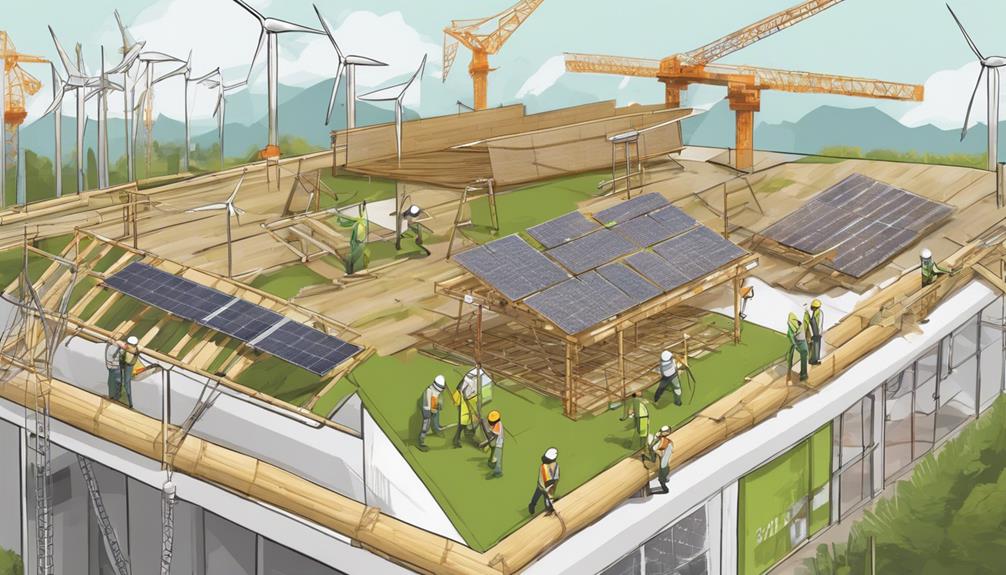
When you're aiming for guilt-free construction, there's a plethora of gadgets to help you mitigate environmental impact. Consider starting with bamboo and recycled materials such as plastic or reclaimed wood to cut down your carbon footprint significantly. Install smart energy systems that adapt to your habits and optimize renewable energy usage, while water-conserving technologies like greywater systems and low-flow fixtures drastically reduce your water demand. Don't overlook the power of solar innovations and green roofing to further enhance efficiency and biodiversity. Every choice you make can contribute significantly to sustainability, guiding you to explore deeper into how these gadgets function to transform green building.
Eco-Friendly Building Materials
In recent years, the shift towards eco-friendly building materials has become essential for sustainable construction. You've likely noticed more options on the market, each promising lower environmental impacts without compromising on quality or durability. Materials like bamboo, recycled plastic, and reclaimed wood aren't just buzzwords; they're practical choices that you can use to reduce your carbon footprint while building or renovating.
Consider bamboo, highly renewable due to its rapid growth rate, making it an ideal alternative to traditional hardwoods. It's not only strong and aesthetically pleasing but also helps in the fight against deforestation.
Similarly, recycled plastic is transforming waste into weather-resistant decking and insulation, pushing the boundaries of what recycling can achieve in construction contexts.
Reclaimed wood is another standout. By repurposing timber from demolished buildings, you're not only preserving history but also avoiding the environmental toll of processing new lumber. This approach significantly cuts down on waste and energy consumption.
As you plan your next building project, think about these materials. They're more than eco-friendly choices; they're smart, sustainable decisions that don't sacrifice functionality for environmental consciousness. Choosing them means you're part of a larger movement towards a greener planet.
Smart Energy Management Systems
Beyond eco-friendly materials, integrating Smart Energy Management Systems into your construction or renovation project can significantly optimize energy use and reduce costs. These systems, equipped with sensors, software, and automation technologies, allow you to monitor and control the energy consumption of your building in real time.
Imagine adjusting heating, cooling, and lighting based on occupancy and time of day—automatically.
You're not just saving money; you're actively participating in a sustainable future. These systems learn from your habits and adjust to improve efficiency over time. For instance, during peak hours when energy costs spike, your system could lower its demand, seamlessly reducing your utility bills without sacrificing comfort.
Moreover, the integration of renewable energy sources like solar or wind becomes simpler with a smart system. It effectively manages the energy you generate, storing excess power for later use or selling it back to the grid. This not only maximizes your investment in renewables but also ensures you have power during outages.
Water Conservation Technologies
Shifting focus to water conservation technologies, you'll discover innovative tools that significantly reduce your project's water footprint. Among these, greywater recycling systems stand out. These systems capture water from sinks, showers, and laundry, then treat and reuse it for irrigation and toilet flushing. It's a smart way to cut down on fresh water usage without compromising on your building's operational needs.
Next, consider installing rainwater harvesting systems. These systems collect rainwater from roofs, which can then be stored and used for landscape irrigation, reducing your reliance on municipal water supplies. It's a straightforward method to harness a natural resource while minimizing your environmental impact.
Low-flow fixtures, including toilets, showerheads, and faucets, are essential too. They reduce water usage by using high-efficiency designs that maintain performance. By switching to these, you can achieve up to a 60% reduction in water use compared to traditional fixtures.
Finally, don't overlook the importance of soil moisture sensors. These devices optimize irrigation schedules based on real-time soil moisture levels, ensuring that you're only watering when necessary, thus preventing water wastage.
Adopting these technologies not only conserves water but also saves money on utility bills, making them a win-win for any green construction project.
Solar Power Innovations
Harness the power of the sun with the latest advancements in solar technology. You're no longer limited to bulky panels on your roof. Today's innovations include flexible solar films that can be integrated directly into the building materials themselves – imagine windows and walls that generate power!
You'll find that newer solar panels have drastically improved in efficiency. They can now convert more sunlight into electricity, even on cloudy days. This means you can achieve greater energy independence and reduce your carbon footprint without sacrificing style or functionality.
Consider also the integration of solar batteries. These aren't just for storing excess power; they're smart. They can learn your energy usage patterns to optimize when to store and when to use the power, ensuring you have energy during grid outages or peak demand times.
Don't forget about portable solar options. Portable solar generators are perfect for on-site power needs without the noise and pollution of traditional generators. They're easy to set up, and you can move them as needed across your construction sites.
Embrace these solar power innovations to make your building projects greener and more sustainable. You're not just building; you're investing in the future of our planet.
Green Roofing Solutions
While exploring solar innovations offers a significant leap toward sustainability, another impactful approach is implementing green roofing solutions. You might wonder what a green roof involves. Essentially, it's a layer of vegetation planted over a waterproofed substrate atop your building. This isn't just about aesthetics; the benefits are substantial.
Firstly, green roofs are excellent at insulating your home. They reduce the need for artificial heating and cooling, slashing your energy bills and carbon footprint. In summer, the soil and plants absorb sunlight, keeping your interiors cooler.
Conversely, in winter, they provide added insulation, trapping heat inside.
Moreover, these roofs manage stormwater effectively. Urban areas often face runoff issues during heavy rains, leading to flooding and strained sewage systems. A green roof absorbs and retains a large percentage of this water, releasing it slowly back into the environment. This not only mitigates flood risks but also reduces the burden on municipal drainage systems.
Green roofs also enhance biodiversity, providing habitats for birds, insects, and other wildlife, which is crucial in urban settings where green spaces are limited.
To get started, consult with a specialist who understands your local climate and can recommend suitable plant species. It's a smart investment that pays off environmentally and financially.
Sustainable Insulation Options
Exploring sustainable insulation options can significantly enhance your home's energy efficiency. By choosing materials that minimize environmental impact, you're not just cutting down on energy costs; you're also contributing to a healthier planet. Let's dive into some eco-friendly choices that don't skimp on performance.
First up is sheep's wool insulation. It's a fantastic option as it naturally regulates humidity, is renewable, and offers excellent thermal resistance. You might worry about costs, but consider the long-term energy savings—it's worth the initial investment.
Next, consider recycled denim. Yes, the material that makes your jeans can also keep your home warm or cool. It's made from post-industrial cotton fibers, which means it's diverting waste from landfills while providing effective insulation.
Another innovative option is cork. Harvested from the bark of cork oak trees without harming the tree, cork is a superb insulator and highly sustainable. It's also naturally fire retardant and sound-dampening, making it a top choice for green building.
Lastly, don't overlook cellulose insulation, made from recycled paper. It's often treated with borate for fire and pest resistance, proving that you can use recycled materials without compromising on safety or efficiency.
Advanced Recycling Tools
As you consider sustainable insulation options, it's also important to explore how advanced recycling tools are transforming construction waste management. These innovative gadgets are crucial in reducing the environmental footprint by efficiently processing materials that would otherwise end up in landfills.
One standout is the mobile crusher, a powerful device that can break down large chunks of concrete into reusable gravel right at the construction site. You'll save on transportation costs and reduce the need for new raw materials.
Another game-changer is the smart shredder, equipped with sensors to sort and process different types of waste, from wood to metal, enhancing the recycling process and minimizing contamination.
Don't overlook specialized scanners that identify and categorize materials for recycling. These tools are incredibly effective in maximizing material recovery and ensuring that each component is reused in the most environmentally friendly way possible.
Conclusion
You've explored an array of tools and technologies that make building green not just possible, but practical. From eco-friendly materials and smart energy systems to innovative solar solutions and sustainable insulation, you're equipped to reduce your environmental footprint significantly. Embrace these advancements and integrate them into your projects. Remember, every choice you make counts towards a healthier planet. Start building guilt-free, knowing you're contributing positively to our world's future.
Related articles: Top 10 Sustainable Construction Technology Solutions