
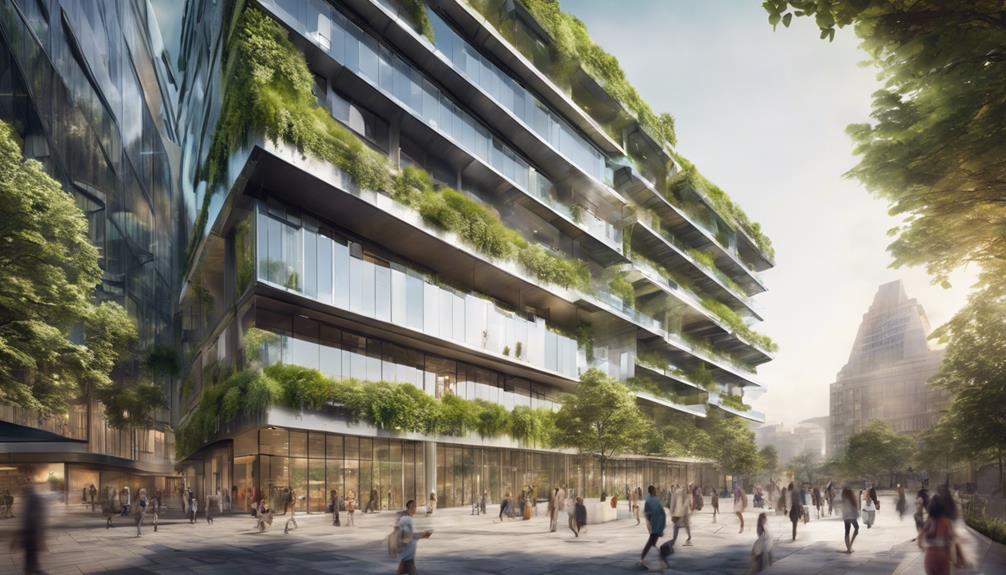
You're stepping into a world where commercial architecture isn't just about aesthetics but also about sustainability and efficiency. Innovative materials like aerogels and bamboo are revolutionizing insulation and structure, while passive solar design maximizes natural light, minimizing your heating costs. Smart glass technology adapts to sunlight variations to optimize indoor environments, cutting down on energy use. Moreover, green roofs provide excellent insulation and manage rainwater effectively, increasing your property's value and sustainability. Natural ventilation strategies reduce your reliance on mechanical systems, improving air quality and energy efficiency. Each of these trends promises to transform how you think about building spaces. Keep exploring, and you'll discover even more fascinating ways these advancements can benefit you.
Smart Glass Technology Advancements
Revolutionizing the aesthetics and functionality of commercial buildings, smart glass technology has made significant strides in recent years. You've likely seen its impact, even if you didn't know what you were looking at.
Imagine walking into a building and the windows automatically adjusting to the sunlight, maintaining perfect lighting without blinds or curtains. That's smart glass at work.
This innovative glass can change its properties, such as tinting, to reduce glare and heat from direct sunlight. You don't have to fiddle with controls or settings; most smart glass systems are automated, reacting to the sun's position and intensity.
This not only enhances your comfort but also cuts down on energy costs by reducing the need for air conditioning and artificial lighting.
Moreover, you're contributing to a more sustainable environment by using smart glass. It's designed to optimize energy consumption, significantly reducing a building's carbon footprint.
The technology has also evolved to allow integration with other building management systems, streamlining operations and boosting efficiency.
If you're in the process of designing or refurbishing your commercial space, consider smart glass for its clear benefits. It's not just an investment in your property's future, but also a step towards a more energy-efficient, sustainable world.
Green Roofing Systems Integration
Expanding upon the innovations in commercial architecture, green roofing systems offer a practical upgrade for any commercial space. As you consider the benefits, you'll find that integrating a green roof isn't just about aesthetics; it's a strategic move towards sustainability.
Green roofs, consisting of vegetation and soil, act as natural insulators. You'll notice a decrease in your building's need for heating and cooling, which translates into lower energy costs.
Furthermore, these systems manage rainwater effectively. Instead of overwhelming stormwater systems, they absorb and filter rainwater, which can reduce the risk of flooding and decrease the burden on local water treatment facilities. You're not only saving on utility bills but also contributing to a healthier urban environment.
Green roofs also extend the lifespan of your roofing materials. By protecting the underlying structure from extreme temperatures and UV radiation, they can double or even triple the life expectancy of your roof. That's a significant saving on maintenance and replacement costs.
Lastly, by adding green space to your building, you're enhancing air quality and providing a natural habitat for wildlife. This can boost the well-being of everyone in the building and elevate the property's value. It's a win-win for you and the environment.
Passive Solar Heating Techniques
While green roofing systems focus on the top of the building, passive solar heating techniques harness the natural energy from the sun to efficiently warm your commercial space from the sides and within. You're essentially turning your building into a solar collector, one that captures and utilizes the sun's heat without active mechanical systems.
Here's how you can implement these techniques:
First, consider the orientation of your building. Having large, south-facing windows maximizes the capture of solar energy during winter months when you need it most. In the summer, when you want to keep things cooler, overhangs or louvers can block the high sun.
Next, think about the materials you use inside. Thermal mass, like concrete floors or brick walls, can absorb and store solar heat during the day and then release it slowly as the temperatures drop at night. This helps in reducing your heating costs significantly.
Lastly, don't underestimate the layout of your space. Open floor plans allow sunlight to penetrate deeper into the interior, reducing the need for artificial lighting during daylight hours and maximizing your passive solar gains.
These strategies, when combined, can drastically cut down your energy consumption and enhance your building's overall energy efficiency.
Advanced Insulation Materials
Building on the idea of harnessing natural resources for energy efficiency, consider the role of advanced insulation materials in your commercial architecture. As you're striving to reduce energy consumption and increase sustainability, these innovative materials are key. They're not just about keeping heat in or out; they significantly enhance the building's overall energy performance.
Think about materials like aerogels and vacuum insulation panels. Aerogels, for instance, boast outstanding thermal resistance with a much thinner profile than traditional insulation. This means you can maximize space and efficiency without compromising on thermal integrity.
Vacuum insulation panels, while more costly, offer unparalleled R-values compared to conventional options. They're ideal for areas where space is at a premium but high thermal resistance is necessary.
Also, don't overlook recycled materials. Denim and cellulose insulation, made from recycled cotton and paper respectively, offer great thermal performance and are environmentally friendly. They're not just good for the planet; they provide excellent sound insulation too, enhancing the comfort within your commercial spaces.
Natural Ventilation Optimization
To further enhance the energy efficiency of your commercial architecture, consider optimizing natural ventilation systems. By leveraging the strategic placement of windows, vents, and openings, you can capitalize on natural wind patterns and temperature differences to regulate your building's climate. This not only reduces reliance on mechanical ventilation but also slashes energy costs significantly.
You should start by analyzing local climate data to understand wind patterns and temperature fluctuations throughout the year. This will guide the positioning of your building's openings to maximize airflow during warmer months and limit heat loss during cooler periods.
Incorporating adjustable window designs and automated vent systems can also help you manage airflow dynamically, adapting to daily or seasonal changes.
Moreover, integrating vegetation like trees and shrubs around your building can enhance these natural ventilation strategies. They act as natural windbreakers and can help funnel breezes into your building. This approach not only improves air quality but also adds aesthetic value to your property.
Renewable Energy Implementations
Transitioning from optimizing natural airflows, you should now focus on incorporating renewable energy sources into your commercial architecture. Integrating solar panels is a great starting point. They're not only cost-effective but also highly adaptable to different building designs. You can install them on roofs, integrate them into window designs, or even use them as shading elements.
Next, consider harnessing wind energy. Small-scale wind turbines can be a practical addition, especially if your building is located in a windy area. They don't require much space and can significantly reduce your building's reliance on traditional energy sources.
Don't overlook the potential of geothermal systems either. By using the earth's stable underground temperature, these systems provide heating and cooling solutions with remarkable efficiency. It's an upfront investment that pays off in the long term with lower utility bills.
Lastly, you might want to explore biomass energy systems, which use organic materials to generate heat and power. This can be particularly beneficial if your project has access to consistent organic waste streams.
Sustainable Building Materials Usage
After exploring renewable energy options, it's crucial to consider the materials you'll use in your project. Choosing sustainable building materials not only minimizes environmental impact but also boosts your building's efficiency and longevity. You're faced with a variety of eco-friendly options, each with distinct benefits and applications.
Firstly, consider bamboo. It's a rapidly renewable material that you can use for flooring, cabinetry, and structural elements. Bamboo grows back quickly after harvesting, making it a top choice for sustainability.
Secondly, recycled steel is a sturdy option that helps you avoid the excessive environmental toll of processing new steel. It provides the same strength and durability as its counterpart, making it ideal for structural supports.
Additionally, you should look at reclaimed wood. Not only does it offer a unique aesthetic with its history, but it also reduces the demand for new timber resources. Using reclaimed wood can significantly lower the carbon footprint of your construction.
Conclusion
You're at the forefront of a green revolution in commercial architecture. By embracing smart glass, integrating green roofs, and utilizing passive solar heating, you're boosting energy efficiency dramatically. Opt for advanced insulation and natural ventilation to further cut costs and carbon footprints. Incorporating renewable energy and sustainable materials isn't just good for the planet—it's smart business. Keep leading the charge; the future of eco-friendly architecture is in your hands, shaping a sustainable world for generations to come.
Related articles: What Are Today’s Top Energy-Saving Building Designs? · How Property Construction Management Software Can Help You · Typical Tools of a Concrete Contractor