
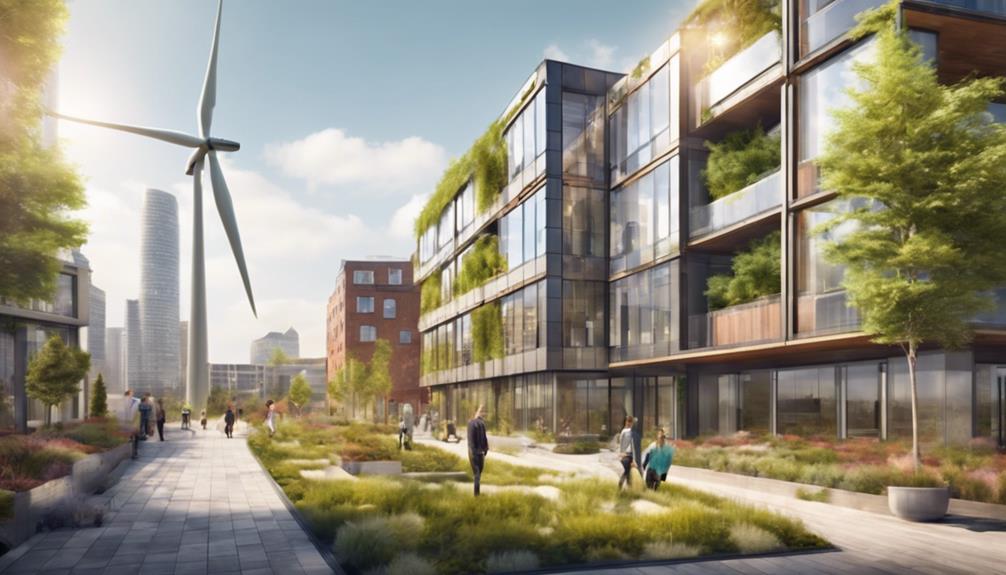
In the realm of energy-efficient architecture, you're likely to see a strong emphasis on passive design strategies, which include utilizing natural ventilation, optimized orientation, and thermally efficient materials like insulated windows. High-performance insulation, such as Insulated Concrete Forms and Vacuum Insulation Panels, plays a crucial role. Moreover, technological advancements have enhanced the efficiency of HVAC systems, with options like Geothermal Heat Pumps and Energy Recovery Ventilators coming to the fore. Additionally, integrating smart building technologies and renewable energy sources, from solar panels to wind turbines, has become pivotal. Exploring these trends further might unveil new insights into building a sustainable future.
Smart Glass Technology Integration
Smart glass technology is increasingly transforming how buildings manage light and heat, offering substantial energy savings and enhanced comfort. Imagine sitting by a window and, without moving an inch, you're able to adjust the tint to control the amount of sunlight streaming in. That's smart glass for you.
This innovative glass automatically changes its light transmission properties based on external conditions, which can significantly reduce costs for heating, air conditioning, and lighting. The core benefit? It adapts to both enhance occupant comfort and lower energy use.
For instance, on a scorching summer day, smart glass can darken to minimize heat absorption and reliance on air conditioning. Conversely, on a chilly, overcast day, it can turn completely transparent to absorb as much natural warmth and light as possible.
You'll also find that smart glass contributes to a quieter indoor environment by providing superior sound insulation compared to traditional glass. It's not just about energy; it's about creating a more adaptable and responsive living or working space.
As you explore options for a greener building, consider how integrating smart glass can align with your energy efficiency goals while boosting the aesthetic and functional value of your property.
Green Roofing Systems
Turning your attention to green roofing systems, you'll find they offer an effective way to enhance your building's energy efficiency and environmental footprint. A green roof, essentially a layer of vegetation planted over a waterproof membrane, isn't just aesthetically pleasing—it's a powerhouse in insulating your home or office.
By installing one, you're adding a natural barrier that regulates the temperature inside. During the hot months, it absorbs and deflects sunlight, keeping the interior cooler without overworking the air conditioning.
Conversely, in colder weather, it provides additional insulation, retaining warmth and reducing heating costs.
Moreover, green roofs significantly reduce stormwater runoff, which can decrease the burden on urban sewage systems during heavy rains. The plants and soil filter rainwater, slowly releasing it into the environment rather than letting it flood the systems.
You'll also enjoy improved air quality since the vegetation helps filter pollutants and carbon dioxide out of the air. This not only contributes positively to your immediate environment but also to the broader urban landscape.
Passive Solar Building Design
Building on the concept of green roofing systems, passive solar building design offers another innovative approach to reducing energy consumption and optimizing natural resources in architecture. You'll find that this method isn't just about placing a few solar panels on rooftops. It's an integrated design strategy that focuses on harnessing the sun's energy effectively and efficiently, without relying on active mechanical systems.
Imagine constructing your building in a way that takes full advantage of the sun's path. Properly oriented windows, walls, and floors are designed to collect, store, and distribute solar energy in the form of heat in the winter and reject solar heat in the summer. You're not just saving on heating costs; you're also enhancing comfort with natural light, which can boost your mood and productivity.
Moreover, consider the materials you choose. Thermal mass materials like concrete, bricks, and stone can absorb and retain heat, releasing it when temperatures drop, maintaining a comfortable indoor environment.
By integrating thoughtful landscaping, such as deciduous trees, you can provide shade during summer while allowing sunlight to warm the building in winter.
Passive solar design isn't just about energy efficiency; it's about creating spaces that live in harmony with the environment.
Advanced Building Insulation Techniques
As we transition from the natural efficiencies of passive solar design, consider the role of advanced building insulation techniques in enhancing your home's energy performance. These innovations aren't just about keeping heat in during winter; they're equally pivotal in reflecting heat during summer, ensuring your living space maintains comfort without over-reliance on energy-intensive systems.
You've likely heard of spray foam insulation, but let's dig deeper. This method creates airtight seals in hard-to-reach nooks and crannies, drastically reducing the potential for thermal bridging where heat typically escapes. It's not just effective; it's also a long-term solution that resists settling or deterioration.
Another groundbreaking technique involves vacuum insulation panels. These panels have a thermal resistance up to ten times greater than traditional insulation materials. By integrating these panels, you're not just insulating; you're supercharging your home's resistance to external temperature changes.
Don't overlook phase-changing materials (PCMs) either. Integrated into wallboards or ceilings, PCMs absorb and release heat as temperatures fluctuate, actively regulating the climate inside your home.
High-Efficiency HVAC Systems
Now that we've explored advanced building insulation techniques, let's consider how high-efficiency HVAC systems can further optimize your home's energy performance. These systems are crucial in managing indoor climate while slashing energy consumption and costs.
You might wonder how these systems differ from standard options. High-efficiency HVAC units use advanced technology to improve thermal conversion rates, meaning they deliver more heating or cooling per unit of energy consumed. They often incorporate features like variable speed fans and multi-stage compressors that adjust energy use based on need. This precision avoids the excessive consumption typical of traditional systems.
Investing in a high-efficiency HVAC system also impacts your home's environmental footprint. By consuming less power, you're reducing your reliance on fossil fuels and contributing to lower carbon emissions. Moreover, many of these systems are designed to integrate seamlessly with smart home technologies, allowing you to monitor and adjust settings remotely for optimized energy use.
Remember, the upfront cost might be higher, but the long-term savings on utility bills can be significant. Additionally, various government incentives often exist for installing energy-efficient appliances, so you'll want to check what's available in your area.
Choosing a high-efficiency HVAC system isn't just a smart choice; it's a forward-thinking move towards sustainable living.
Renewable Energy Sources Utilization
Transitioning to renewable energy sources is your next step toward a sustainable home. As the focus on energy efficiency sharpens, integrating solar panels, wind turbines, or even biomass systems isn't just a trend; it's a smart investment in your property's future and the planet's health. You're not only slashing your utility bills but also increasing your home's resale value.
Solar energy, for instance, can be harnessed using photovoltaic cells on your roof to generate electricity or solar thermal technology to heat water. Both methods significantly reduce your reliance on traditional power grids and minimize your carbon footprint.
If you're in a windy region, consider small-scale wind turbines. These can be installed on your property and are perfect for generating electricity, further decreasing your energy costs.
Moreover, embracing geothermal heat pumps for heating and cooling your home utilizes the stable underground temperatures to enhance efficiency and comfort. This system requires an initial investment but pays off with lower operating costs and minimal maintenance.
Investing in renewable energy sources isn't just about being eco-friendly. It's about future-proofing your home against rising energy prices and building a sustainable legacy that you'll be proud of. Don't wait; start planning your transition today.
Conclusion
You're on the brink of embracing some of the most innovative architectural trends to ensure your building is as energy-efficient as possible. From integrating smart glass technology that adapts to sunlight, to installing green roofing systems that provide natural insulation, your choices are shaping a sustainable future. Remember, incorporating advanced insulation techniques and high-efficiency HVAC systems, along with utilizing renewable energy sources, doesn't just cut costs—it significantly reduces your carbon footprint. Make the smart choice, make a lasting impact.
Related articles: Revolutionary Trends in Energy-Efficient Commercial Architecture · What Are Today’s Top Energy-Saving Building Designs? · How Property Construction Management Software Can Help You