
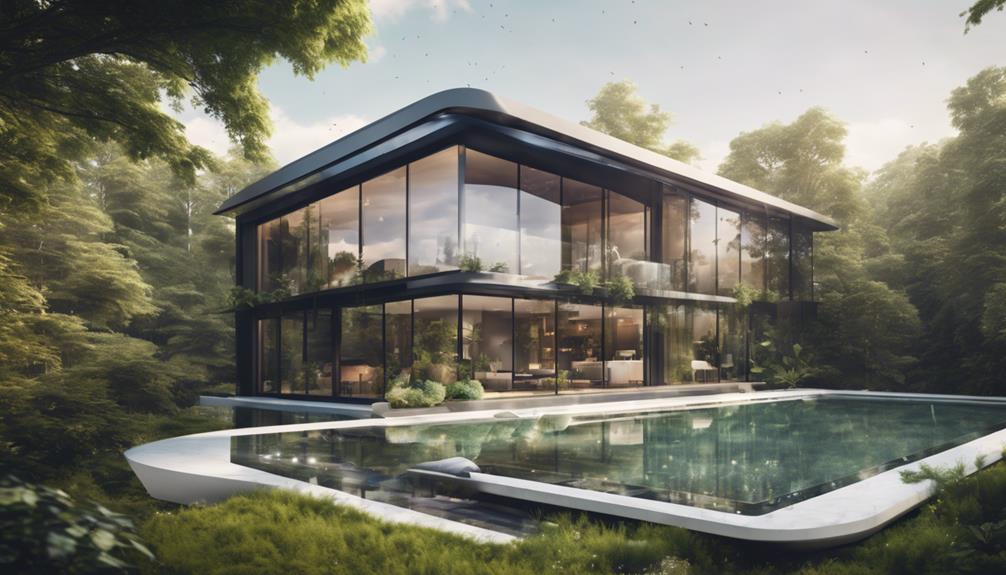
As you explore incorporating smart tech into modern architecture, you'll find it's not just about adding convenience; it's a comprehensive enhancement of energy efficiency, safety, and aesthetic values. You can manage your home's climate and energy using intuitive systems that learn from your habits, improve security with biometric tech, and reduce energy costs with interconnected IoT devices. Advanced lighting and climate controls connect seamlessly with renewable energy sources, consistently optimizing your living space's comfort and functionality while prioritizing sustainability. Moreover, these technologies adapt to both your needs and the environmental demands, continuously evolving as you further explore their potential.
Exploring Energy Management Systems
In today's world, effectively managing energy consumption is crucial, and smart technology offers innovative solutions. Imagine you're controlling your home's climate, lighting, and appliances with just a few taps on your smartphone. It's not just convenient; it's also incredibly efficient.
Smart thermostats learn your habits and adjust the heating and cooling to suit your schedule, reducing energy waste. You're not only saving money but also contributing to a larger cause: reducing your carbon footprint.
Smart lighting systems go beyond simple on and off switches. They adjust the brightness based on the time of day and presence in the room, ensuring that no energy is wasted on an empty space. Moreover, these systems integrate seamlessly with solar panels and other renewable energy sources.
You can monitor and manage your energy production and consumption in real-time, optimizing the use of available resources. This integration is pivotal as it transforms how you interact with your home's energy systems, making you an active participant in energy conservation.
Embrace these technologies, and you'll see how they revolutionize not only how you interact with your home but also how you contribute to a more sustainable world.
Enhancing Security With Biometric Technology
Biometric technology significantly enhances security by personalizing access to your home. Imagine never needing to fumble for keys again — your fingerprint, iris, or facial recognition grants you entry. This isn't just about convenience; it's about creating a nearly impenetrable barrier against unauthorized access. You control who comes in and when, ensuring that only recognized individuals can enter.
Moreover, integrating biometrics with your home security system elevates the safety of your living space. If there's an attempt to breach your secure entry, you'll receive instant notifications on your devices. This real-time alert system doesn't just protect against burglaries; it enhances your ability to monitor and control access remotely.
You can even set temporary access for visitors or service personnel without compromising your overall security.
Think of biometric technology as your personal security guard, always on duty and recognizing only familiar faces, fingerprints, or eyes. It removes the risk of lost or stolen keys and the potential for copied access codes. With biometrics, your home's security adapts to the unique identifiers of your family, creating a personalized and secure environment that keeps pace with modern life.
Implementing IoT for Building Efficiency
Shifting focus to the implementation of Internet of Things (IoT) technology, you'll find it revolutionizes building efficiency. By integrating IoT devices throughout a building, you're not just installing technology; you're embedding a smart network that communicates and optimizes itself to enhance the way the building operates. This isn't just about saving energy; it's about creating environments that adapt to the needs of those inside them.
Imagine sensors that monitor air quality and adjust HVAC systems in real time, ensuring optimal conditions while conserving energy. Or consider IoT-enabled systems that manage water usage, detecting leaks or inefficiencies that often go unnoticed until they're costly problems. By leveraging these technologies, you're not only making the building more sustainable but also significantly reducing operational costs.
Furthermore, with IoT, building maintenance transforms from reactive to proactive. Sensors can predict equipment failures before they occur, allowing for timely maintenance that minimizes downtime and extends the lifespan of the building's infrastructure.
This integration doesn't just add value; it fundamentally changes how buildings are managed, making them smarter, more responsive, and inherently more efficient. As you move forward, these IoT solutions aren't just options but essential components in modern architectural design.
Advancements in Smart Lighting Solutions
As we delve into advancements in smart lighting solutions, it's clear that this technology has moved beyond simple on-and-off functionality. You're now entering a realm where lighting doesn't just illuminate your space; it enhances your life.
Imagine your home or office lights adjusting automatically based on the time of day or the weather outside. This isn't a distant dream—it's today's reality.
Smart lighting systems utilize sensors and AI to optimize light levels, saving energy and reducing your utility bills. You can control these systems via smartphone apps or voice commands, making them not only efficient but also incredibly convenient.
Picture adjusting the ambiance of a room with just a few taps on your phone or a simple voice command.
Moreover, these systems integrate seamlessly with other smart home technologies, providing a holistic experience. They can even learn from your behavior. Forgot to dim the lights before bed? Don't worry, your smart system remembers your preferences and adjusts accordingly.
This isn't just about practicality; it's about creating mood and enhancing aesthetics. Whether you're setting the scene for a dinner party or focusing on work, smart lighting adapts to your needs, transforming how you interact with your environment.
Automation in Climate Control Systems
Moving seamlessly from smart lighting to the realm of climate control, modern technology now allows you to tailor your indoor environment with precision. With automated climate control systems, you're able to adjust temperatures, manage humidity, and enhance air quality with minimal effort. These systems learn from your habits and preferences, automatically creating the perfect atmosphere for comfort and energy efficiency.
You can control these settings from your smartphone or voice-activated devices, making it easier than ever to manage your home's climate, even when you're away. This isn't just about comfort; it's also about reducing your carbon footprint and slashing energy costs. The system's smart sensors detect when a room is unoccupied, adjusting the environment accordingly to avoid unnecessary heating or cooling.
Moreover, integration with other smart home systems allows for a cohesive approach to energy management. For example, your climate control can work in tandem with smart windows that adjust tint and opacity to keep out heat during summer or insulate the house during colder months. It's a complete system that not only improves your living conditions but also contributes to a sustainable future.
Future Trends in Smart Building Materials
Exploring the future of architecture, smart building materials are set to revolutionize how structures interact with their environment. Imagine buildings that heal themselves, adapt to weather changes, and optimize energy use without human intervention. You'll see facades that shift and breathe, windows that adjust to light automatically, and walls that regulate indoor temperatures.
You're stepping into a world where construction materials aren't just inert substances; they're dynamic components equipped with sensors and IoT connectivity. These materials can detect structural weaknesses, alerting you to potential issues before they escalate. This isn't just about safety; it's about sustainability. By significantly reducing the need for repairs and replacements, these materials extend the life of buildings and lessen environmental impact.
Looking ahead, expect to see more integration of nanotechnology and biotechnology in building materials. Nanotech offers materials that are stronger yet lighter, while biotech can lead to living materials that might even absorb pollutants from the air. You'll be part of selecting these materials, not just for their functionality but for their ability to reduce your carbon footprint.
As you plan your next project, think of these innovations not just as building materials, but as essential partners in sustainable development.
Conclusion
You're stepping into a future where your living and working spaces are as smart as they are stylish. Imagine managing energy seamlessly, enhancing security with a touch, and optimizing building efficiency through IoT. Advances in smart lighting and climate control aren't just convenient—they're revolutionizing how you interact with your environment. As you embrace these innovations, keep an eye on emerging smart materials that promise even more integrated, sustainable living spaces. The future of architecture isn't just about buildings; it's about better living.
Related articles: Top 10 Smart Tech Tips for Commercial Architecture · Integrating Smart Tech in Modern Architecture · Revolutionizing Commercial Architecture With Smart Tech