
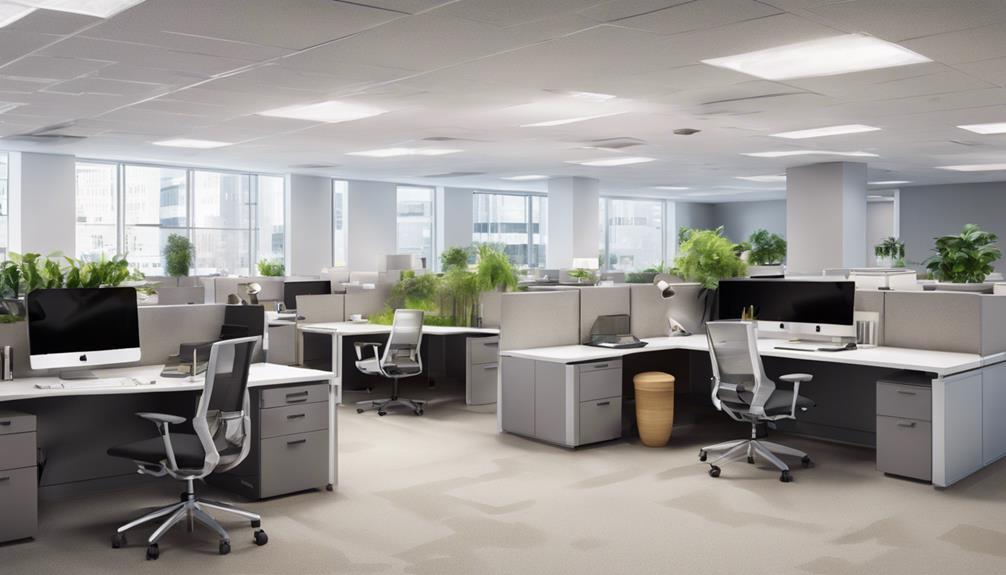
Traditional office designs are becoming obsolete because your work environment now demands flexibility, sustainability, and well-being. With the rise of remote work, you no longer need a fixed desk in a static location; instead, you thrive in adaptable spaces that facilitate both focus and collaboration. You also expect your office to prioritize eco-friendly practices and support your health, incorporating natural lighting and biophilic design elements to reduce stress. Furthermore, as you embrace technology, high-functioning collaborative tools integrated into office furniture become essential. If you're intrigued, there's a wealth of insights and trends just waiting to be explored further.
Shift Towards Remote Work
The COVID-19 pandemic accelerated the shift towards remote work, transforming it from a niche option to a widespread norm. You've likely noticed how this change has reshaped the landscape of work. Gone are the days when being physically present in the office from nine to five was a must. Now, you can connect to your team from virtually anywhere.
This transition isn't just about location flexibility. It's also about how you manage your time and balance your tasks. You're no longer bound by the confines of an office space, which means you can tailor your work environment to suit your productivity peaks. Whether you're a night owl or an early riser, remote work allows you to work at your own pace and at times that you're most efficient.
Moreover, the necessity for large, centralized office spaces is dwindling. Companies are now investing in technology that supports remote collaboration rather than expansive physical offices.
You've probably adapted to using various digital tools that help in managing projects, maintaining communication, and fostering teamwork, all without stepping foot into a traditional office setting. This shift not only reflects a change in where work is done but also how it's done.
Emphasis on Employee Well-being
In light of shifting work dynamics, there's a growing focus on employee well-being. Companies are realizing that your health and mental comfort play pivotal roles in your productivity and overall job satisfaction. This isn't just about physical health; it's equally about psychological safety and comfort in your workspace.
Gone are the days when you'd be expected to thrive in a stark, fluorescent-lit box. Now, employers are integrating biophilic design elements that bring nature into the office. Imagine working surrounded by plants, natural light, and perhaps even soothing water features. These aren't just aesthetically pleasing choices—they reduce stress and enhance your creative thinking.
Moreover, the traditional one-size-fits-all approach to ergonomics is on its way out. Now, you're likely to find workspaces that prioritize adjustable desks and chairs that fit your individual physical needs, reducing the risk of strain and injury. This personalized attention shows a commitment not just to the work you do, but also to your personal health and long-term well-being.
Employers are also stepping up by offering more in-office wellness programs. From mindfulness workshops to on-site fitness classes, these initiatives are designed to keep you healthy and engaged. It's clear: your well-being is now central to office design philosophy.
Demand for Flexible Spaces
Building on the importance of employee well-being, flexible office spaces have become a key feature in modern workplace design. You've likely noticed how rigid layouts with cubicles and fixed seating arrangements are being replaced by environments that adapt to the needs of their users. These spaces aren't just about aesthetics; they're about function and the freedom to choose how and where you work best.
Imagine you've got a project that requires deep concentration. In a flexible workspace, you can move to a quiet zone specially designed for focus.
Conversely, if collaboration is the key to solving a problem, you can join your team in a dynamic, open area equipped with movable furniture that can be easily reconfigured to suit group activities.
This shift isn't merely a trend; it's a response to the diverse and evolving needs of today's workforce. You're not just looking for a place to work; you're seeking a space that supports your work-life balance, creativity, and productivity. Flexible workspaces offer you the ability to personalize your work environment daily, which can lead to increased satisfaction and effectiveness at work. So, it's clear why traditional office designs are on their way out—they simply can't keep up.
Integration of Technology
Seamlessly blending into the fabric of modern office design, technology elevates the functionality of workspaces to new heights. You now experience a world where your desk, your chair, even your surrounding environment, responds to your needs. Imagine walking into your office and the lights, temperature, and electronic devices adjust automatically to your preset preferences.
You're not just working; you're interacting with a space designed to enhance your productivity and comfort. Collaborative tools and communication platforms are integrated directly into furniture and architecture. This isn't the future; it's your current reality. Tables double as touchscreens, walls serve as digital projectors, and virtual reality setups allow you to engage with colleagues across the globe as if they're right there with you.
Gone are the days of static, one-dimensional work environments. Now, you're part of a dynamic, adaptive office landscape. This shift isn't just about convenience; it's about maximizing your potential. Every piece of technology is a building block towards a more efficient, more intuitive workplace. You'll find yourself less bogged down by mundane tasks, free to focus on innovation and creativity.
Welcome to your new office, where technology doesn't just support your work—it transforms it.
Environmental Sustainability Concerns
As we embrace the advanced technology defining our workspaces, it's vital to address the environmental impacts of these innovations.
You've seen how sleek, modern offices boast cutting-edge tech, but have you considered their ecological footprint? The production and disposal of high-tech equipment contribute significantly to environmental degradation. You're not just dealing with increased energy consumption; there are also issues like electronic waste that can harm ecosystems if not properly managed.
Moreover, as you opt for more digital solutions, the demand for cloud storage and data centers skyrockets, leading to further energy use and increased carbon emissions.
It's not all doom and gloom, though. You have the power to make a difference. By choosing sustainable materials and energy-efficient technologies, you can reduce your office's environmental impact. Opt for suppliers who prioritize eco-friendly practices, and consider the longevity and recyclability of the products you use.
Changing Workforce Demographics
While considering the adoption of modern technologies and sustainable practices in office designs, it's crucial to also focus on the changing workforce demographics. You're now dealing with a multi-generational workforce that brings diverse needs and expectations to the table. Baby boomers might still appreciate the familiarity of traditional cubicles and private offices, but millennials and Gen Z workers often seek open, flexible workspaces that foster collaboration and creativity.
You've got to understand that these younger generations are digital natives. They've grown up with technology at their fingertips, and this shapes how they interact with their work environment. They're looking for spaces that seamlessly integrate technology, not only for efficiency but also to support a work-life balance. This includes providing options for remote working, which has become a significant preference, especially after recent global shifts towards more home-based work.
Moreover, the increase in workforce diversity necessitates inclusive design that accommodates different cultures, genders, and physical abilities. It's about creating spaces that everyone feels comfortable in, which traditional office designs often fail to address.
Cost Efficiency in Modern Designs
When considering modern office designs, you'll find that they often lead to significant cost savings over time. These designs typically use space more efficiently, reducing the square footage you need. By optimizing the layout, you're not just saving on rent; you're also cutting down on the energy costs associated with heating, cooling, and lighting a larger area.
Moreover, modern designs frequently incorporate sustainable materials and technologies. Things like LED lighting, energy-efficient appliances, and smart thermostats don't just reduce your carbon footprint; they also lower your utility bills significantly. Over time, these savings can add up to a substantial amount, offsetting the initial investment in green technologies.
You'll also notice that modern office designs often include modular furniture and adaptable spaces. This flexibility means you can reconfigure your setup as your needs change without major renovations. Instead of spending money on constructing new walls or installing fixed structures, you're investing in assets that can adapt and evolve with your business. This not only saves you money but also reduces waste, contributing to both cost efficiency and environmental sustainability.
Collaborative Workspace Needs
Modern office environments increasingly require spaces that foster collaboration and creativity among teams. You've likely seen the shift; where once cubicles dominated, now open floor plans and multifunctional areas are taking over. It's not just about pulling down partitions; it's about designing spaces that encourage people to come together and share ideas freely.
You need places where you can brainstorm as a group without feeling boxed in by traditional setups. Think about the last time you tried to solve a problem in a cramped meeting room; it's not just uncomfortable, it stifles creativity.
Modern workspaces are adapting with features like writable walls, communal tables, and areas that can be easily reconfigured according to the task at hand.
Moreover, technology integration is crucial. You aren't just working with people in the same room anymore. You're connecting with teams around the globe, and your space needs to support that. This means having the tech and infrastructure to facilitate easy communication and information sharing, not just within the walls of your office but extending outward.
Embracing these changes doesn't just make your office look cutting-edge; it makes you part of a dynamic, interconnected team that's well-equipped to tackle today's challenges.
Aesthetic and Functional Innovation
In today's office designs, aesthetic appeal pairs with functional innovation to create environments that not only look good but also work effectively. You'll find that gone are the days of drab, one-size-fits-all cubicles that prioritize mere function over form. Instead, modern workspaces embrace vibrant colors, dynamic layouts, and modular furniture that can be easily reconfigured to meet changing needs. These elements aren't just pleasing to the eye; they boost your mood and productivity.
You're also seeing a blend of natural elements with high-tech features. Imagine working in a space that incorporates live plants, natural lighting, and exposed wood alongside smart desks that adjust their height with the touch of a button and zones controlled by AI for optimal lighting and temperature. This isn't just about looking modern—it's about creating a space that adapts to your work style and wellness.
Moreover, these innovations reflect a broader trend: offices are no longer just places to work; they're designed to inspire and energize you. By integrating technology and design, you're equipped with a workplace that not only meets today's demands but is also future-proof. This shift isn't just a trend; it's the new standard in office design.
Conclusion
As you navigate the evolving workplace, remember that traditional office designs are fading away. You're seeing a shift towards remote work and a stronger emphasis on your well-being. Spaces are becoming more flexible, integrated with technology, and environmentally sustainable. Your diverse needs and collaborative efforts demand modern, cost-efficient designs. Embrace these changes; they're not just trends but necessary adaptations to keep pace with a dynamic workforce and innovative aesthetic and functional demands.
Related articles: Why Incorporate Biophilic Design in Workspaces? · Top 3 Tips for Biophilic Design in Offices · 7 Best Biophilic Design Trends for Workspaces