
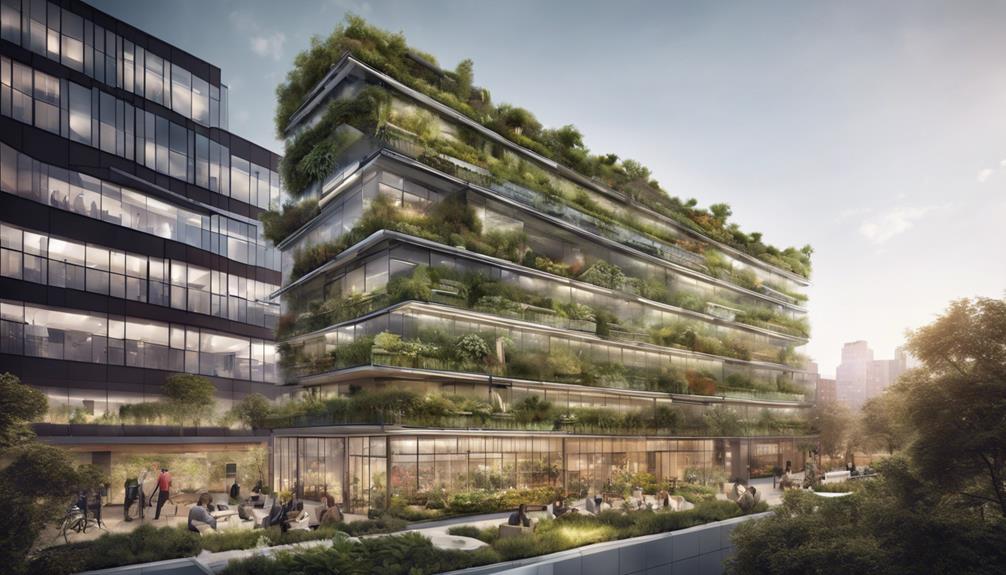
As you explore modern office design, you'll encounter buildings where sustainability blends seamlessly with technology. Features like recycled steel, thermally modified timber, and dynamic glass optimize both eco-friendliness and aesthetic appeal. Smart technologies aren't just about automatization; they're reshaping how security and environmental controls enhance workplace efficiency. Flexible layouts with movable walls and modular furniture cater to various work styles, fostering innovation and productivity. Also, the integration of biophilic elements, like natural light and living walls, boosts well-being and creativity. With advances in energy-efficient lighting and health-centric designs, you're not just stepping into a workspace but a revitalized environment. There's much more to uncover as you look further into these trends.
Sustainable Materials and Techniques
Embracing sustainable materials and techniques, modern office buildings aren't only reducing their environmental footprint but also enhancing their aesthetic appeal. You'll notice more use of recycled steel, which supports structural integrity without relying on freshly mined resources.
You're also seeing a rise in thermally modified timber, a process that uses heat rather than chemicals to treat the wood, making it more durable and resistant to decay.
Green roofs are another element you might spot. These aren't just for show; they play a critical role in insulation and rainwater absorption, drastically lowering heating and cooling costs.
Moreover, living walls, filled with vibrant plants, are becoming a staple in lobbies and communal spaces, improving air quality and providing a serene environment for you and your colleagues.
You're part of a larger shift when you work in these buildings. Each element, from bamboo flooring to low-VOC paints, contributes to a healthier workspace while pushing the envelope on what sustainable design can achieve.
As you walk through these spaces, filled with natural light and open air, remember that each choice was made not just for aesthetics but for a profound commitment to sustainability.
Smart Building Technology Integration
As you step into a modern office environment, you'll quickly notice the integration of smart building technology that streamlines operations and enhances user experiences. From automated climate control systems to advanced security protocols, these innovations aren't just about convenience—they're transforming how workplaces function.
Imagine walking into an office that recognizes you the moment you arrive. Facial recognition technology can ensure seamless access while maintaining high-security standards. Inside, IoT sensors monitor everything from air quality to room occupancy, adjusting lighting and temperature to optimize comfort and energy use. You're not just working in a space; you're interacting with an environment that responds to your needs.
But it's not all about comfort. Smart technology also supports critical safety features. In emergencies, connected systems can guide you to the nearest exit with illuminated pathways or even shut down hazardous equipment remotely. This integration of technology doesn't just make office life easier; it makes it safer.
Furthermore, this shift towards smart buildings isn't a distant future—it's happening now. As you move through your day, each interaction with the building's tech-enhanced features reinforces the benefits of living and working in a digitally interconnected world. It's clear that smart buildings are setting new standards for the modern workplace.
Flexible Workspace Layouts
Shifting away from traditional rigid office structures, flexible workspace layouts are increasingly becoming the norm in contemporary office design. You'll find that these spaces cater to a variety of working styles and team sizes, adapting seamlessly to the needs of the day or hour. It's all about creating environments that foster collaboration, innovation, and productivity.
Imagine you can choose where you work based on your tasks. In the morning, a quiet pod for deep focus; after lunch, a communal table for team collaboration. This isn't just convenient; it's transformative. Movable walls, adjustable lighting, and modular furniture allow you to reshape your environment instantly. You're no longer confined to one spot. You're empowered to discover your most productive self by altering your surroundings as needed.
Moreover, these layouts promote a sense of ownership and comfort among employees. You're encouraged to interact and share ideas, yet you can also retreat to private nooks for confidential conversations or solo tasks.
The dynamic nature of such spaces can significantly enhance job satisfaction and retention by addressing diverse preferences and work habits, ensuring everyone finds their perfect spot to thrive.
Biophilic Design Elements
Integrating natural elements into office design, biophilic elements enhance both aesthetic appeal and mental well-being. When you step into a workspace adorned with living green walls, natural wood accents, or water features, you're not just entering a building; you're immersing yourself in an environment that's alive. This connection to nature doesn't just look good; it makes you feel better, reducing stress and increasing creativity and focus.
Imagine you're sitting at a desk surrounded by lush plant life and exposed stone. These textures and colors reduce fatigue and boost your mood. It's not just about decoration; it's about creating a space that fundamentally changes how you interact with your work environment.
Moreover, the use of natural materials isn't only for beauty. They often come with inherent qualities that improve air quality and acoustics. Wood, for example, not only brings warmth and comfort to a space but also has properties that can dampen noise, making it easier for you to concentrate and communicate.
Incorporating these elements into office design isn't just a trend; it's a transformation in how we think about productive and healthy workspaces. You're not just working; you're thriving in a space designed for well-being.
Energy-Efficient Lighting Systems
Beyond aesthetic enhancements, modern office designs are increasingly adopting energy-efficient lighting systems to reduce environmental impact and operational costs. You'll find that integrating such technologies not only supports sustainability but also fosters a more productive working environment.
Consider LED lighting, which uses at least 75% less energy and lasts 25 times longer than traditional incandescent lighting. You're not just cutting down on energy consumption; you're also reducing the frequency of replacements. This means less maintenance and more savings.
Smart lighting systems take this a step further. Imagine lights that adjust based on the amount of natural daylight or occupancy in the room. You're not only using less power, but you're also ensuring that energy isn't wasted lighting empty spaces or over-illuminating areas already well-lit by natural sources. It's all about optimizing your office's lighting needs without excess.
Moreover, the implementation of advanced lighting controls can be seamlessly integrated with other building management systems. You can monitor and control the lighting from a central dashboard, making adjustments as needed to maximize efficiency.
Investing in these systems might seem hefty upfront, but the long-term savings and environmental benefits are well worth it. You're not just designing a space; you're setting a standard for future office environments.
Collaborative Spaces Innovation
Cutting-Edge Office Building Design Trends
Collaborative Spaces Innovation
How do innovative collaborative spaces boost productivity in your office? Today's design trends focus on creating environments that not only encourage interaction but also enhance it. You'll find that these spaces aren't just about putting desks together; they're about creating zones that inspire teamwork and creativity.
Imagine an office where modular furniture can be easily moved and reconfigured to suit the task at hand. You're no longer bound by the traditional setup of rows of desks. Instead, you can create a circle for a team meeting or a cozy nook for brainstorming. This flexibility allows you to adapt your space to the dynamics of your workday, keeping everyone engaged and responsive.
Moreover, integrating technology seamlessly into these areas is key. Smartboards, wireless charging stations, and soundproof pods for video calls are just a few examples that help streamline collaboration. You don't have to leave your space to find the tools you need; everything is at your fingertips.
These innovations in collaborative spaces aren't just about aesthetics; they're about functionality. By breaking down physical barriers and integrating technology, you're setting the stage for spontaneous interaction and enhanced productivity.
Facade Engineering Advances
Shaping the face of modern office buildings, facade engineering advances play a crucial role in both aesthetics and functionality. You've likely noticed newer buildings sporting sleek, almost futuristic facades. These aren't just for show. Today's materials and designs are pushing boundaries; they're smarter, more energy-efficient, and incredibly versatile.
Consider the role of dynamic glass technologies that adjust their opacity based on sunlight exposure. You're not just controlling glare and UV penetration; you're significantly reducing energy costs by minimizing the need for artificial cooling. It's a game-changer for office environments, where comfort and cost-effectiveness are paramount.
Moving on, think about the integration of photovoltaic panels in facades. These aren't the bulky solar panels you're used to seeing on rooftops. These are streamlined, aesthetically pleasing, and double as a power source for the building. It's about making the building's skin a functional asset, not just an envelope.
Lastly, the use of recycled materials in facades is on the rise. You're seeing more buildings with facades made from repurposed glass and metal, reducing the environmental footprint and promoting sustainability. This isn't just a trend; it's the future of building design, blending beauty with responsibility.
Health-Centric Building Features
As office buildings evolve to include advanced facades, attention is also turning towards the health and well-being of the people inside. It's not just about aesthetics anymore; it's about creating environments that actively promote physical and mental health. You'll find that modern office designs are incorporating more natural light, better air quality, and spaces that encourage physical activity.
Imagine working in a space that's flooded with natural light and features air that's not only fresh but also filtered to reduce pollutants and allergens. That's becoming the norm. Large, openable windows, air purification systems, and green walls are just some features you might encounter. These aren't just nice-to-haves; they're about keeping you healthier.
And then there's the movement aspect. Instead of static desks, think of adjustable setups that encourage you to switch between sitting and standing. Some offices now include walking tracks or design layouts that encourage stair use over elevators.
To cap it all, many workplaces are integrating biophilic design principles, bringing elements of the outdoors inside. This could range from indoor water features to extensive plant installations, all geared to boost your mood and productivity. You'll not only work in these spaces; you'll thrive.
Conclusion
You've seen how cutting-edge trends like sustainable materials and smart technology can transform office buildings into more than just workplaces. By integrating flexible layouts, biophilic elements, and energy-efficient lighting, your office can become a beacon of modernity and efficiency. Embrace these innovations to foster collaboration, enhance well-being, and stay ahead in facade engineering. Remember, adopting these trends isn't just about aesthetics—it's about creating healthier, more dynamic spaces for everyone to thrive.
Related articles: Why Traditional Office Designs Are Becoming Obsolete · Why Incorporate Biophilic Design in Workspaces? · Top 3 Tips for Biophilic Design in Offices