
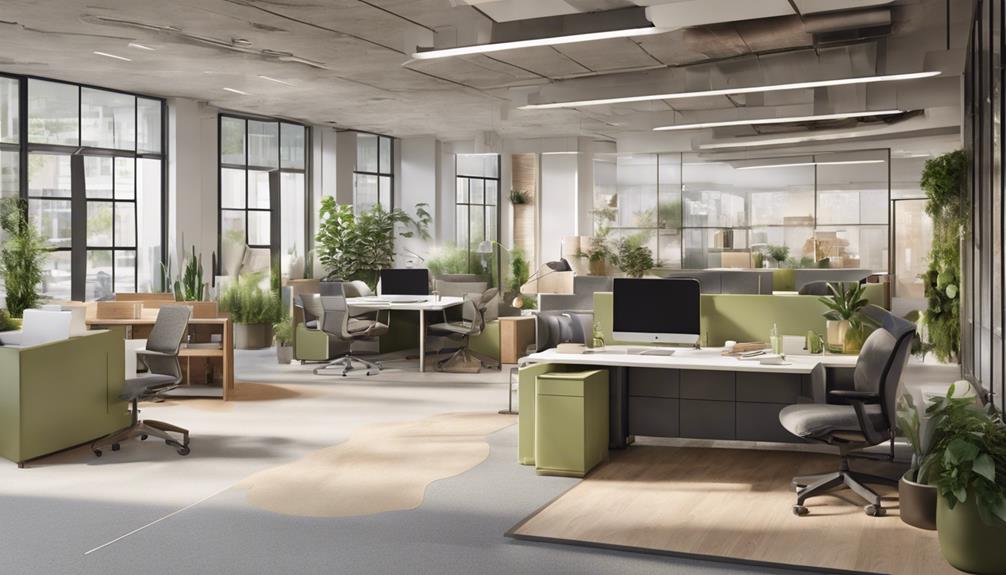
You'll find that today's top office design trends are all about creating spaces that are flexible, sustainable, and wellness-oriented. Employers are integrating biophilic elements to connect you to nature, enhancing both your well-being and productivity. Spaces are more adaptable, featuring movable partitions and multi-functional furniture to suit your dynamic work needs. Smart technologies automate your environment for optimal comfort, while minimalist layouts help clear your mind and reduce clutter. Sustainability is key, with eco-friendly materials and energy sources cutting down on costs and environmental impact. Exploring these trends further could significantly transform your workspace experience.
Biophilic Design Elements
Incorporating biophilic design elements into your office can significantly enhance the workspace ambiance and boost productivity. By bringing nature into your environment, you're not just adding aesthetic value; you're also contributing to a healthier, more vibrant place to work.
Imagine stepping into an office where lush green plants greet you, natural light bathes your workspace, and perhaps a small waterfall hums softly in the background. It's not just pleasing to the eye; it's scientifically proven to reduce stress and enhance creativity.
You might think it's a complex overhaul, but it's simpler than you'd expect. Start with something as straightforward as introducing a variety of indoor plants. Research shows that just having a view of greenery can increase work engagement by helping you recover faster from stress and mental fatigue.
Incorporating materials that mimic natural elements, like wood and stone, can also elevate the sense of being connected to the natural world.
Moreover, consider maximizing natural light by rearranging workstations so that as many as possible can benefit from daylight. Not only does this help with your team's circadian rhythms, but it also cuts down on artificial lighting, saving energy and costs.
Flexible Workspaces
Flexible workspaces are transforming how you interact with your office environment, adapting to the diverse needs of today's dynamic workforce. These spaces aren't just about shared desks or open layouts; they're about creating environments that flex and adapt to the task at hand.
You might find yourself working at a standing desk in the morning and moving to a quiet pod for deep focus in the afternoon, all within the same office.
The beauty of these setups lies in their variety and versatility. You can collaborate with your team in a tech-equipped huddle space, or choose a soft-seating area for a more relaxed brainstorming session. This shift in design philosophy means you're no longer tied to one desk or one way of working, which can significantly boost your creativity and productivity.
Moreover, flexible workspaces often include movable partitions and modular furniture, allowing you to customize the space as needed. This adaptability makes it easier to accommodate fluctuating team sizes and projects with varying space requirements. It's a smart solution that not only supports your work style but also promotes a more dynamic and responsive office culture.
Smart Building Technology
As you embrace the versatility of flexible workspaces, integrating smart building technology can further enhance your office environment. Imagine walking into an office that adjusts to your personal preferences without a hitch. Smart thermostats automatically modify the temperature, and intelligent lighting systems adapt to optimize your comfort and productivity. This isn't just about comfort; it's about creating an environment that responds to your needs in real-time.
You'll find that smart technology does more than adjust environmental controls. Advanced systems allow for seamless communication and interaction with your workspace. With the swipe of an app, you can book meeting rooms, manage access controls, or even alter room layouts. It's all at your fingertips, making your office life as fluid as your work demands.
Moreover, consider the efficiency of IoT-enabled devices that collect data on office usage. You can analyze this data to make informed decisions about space utilization, ultimately reducing wasted resources and enhancing operational efficiency.
These technologies aren't just tools; they're partners in optimizing your work environment, ensuring every element of your office is working just as hard as you are.
Sustainability Practices
While smart technology streamlines your office space, adopting sustainability practices can significantly reduce your environmental footprint. You're not just saving on costs; you're contributing to a healthier planet. Integrating green materials is a straightforward step you can take. Opt for recycled or sustainably sourced furniture and building materials. These choices aren't just good for the Earth; they often come with a sleek, modern aesthetic that can elevate your office design.
Consider the energy you're using. Switching to LED lighting reduces power consumption and increases the lifespan of your bulbs, cutting both your electricity bill and waste.
You can also tap into renewable energy sources like solar panels, which might be an initial investment but pay off in the long run in terms of both costs and carbon footprint.
Don't overlook your office's air quality and natural light access. Installing large, energy-efficient windows can boost employee morale and productivity by bringing in more natural light and reducing the need for artificial lighting during the day. Moreover, incorporating plants not only adds a touch of nature but also improves air quality, making your office a healthier environment for everyone. By adopting these practices, you're setting a standard for sustainability in the workspace.
Minimalist Layouts
In today's fast-paced world, minimalist layouts in office design are becoming increasingly popular. You might find that less is indeed more when it comes to creating an efficient and aesthetically pleasing workspace. By stripping down to the essentials, you're not just clearing physical space but also mental clutter, enabling a sharper focus and increased productivity.
This design philosophy uses simple forms, open spaces, and uncluttered surfaces. You'll see a preference for sleek, functional furniture and a neutral color palette that emphasizes light and space. The reduction of visual distractions helps you concentrate better on your tasks. Moreover, this approach isn't just about aesthetics; it's also practical.
Easy-to-maintain and clean spaces mean less time spent on upkeep and more on the work at hand. As you adopt minimalist design, you'll find that every piece of furniture and decor serves a purpose. There's no room for anything superfluous.
This might involve choosing desks with built-in storage to hide away paperwork, using subtle, built-in lighting, and selecting ergonomic chairs that blend into the environment while providing comfort.
Collaborative Spaces
Transitioning from minimalist layouts, consider the growing importance of collaborative spaces in modern office designs. As you navigate the evolving landscape of workplace functionality, you'll notice that fostering teamwork has become a central theme. These areas aren't just about open floor plans; they're specifically crafted to encourage interaction and exchange of ideas.
Imagine spaces equipped with modular furniture that you can easily move around to suit the task at hand. You've got writable walls for spontaneous brainstorming, tech hubs for digital collaboration, and even lounge areas that blend comfort with connectivity. These environments are designed to adapt to the dynamic needs of teams, facilitating both planned meetings and impromptu discussions.
Moreover, you'll find that these collaborative zones help break down the traditional silos that often hinder communication and innovation.
Health-Centric Features
Beyond fostering collaboration, today's office designs are increasingly prioritizing your health. Modern workplaces are being equipped with air quality monitors and advanced HVAC systems to ensure the air you're breathing is clean and safe. Ergonomically designed furniture is also becoming a staple, aiming to reduce back pain and improve your posture throughout your workday.
Biophilic design elements are on the rise, integrating natural light, live plants, and even water features to reduce stress and enhance your overall well-being. These features also improve concentration and productivity, making you feel more energized and less confined.
Lighting, too, has been given a significant overhaul. Instead of harsh fluorescents, offices are now utilizing adjustable LED lighting that mimics natural light patterns, helping to regulate your circadian rhythm and boost your mood.
Furthermore, some offices are incorporating fitness centers and meditation areas. These spaces encourage you to take necessary breaks and engage in physical or mental wellness activities. This not only boosts your health but also reinvigorates your mind for better performance at work.
These health-centric features are transforming the traditional office into a space that cares as much about your well-being as it does about productivity.
Conclusion
You've seen how modern office design trends like biophilic elements and flexible workspaces can transform your work environment. By integrating smart technology and sustainability practices, you're not just enhancing productivity but also promoting well-being. Embrace minimalist layouts to declutter your space and mind, while collaborative areas spark creativity and teamwork. Don't forget health-centric features that keep everyone's well-being at the forefront. It's time to reinvent your office into a space that's as dynamic and innovative as your team.
Related articles: Fresh Office Building Design Trends for 2023 · Cutting-Edge Office Building Design Trends · Why Traditional Office Designs Are Becoming Obsolete